
CXMT's Market Cap Returns to 4 Trillion Yuan, Equivalent to 2.5 Times Moutai: Is the AI Memory Bonus Just Beginning?
 I'm LongbridgeAI, I can summarize articles.
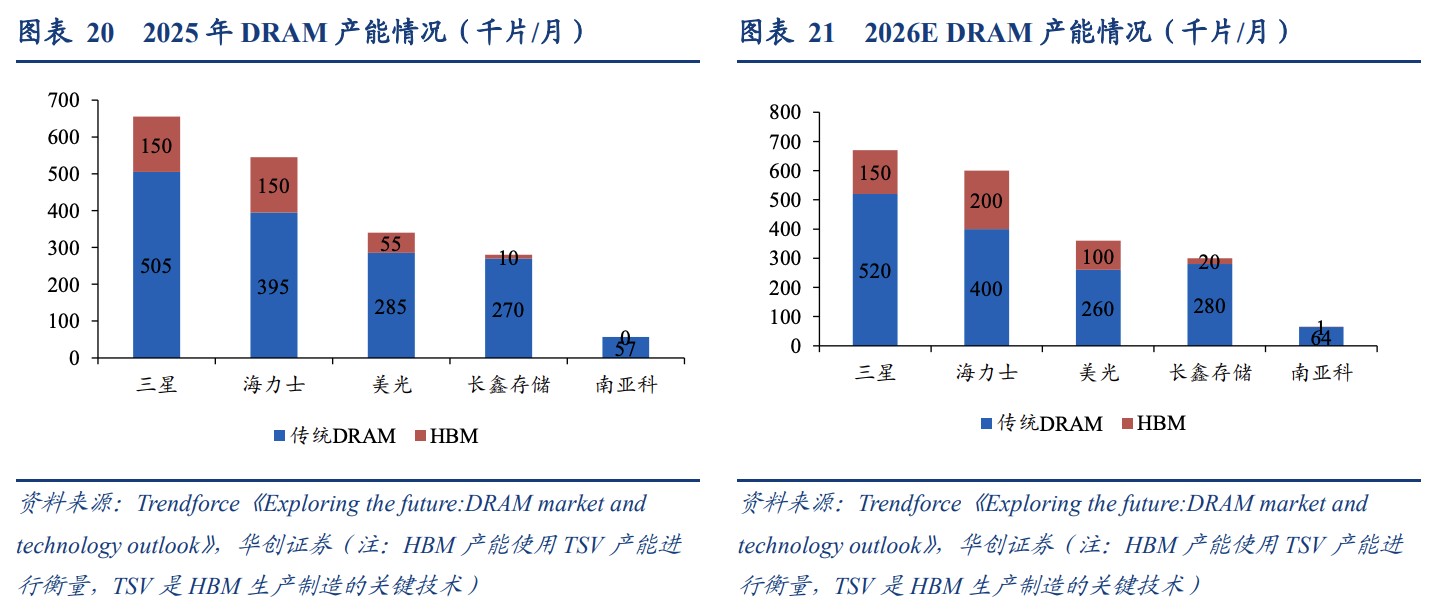
CXMT hits new highs again. The core drivers are: the continuation of the AI-driven DRAM boom cycle; accelerated domestic substitution with CXMT's market share steadily rising; meanwhile, major original manufacturers are shifting capacity toward HBM, limiting new traditional DRAM capacity, while CXMT's capacity expansion exceeds expectations. It is estimated that by the end of 2026, compared to the end of 2025, new capacity will increase by 85,000 wafers/month, which is 4.25 times the sum of Samsung and SK Hynix's new capacity during the same period
CXMT's market capitalization has once again surpassed 4 trillion yuan, topping the A-share market as the "largest by market cap," while also surpassing Hong Kong-listed Tencent. Behind this is the resonance of three logics: the AI-driven DRAM boom cycle, accelerated domestic substitution, and capacity expansion—and analysts believe this rally is far from over.
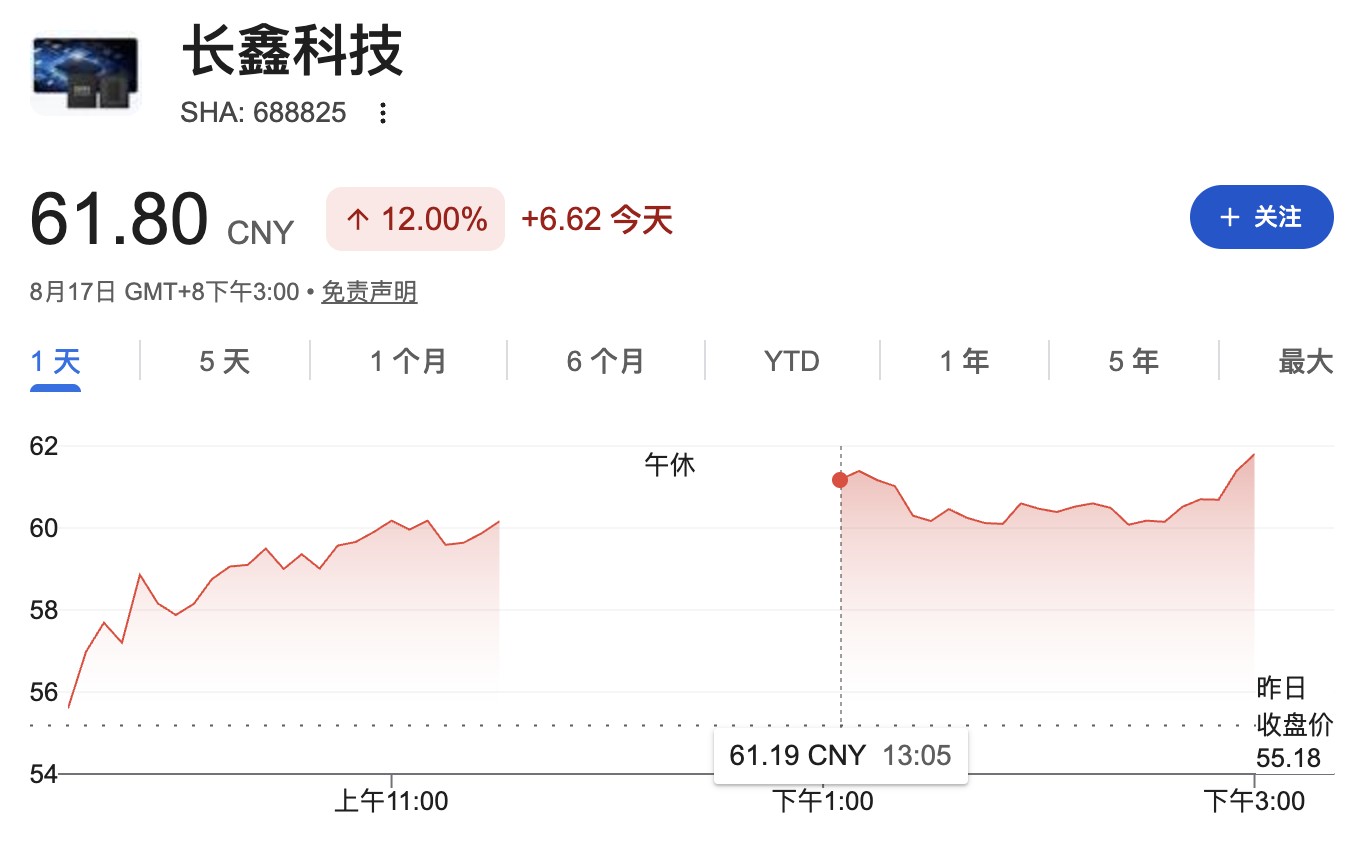
On August 17, CXMT closed up 12%, with its stock price hitting a new high and total market capitalization breaking through 4 trillion yuan again, approximately 2.5 times the total market capitalization of the former "stock king," Moutai.
Huachuang Securities initiated coverage with a "Strong Buy" rating and a target price of 72.97 yuan; Guosheng Securities initiated coverage with a "Buy" rating. Both institutions pointed out that the company is in a phase of triple resonance involving domestic substitution, AI computing power expansion, and an upward memory cycle coupled with capacity expansion, significantly strengthening the certainty of growth.
Accelerated Domestic Substitution: Fourth Globally, Market Share Continues to Rise
In the highly concentrated global DRAM market landscape, CXMT is expanding its share at a relatively fast pace.
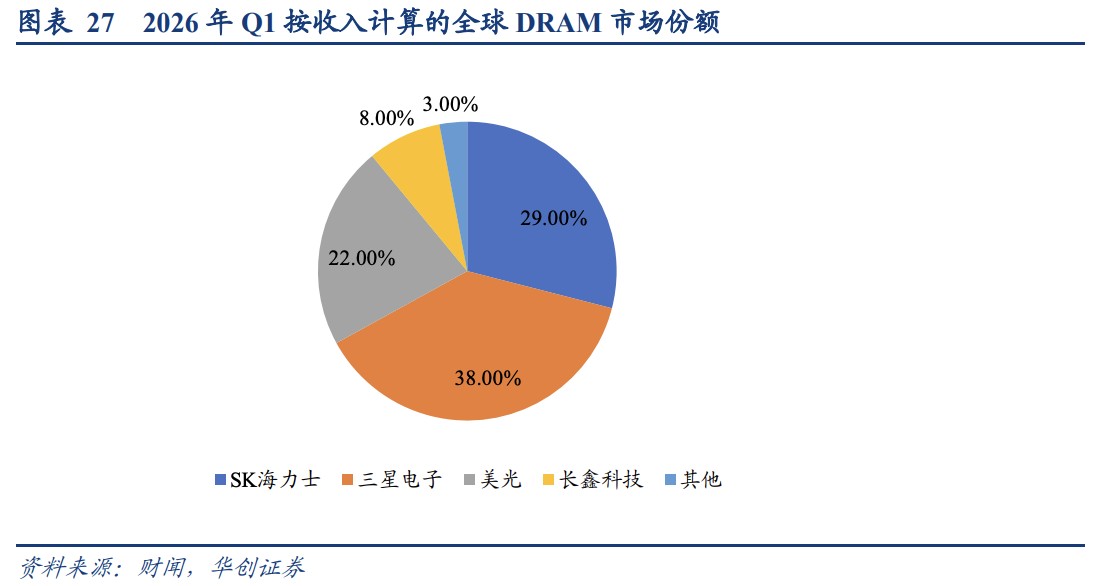
According to Omdia data, based on shipment volume and sales revenue, CXMT is the largest DRAM manufacturer in China and the fourth largest globally, with a global market share of approximately 7.7% in the first quarter of 2026, a further increase from previous levels.
Since its establishment in 2016, the company has adopted a "skip-generation R&D" technical route, bypassing some intermediate nodes and advancing directly from 18nm-class G3 process technology to 16nm-class G4 process technology. It has successively achieved mass production for first-to-fourth generation process platforms, completing full product iteration coverage from DDR4 and LPDDR4X to DDR5 and LPDDR5/5X.
Although there is still a gap of about three years compared to the three overseas leaders—Samsung, SK Hynix, and Micron—in current process technology, and there is a phased lag in high-end product areas such as HBM, Huachuang Securities pointed out that this gap is continuously narrowing.
The competitiveness of mainstream products has significantly strengthened—the maximum speed of LPDDR5/5X can reach 10667Mbps, placing its performance in the global first tier.
Product structure is also continuously optimizing. DDR5 has achieved large-scale mass production and batch commercial use. In 2025, the revenue proportion of the DDR series increased to 31.87%, a year-on-year increase of 18.61 percentage points, mainly benefiting from the pull of high-value downstream demand such as servers.
Industry Boom: AI Reshapes DRAM Supply and Demand Patterns
The DRAM industry is in a structural upward cycle driven by AI, providing strong external support for CXMT's growth.
According to Omdia and WSTS data, the global DRAM market size in 2025 was $150.5 billion, accounting for about 65% of the memory chip market size. Omdia predicts that the global DRAM market size is expected to grow from $150.5 billion in 2025 to $571 billion in 2030, with a compound annual growth rate of approximately 30.56%.
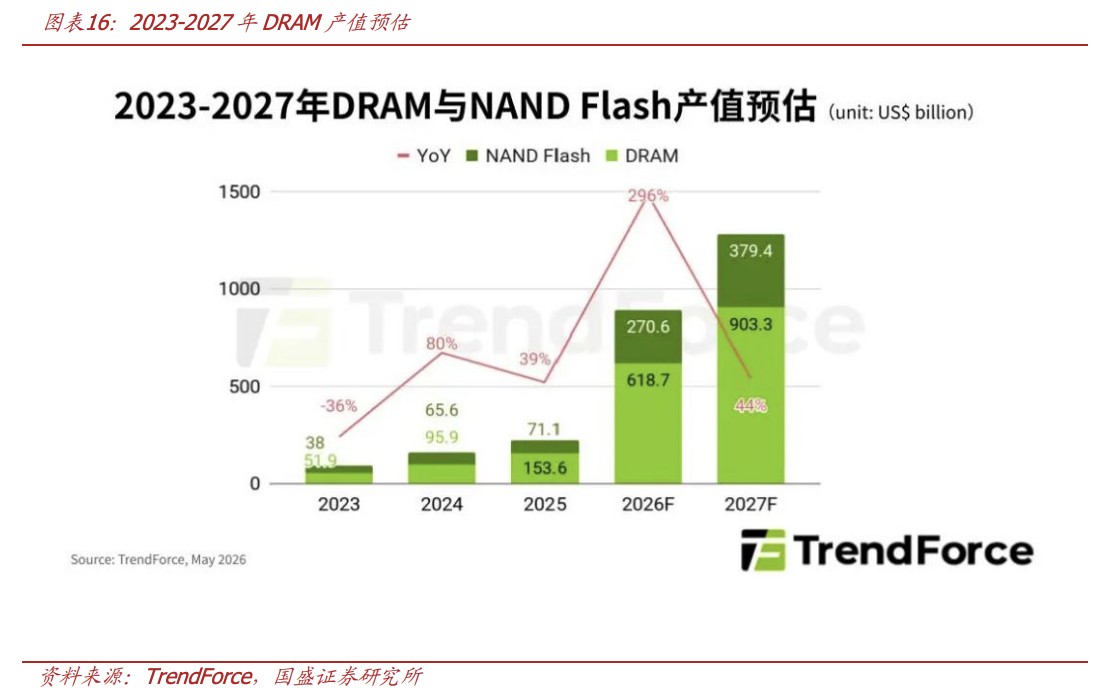
According to TrendForce forecasts, the global DRAM output value will reach $618.7 billion in 2026 and further increase to $903.3 billion in 2027.
On the demand side, the rapid expansion of AI inference applications is reshaping the memory demand structure. AI development is shifting from large model training to Agentic AI applications centered on inference, driving cloud service providers (CSPs) to extend the focus of data center construction from AI servers to general-purpose servers, thereby significantly expanding procurement demand for various capacities of RDIMMs.
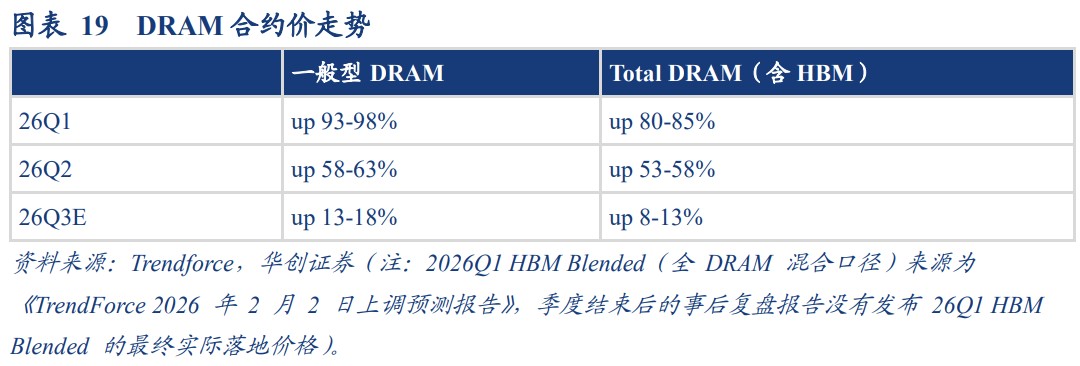
According to TrendForce, server DRAM contract prices in the third quarter of 2026 are expected to increase by 13% to 18% quarter-on-quarter. The capital expenditure of the nine major cloud service providers in 2026 is estimated at approximately $830 billion, with the overall year-on-year growth rate revised upward from 61% to 79%.
On the supply side, major original manufacturers are shifting capacity toward HBM, limiting new traditional DRAM capacity. In 2026, SK Hynix plans to allocate up to one-third of its total capacity to HBM production, while Micron's HBM capacity plan is close to doubling.
Regarding traditional DRAM, Samsung is adding only 15,000 wafers/month, and SK Hynix is adding 5,000 wafers/month. Overall new capacity is relatively limited, and the tight supply-demand pattern is expected to continue.
Capacity Expansion: Scale Effects Accelerate Release
Capacity is the core support for CXMT's scaled growth. The company owns three 12-inch DRAM wafer fabs in Hefei and Beijing, with capacity utilization rates continuously rising from 87.06% in 2023 to 95.73% in 2025.
According to SemiAnalysis data updated in June 2026, the company's monthly capacity is expected to increase from approximately 265,000 wafers at the end of 2025 to approximately 350,000 wafers at the end of 2026, an increase of about 85,000 wafers/month. The design capacity of Phase I in Hefei is 120,000 wafers/month, and the total design capacity for all three phases is 360,000 wafers per month.
Guosheng Securities pointed out that as planned capacity construction is gradually completed and capacity ramps up quickly, the effective synergy of various business segments under the IDM model will further strengthen cost competitiveness.
Notably, the company's capacity expansion speed has exceeded previous market expectations. According to G-enews and ChosunBiz citing Omdia forecasts, CXMT's production volume in 2025 was originally expected to grow by only 20%, but the latest data shows its expansion speed has exceeded expectations by more than three times.
Valuation and Risks: Scarcity Premium Coexists with Cyclical Concerns
Regarding valuation, Huachuang Securities referenced the average 2027 P/E ratio of 9.88x for comparable overseas memory companies (Micron, SanDisk, Western Digital, Seagate Technology), and the average 2027 P/E ratio of 69.63x for comparable wafer foundry/IDM model companies (TSMC, SMIC, CR Micro).
Considering the company's scarcity and the space for domestic substitution, Huachuang Securities assigned CXMT a 2027 P/E ratio of 20x, with a target price of 72.97 yuan.
Guosheng Securities used Samsung Electronics, SK Hynix, and Micron Technology as comparable companies, with average P/E ratios of 9/5/5x for 2026 to 2028, believing that CXMT enjoys a significant domestic substitution premium.
Regarding risks, both institutions warned of the strong cyclical nature of the DRAM industry—historically, concentrated capacity expansion by top manufacturers often leads to oversupply, causing the industry to enter a downward cycle, where price fluctuations may significantly impact the company's profitability.