
How Wall Street Views the U.S. Treasury's Surprise Move: A Variant of QT Arrives, Another 'Trump Put,' and Complications for Walsh's Inflation Fight
 I'm LongbridgeAI, I can summarize articles.
The U.S. Treasury did not specify the source of funds for the buybacks, with market participants expecting financing through short-term debt issuance, equivalent to a Treasury version of 'Operation Twist' (QT). A CNBC host stated that the U.S. government hopes the stock market rally will continue, labeling this move a 'Trump Put.' The chief economist at RSM believes that the Treasury's attempt to control yields could complicate the Federal Reserve's task of controlling inflation
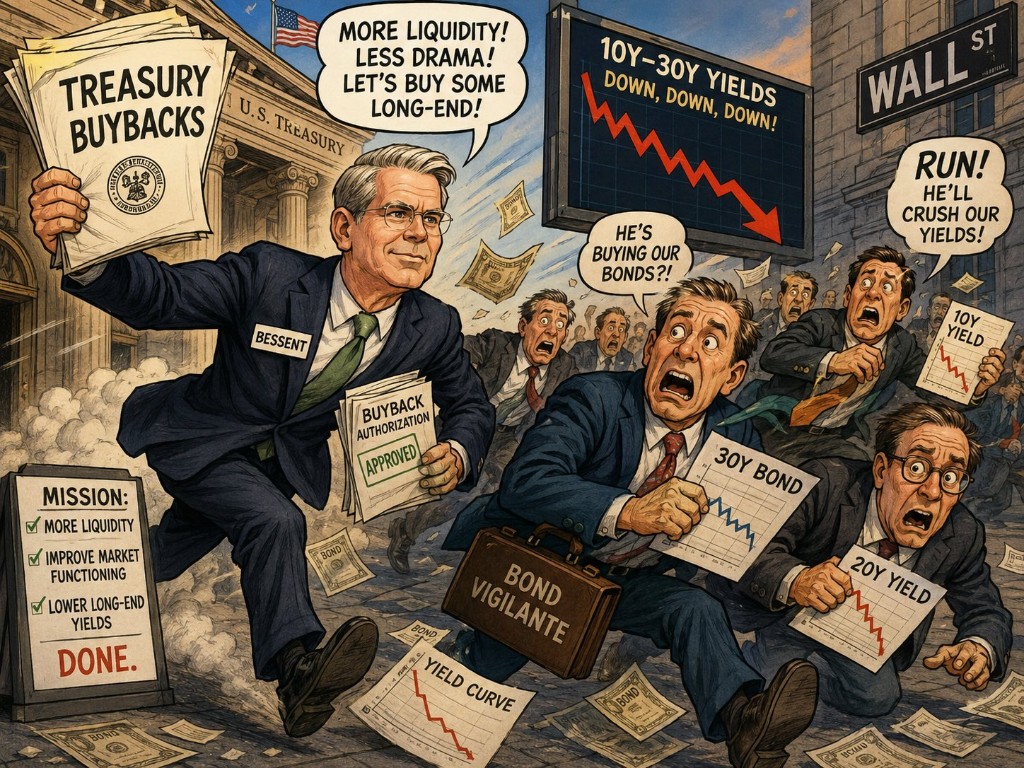
The U.S. Treasury unexpectedly expanded the scale of long-term Treasury bond buybacks, sending a signal of intervention amid pressure in the bond market and sparking widespread discussion on Wall Street—is this merely technical liquidity management, or the beginning of active government suppression of long-end yields?
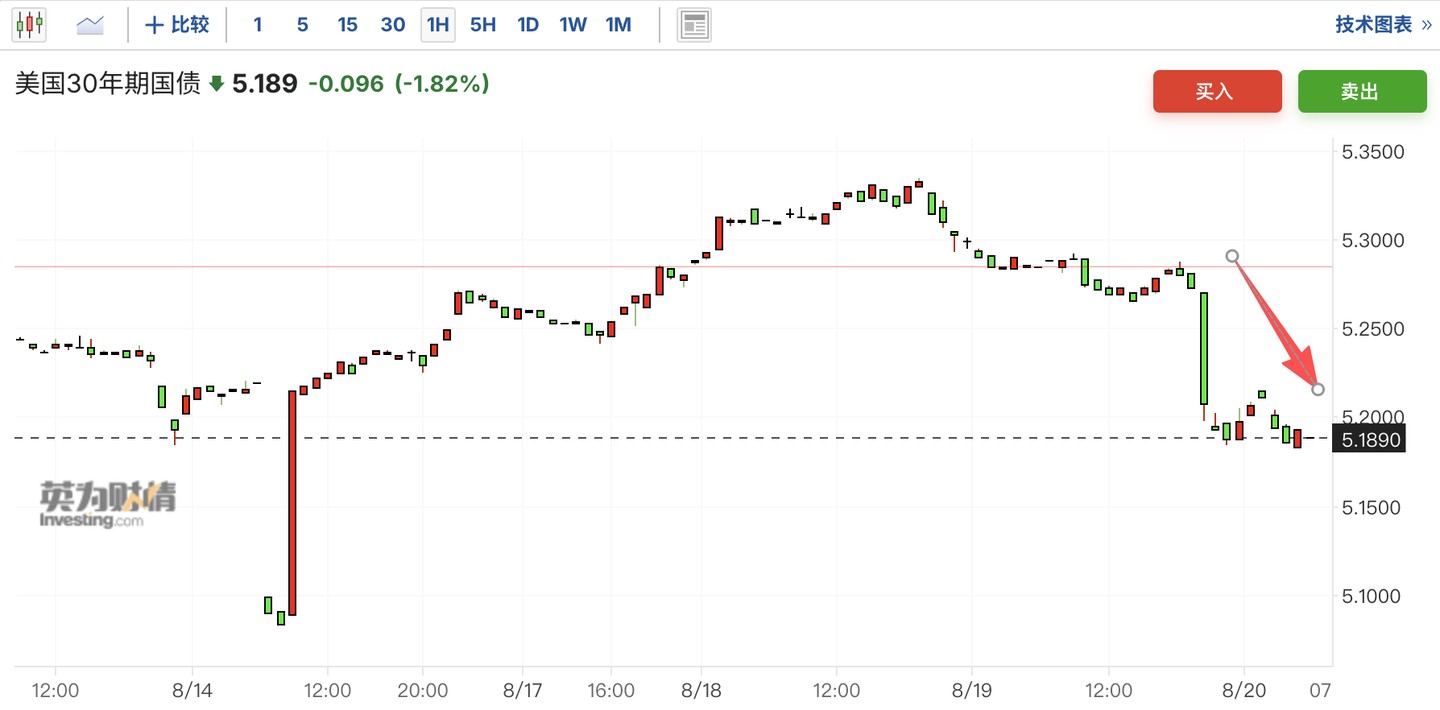
On Wednesday, the Treasury announced it would double the cap on liquidity buybacks for 10- to 30-year Treasury bonds, raising the single transaction size to at least $4 billion. Following the news, the 10-Year Treasury Yield fell by 6 basis points, while the 30-year yield dropped about 10 basis points during the session—the latter had just touched its highest level in 19 years.
Multiple analysts pointed out that the timing of this announcement itself sends a strong signal: officials are uneasy about the current situation.
However, the market remains generally cautious about the substantive impact of this operation. Several analysts emphasized that the buyback does not change fundamentals such as the fiscal deficit and supply pressure. Meanwhile, some views suggest that this move could make Federal Reserve Chair Walsh's task of bringing inflation back to the 2% target more complex.
Why is the announcement to expand the Treasury buyback program significant?
The U.S. government has been buying back old, so-called "off-the-run" U.S. Treasuries for nearly two years, a practice that previously did not cause much stir. But this time, the situation is clearly different.
From a technical perspective, the Treasury's bond buybacks aim to provide "liquidity support"—their purpose is not to lower the yields of the latest benchmark Treasuries, but to prevent the yields of less actively traded older bonds from rising too quickly solely due to poor liquidity.
The 30-year U.S. Treasury yield had just touched its highest level in 19 years when the Treasury announced on Wednesday that it would further expand the scale of long-term Treasury buybacks.
John Briggs, Head of U.S. Rates Strategy at Natixis Corporate & Investment Banking, stated that if the Treasury had announced the same plan in its routine quarterly refinancing announcement, the market reaction might not have been so strong.
But he added that the choice of timing now indicates that officials "did not like what was happening at the time."
"Now you have to worry about whether the Treasury might take further measures at some point to curb rising yields."
If Short-Term Debt Issuance Replaces Long-Term Debt, It Resembles a Treasury Version of 'Operation Twist' (QT)
The Treasury did not specify on Wednesday how it would fund these bond buybacks. Market participants expect that the U.S. Treasury will finance the buyback operations by issuing more short-term bonds. If Treasury officials are effectively replacing long-term debt with increased short-term Treasury issuance, then the latest move announced on Wednesday is equivalent to a Treasury version of 'Operation Twist' (QT).
James Knightley, Chief International Economist at ING, stated, "We may see more short-end issuance for liquidity purposes." Another analyst, Murray, also pointed out, "Given the volume of issuance needed to finance the deficit, this means there will be more issuance at the short end of the yield curve."
Peter Boockvar, Chief Investment Officer at One Point BFG Wealth Partners, also bluntly stated, "This is not debt repayment, just a rearrangement of the Treasury maturity schedule."
Deutsche Bank strategist George Saravelos wrote in a report: "QT is here." He described this practice as a form of "mild financial repression."
Evercore economists Krishna Guha and Marco Casiraghi described the Treasury's action as a "very small-scale QT" and warned that if limited policy firepower fails to produce sustained effects, it could ultimately even be counterproductive. They also pointed out: "This operation hardly changes any fundamentals."
Another 'Trump Put'
CNBC host Jim Cramer stated that the U.S. Treasury's expansion of bond buybacks may help alleviate market pressure in the short term, but this unusual intervention also highlights the pressure the U.S. government bond market is under.
Cramer said, "I think people really want this rally (in stocks) to continue, and some might say they are achieving this goal in the worst possible way."
"This is a put option, obviously a put," Cramer said. In the past, Cramer and others have referred to the Trump administration's tendency to introduce market-friendly policies as the "Trump Put."
Cramer believes there are multiple reasons for the surge in long-term U.S. Treasury yields, including investors demanding higher risk premiums for holding long-term government debt, changes in the structure of U.S. Treasury investors, and large-scale corporate debt issuance driven by AI infrastructure construction.
Cramer remains overall cautious. He pointed out that while the Treasury's purchase of Treasuries can alleviate upward pressure on yields, it cannot eliminate the inflation concerns that initially drove yields higher—especially the inflation risks brought by rising oil prices due to a potential war in Iran.
Intervention May Complicate the Fed's Inflation Control Efforts
This operation has also raised concerns among some economists regarding inflation control.
Joe Brusuelas, Chief Economist at RSM, stated that attempts to control yields could make the Federal Reserve's task of restoring inflation to the 2% target more complex. Citing Federal Reserve Chair Walsh's stance, he noted that Walsh prefers letting the market determine interest rates, and such moves by the Treasury could artificially suppress yields, making inflation control more difficult.
Brusuelas wrote in a report that Treasury Secretary Bessent "is a political figure whose interests are purely short-term, centered around the upcoming election, rather than restoring price stability."
Signal Value Outweighs Substantive Impact
Many market participants remain cautious about the substantive impact of this buyback.
Krishna Guha, Global Head of Policy and Central Bank Strategy at Evercore ISI, stated in a client report that the upgraded operation "can help attract potential buyers who were previously attracted by rising yields, prompt short-covering by short-term shorts, and prevent investors from overly shorting due to fears of another surprise attack." But he added, "The operation itself will hardly change fundamentals, particularly as the financing needs for massive AI infrastructure debt and huge government deficits remain unchanged."
Jack McIntyre, Portfolio Manager at Brandywine Global Investment Management, admitted that global long-end market sentiment is "the most pessimistic I have seen in a long time," and pointed out that "what can truly lower long-term rates is an economic slowdown or a resolution to the Iran conflict, and I am not sure we have reached that stage yet."
As the scale of buyback operations continues to expand, especially with continued intervention in long-end bonds, the market has begun discussing whether this constitutes some form of 'Fiscal Yield Curve Control (YCC).'
Economist Mohamed El-Erian stated on platform X that the planned purchases are "small in absolute terms and relative to net issuance," and are more part of a "broader deployment of 'Yield Curve Control.'"
This buyback signals the Treasury's dissatisfaction with the current situation, triggering short-covering.
John Briggs, Head of U.S. Rates Strategy at Natixis Corporate & Investment Banking, pointed out that if the Treasury had released the same plan in a regular quarterly refinancing announcement, the market reaction might have been far less intense. He stated that this timing implies officials "do not like the current situation," and warned that "now you must worry about the Treasury potentially taking further actions in the future to curb rising yields."
Macro strategist Cameron Crise characterized this action as "a clear signal that the Treasury is paying attention to the market and is concerned about long-end yields," but also pointed out that "the incremental scale itself cannot reverse the trend of selling in the long end, but the signal may be enough to prompt further short-covering."