
 I'm LongbridgeAI, I can summarize articles.
UPS completed its strategic reduction of Amazon packages, eliminating 2 million daily shipments to improve profitability. Consequently, Amazon has absorbed this volume, becoming the largest U.S. parcel carrier by volume in 2025. While UPS benefited from higher margins and revenue growth, Amazon faces rising costs, with shipping expenses increasing 19% to $27.9 billion in Q2. This shift underscores Amazon's strategy of controlling delivery networks to ensure speed, despite the financial burden outpacing online sales growth.
UPS (UPS -0.56%) spent 18 months deliberately shrinking its relationship with its biggest customer, and on July 28 it declared the job finished. In the earnings release, CEO Carol Tomé thanked employees for having "successfully completed our Amazon glide down and related network reconfiguration initiatives as designed."
The scale of what ended is massive. On the earnings call, Tomé said UPS had eliminated about 2 million pieces per day of what she called lower-quality Amazon (AMZN -0.57%) volume, removing roughly $4.5 billion of related expenses along the way.
For Amazon shareholders, the story runs the other way. Two million packages a day stopped moving through UPS trucks. Who's moving them now, and at what cost?
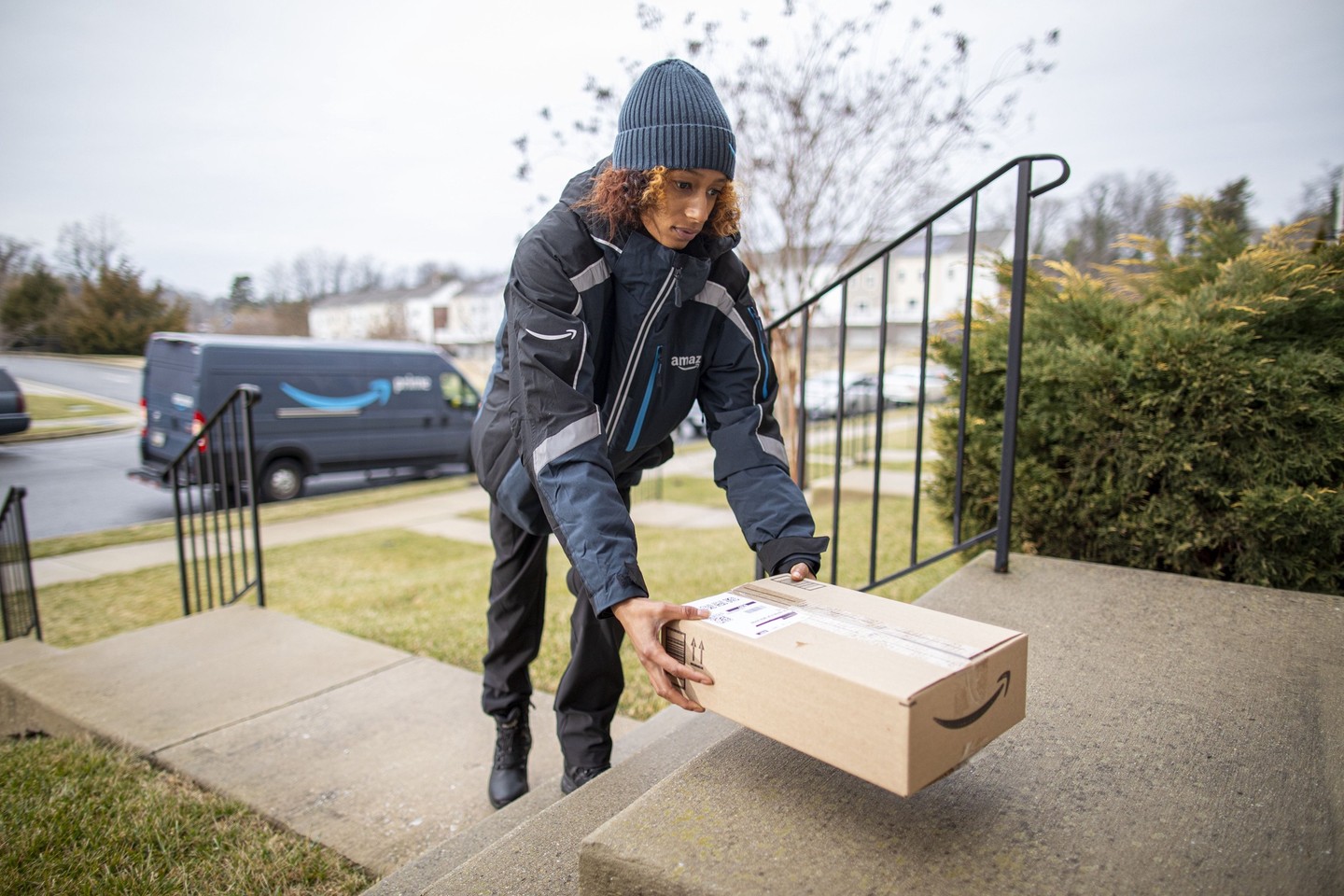
Image source: Amazon.
UPS got what it wanted
The carrier's results say a lot about the volume it gave up. UPS's second-quarter U.S. domestic revenue rose 6% year over year on a 9.3% increase in revenue per piece -- more money on fewer packages. The segment's non-GAAP (adjusted) operating margin expanded to 8%, up a full percentage point from a year earlier. And the company raised its full-year revenue outlook to about $91.2 billion.
And Tomé told analysts that excluding Amazon and the volume UPS intentionally handed to the market, its volume grew in the second quarter.
Put another way, the packages UPS shed were the ones diluting its profitability. Residential e-commerce delivery is expensive relative to what shippers pay, and UPS's margin went up as less of it flowed through the network.

NYSE: UPS
Key Data Points
The biggest parcel carrier is the shipper
Most of that volume appears to have gone to Amazon itself. According to logistics data firm ShipMatrix, Amazon's delivery arm handled an estimated 6.7 billion U.S. parcels in 2025. The U.S. Postal Service handled 6.6 billion, UPS came in at 4.4 billion, and FedEx delivered 3.6 billion. That made Amazon the country's largest parcel carrier by volume.
The growth rates were just as lopsided. Amazon's volumes rose nearly 10% in 2025, while UPS and the Postal Service each shrank 8.6%, ShipMatrix found. FedEx was the only one of the three traditional carriers whose volume grew.
To be fair, Amazon hasn't said precisely how much of the departed UPS volume it absorbed itself. The company still hands packages to the Postal Service and other carriers for portions of the last mile, so some of the load simply moved between carriers.
But Amazon's own delivery network is already expanding fast. The company is spending more than $4 billion to triple its rural delivery footprint by the end of this year, growing that network to over 200 delivery stations reaching more than 13,000 ZIP codes -- capacity it says will handle over a billion additional packages a year. The rural build is one slice of the capital expenditures Amazon keeps pouring into its delivery network.
The contrast with the carriers is sharp. FedEx and UPS charged remote-delivery surcharges of about $15.50 and $15.35 per package last year, and Amazon is building density in the kinds of places its rivals charge extra to visit.
A $27.9 billion quarterly shipping bill
That capacity isn't free, and Amazon's income statement shows where the cost lands. The company's worldwide shipping costs hit $27.9 billion in the second quarter, up 19% from $23.4 billion a year earlier. Across the first six months of 2026, shipping costs rose 17% to $53.6 billion, so the bill is growing faster as the year goes on.

NASDAQ: AMZN
Key Data Points
Compare that to what the shipping supports. Amazon's online-store sales grew 15% year over year in the second quarter, so the delivery bill is outpacing the revenue it serves.
Why carry the load anyway? Because for Amazon, delivery is part of the product. The company's own filings credit its sales growth partly to its "fast shipping offers," and speed is easier to guarantee on a network Amazon controls than on one it rents.
That, I think, is the right way to read the 2 million daily packages. Volume that was a margin problem for a carrier is, for Amazon, the cost of owning its promise to customers.
The trade-off is right there in the numbers: shipping costs rising 19% against 15% online-store growth. UPS is done with the volume. The cost of carrying it sits on Amazon's own network now, and it likely will for a long time.