
Momenta "hard charge" IPO
 I'm LongbridgeAI, I can summarize articles.
On July 8, 2026, Momenta was listed on the Hong Kong Stock Exchange at an issuance price of HKD 295.6, with the code. The IPO received over HKD 100 billion in institutional orders, and the public offering was oversubscribed 414 times. Momenta holds a 65% market share in China's NOA market, with revenue tripling over three years to HKD 2.413 billion and a gross margin rising to 71.6%. The revenue structure has been optimized, with licensing services accounting for 40.1%. 14 cornerstone investors, including GIC and Fidelity, participated in the subscription
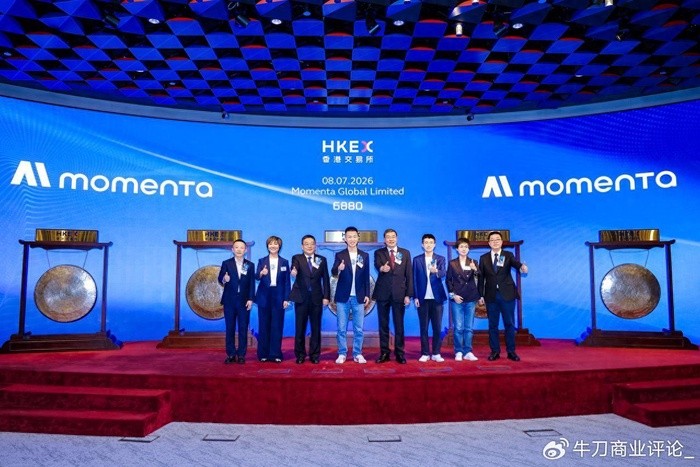
On July 8, 2026, Momenta officially listed on the Hong Kong Stock Exchange, stock code 6880.HK.
The issue price was HKD 295.6, with no price range set, directly locked in.
In the world of Hong Kong IPOs, this can only be explained by one thing: the feedback during the institutional roadshow was enthusiastic enough that there was no need to discount to test the market bottom line.
It opened at HKD 301, up 1.83%, and at one point surged to HKD 314.8 during the day, with an increase of over 6%, pushing the total market value beyond HKD 70 billion. It ultimately closed flat at HKD 295.6.
The public offering portion was oversubscribed by 414 times; the international offering portion received over HKD 100 billion in institutional orders, covering sovereign and long-term funds from 15 countries and regions, with an oversubscription of about 44 times.
01
What makes Momenta so strong?
First, let's look at the fundamentals.
In the past 12 months, Momenta's market share in the Chinese third-party city NOA supplier market reached 65%. Nine of the top ten global automakers are its clients. The scale of its mass production business has surpassed 1 million units.
Now, let's look at the fundamentals.
From 2023 to 2025, revenue is expected to grow from HKD 743 million to HKD 2.413 billion, tripling over three years, with an average annual compound growth rate of over 80%. Gross margin soared from 17.5% to 71.6%.
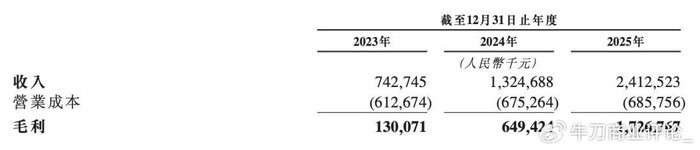

(Source: Momenta prospectus)
Adjusted losses narrowed from HKD 1.093 billion to HKD 303 million.
The most impressive change is in the revenue structure.
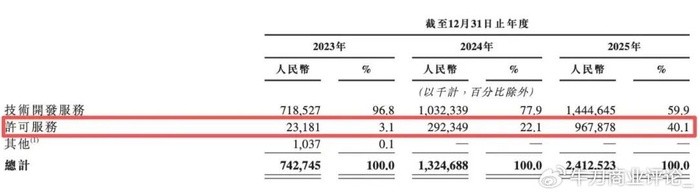
In 2023, 96.8% of revenue came from technology development services, earning money per project for automakers, which is essentially an engineer's hourly business.
By 2025, licensing service revenue is expected to account for 40.1%, charging licensing fees based on the sales volume of vehicles equipped with its solutions, with marginal costs nearly zero.
(Source: Momenta prospectus)
From "brick moving" to "rent collection," in three years, licensing revenue increased from 23 million to 968 million, a 42-fold increase.
What the capital market is buying is this "rent collection" script.
02
But what Momenta has obtained is not just a script, but a cast full of stars.
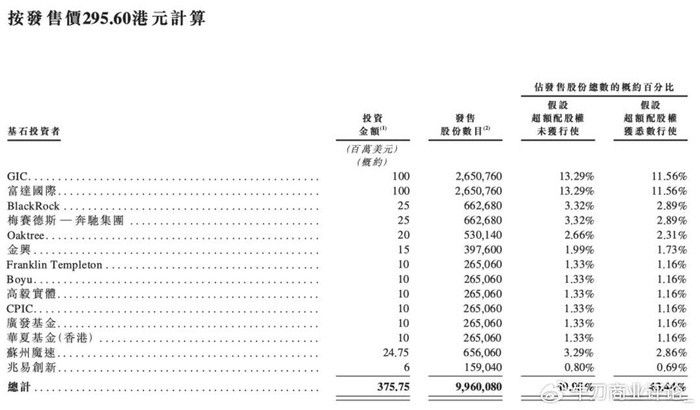
14 cornerstone investors subscribed for approximately HKD 3 billion, accounting for nearly half of the issuance scale. GIC and Fidelity International each led with USD 100 million, BlackRock with USD 25 million, and Oak Tree Capital with USD 20 million.
Industry players Mercedes-Benz and BYD invested USD 25 million and USD 15 million, respectively. On the Chinese side, Gao Yi, Boyu, Huaxia Fund, GF Fund, and Pacific Insurance each invested USD 10 million.
(Source: Momenta prospectus)
GIC is a sovereign wealth fund from Singapore, known for its long-term investment cycles; Fidelity and BlackRock are among the world's leading long-term funds; Mercedes-Benz and BYD are both customers and shareholders.
The signals released by this combination are very clear: some see long-term value, some see industrial synergy, and some see strategic positioning.
At an issuance price of HKD 295.6, Momenta's market capitalization upon listing reached HKD 69.6 billion, approximately USD 8.88 billion, an increase of about 43.6% compared to the valuation from the last round of financing over six months ago.
Early investors have already made over 80 times their investment—cost per share in the A round in 2016 was USD 0.45, now it has increased 84 times.
After ten years of honing a sword, Momenta's early shareholders have finally waited for the harvest season.
03
Cao Xudong said something interesting at the listing ceremony: "Before the listing, the company had about 10 billion in cash, and this IPO added several billion more, bringing the total to nearly 20 billion in cash."
Why does a company that doesn't lack money want to go public?
Cao Xudong's answer is: brand and trust. "Today’s listing coincides with a key milestone of our 1 million users, and more and more customers are willing to work with us to build the intelligent driving brand, further strengthening consumer recognition and trust in Momenta." Translate into plain language: It's not a lack of money, but rather the endorsement of being a "public company." In the autonomous driving industry, customers look at suppliers not only for technology but also for "how long you can survive." Going public itself is a long-term ticket to success.
He also provided a profit timeline:
This year, losses will further narrow, next year will achieve a break-even point, and the year after will achieve profitability.
At the same time, he threw out a judgment of a "Moore's Law for autonomous driving," stating that the product performance of leading companies will "improve tenfold every year," and it is expected that by 2028, the penetration rate of autonomous driving will reach 50% to 60%.
If this judgment holds, Momenta's current 65% market share is just the entrance to a gold mine.
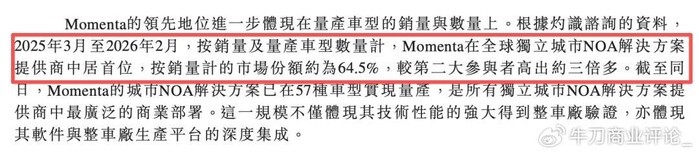
(Source: Momenta prospectus)
04
However, in the story of "hard charging" for an IPO, there is never just applause.
The net loss on the books remains eye-catching. From 2023 to 2025, the net losses are projected to be 2.57 billion, 3.21 billion, and 3.46 billion yuan respectively.
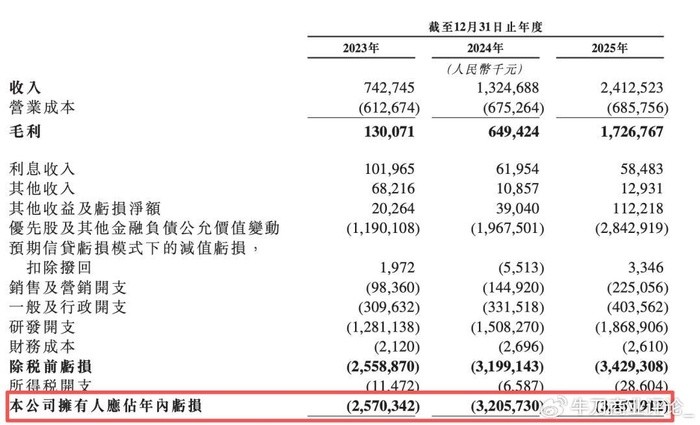
(Source: Momenta prospectus)
Although the adjusted losses have narrowed significantly, the words "net loss" on the financial statements are like bullets handed to short sellers.
Customer concentration is also a hidden concern.
Although the revenue share of the top five customers has decreased from 86.7% to 62.6%, BYD has become one of the largest customers.
The "customers are also shareholders" structure is a short-term moat, but a double-edged sword in the long term. When technology matures to a certain extent, will car manufacturers choose to develop in-house or turn to competitors? The prospectus itself admits to a "lack of bargaining power."
In-house development by car manufacturers is the biggest long-term threat.
BYD has the "Eye of God," Geely has "Horizon Intelligent Driving," and the likes of Nio and Li Auto go without saying.
If more and more leading car manufacturers choose in-house development rather than outsourcing, the market space for third-party suppliers will be compressed.
There is also the cautionary tale of MiniMax, which fell 66% from its peak after going public. Momenta's first day closed flat, unlike MiniMax, which surged 109%.
The market is voting with its feet: the story sounds good, but the accounts need to be clear.
Conclusion
Momenta does not lack money for its IPO, but it needs the endorsement of being a public company No price range is set, as institutional orders have already provided the answer.
14 top cornerstone investors have locked in nearly half, with international offerings oversubscribed by more than 44 times, a result of ten years of technological accumulation.
From "flipping bricks" to "collecting rent," from a gross margin of 17.5% to 71.6%, from a loss of 1 billion to a loss of 300 million, the data is improving, and the direction is correct.
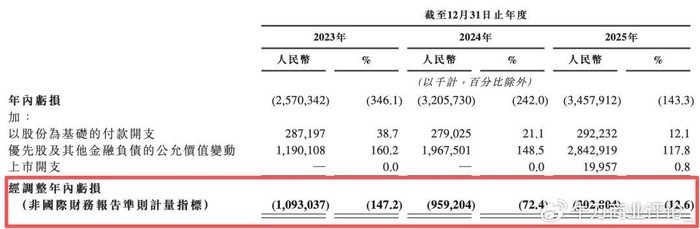
(Source: Momenta prospectus)
However, the endgame of the intelligent driving industry is far from over. The threats from self-developed technologies by car manufacturers, the pressure of price wars, and the iteration of technological routes are all variables.
Cao Xudong said profitability will come in two years; whether the market believes it depends on tomorrow's stock price.
"Hard charging" into the IPO is just the beginning; whether it can "stand firm" is the real test