

Henan University’s latest paper in Nature Catalysis optimizes the extraction process of "liquid gold"
 I'm LongbridgeAI, I can summarize articles.
A research team from Henan University published a new study in Nature Catalysis, proposing a method to extract percarbamide from urine through electrochemical reactions. This method can effectively purify urban wastewater without complex purification steps, featuring high cost-effectiveness and good environmental value. The research indicates that producing one ton of percarbamide daily requires only 100 square meters of land and urine from 6,382 households or 3,800 dairy cows, demonstrating the feasibility and potential scalability of the method
Researchers from Henan University, Shi Xinjian, Lü Peng, and Zheng Xiaolin from Stanford University published a research paper titled: In situ electrochemical production of solid peroxide from urine in the journal Nature Catalysis.
The study reports a mechanism that can purify urban wastewater and extract a useful substance from urine, which may be used for crop fertilization and other purposes. The research proposes a novel method with expansion potential that is cost-effective and suitable for large-scale wastewater treatment, with good economic and environmental value.
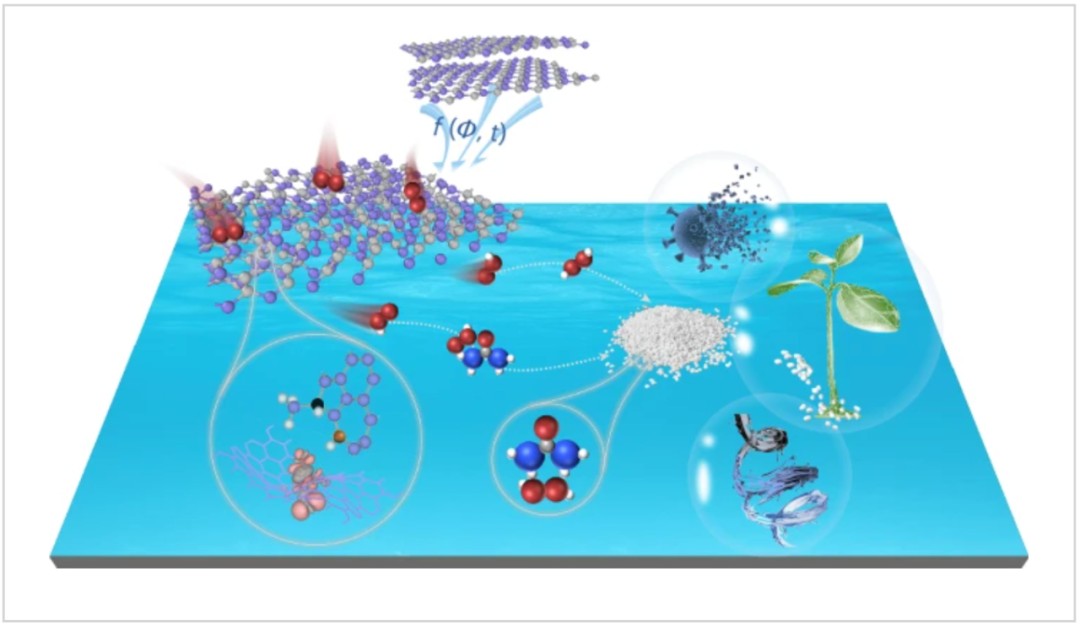
In this latest study, the research team utilized electrochemical reactions to remove urea from wastewater and converted nearly 100% of the urea into pure percarbamide—a useful solid derivative of urea—without the need for complex purification steps.
The collected percarbamide may have various uses, including environmental water treatment, disinfection, and promoting crop growth. This reaction employs a carbon-based electrode as a catalyst, combined with atmospheric oxygen, to produce percarbamide at lower temperatures and pressures than traditional reactions. This system has been found to be applicable to both human and animal urine, being cheaper than other methods and capable of producing purer and more valuable final products.
After an economic analysis, Shi Xinjian and others calculated that producing one ton of percarbamide daily requires only 100 square meters of land and urine from 6,382 households or 3,800 dairy cows, indicating the high feasibility of this method.
The results of this study lay the foundation for future research on the efficiency and scalability of this process. Further upgrades may achieve more sustainable urban wastewater management practices and innovative uses for the newly obtained substances