

Chain pharmacies are sick
 I'm LongbridgeAI, I can summarize articles.
The Chinese chain pharmacy industry is facing structural overcapacity, with nearly 40,000 stores expected to close in 2024 and overall performance declining. Adjustments to medical insurance policies and intensified competition from e-commerce have led to a decrease in offline foot traffic and rising operating costs. Major chain pharmacies such as Guoda Pharmacy and SYPM have seen significant declines in performance, with Guoda Pharmacy's operating revenue at 22.357 billion yuan, a year-on-year decrease of 8.41%, and a net profit loss of 1.027 billion yuan. SYPM's operating revenue was 9.570 billion yuan, a year-on-year increase of 4.11%, but with a net profit loss of 189 million yuan
After years of "indulgence," China's chain pharmacies have finally shown symptoms of "overindulgence" and are collectively unwell.
The once vigorous and rapid growth has come to an end, with industry-wide performance declines, halving of revenues, and even losses becoming the norm.
In 2024, when the number of pharmacies in China exceeds 700,000, structural oversupply has reached an unprecedented level. Throughout the year, nearly 40,000 stores closed, just the beginning. In the next two years, the closure of pharmacies will intensify, and the cyclical pain is unavoidable.
How to resolve the crisis? The remedy must be sought individually.
Collective "Illness"
What type of business is most densely packed around residential communities in various cities? Pharmacies are certainly one of them.
Ten years ago, opening a pharmacy was almost guaranteed to be profitable; today, this "easy money" business is a thing of the past.
In 2024, adjustments to the medical insurance pooling and personal account policies will change customers' purchasing channels and product choices, leading to a significant decline in foot traffic at offline pharmacies; coupled with the continuous refinement of regulatory rules, companies are increasing their resource investments in compliance areas such as medical insurance compliance and drug traceability, which will raise operational costs in the short term; at the same time, intensified competition in the pharmaceutical retail industry and the online diversion effect of pharmaceutical e-commerce have caused the pharmaceutical distribution industry to enter an adjustment phase.
According to Zhongkang CMH data, in 2024, the cumulative sales scale of the national retail pharmacy market reached 528.2 billion yuan, a year-on-year decline of 2.2%.
The industry's adjustment is clearly reflected in the performance of major chain pharmacy listed companies in the A-share market. After years of rapid growth, they collectively hit the brakes in 2024, with significant declines in performance and even losses becoming the main theme.
Guoda Pharmacy, the retail segment under the "national brand" China National Pharmaceutical Group, was once a member of the "10,000-store club."
In 2024, affected by store closures and asset impairments, Guoda Pharmacy achieved operating revenue of 22.357 billion yuan, a year-on-year decline of 8.41%; net profit attributable to the parent company was -1.027 billion yuan, a year-on-year decrease of 388.83%.
On the road to achieving 10 billion and 10,000 stores, SYPM suddenly stumbled. In 2024, the company achieved operating revenue of 9.570 billion yuan, a year-on-year increase of 4.11%, but various rigid expenses could not be effectively controlled in the short term, resulting in a net profit loss of 189 million yuan for the year. This is also the first loss for the company since it began publicly disclosing performance in 2013.
Dazhong Pharmacy (603233.SH) is the "king of stores" among chain pharmacies, with 16,553 stores by the end of 2024, ranking first in the industry. Despite having an absolute scale advantage, the company still cannot escape the fate of increasing revenue without increasing profits. For the year, operating revenue grew by 8.01% year-on-year to 26.50 billion yuan, while net profit attributable to the parent company and net profit after deducting non-recurring gains and losses both fell by over 20%.
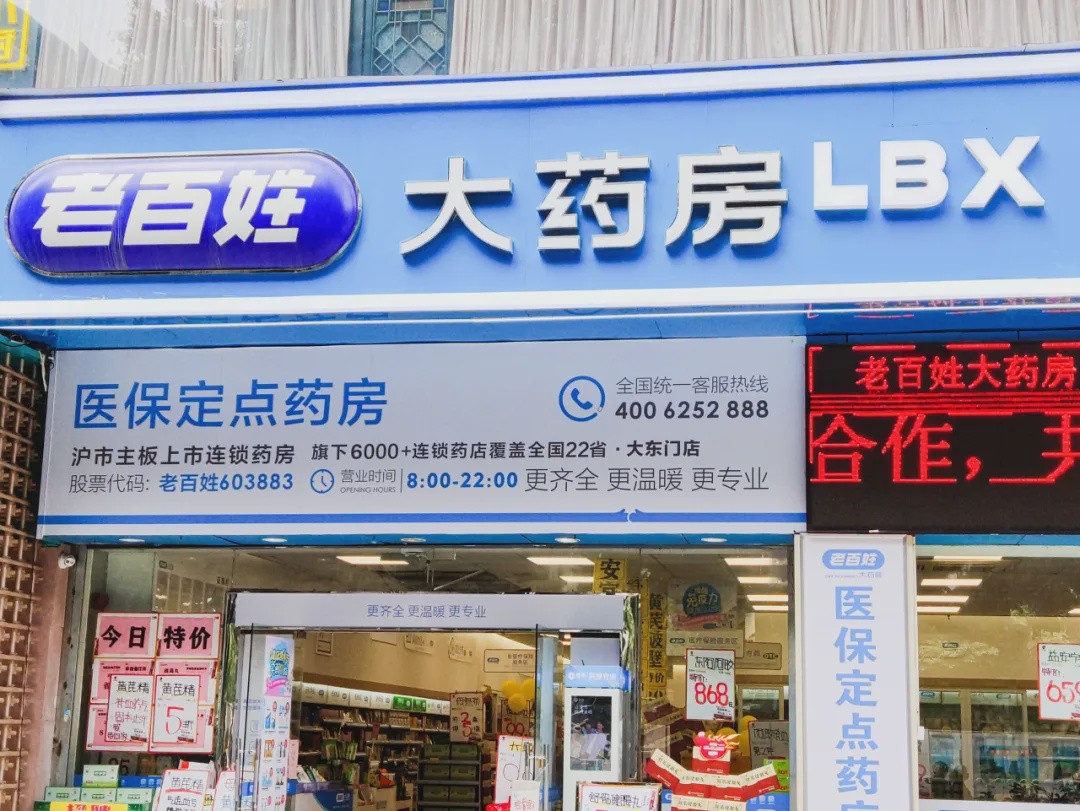
Lao Baixing (603883.SH) is even less optimistic. In 2024, the company added a net of 1,703 stores, reaching 15,277 stores, but its annual operating revenue decreased by 0.36%, and net profit attributable to the parent company was 519 million yuan, a year-on-year drop of 44.13%, instantly returning to levels seen five years ago
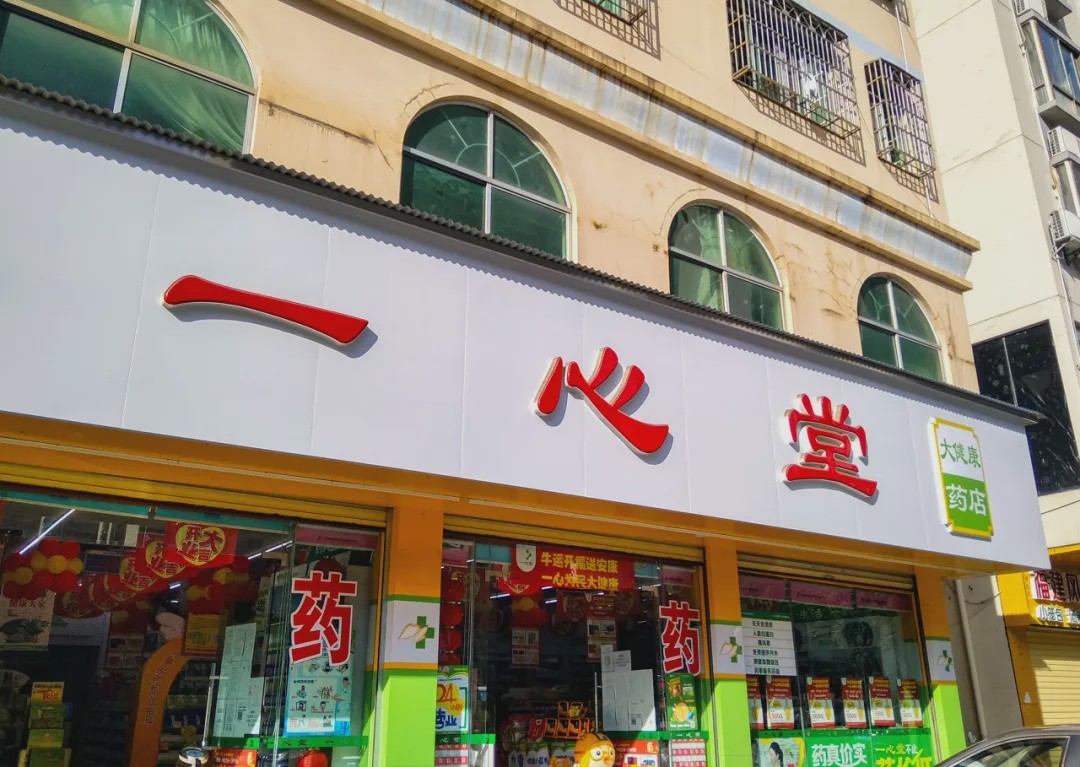
Both Yixin Tang and Jianzhijia (605266.SH), headquartered in Kunming, Yunnan, mainly adopt a direct sales model. Although there is a certain gap in scale, they showed the same trend in 2024, with a slight increase in operating income and a significant decrease in net profit attributable to the parent company of 79.23% and 69.08%, respectively.
Among the listed chain pharmacy companies, only Yifeng Pharmacy (603939.SH) maintained steady growth in 2024. This is mainly due to the company's strong promotion of cost reduction and efficiency improvement measures.
Aftermath of Mergers and Acquisitions
The rise of the chain pharmacy industry in China is essentially a history of mergers and acquisitions.
Most people may not be aware that the first company known as the "King of Chain Pharmacies" in China is Haiwangxingchen. As early as 2007, the company opened over 2,000 pharmacies in more than 60 cities nationwide, making it the absolute industry leader. That same year, the company successfully listed on the US stock market.
How Haiwangxingchen fell from its throne is another story. The outcome was that in 2016, the company went private and delisted from the US stock market.
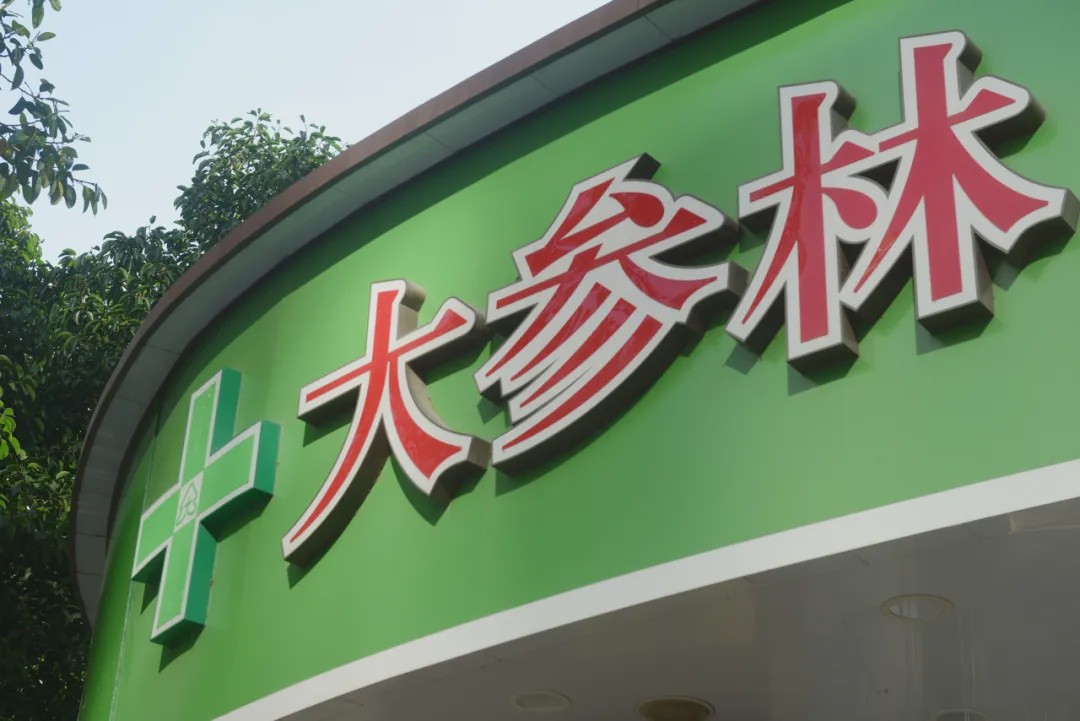
At the same time that Haiwangxingchen ended its capital journey, the A-share market welcomed a wave of capitalization for chain pharmacies. Yixin Tang, Yifeng Pharmacy, Laobaixing, Dacilin, and others successfully listed on the Shanghai and Shenzhen stock exchanges, completing the gathering of China's leading chain pharmacy companies in the capital market.
The impulse for growth, fueled by capital and rapid market demand, jointly drove a multi-year expansion wave of chain pharmacies.
At that time, high-quality regional chain pharmacies across the country were basically acquired by listed companies in the industry. In a short period, the prices of chain pharmacy targets soared.
Under the dual drive of self-built and mergers and acquisitions, the "store opening competition" officially entered the "ten thousand store era" in 2022. By the end of that year, Laobaixing, Yifeng Pharmacy, and Dacilin collectively surpassed 10,000 stores, while the fully direct-operated Yixin Tang was just one step away from reaching that milestone.
It is difficult to accurately calculate how much money chain pharmacy listed companies spent in the merger and acquisition market over the years. According to preliminary media statistics, Yifeng Pharmacy alone completed over 100 mergers and acquisitions from 2015 to 2023, investing more than 5 billion yuan.
Indeed, external mergers and acquisitions have rapidly propelled the scale and performance of leading companies over the years, but they have also laid the groundwork for the current structural surplus.
In just ten years, the number of offline pharmacies in China surged from 400,000 to 700,000, with insufficient population coverage per store and declining operational efficiency becoming inevitable

Finding the Antidote
Store closures are the result of market adjustments.
There is a staggering set of numbers; according to data from Minet, a total of 39,000 pharmacies will close in 2024, with a closure rate as high as 5.7%.
Guoda Pharmacy has clearly felt the pressure from the market. In 2024, it adjusted its strategic direction from "scale growth" to "high-quality development" and established a loss management team. Throughout the year, it strategically exited and closed more than 1,270 directly operated stores and 389 franchise stores, reducing the total number of stores to 9,569, temporarily leaving the "10,000-store club."
If the leading enterprises are facing such challenges, the survival status of small and medium-sized chain pharmacies can be imagined.
Although the growth of stores remains mainstream among listed chain pharmacies, the speed has clearly slowed down, and the intensity of closures and adjustments has increased. At this time, they are paying more attention to quality rather than quantity.
The industry expects that in the next two years, more pharmacies will be cleared out, with the number of closures in 2025 possibly reaching 50,000 to 100,000. Experts predict that when the total number of pharmacies nationwide drops to around 400,000, supply and demand will achieve balance.
This means that the chain pharmacy industry will still undergo a prolonged period of cyclical adjustment. How to survive this painful period? Each enterprise is trying various methods to find a way out.
In terms of business, laying out new retail, accommodating prescription outflow, setting up hospital-side stores, DTP pharmacies, chronic disease stores, etc., are actions almost all enterprises are taking. When specialties become routine, a new wave of homogenized competition will begin.
Diversification is the transformation path chosen by many chain pharmacy enterprises.
"Yunnan Medicine King" Yixin Tang (002727.SZ) is one of the earlier chain pharmacy enterprises to explore diversification. Its pharmacies in Yunnan Province offer a wide range of products, not only medicines and health products but also skincare products, cosmetics, personal care and household cleaning products, as well as milk and snacks. Even while purchasing medicine, customers can conveniently buy lottery tickets.
In 2024, the company's sales of general health products increased by 29.3% year-on-year, with functional foods growing by 120% and personal care products growing by 28.7%, becoming an important driving force for sustainable development.
Yixin Tang has made it clear that it will enhance its non-pharmaceutical business, reducing reliance on medical insurance payments and pharmaceutical sales in the future, aiming to lower the proportion of medical insurance sales from the current approximately 30% to below 25%. The short-term goal is to reduce the proportion of pharmaceutical sales to around 60%, with a long-term goal of around 50%, vigorously developing non-pharmaceutical general health products. This year, it will transform more than 500 third-generation stores in the Yunnan region, with the proportion of non-pharmaceutical products in pilot stores increasing from 15% to around 40%.
 The general public has focused on the non-pharmaceutical emphasis on its own brand "Lao Bai Xing You Xuan." From January to September 2024, the company's self-owned brand self-operated store sales reached 2.53 billion yuan, accounting for 21.9% of sales, an increase of approximately 2.4 percentage points year-on-year.
SYPM (301017.SZ) has piloted the introduction of high-frequency convenience items such as dairy products and peanut oil in 2024. Meanwhile, the "Da Shu SYPM" pharmacy, a joint venture with Da Shu and Wang Wang, is about to be launched, focusing on differentiated products such as personal care and imported medicines.
In the future, the pharmacies around you will no longer be just pharmacies, but convenience stores with a pharmaceutical specialty. At that time, its competitors will no longer be the neighboring pharmacies, but all convenience stores and beauty stores.
This article is reproduced from Zebra Consumption (ID: banmaxiaofei), with authorization, and the copyright belongs to Zebra Consumption. Unauthorized translation or reproduction is prohibited.
The "2024 China New Consumer Brand Growth White Paper" is based on research from over 8,000 consumers, insights from more than 100 experts, and in-depth analysis of over 3,000 companies, decoding the essence of the market from eight dimensions and anchoring future trends from six perspectives. This 200,000-word professional report will serve as a "barometer" for the iteration of the consumer industry and a strategic guide for companies to break through existing constraints and reshape growth momentum.
Click here or the image below to purchase, with free shipping to your home!