

China asks banks to pause new loans to US-sanctioned refiners
 I'm LongbridgeAI, I can summarize articles.
China's financial regulator has advised major banks to pause new loans to five refineries sanctioned by the US for their connections to Iranian oil. The National Financial Regulatory Administration (NFRA) has instructed banks to assess their exposure to these firms, including Hengli Petrochemical, while not calling in existing loans. This directive contrasts with a recent notice from China's Ministry of Commerce, which told companies to ignore US sanctions. The situation reflects China's attempt to balance defiance against US policies while protecting its state-owned banks from potential sanctions.
CHINA’S financial regulator advised the country’s largest lenders to temporarily suspend new loans to five refineries recently sanctioned by the US over their ties to Iranian oil, according to sources familiar with the matter.
The National Financial Regulatory Administration (NFRA) asked banks to review their exposure and business dealings with firms, including Hengli Petrochemical (Dalian) Refinery, one of China’s largest private refiners, while awaiting further guidance, the sources said, asking not to be named because the information is private. For now, banks have been guided not to extend new yuan-denominated credit, though they have also been told not to call in existing loans, the sources added.
The verbal directive, which came before China entered a long holiday weekend on May 1, contrasts with a May 2 notice from China’s Ministry of Commerce, which instructed companies to disregard US sanctions. That was the first time China had deployed a blocking measure introduced in 2021 aimed at protecting its firms from foreign laws it deemed unjustified.
The NFRA, which regulates banks and insurers, did not respond to a request for comment.
The moves highlight the balancing act Beijing faces as it tries to project defiance towards the Trump administration while shielding its largest state-owned banks from US secondary sanctions. Tensions are escalating between the superpowers just weeks before a long-awaited meeting between US President Donald Trump and his counterpart Xi Jinping in Beijing on May 14 to 15.
Washington has been ratcheting up efforts to cut off Iranian oil shipments, a vital financial lifeline for Teheran. Late last month, the Treasury Department’s Office of Foreign Assets Control blacklisted Hengli, targeting a significant and well-connected player in the country’s vast crude-processing industry.
Navigate Asia in
a new global order
Get the insights delivered to your inbox.
The US also warned banks that they are at risk of secondary sanctions if they support Chinese private refiners that buy Iranian oil.
Treasury Secretary Scott Bessent said that the US sent letters to two Chinese banks warning them of the risk of secondary sanctions if they are found to be supporting transactions tied to Iran. Bessent did not identify the banks.
Chinese banks have not publicly disclosed their exposure to Hengli, loan data compiled by Bloomberg show the nation’s top four banks – Industrial & Commercial Bank of China, Agricultural Bank of China, China Construction Bank, and Bank of China – all lent to Hengli as recently as 2018.
SEE ALSO
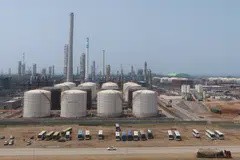
China uses anti-sanctions law to counter US blacklisting of refiners that bought Iranian crude

China’s rare defiance of US sanctions sparks showdown over banks

US warns of sanctions risks for Chinese refiners of Iranian oil
The lenders and Hengli did not respond to requests for comment.
While China has often railed against unilateral sanctions, it has in past instances also quietly allowed its largest companies to comply with them, in order to avoid blowback on its own economy. Its largest state banks have a history of complying with US sanctions against Iran, North Korea, and even top officials in Hong Kong to avoid losing access to the US dollar clearing system.
In earlier episodes, Beijing sought to shield its systemically important lenders by channelling Iran-related transactions through China National Petroleum’s subsidiary Bank of Kunlun, which is currently sanctioned. BLOOMBERG
Decoding Asia newsletter: your guide to navigating Asia in a new global order. Sign up here to get Decoding Asia newsletter. Delivered to your inbox. Free.