

Founder Securities: Current Drivers of Crude Oil Prices and Historical Trend Review
 I'm LongbridgeAI, I can summarize articles.
Founder Securities released a research report analyzing the driving factors and historical trends of current crude oil prices, pointing out that crude oil prices are influenced by supply and demand fundamentals, financial attributes, and political attributes. The United States, Russia, and Saudi Arabia form a tripartite balance in terms of supply, and short-term prices may deviate. The report mentions that future U.S. military intervention in Venezuela could make it a new oil dollar anchor point. Crude oil prices are mainly influenced by commodity attributes, financial attributes, and political attributes, emphasizing the importance of actual consumption demand
According to the Zhitong Finance APP, Founder Securities released a research report stating that crude oil, as a core commodity in the global energy system, is significantly influenced by supply and demand fundamentals. The United States, Russia, and Saudi Arabia are in a tripartite balance in terms of supply. The financial attributes of crude oil can easily lead to short-term price deviations. The petrodollar system is driven by various influences and faces decoupling risks; however, the attractiveness of dollar assets still exists, making it difficult to replace its core position in the short term. Additionally, the political attributes of crude oil reshape its supply and demand structure. The "shale revolution" and the establishment of the OPEC+ mechanism have facilitated the formation of a new tripartite oil supply system, and the interactions and conflicts in the energy game are continuously increasing. In early 2026, the United States may intervene militarily in Venezuela, and Venezuela's rich oil reserves could potentially become a new anchor point for the petrodollar in the context of U.S. intervention.
The main points of Founder Securities are as follows:
Crude Oil Prices and Influencing Factors: Three Major Attributes Affect Crude Oil Prices
Three Major Pricing Systems for Crude Oil: Three Systems Based on Different Benchmark Crude Oils
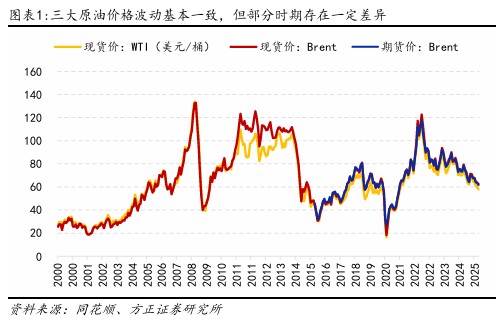
There are mainly three pricing systems in the global crude oil market, each based on different benchmark crude oils, reflecting regional supply and demand, quality differences, and market characteristics. These three benchmark crude oils are: West Texas Intermediate (WTI), Brent crude oil, and Dubai crude oil.
Factors Influencing International Crude Oil Prices: Commodity Attributes, Financial Attributes, Political Attributes
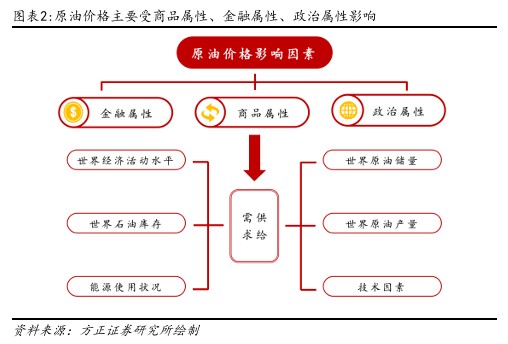
Crude oil prices are mainly influenced by commodity attributes, financial attributes, and political attributes. As one of the most important industrial raw materials, the commodity attributes of crude oil determine long-term demand trends, while financial attributes amplify price fluctuations to some extent, and political attributes introduce uncertainty into crude oil prices. Compared to gold, crude oil emphasizes actual consumption demand rather than value storage function, making its price more sensitive to changes in supply and demand fundamentals. At the same time, political attributes make the crude oil market more susceptible to policy interventions and geopolitical conflicts than gold.
Commodity Attributes: The Pricing Anchor Determining the Equilibrium Price of Crude Oil
Demand Side: Crude Oil Prices Are Influenced by Global Economic Activity Levels, Oil Inventories, and Energy Usage Conditions
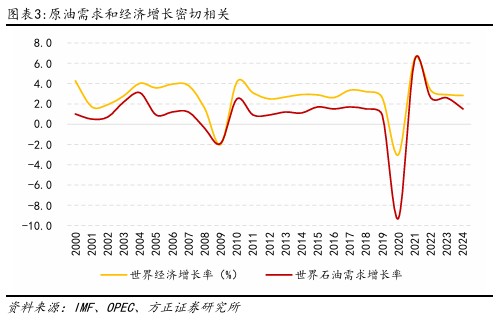
Global economic activity levels are highly positively correlated with crude oil demand, significantly impacting oil demand. As one of the most important energy commodities globally, the supply and demand relationship of crude oil is highly dependent on the macroeconomic operating conditions. In countries with high levels of industrialization and rapidly developing emerging markets, there is a strong positive correlation between crude oil consumption and economic growth
Crude Oil Inventory: Regulating Market Balance in the Supply and Demand System
Crude oil inventory plays a crucial buffering role in the global crude oil supply and demand system and is an important stabilizer for regulating market balance. As a negative feedback mechanism in the supply chain, crude oil reserves can effectively absorb shocks from sudden supply disruptions, smooth out the resulting price volatility, stabilize the crude oil market, and even impact local economic development.
Crude oil inventory is divided into strategic inventory and commercial inventory. Strategic crude oil inventory aims to respond to potential future sudden crude oil supply crises. Commercial inventory, on the other hand, is primarily reserved crude oil and refined oil to ensure economic benefits and smooth production.
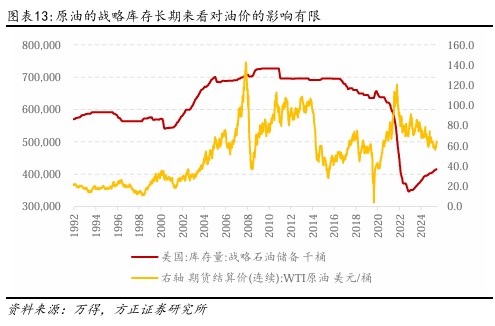
Strategic inventory, as a "national security tool," can temporarily influence the crude oil market during special periods but cannot replace market supply and demand; its long-term impact on oil prices is limited.
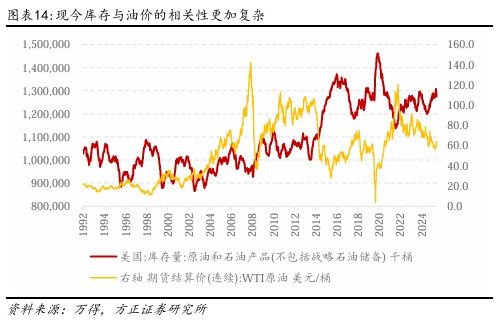
Commercial inventory, as a "price barometer," has a significant impact on oil price fluctuations, and the relationship varies at different stages. The year 2003 became a dividing point for the relationship between U.S. crude oil reserves and market supply and demand.
After 2003, the financial attributes of crude oil strengthened, with speculative expectations dominating and futures market pricing becoming predominant. U.S. commercial crude oil inventory showed a clear positive correlation with WTI oil prices, a situation that persisted until 2007.
From 2008 to the present, U.S. commercial crude oil inventory has generally maintained a negative correlation with WTI oil prices. Between 2008 and 2014, oil price volatility increased significantly, with fluctuations exceeding 300%, and uncertainty became more apparent, leading to a shift from positive to negative correlation, with periods of correlation breakdown. This was primarily due to the 2008 financial crisis, which led to capital withdrawal from the commodity market and a sharp decline in global demand, causing WTI prices to fall. Additionally, the U.S. shale oil revolution in 2014 resulted in a surge in crude oil production, which continues to pressure oil prices and impact WTI prices.
In 2016, after OPEC and non-OPEC countries reached a production cut agreement, inventories gradually began to decrease, and oil prices also moderately rebounded. At this time, the impact of inventory changes on oil prices still existed, with continued negative correlation, but volatility weakened, and the market became more sensitive to OPEC policy signals.
In 2019, as the U.S. became one of the largest crude oil producers globally, the expansion of shale oil further affected inventory levels, leading to cyclical fluctuations in inventory still exerting pressure on WTI prices, but price fluctuations became more complex In addition, the outbreak of the COVID-19 pandemic in 2020 led to a sharp decline in global demand, causing oil prices to plummet to negative values and inventories to surge, resulting in an extreme negative correlation between inventories and oil prices. Subsequently, as the global economy recovered and demand rebounded, inventory levels gradually decreased, and oil prices began to rise again. Various macroeconomic factors, such as geopolitical risks and fluctuations in the US dollar, have made the correlation between inventories and oil prices more complex, with a wider range of influencing factors.
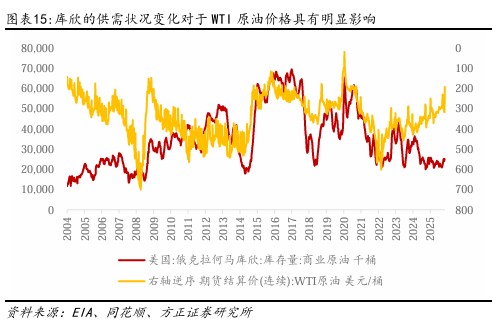
Changes in the supply and demand situation in Cushing have a significant impact on WTI crude oil prices. All WTI crude oil futures contracts traded on NYMEX must be physically delivered through Cushing. This delivery mechanism means that the inventory levels in Cushing directly affect the prices of WTI crude oil futures, which in turn influences the price trends in the global oil market. Additionally, the region also serves as a crude oil storage and transportation hub for several refineries in Oklahoma, Texas, and Kansas, making it an important oil storage and logistics center.
Supply Side: Crude oil prices are influenced by global oil reserves, crude oil production, and technical issues
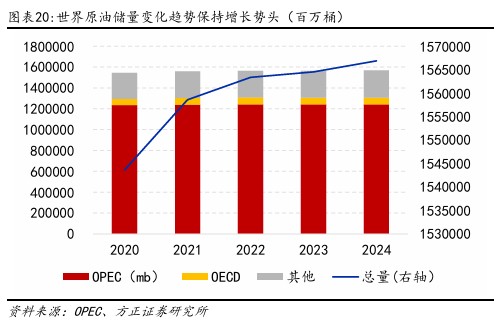
Global Oil Reserves: A Long-term Factor Affecting Oil Supply The world's oil reserves are one of the long-term factors influencing oil supply. From the perspective of resource endowment theory, oil, as a typical non-renewable resource, will theoretically decrease in reserves with continuous extraction, and this natural depletion pattern should lead to a long-term decline in oil supply capacity. However, in reality, oil reserves have continued to grow over the past few decades, as there are still many potentially oil-rich areas that have not been explored, and advancements in exploration technology can lead to increases in existing oil field reserves.
Crude Oil Production: A Triangular Balance in Oil Supply
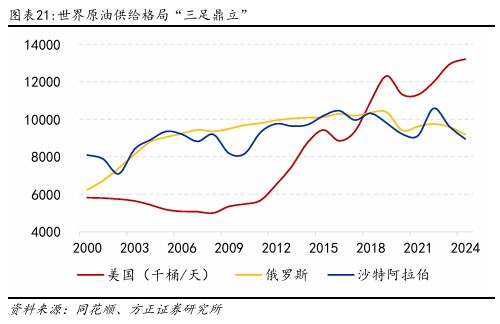
Currently, the global crude oil supply pattern is characterized by a "triangular balance." The United States is the largest crude oil producer in the world, relying on shale oil technology, with an annual production approaching 13.2 million barrels per day by 2024. Although Russia's crude oil production is affected by geopolitical factors, it still has a significant impact on the global market. Saudi Arabia, as a core member of OPEC, has a decisive influence on global oil prices due to its low-cost oil production capabilities. The production levels and adjustment strategies of these three major oil-producing countries directly affect the supply-demand balance and price fluctuations in the global oil market
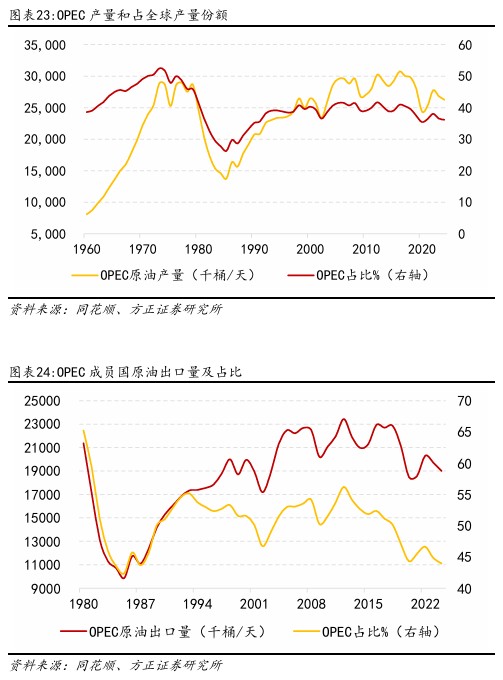
In order to combat the Western oil monopoly capital and protect the economic interests of oil-producing countries, major oil-producing countries globally, such as those in the Middle East and North Africa, jointly established OPEC (Organization of the Petroleum Exporting Countries). This organization has gradually expanded from the initial 5 founding member countries to the current 12 countries, holding a 36% share of the global oil market in 2024.
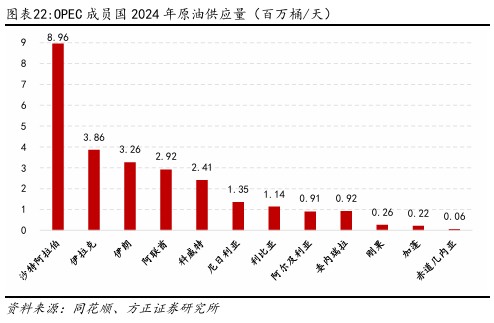
As a long-standing dominant supplier of crude oil, to some extent, the history of OPEC can be viewed as the development history of the world oil market. In the 1970s, the Organization of the Petroleum Exporting Countries (OPEC) gradually recognized the strategic value of the "oil weapon" it possessed and was the first to represent developing countries in calling for the establishment of a new international economic order. Initially, OPEC member countries not only achieved the nationalization of the oil industry but also successfully regained control over oil pricing, fundamentally changing the historical pattern of international oil prices remaining at $2 per barrel for a long time.
Subsequently, with the recovery of Russian production and the commercialization of U.S. shale oil, OPEC's market share has declined, but it still demonstrated its core role as a "supply stabilizer" by coordinating production to stabilize the market in the face of significant shocks (such as the COVID-19 pandemic).
Financial Attributes: Triggering Short-term Price Deviations
Petrodollar System: Establishment and Erosion
The U.S. dollar, as the currency for pricing international crude oil, has a far greater impact on oil prices than other currencies. The petrodollar system has solidified the dollar's status as the world's reserve currency. As a result, the U.S. can use the "right to use the dollar" as a weapon to impose economic sanctions on other countries.
Oil and the Dollar: Dynamic Bidirectional Influence
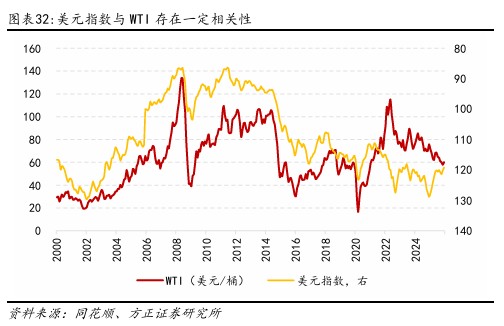
For a long time, there has been a stable inverse relationship between the dollar and oil prices. Although there is a dynamic bidirectional influence between the dollar index and WTI oil prices, as the financial attributes of crude oil have strengthened, the dollar index's dominant role over oil prices has become more pronounced.
From a purchasing power perspective, the reason why the rise in the dollar index contributes to the decline in oil prices can be attributed to two main reasons.
First, an increase in the dollar index raises the purchasing power of oil-producing or exporting countries. Since oil prices are quoted in dollars, oil-producing countries sell oil to obtain dollars and then exchange those dollars for the currencies of other countries to purchase goods from around the world. Due to the appreciation of the dollar, the purchasing power of oil-producing countries increases, and from this perspective, there is no demand for price increases from the producing countries Second, the rise of the US dollar index will lead to a decrease in purchasing power for some oil-buying countries such as Europe and Japan, as the price of oil priced in euros and yen becomes relatively higher, resulting in a decline in global oil demand. On the other hand, the US dollar itself has strong safe-haven attributes. A stronger dollar is usually accompanied by an increase in global risk aversion, during which funds flow back to the US capital markets and out of the commodity markets, causing oil prices to fall.
Oil Market: Dual Characteristics of Commodity and Financial Attributes
The oil market has dual characteristics of both commodity and financial attributes: on one hand, as a core commodity in the global energy system, oil is produced, transported, processed, and traded on a large scale in physical form within international industrial and supply chains; on the other hand, various financial derivatives such as futures, options, and swaps, which have developed based on the oil spot market, are highly active, with substantial financial capital participating, making oil prices not only influenced by supply and demand fundamentals but also deeply tied to factors such as global financial market liquidity, interest rates, and geopolitical dynamics.
Oil Spot Market: Five Major Oil Spot Markets Globally
There are five major oil spot markets globally: the Northwest European market centered around Amsterdam-Rotterdam-Antwerp (ARA), primarily supplying crude oil from the CIS and North Sea, as well as local refinery products to countries like Germany and France; the Mediterranean market, as another main battleground in Europe, supplies local refinery products and oil from the Arabian Gulf; the Caribbean market, relatively smaller in scale, mainly supplies oil from Venezuela and Mexico to the United States, with some diesel and fuel oil also flowing into Europe for arbitrage; the Singapore market focuses on South Asia and Southeast Asia, providing oil from the Arabian Gulf and local refinery products; the US market, relying on its large production and consumption volume, has formed large oil spot markets in Houston, Portland, and New York ports.
Crude Oil Futures Market: Undertaking the "Price Discovery" Function
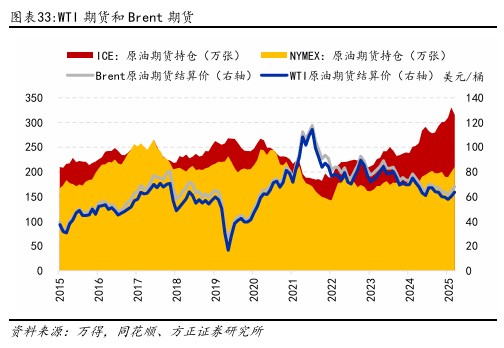
Oil futures trading volume far exceeds that of spot trading, with abundant liquidity, thus undertaking the "price discovery" function. Futures prices are in turn used as pricing references for long-term contracts or spot transactions. In simple terms, oil prices are actually determined in the futures market. The two largest oil futures by trading volume are WTI futures (NYMEX WTI Crude Oil Futures) and Brent futures (ICE Brent Crude Futures), which serve as the benchmark crude oil contracts for the US and globally, respectively. At the same time, since the Middle East is the core area of international crude oil supply, the Oman crude oil futures launched by the Dubai Mercantile Exchange, although a regional pricing benchmark and not yet globally influential, is usually grouped with Brent and WTI as one of the three major crude oil futures globally due to the importance of the regional market
Political Attributes: Restructuring the Oil Supply and Demand Structure
The "Shale Revolution" and the establishment of the OPEC+ mechanism have facilitated the creation of a new tripartite oil supply system, with increasing interactions and conflicts in the energy game.
The United States has been active in the international crude oil market. The shale revolution has significantly enhanced U.S. energy power, first by greatly increasing America's flexibility in diplomatic energy matters. Although Saudi Arabia has been a long-term ally of the U.S., its strategic value to the U.S. has diminished after the shale revolution, leading to an asymmetrical relationship. This may result in the U.S. reducing its security investments in Saudi Arabia, making it more passive in the Middle Eastern situation.
Faced with an increasingly unfavorable diplomatic situation, Saudi Arabia has begun to seek new strategic cooperation directions, while Russia, being relatively less pressured by the U.S. and capable of deep involvement in Middle Eastern affairs, has become an important diplomatic alternative for Saudi Arabia. Through OPEC+, Russia has strengthened its presence in the Middle East, to some extent breaking through the U.S. strategic encirclement; meanwhile, Saudi Arabia has reinforced its balanced diplomatic strategy between Russia and the U.S. through OPEC+, changing the unfavorable situation.
The U.S. Responds Actively to the OPEC+ Mechanism
In response to the increasingly close diplomatic relations between Russia and Saudi Arabia after the establishment of OPEC+, the U.S. quickly reacted in the energy sector. On one hand, in response to the oil production control jointly implemented by the two countries, the U.S. has sought to expand its own oil production and export capacity as much as possible. On the other hand, the U.S. has transformed its original "energy independence" strategy into a more aggressive "energy dominance" strategy, shifting its goal from merely reducing external dependence to guiding and dominating the international energy market structure. Relying on its rapidly developing domestic oil industry, the U.S. has continuously expanded its export scale and actively promoted its energy products globally to enhance its voice and influence in the global energy system.
Secondly, utilizing political influence for intervention is a primary means for the U.S. Regarding Iran, a traditional adversary within OPEC+, the U.S. has once again imposed strong pressure. Additionally, Qatar has also been a breakthrough point for the U.S. to divide the OPEC+ organization. Due to competition in the economic and political fields and differing perceptions of the threat posed by Iran, Qatar has had ongoing conflicts with countries like Saudi Arabia. Therefore, the U.S. has continuously fanned the flames in related events, ultimately leading to Qatar's formal withdrawal from OPEC in January 2019. For core members of OPEC+ (Russia and Saudi Arabia), the U.S. is actively repairing friendly relations with Saudi Arabia while applying moderate pressure; although it cannot influence Russia's energy policy, the U.S. is attempting to create a legal basis for sanctioning OPEC+'s production control actions.
The U.S.-Venezuela Incident: Extending the Life of Petrodollars
Domestic issues in the U.S. are the primary driving force behind the U.S.-Venezuela incident. By the end of 2025, the Republican Party failed to achieve its established goal of reducing healthcare spending, putting it in a passive political situation. The setbacks in healthcare reform, combined with a lack of impressive results in economic livelihood and foreign affairs, forced the Trump administration to divert domestic conflicts and stabilize its voter base through strong external actions Thus, it accumulates political capital for the midterm elections in 2026. At the same time, the other purpose of this action is linked to crude oil.
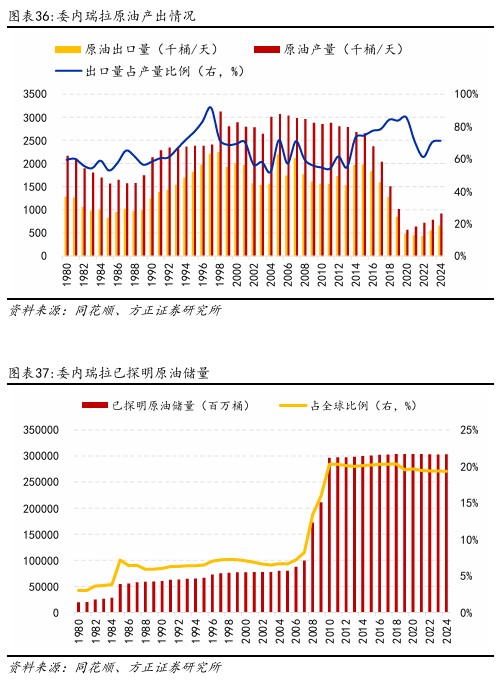
The Venezuela incident is a "lifeline" for the petrodollar. According to the latest data, Venezuela's daily crude oil production in 2024 reaches 920,000 barrels, of which 660,000 barrels are for export. Although Venezuela's crude oil production and export volumes have significantly declined compared to pre-pandemic levels, they have been slowly recovering over the past two years, and the proportion of crude oil exports to production has also increased. More notably, Venezuela's proven crude oil reserves in 2024 have reached 303.221 billion barrels, accounting for 19% of the world's proven crude oil reserves. The Trump administration has announced that it will allow U.S. energy companies to fully participate in the reconstruction of the country's oil infrastructure and stated that it will "manage" Venezuela's resource development in a "very profitable manner" over the long term. This position essentially conveys a key signal: the U.S. is pushing for the reintegration of the world's richest and yet underdeveloped oil resources into the dollar settlement framework, thereby establishing a new support anchor for the petrodollar system in the context of weakening Saudi-related agreements.
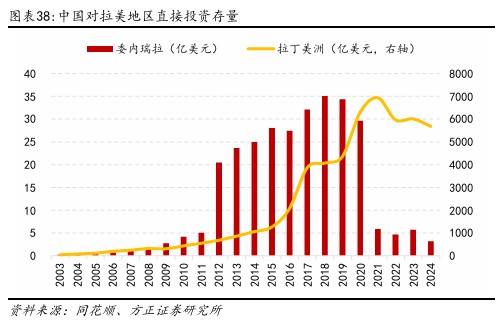
In addition, the U.S. military actions against Venezuela have had a significant "demonstration effect." This action sends a strong signal to Latin American countries and serves as a deterrent to countries like Colombia regarding their future negotiation positions with the U.S., suppressing China's influence in the Latin American region.
Historical Review of Crude Oil Price Trends
January 2000 – July 2008: Continuous Bull Market
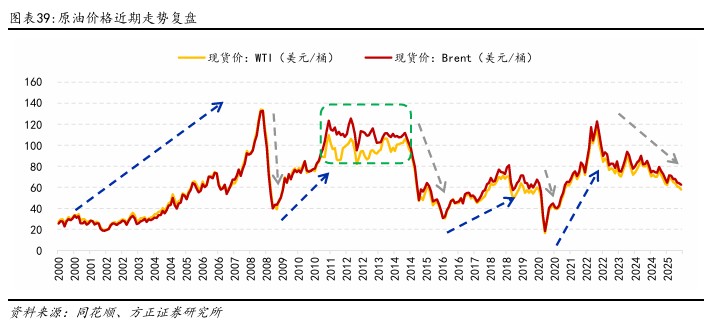
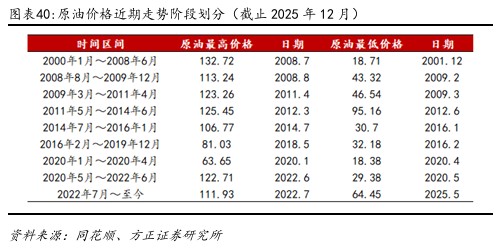
From January 2000 to July 2008, crude oil prices rose steadily, experiencing an almost continuous bull market. The Brent price in December 2001 became the lowest point in this phase mainly due to the extreme panic in global financial markets caused by the 9/11 terrorist attacks, marking the first significant security threat faced by the U.S. since the Cold War. During this phase, the global economy entered a period of rapid development, particularly driven by the rapid industrialization and urbanization processes in emerging market countries such as China and India, which significantly boosted energy demand On the other hand, the Iraq War in 2003, along with production limitations in major oil-producing countries like Nigeria and Venezuela, intensified geopolitical risks and raised concerns about supply security in the crude oil market, driving oil prices to continue rising. Speculative funds also flooded into the oil futures market, further amplifying the financial attributes of the price increase. Until July 2008, oil prices reached an all-time high, with Brent surpassing $133 per barrel.
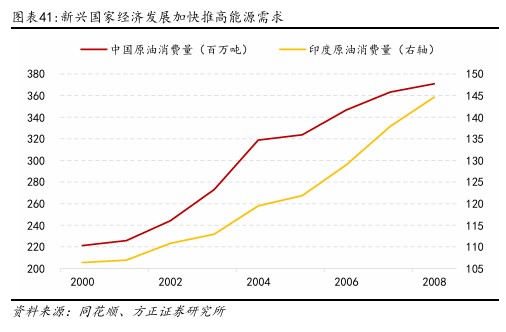
July 2008 – February 2009: Financial crisis leads to a decline in crude oil prices
From July 2008 to February 2009, the subprime mortgage crisis triggered a global crisis, causing crude oil prices to rapidly drop to a low point. During this period, the onset of the U.S. subprime mortgage crisis severely impacted the global economy, affecting oil demand and leading to a continuous decline in oil prices over eight months, ultimately reaching a low of $43 per barrel in February 2009.
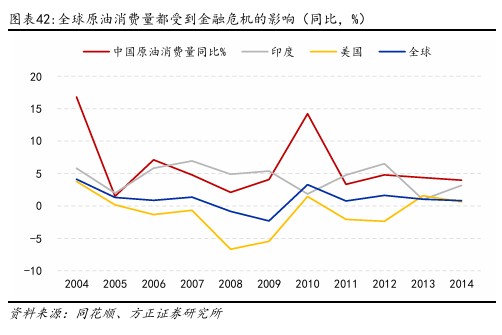
March 2009 – April 2011: Economic recovery and oil price rebound
From March 2009 to April 2011, the global economy recovered, and oil prices rebounded rapidly. In response to the global economic recession following the financial crisis, countries launched unprecedented stimulus policies. The United States implemented quantitative easing (QE), injecting massive liquidity and maintaining interest rates at zero; China introduced a 4 trillion yuan stimulus plan, focusing on high-energy-consuming sectors such as infrastructure and real estate. The extremely loose global monetary policy drove credit expansion, gradually warming up economic activity, while also stimulating a general rise in commodity prices. By April 2011, Brent prices had risen to $123 per barrel.
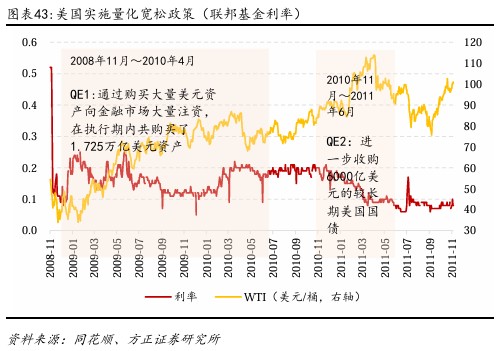
May 2011 – June 2014: Oil prices fluctuate at high levels
From May 2011 to June 2014, oil prices fluctuated at high levels, but WTI prices diverged from Brent prices during certain periods. During this phase, the global economy gradually stabilized, but the pace of recovery showed divergence. The U.S. economy slowly repaired under QE and fiscal stimulus, while the Eurozone was mired in a sovereign debt crisis with weak growth. Additionally, geopolitical risks in the Middle East remained prominent, with factors such as the Arab Spring, the Syrian civil war, and political turmoil in Libya limiting the supply capacity of local oil-producing regions. OPEC maintained an overall attitude of production cuts, resulting in a relatively balanced supply and demand in the oil market Despite the initial signs of a shale oil revolution, its production scale has not yet significantly impacted the global supply-demand pattern. However, the surge in U.S. inland shale oil production and transportation bottlenecks have limited the liquidity of WTI, causing its regional price to be significantly lower than the Brent benchmark that reflects the global market.
July 2014 - January 2016: Supply Overhang, Oil Prices Decline
From July 2014 to January 2016, oil prices fell sharply due to supply overhang. This round of decline was mainly driven by a significant increase in supply and a strategic shift by OPEC. In 2014, U.S. shale oil production surged, pushing its daily crude oil output to a nearly 40-year high, disrupting the global crude oil supply pattern. Meanwhile, OPEC decided not to cut production at its November 2014 meeting to maintain market share, intending to suppress high-cost shale oil companies. The global crude oil market quickly shifted from a tight supply-demand balance to a severe oversupply. By January 2016, Brent oil prices had fallen to $30.
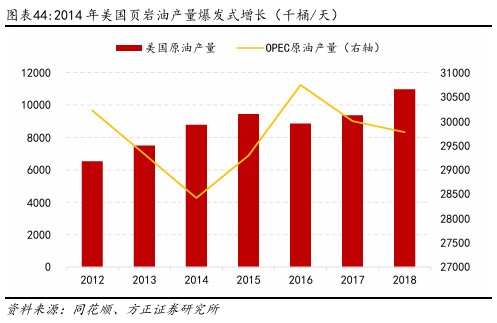
February 2016 - December 2019: Oil Prices Slowly Rebound
From February 2016 to December 2019, oil prices slowly rebounded and fluctuated within a moderate price range. During this period, the crude oil market entered a structural adjustment phase, with OPEC and non-OPEC countries (such as Russia) reaching a "production cut agreement" (OPEC+ mechanism) for the first time at the end of 2016, marking a strengthening of the coordination mechanism in the crude oil market and gradually tightening global supply. At the same time, the U.S. shale oil industry, after undergoing adjustments from 2014 to 2016, saw a decrease in costs and an increase in efficiency, with production capacity gradually recovering and continuing to grow. The supply-demand relationship tended to balance, but due to the enhanced "elastic supply" mechanism of shale oil, oil prices struggled to return to the $100 era. Overall, while oil prices rebounded significantly from previous lows, they remained in a mid-range fluctuation due to the dual backdrop of shale oil production limits and a slowing global economy.
January 2020 - April 2020: Pandemic Outbreak, Oil Prices Plummet
From January 2020 to April 2020, the outbreak of COVID-19 led to a sharp decline in demand and a crash in oil prices. The global outbreak of COVID-19 had a huge impact on the crude oil market. As countries implemented lockdowns and travel bans, industries such as transportation and manufacturing nearly came to a standstill, causing global crude oil demand to collapse. On the other hand, the OPEC+ production cut negotiations broke down, leading Saudi Arabia and Russia to engage in a price war, resulting in a surge in market supply. In the context of a dual imbalance in supply and demand, crude oil prices plummeted, reaching a low of $18 per barrel in April 2020 May 2020 - June 2022: Geopolitical Conflicts and Oil Price Rebound
From May 2020 to June 2022, the recovery in demand combined with geopolitical conflicts led to a strong rebound in oil prices to high levels. After the initial panic of the pandemic, governments and central banks around the world launched large-scale economic stimulus plans. The United States introduced multiple fiscal and monetary stimulus measures, while China, the European Union, and others increased support for infrastructure and consumption. Globally, "revenge spending" combined with a manufacturing recovery drove a rapid rebound in crude oil demand. Additionally, global supply chain bottlenecks and long-term underinvestment in energy (especially during the pandemic when oil companies sharply reduced capital expenditures) exacerbated the decline in supply elasticity. Geopolitical risks also pushed oil prices higher during this phase, particularly with the outbreak of the Russia-Ukraine war in early 2022, which raised global concerns about sanctions on Russian energy. Brent crude prices soared to USD 123 per barrel at one point, reaching a new high since 2008. This phase also saw a decline in traditional energy investment willingness under the global "green transition," leading to an asymmetric recovery in supply and demand, further driving up oil prices.
July 2022 - Present: Oil Prices Decline and Stabilize
From July 2022 to the present, the global economy has slowed, and oil prices have gradually declined and stabilized. Although the Russia-Ukraine conflict continues to drag on, the market's expectations for an energy crisis triggered by the war have largely been digested. Europe is actively promoting energy diversification and adjusting its import structure, alleviating its dependence on Russian crude oil. On the other hand, the United States continues to release strategic reserves and increase domestic production, while countries like Iran and Venezuela have resumed exports during certain periods, along with OPEC+'s production increase plans, leading to a gradual easing of the global crude oil supply structure. On the demand side, the Federal Reserve's continuous interest rate hikes have suppressed economic overheating, and the economies of Europe and the United States have entered a phase of stagflation or low growth, with China's overall oil consumption growth slowing. Furthermore, the increasing penetration of new energy vehicles and strengthened environmental policies have formed a medium- to long-term suppression of demand for traditional energy