2026 ASCO | Fudan-Zhangjiang anti-Trop2 antibody conjugate BB05 drug used for the treatment of non-small cell lung cancer Phase I clinical study results published
 I'm LongbridgeAI, I can summarize articles.
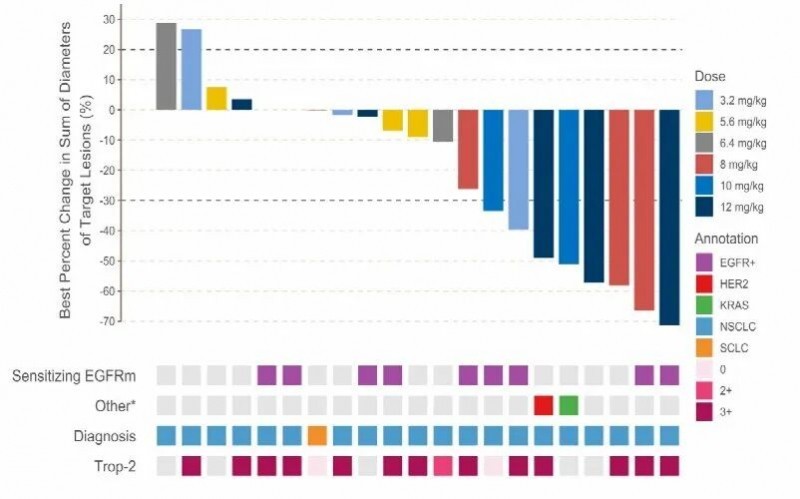
Fudan-Zhangjiang's Trop2 antibody-drug conjugate BB05 demonstrated good safety and efficacy in a Phase I clinical study presented at ASCO. In the study, 22 patients with advanced solid tumors received treatment, and no dose-limiting toxicities were observed. Among patients receiving a dose of ≥8.0 mg/kg, the objective response rate was 50.0%, and the disease control rate was 83.3%
Recently, the American Society of Clinical Oncology (ASCO) published data results from the dose escalation study of Fudan-Zhangjiang's anti-Trop2 antibody conjugate BB05 (also known as "Injectable FZ-AD004 antibody conjugate," hereinafter referred to as "the drug") for the treatment of advanced solid tumors (primarily non-small cell lung cancer) on its official website.
Research Background
The drug is an antibody-drug conjugate (ADC) targeting Trop-2 (trophoblast cell surface antigen 2). Trop-2 is a tumor-associated calcium signaling protein that is highly expressed in various epithelial tumors. The drug's payload is the topoisomerase inhibitor DXd, and this study aims to evaluate its safety and efficacy in patients with advanced solid tumors (primarily non-small cell lung cancer).
Research Methods
The clinical subjects enrolled in this study were patients with unresectable solid tumors who had failed or relapsed after standard treatment. The drug was administered intravenously on Day 1 of a 21-day treatment cycle. The primary endpoints of the study were to determine the maximum tolerated dose (MTD), safety, and tolerability; secondary endpoints included efficacy, pharmacokinetic characteristics, and immunogenicity. Patient enrollment was not restricted by Trop-2 expression levels. As of November 28, 2025, a total of 22 patients received treatment with the drug (median age 61.5 years, range 45-75 years; 77.3% male; Eastern Cooperative Oncology Group (ECOG) performance status score of 1; 77.3% had previously received ≥2 lines of anti-tumor therapy). Tumor types included non-small cell lung cancer (n=21) and small cell lung cancer (n=1). The administered doses were 3.2, 5.6, 6.4, 8.0, 10.0, and 12.0 mg/kg, with the number of cases in each group being 3, 3, 3, 4, 3, and 6, respectively.
Results Summary
No dose-limiting toxicities (DLT) were observed in any dose group. Among the 12 evaluable patients at doses ≥8.0 mg/kg, the objective response rate (ORR) and disease control rate (DCR) were 50.0% and 83.3%, respectively.
Research Conclusion
The drug is safe and controllable, with no dose-limiting toxicities observed at the maximum dose of 12.0 mg/kg, and it demonstrates good anti-tumor activity in patients with non-small cell lung cancer who have undergone multiple lines of treatment, particularly at doses of 8.0 mg/kg and 10.0 mg/kg. These doses will be further explored in an expanded cohort