

The world has entered the AI PC era, and Chipsea is accelerating its integration into the global AI PC industry chain
 I'm LongbridgeAI, I can summarize articles.
Chipsea Technology (688595) has participated in COMPUTEX for the fifth consecutive year, showcasing its matrix of computing peripheral chips and the large-scale production results in mainstream models from Lenovo, Xiaomi, and others. As the only EC chip supplier in mainland China certified by both Intel and AMD platforms, Chipsea Technology has integrated into the global PC supply chain and is accelerating its entry into the AI PC industry chain
In June in Taipei, the AI wind rises.
On June 1, Jensen Huang, CEO of NVIDIA, unveiled the RTX Spark super chip for Windows laptops and small workstations during the opening speech at COMPUTEX 2026, once again bringing AI PCs into the spotlight of the global technology industry. On June 2, Chipsea Technology (stock code: 688595) presented its peripheral chip matrix and various terminal models from numerous clients such as Lenovo, Xiaomi, and Honor at COMPUTEX for the fifth consecutive year, attracting widespread attention from industry audiences and media.
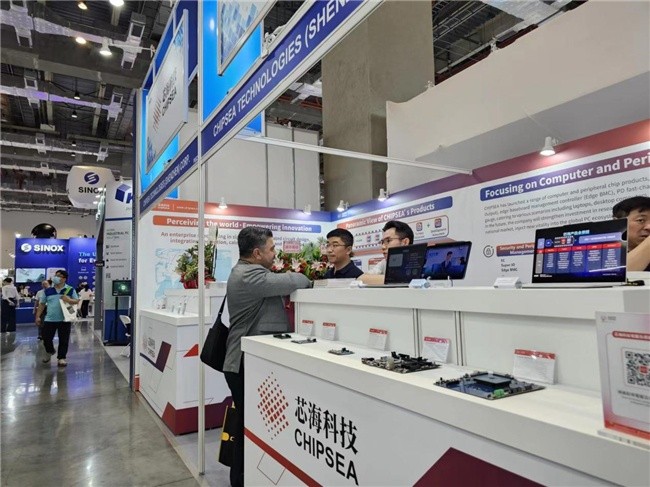
From 2022 to 2026, Chipsea Technology's narrative at COMPUTEX has quietly shifted from "What technological innovations do we have?" to "Which mainstream models have our technologies been scaled up for mass production?" Behind these five years is the company's determination to transition from technological breakthroughs to integration into the global PC supply chain.
The only one in mainland China, the fourth globally, two major international CPU platform certifications
On the computer motherboards filled with various chips, the EC may not be the most dazzling one, but it is the indispensable one. The timing of power on/off, power management, charge and discharge control, keyboard scanning, touchpad signals, fan and thermal management, secure boot, and firmware protection are all handled by this "invisible butler." Therefore, the EC does not just solve the functional issues of a single chip but must coordinate the overall energy efficiency and ecological issues of the entire computer motherboard.
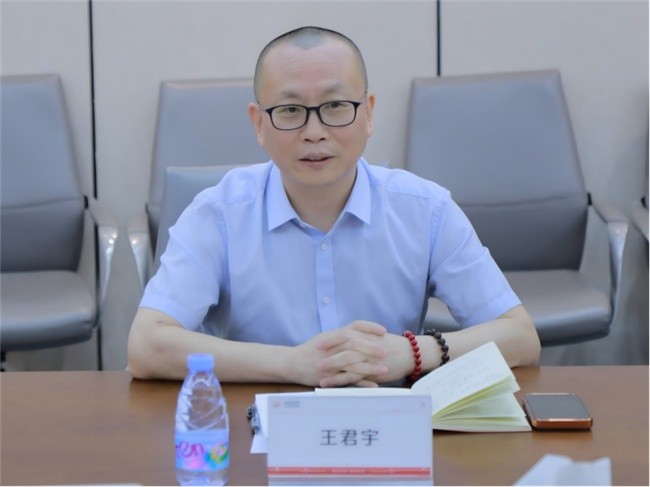
As Wang Junyu, co-CEO of Chipsea Technology, mentioned in a media interview: The threshold for Chipsea Technology to enter the PC supply chain is much higher than imagined. After years of technological breakthroughs, Chipsea's EC has passed both Intel PCL and AMD AVL dual-platform certifications, obtaining a "pass" to the global PC industry chain, becoming the only EC chip supplier in mainland China to receive certifications from both major international CPU platforms, and the fourth general EC supplier globally after Lianyang, Nuvoton, and Microchip.
Now, with many mainstream PC brands successively adopting it on a large scale, Chipsea's EC has completed a full closed loop from chip design, firmware adaptation, customer validation to complete machine mass production.
At the forefront of AI PCs: Opportunities and challenges for peripheral computing chips
While the global technology industry's focus remains on the computing power competition of CPUs, GPUs, and NPUs, a system-level question is emerging: If PCs become all-weather AI intelligent body gateways, who will manage their power, heat, interfaces, security, and remote status? The answer remains the EC chip. The intelligent agents of the AI PC era require longer online time, lower power standby, more complex interface collaboration, and stronger local security control. A large number of computing, control, perception, and security-related functions are quietly shifting to peripheral computing chips. As a result, EC has further evolved from a "logistics manager" role to become the underlying entry point for whether edge-side intelligence can truly take root.
Yang Lining, Vice President of Chipsea, pointed out: "When personal AI agents enter PCs, they will continuously accumulate personal files, behavioral preferences, and other data. In the future, PC manufacturers hope to keep data within local or controllable ranges." This means that EC will further transition from a basic control chip to an underlying entry point for local security, resource management, and privacy protection. This is both a new demand for AI EC and an opportunity for Chipsea to overtake in a curve.
Zhou Zhensheng, head of Chipsea's computing and communication business, further explained: "AI PCs simultaneously mobilize multiple computing units such as CPU, GPU, and NPU. EC needs to participate in coordinating management between performance release, power consumption control, and thermal management, taking on the underlying role of computing power allocation and sharing. It is precisely because AI PCs have higher requirements for EC that the birth of Chipsea's AI EC has been stimulated."
It is noteworthy that regarding AI PCs and edge computing, Chipsea has already established end-to-end capabilities from underlying control of the entire machine to cloud device management. Zhou Zhensheng introduced that Chipsea has the system capability to extend from EC to the peripheral computing ecosystem: EC is responsible for the underlying control of the entire machine, PD is responsible for fast charging protocols and power supply, USB HUB supports interface expansion and data connection, SIO/eSIO manages peripherals for desktop and industrial computers, BMS manages battery safety and status, and edge BMC focuses on remote monitoring, fault diagnosis, and out-of-band management for edge devices.
At this year's COMPUTEX, Chipsea's booth not only showcased a full-stack ecosystem of peripheral computing chips centered around EC, including products such as PD, USB HUB, HapticPad, SIO, BMS, and edge BMC.
Serving computing, driving computing, moving towards becoming a world-class core chip supplier for peripheral computing
When Chipsea first participated in COMPUTEX in 2022 as "the first EC chip supplier from the mainland," it attracted industry attention. In 2023, it showcased a full range of peripheral computing products, announcing the formation of its product matrix. In 2024, it will focus on showcasing its AI PC layout.
By 2026, the dazzling array of end customer models in front of Chipsea's booth will be more persuasive than any technical parameters.
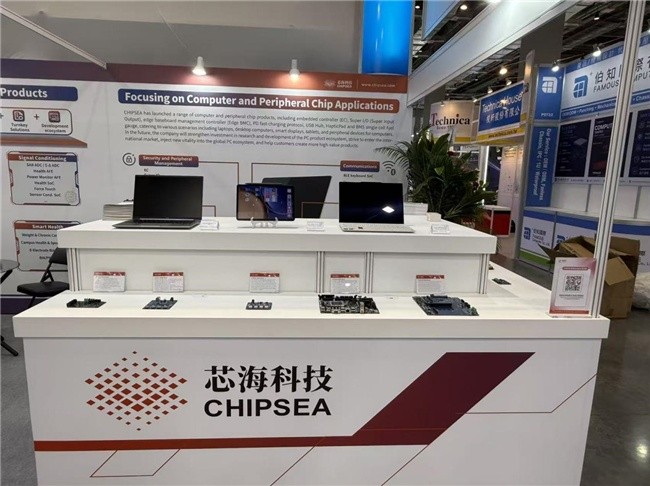
Now, as AI PCs systematically reconstruct the entire industry towards computing power, power consumption, security, interfaces, remote management, and supply chain reliability, Chipsea Technology is accelerating its integration into the global PC industry chain in this reconstruction The company will continue to uphold the philosophy of "service computing, driving computing," relying on technological leadership and efficient execution, and will continue to advance towards becoming a world-class supplier of peripheral core chips for computing