Model sovereignty, token economics and blockchain opportunities
 I'm LongbridgeAI, I can summarize articles.
HashKey Capital highlights two key blockchain and AI trends: model sovereignty, driven by US export controls forcing firms to adopt domestic AI infrastructure, and token economics, where surging AI agent usage causes corporate budgets to explode despite lower per-token costs. Companies like Uber and Tesla are implementing strict spending caps and hybrid deployment strategies, combining open-source and closed-source models to optimize costs and mitigate provider dependency risks.
Author: Jinming, HashKey Capital; Source: Medium; Compiled by: Shaw, Golden Finance

Abstract
1. Model Sovereignty Narrative
In June 2026, based on a U.S. national security export control order, Anthropic was required to suspend all user access to Claude Fable 5 and Claude Mythos 5; access was restored approximately three weeks later after the order was lifted. Regardless of how people view the underlying policy differences, the objective operational facts are clear: a single order can completely shut down a globally available AI product within hours, leaving affected customers with no recourse and no way to circumvent the restrictions to continue using it.
These types of risk exposures have prompted governments and companies to pursue sovereign AI projects: state-supported computing clusters, domestically trained models, and mandatory deployment of sensitive services on domestic infrastructure. The core objective is to avoid dependence on foreign service providers—who might be forced to cut off services at the request of their own governments. 2. Token Economics and Corporate Budget Crisis By 2025, corporate spending on generative AI is projected to triple, reaching an estimated $37 billion, despite a significant decline in the price per token. This is a classic Jevons paradox: declining unit costs generate massive new usage demand, ultimately driving total spending ever higher. Surveys of IT managers show that the vast majority of AI projects actually exceeded their initial budgets, with a significant portion exceeding their budgets by more than 50%. AI agents are the core driver of soaring costs: a single AI agent may initiate dozens or even hundreds of model calls to complete a task, and as AI agents become more widespread, enterprise costs continue to accumulate. **The calling cost of cutting-edge closed-source models is higher than that of mainstream open-source models.** [Image of closed-source models] [Image of open-source models] Uber is the most typical case to date. Due to the impact of its agents calling Claude Code and Cursor tools, the company exhausted its entire 2026 AI code tool budget in just four months. Subsequently, Uber implemented control measures, limiting each employee's monthly spending on a single tool to a maximum of $1,500 and building a data dashboard to monitor resource consumption. Tesla, Amazon, Meta, and other companies have adopted similar solutions. There are also reports that Microsoft has revoked most of its internal Claude Code licenses, guiding employees to the GitHub Copilot command-line tool. As the intelligence level of open-source models gradually catches up with cutting-edge closed-source models, enterprise AI strategies have shifted: no longer simply pursuing the use of top-tier closed-source models, but adopting hybrid deployment solutions to maximize token cost-effectiveness. Enterprises are now building an AI FinOps functional system (usage measurement, per capita cost dashboard) and adopting a layered model combination strategy: selecting low-cost, high-efficiency models to handle information extraction and routine tasks, while reserving cutting-edge inference models only for complex inference scenarios.
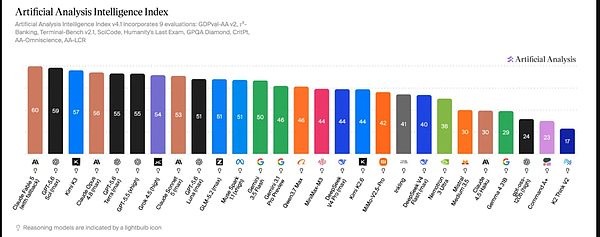
Open source models GLM-5.2 and Kimi K3 rank among the top ten globally in overall capabilities
3. New Core Capabilities: Model Selection and Token Strategy
Model sovereignty risk and Token call costs both point to the same operational conclusion: Do not rely entirely on a single service provider. The native AI legal platform Harvey has partnered with Fireworks AI to benchmark a hybrid AI solution based on Harvey's legal intelligent agent.
Model quality