

Full Text of Jensen Huang's GTC 2026 Speech: Nvidia Doesn't Want to Just Sell GPUs Anymore
 Complete. Here is the key summary
At GTC 2026, Jensen Huang announced Nvidia's strategic shift from selling GPUs to providing comprehensive AI infrastructure. He highlighted the transition to an 'Agent era' where AI performs tasks autonomously, driving demand for inference over training. Key announcements include the Vera Rubin platform for cost-effective agent inference, the concept of 'AI Factories' as new productivity infrastructure, and entry into the PC processor market with the RTX Spark Superchip, challenging Intel and AMD.
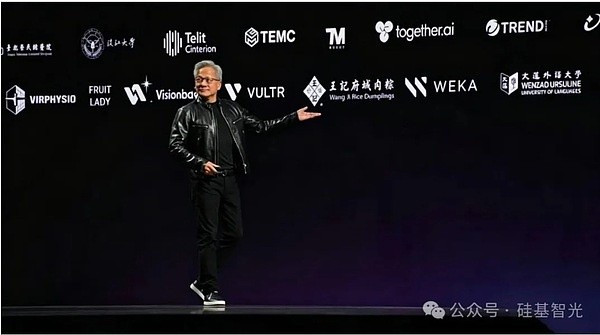
Why is Jensen Huang becoming less and less like a chip company CEO?
While many people are still focused on: How much has GPU performance improved? How powerful are the new graphics cards?
At this year's GTC 2026, Jensen Huang spent two hours talking about something else entirely: AI is moving from chatbots to the Agent era.
At this year's GTC 2026, Jensen Huang actually spent two hours talking about something else entirely: AI is moving from chatbots to the Agent era.
Nvidia aims to become the infrastructure provider for this new era. This wasn't a chip specifications launch event; it was a sermon on "how the future world will work." The first card—the Agent era officially begins. The ChatGPT era solved the problem of "knowing the answer," while the Agent era solves the problem of "getting the job done." This is the most important underlying logic of the entire presentation. Over the past three years, AI has primarily addressed tasks such as writing articles, generating images, and answering questions. Representative products include ChatGPT, Claude, and Gemini. The core capability of these AI systems is generation—they answer whatever you ask; they write whatever you ask them to write. However, Huang Renxun predicts that in the next few years, AI will begin to perform tasks: automated programming, automated research, automated operations, and automated office work—AI will transform from an "assistant" into an "employee." Huang Renxun defines this as: Agent AI. This shift sounds simple, but it's a fundamental paradigm shift. The difference in computing power requirements, system complexity, and commercial value between a chatbot answering "How to create a market analysis report" and an agent actually logging into a data platform, pulling reports, generating a PowerPoint presentation, and sending it to the team is orders of magnitude. The second key factor—inference computing power will surpass training computing power—is the next stage of the AI industry, not a competition of parameter scale, but of token cost. Why is Nvidia still frantically manufacturing chips? Because agents consume more computing power than chatbots. Chatbots are a question-and-answer process: you input, it outputs. Agents, on the other hand, require: long-chain reasoning (thinking multiple steps before acting), multi-round planning (adjusting as you go), and multi-agent collaboration (several AIs working together to complete a task). Behind every "thinking" and "action" lies reasoning and computation. Jensen Huang's judgment is very clear: The biggest drain on the future AI industry will no longer be training, but reasoning. This leads to the hardware protagonist of this year's GTC—Vera Rubin, NVIDIA's next-generation AI platform. Its core goal isn't training larger models, but rather making agent inference cheaper. Official data shows that compared to the previous generation Blackwell Ultra, Vera Rubin's inference performance is improved by approximately 5 times, and token costs are reduced by approximately 10 times. This means that an agent task that previously required $1 will now only cost $0.10. When inference is cheap enough, enterprises will feel comfortable entrusting their real-world business processes to AI.
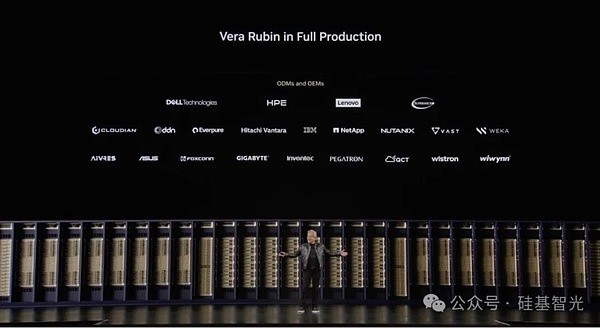
The third card—AI Factory becoming the new infrastructure
Nvidia is no longer selling computing power, but productivity.
This is the concept that appeared most frequently throughout Huang Renxun's speech: AI Factory.
This is the concept that appeared most frequently throughout Huang Renxun's speech.AI Factory.
He offered a very vivid analogy: In the past, power plants produced electricity; in the future, AI factories will produce tokens. Tokens are no longer just a technical term, but have become a new "means of production"—just like electricity, oil, and data. Jensen Huang predicts that enterprises will have three types of infrastructure in the future: Data Center (for storing data) AI Factory (for producing smart tokens) Agent Factory (for deploying AI employees). Nvidia will no longer sell GPUs, but a complete AI factory solution, including chips, networks, storage, software, and an Agent platform. In other words, customers don't need to assemble various parts themselves; Nvidia delivers a "plug-and-play AI production line." The fourth card—Nvidia officially enters the PC processor market. Rubin is expanding data centers, while Spark is vying for the future billion AI computers. In the past, the division of labor was clear: Nvidia was responsible for GPUs, Intel for CPUs, AMD did both, and Apple developed its own M-series chips. But this time, Jensen Huang officially launched the RTX Spark Superchip—a complete chip integrating an ARM CPU, a Blackwell GPU, and an AI NPU. It's no longer just a "graphics card," but a true AI PC processor. This means that Nvidia has officially entered the CPU market, beginning to directly challenge Intel, AMD, Qualcomm, and even Apple. Why is this step so crucial? Because in the Agent era, AI won't just run in the cloud. Many tasks need to be processed in real time, locally, at the edge, and on personal devices—with low latency, privacy, and offline availability. Whoever controls the "AI brain" of the PC controls the gateway to billions of future terminal devices.
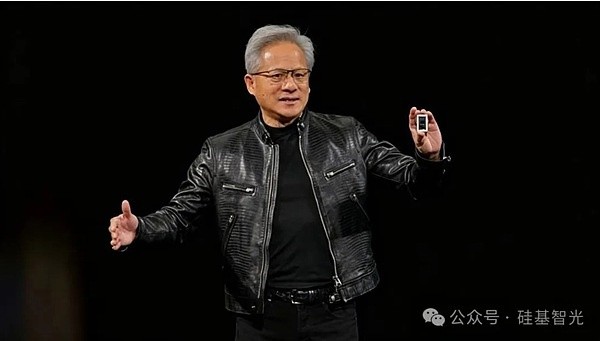
The Fifth Card—From Cloud to Desktop, NVIDIA's Ecosystem Closed Loop is Formed
If you look at all the releases together, you'll find that NVIDIA is forming a complete ecosystem closed loop from cloud to edge:
- Cloud: Vera Rubin supercomputing cluster drives the world's largest AI factory. Enterprises: DGX platform, enterprise-grade AI infrastructure; Developers: DGX Spark, personal AI workstations; Individual users: RTX Spark PC, next-generation AI computers. What does this chain mean? Wherever the agent runs—cloud data centers, enterprise server rooms, developer desktops, ordinary users' laptops—it is likely powered by NVIDIA chips and platforms. Jensen Huang is replicating Microsoft's "Windows Everywhere" strategy from years ago, except this time, what's ubiquitous isn't the operating system, but AI computing power. The final card—Robots and Physical AI. Huang believes that after Agents, the next wave will be Robots (Physical AI). In his speech, he clearly divided AI into three stages: 1. Generative AI – Creating content; 2. Agent AI – Performing tasks; 3. Physical AI – Acting in the real world. In the future, humanoid robots, autonomous driving, and smart factories will all run on NVIDIA platforms. Nvidia doesn't build robots itself; it provides the "brain" and "training ground"—the Jetson edge computing platform, the Isaac Sim simulation environment, and the Newton physics engine. Just like Android doesn't build phones, but powers the vast majority of smartphones worldwide. The Disney "Olaf" robot that appeared at the end of the presentation, seemingly a cute Easter egg, was actually Nvidia showcasing its "Physical AI concept car" to the world. What does Jensen Huang truly want to become? Many people believe that Nvidia is a GPU company. But after watching this GTC, you'll find that Jensen Huang is no longer satisfied with just selling chips. What he wants to do is: Microsoft in the Agent era – enabling every enterprise to run on Nvidia's AI factory. Intel in the AI era – giving every PC an Nvidia chip. Android in the Robot era – enabling every robot to run on Nvidia's platform. From data centers to PCs, from agents to robots, from chips to AI factories – Nvidia is building an AI infrastructure empire covering the next decade. This, perhaps, is the most noteworthy aspect of GTC 2026. When Jensen Huang declared on the Taipei stage, "In the future, we won't be selling GPUs, but AI Factories," he was essentially declaring that Nvidia's competitors are no longer AMD or Intel, but all forces attempting to define the next generation of computing paradigms. After this speech, the world should understand one thing: Nvidia doesn't want to just sell GPUs anymore.