

Agricultural Commodity Prices Break Out As JPMorgan's Food Crisis Warning Gets Louder
 I'm LongbridgeAI, I can summarize articles.
Agricultural commodity prices are surging, with the Bloomberg Agriculture Spot Index reaching its highest level since early 2023. This rally follows JPMorgan's warning of a potential global food crisis and weaker-than-expected US crop yields from the Pro Farmer Crop Tour. Corn and wheat futures are approaching recent highs, while rising diesel costs further exacerbate inflationary pressures in the food sector.
JPMorgan analyst Nora Szentivanyi's warning last week that the next global food crisis could begin as early as next year has been a major wake-up call for some, adding to the growing voices oninstitutional desks warning thatfood inflation is poised to re-accelerate.
Remaining extra watchfulabout agricultural prices, Bloomberg reported earlier that US corn futures moved higherafter preliminary results from the Pro Farmer Crop Tour indicated weaker-than-expected yields in parts of critical growing belts across the Midwest.
Corn yield estimates were about 3% below last year in Ohio and 14% lower in South Dakota. Soybean pod counts also declined, while severe storms and flooding in Indiana and Ohio added to concerns about further crop damage."
“The crop tour has somewhat buoyed markets so far, considering the expected lower yields and unfavorable weather,” said Eliza Redfern, Senior Manager Industry Insights for Bendigo Bank Agribusiness.
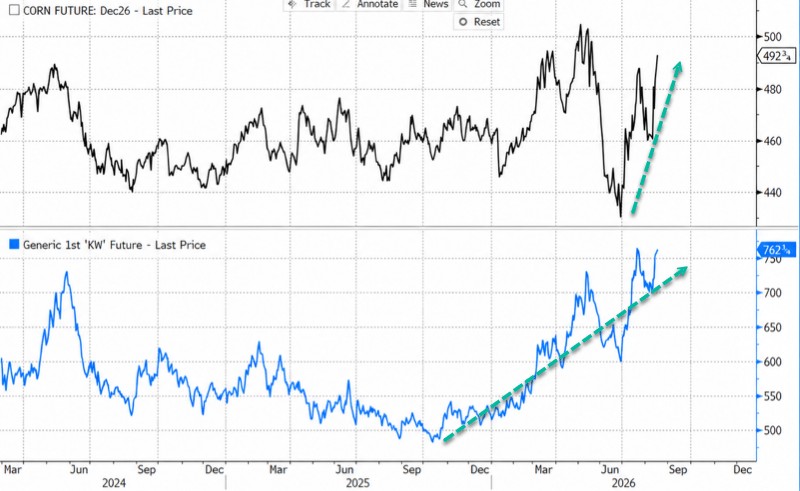
Chicago corn futures are approaching their 2026 highs, while wheat futures are closing in on levels last seen in 2023.
Meanwhile, and perhaps most alarming, the broader agricultural complex is confirming the move in soft commodities. The Bloomberg Agriculture Spot Index rose to about 406, its highest level since early 2023 and roughly 27% above its 2024 low.
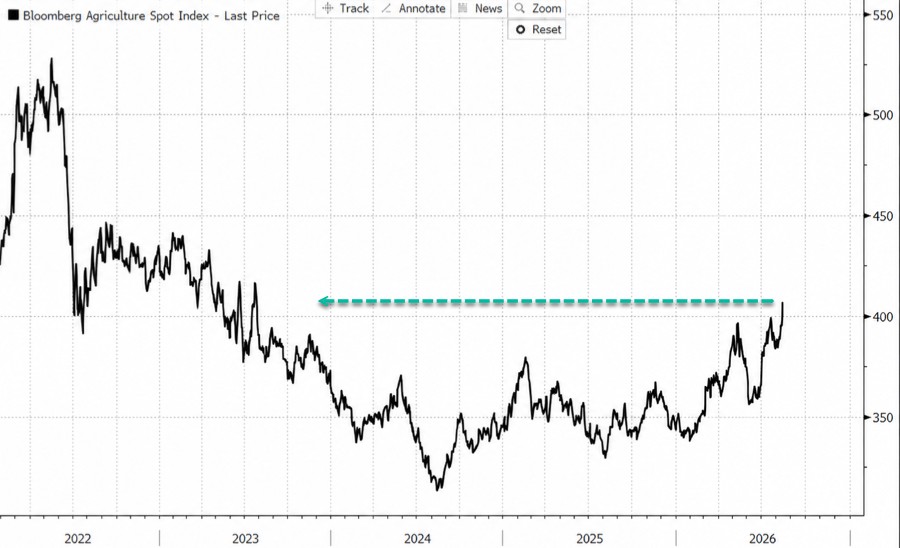
The benchmark remains below the extreme peaks reached during the 2008-10 Arab Spring crisis and 2021-22 food crises, but its accelerating upside momentum suggests inflationary pressure is building across the broader food complex.
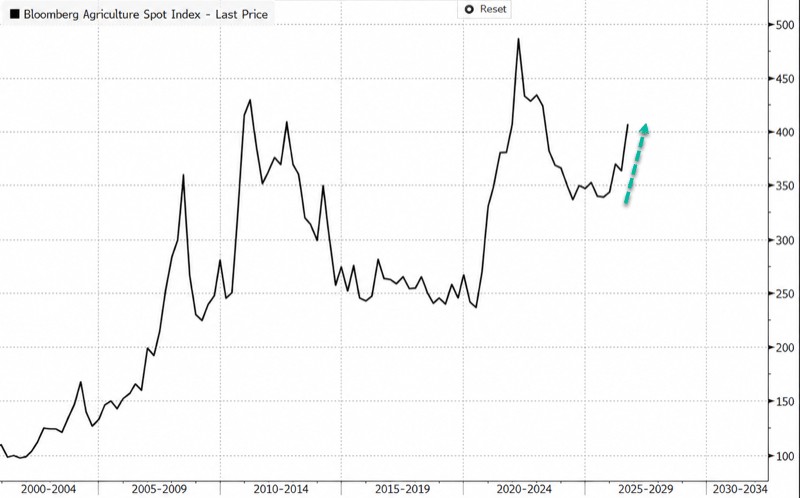
The latest moves provide further evidence that Szentivanyi's global food-crisis scenario may become a higher-probabilityoutcome in 2027.
Meanwhile, the diesel crack spread is blowing out, a key indication of a "perfect storm" brewing in the refined products market that will certainly add to inflationary forces in the food complex.