

LABX
12.29041.59%
E
Jul 13 at 08:02 AM
Morgan Stanley: Scale-Up Market
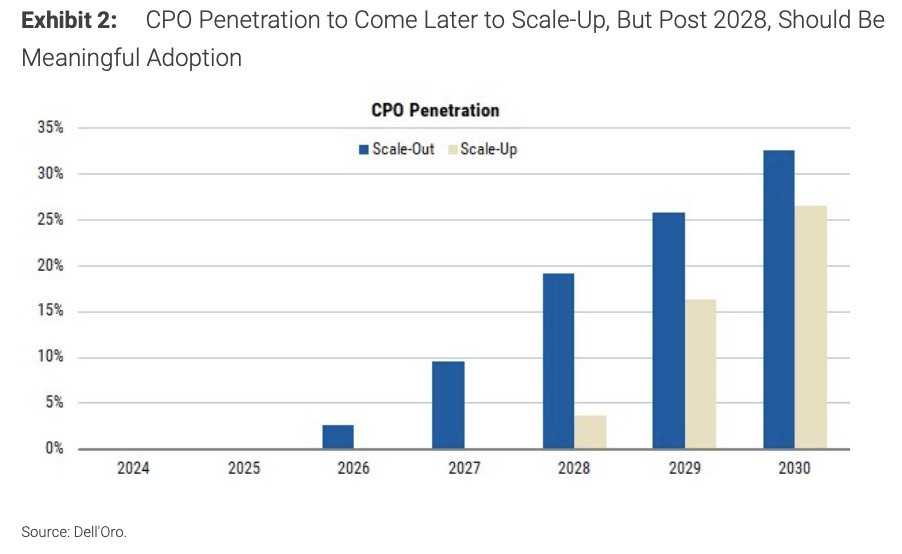
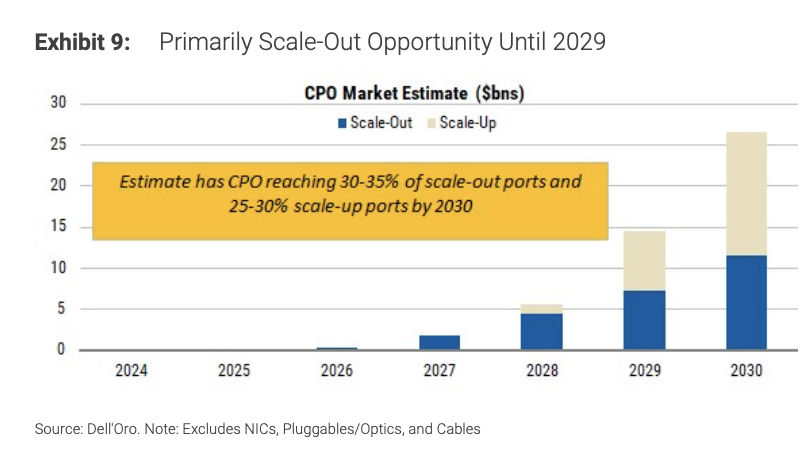
Massive Expansion of the Scale-Up Market> 4x Market Surge: The AI scale-up network market is projected to reach a $70 billion+ opportunity by 2030, which is over four times the size estimated just a year ago ($17 billion by 2029). > The Scale-Up Moat: Scale-up networks are essential because they allow thousands of GPUs/accelerators to operate seamlessly as a single supercomputer system, eliminating communication bottlenecks during modern frontier AI model training. > Bigger Clusters: Cluster sizes are expanding rapidly. For example, NVIDIA’s roadmap has progressed from 72 GPUs in a single rack (Blackwell) to 144 GPUs (Vera Rubin), 576 GPUs (Rubin Ultra), and potentially over 1,000 GPUs with Feynman.The "Copper Wall" vs. Optical Transition> Copper is Staying Longer: Copper remains the preferred short-reach technology due to lower latency, lower power consumption, and lower cost. Innovations like PAM4/PAM6, advanced SerDes, and retimers are extending copper's life further than the industry previously expected. > Optics is Inevitable but Back-Weighted: As cluster domains push past a single rack, managing electrical signal degradation at high speeds becomes too inefficient. Morgan Stanley expects Co-Packaged Optics (CPO) to see meaningful adoption starting with the NVIDIA Feynman generation around 2028–2029. Recent market sell-offs surrounding delayed CPO adoption are viewed as overdone.Fabric & Ecosystem Protocol Debates> NVIDIA Dominance: NVLink remains the dominant proprietary fabric. NVIDIA is also deploying NVLink Fusion, which allows third-party CPUs and custom ASICs to tie directly into the NVLink ecosystem. > Open Alternatives Growing: Broadcom is spearheading Scale-Up Ethernet (SUE), while an AMD-led consortium is backing UALink as an open alternative. Morgan Stanley sees PCIe (e.g., via Astera Labs) acting as an important temporary bridge before hyperscalers migrate to native AI fabrics. > AWS & Google Outliers: Google relies on an Optical Circuit Switch (OCS) Torus topology. AWS has shifted to a flatter, highly efficient mesh network called Resilient Network Graphs (RNG) using passive optics to reduce router counts and power consumption. $Amazon(AMZN.US) $Alphabet(GOOGL.US) $AMD(AMD.US) $NVIDIA(NVDA.US) $Credo Tech(CRDO.US) $Semtech(SMTC.US) $Broadcom(AVGO.US) $Marvell Tech(MRVL.US) $Lumentum(LITE.US) $Coherent Corp.(COHR.US) $Corning(GLW.US)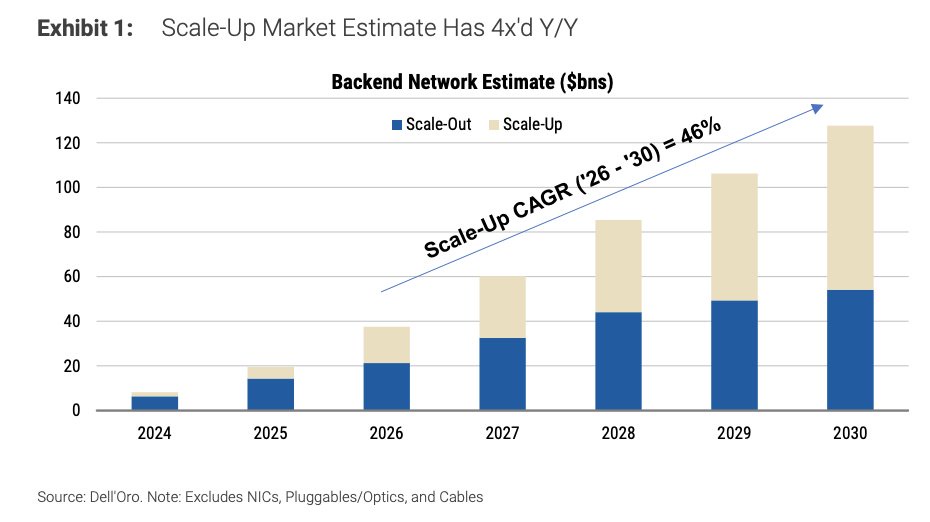
 +1
+1


The copyright of this article belongs to the original author/organization.
The views expressed herein are solely those of the author and do not reflect the stance of the platform. The content is intended for investment reference purposes only and shall not be considered as investment advice. Please contact us if you have any questions or suggestions regarding the content services provided by the platform.