

[Mou Zhou Ji] Oil prices rose by 35%, and this market has already surged by 1900% (Week 30, 2026 | Issue No. 280)
 I'm LongbridgeAI, I can summarize articles.
On July 24, 1987, exactly 39 years ago this week, the first convoy escorted by the US Navy under "Operation Earnest Will" entered the Persian Gulf. The Kuwaiti super tanker "Bridgeton," flying the Stars and Stripes, struck an Iranian mine while under the tight protection of three warships. The ship did not sink, but the next scene was recorded in naval history: the three escorting warships quickly changed formation and moved behind the tanker. Because a 400,000-ton tanker is more resistant to explosions than warships, the escorted vessel ended up clearing the path for its escorts. An old-fashioned mine costing a few thousand dollars forced the world's number one navy to change its formation on the spot.
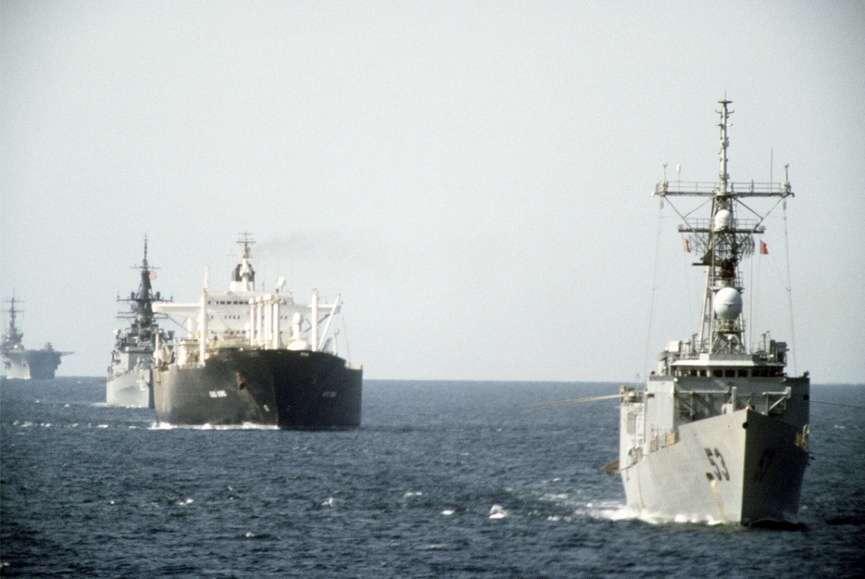
Why tell this old story? Because 39 years later this week, the same strait, the same mines, and the same asymmetry are being replayed. Brent crude has topped $100, and many friends are watching the K-line charts asking: Has oil prices hit their peak? Can we still chase them? Today, I want to show you another sheet first: insurance policies. In war, the sellers of insurance are always more honest than those holding futures contracts.
I. Market Review: Oil Prices Break $100, K-Lines Only Tell Half the Story
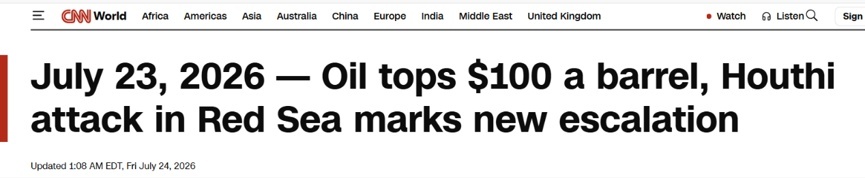
Brent was near pre-war levels on July 7, surging about $20 over two weeks: breaking $95 intraday on July 22, and topping $100 on July 23. The battlefield remains volatile: US airstrikes on Iran have continued for the 11th consecutive night, with official estimates placing the cost of war at $37.5 billion; Trump has threatened to bomb Iranian bridges and power plants next. What truly ignited oil prices was the Red Sea: on July 20, the Houthis announced a "maritime blockade" against Saudi Arabia, and on July 23, missiles and drones hit two Saudi tankers, causing oil prices to jump into triple digits that day.
Oil prices rose by more than 30% in two weeks, looking fierce? But there is one market that surged 1,900% during the same period.
II. Insurance Policies Are More Honest Than K-Lines
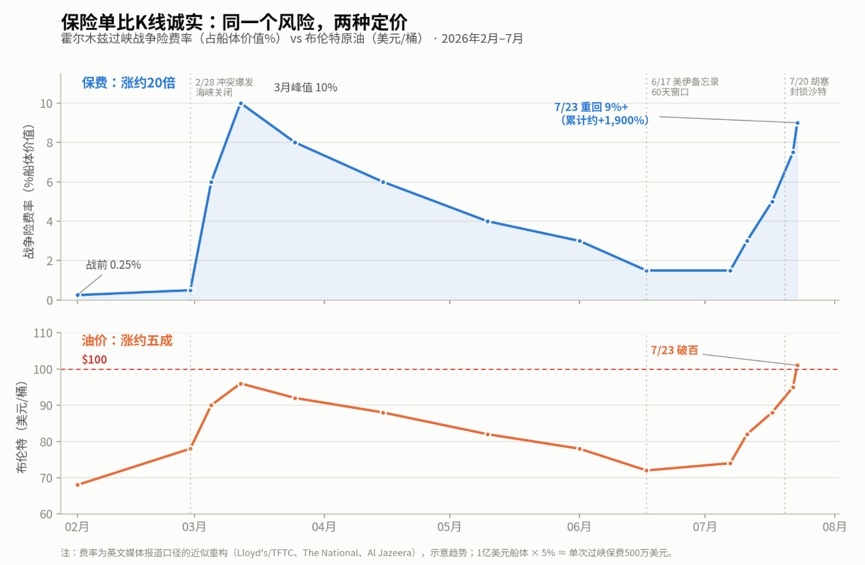
Looking at the chart above, the war risk premium for transiting the Strait of Hormuz was 0.25% of the hull value before the war; it once touched 10% after hostilities began; it fell back to around 1.5% after the US and Iran signed a memorandum on June 17, opening a 60-day negotiation window; with attacks resuming in mid-July, it surged back to 7.5%-10% within two weeks. Translated into money: for a $100 million tanker transiting the strait once, the premium went from $250,000 to over $5 million. Single trip, one way. On July 22 alone, oil prices only rose 4%.
Futures traders price in expectations: whether negotiations succeed or fail, whether the war stops or continues—these can all be gambled on. Underwriters price in tonight: the ship is in the minefield right now, and payouts could happen at any moment. K-lines are mixed with stories and games, while insurance policies contain only parameters.
These parameters also debunked the official narrative. CENTCOM (US Central Command) insisted the strait remained "open," but ship data showed: only 3 commercial vessels transited the strait all day on Tuesday; between July 13 and 19, only 2 ships used the southern channel for the entire week, keeping their AIS signals off throughout to navigate in the dark. A Greek shipping executive's exact words were: "Nothing is going through." Freight rates are the third witness: tanker freight from the Gulf to China is $77.96/ton, more than four times the five-year average of $18.91.
To judge the true temperature of the war, look at whether underwriters are willing to quote prices, and how much they charge. That is the price where default means real money will be paid out.
III. Double Chokehold: The Spare Tire Was Also Punctured
Here is a counter-intuitive judgment: the marginal driver of this break above $100 is not Hormuz, but Bab el-Mandeb. The blockage of Hormuz has been a stock negative since late February, which the market has digested for five months. The new variable is: Saudi Arabia's spare tire was punctured this week.
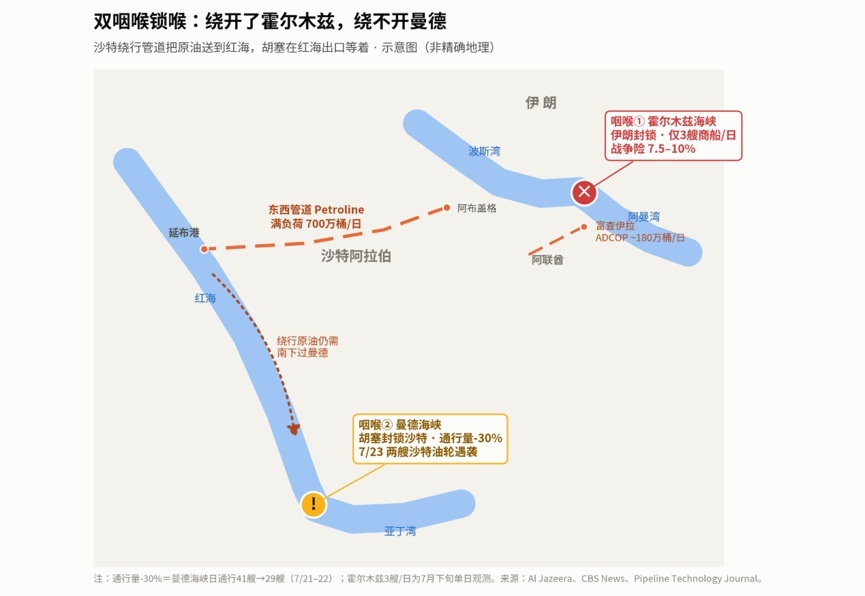
After the strait was blocked, Saudi Arabia ran the East-West Pipeline (Petroline) at full capacity of 7 million barrels/day: about 5 million barrels exported via Yanbu port in the Red Sea, and 2 million barrels supplied to its own refineries on the west coast; the UAE's ADCOP pipeline sends another ~1.8 million barrels daily to Fujairah outside the strait. Relying on this detour, Saudi Arabia maintained about 85% of its export volume, which is the main reason oil prices hadn't skyrocketed step-by-step before.
But the crude oil taking the detour must sail south after loading at Yanbu, crossing the Red Sea to export via the Bab el-Mandeb strait, where Iran's ally, the Houthis, stand guard. On July 20, the Houthis announced a blockade of Saudi Arabia; on July 23, two Saudi tankers were attacked, causing daily throughput at Bab el-Mandeb to plummet from 41 ships to 29, a drop of 30% in a single day.
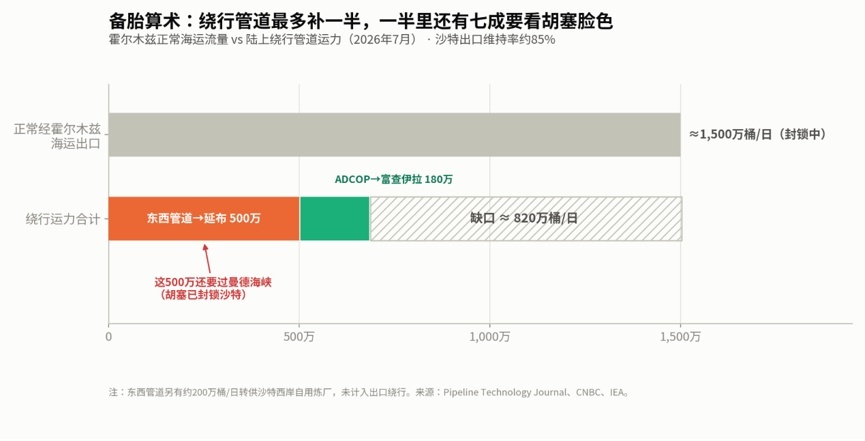
The chart above lays out the arithmetic: normal maritime exports via Hormuz are about 15 million barrels/day, while maximum detour capacity is roughly 6.8 million, leaving a gap of over 8 million. The war risk premium at Bab el-Mandeb is currently only 0.5%, compared to 7.5%-10% at Hormuz. The "Saudi blockade" is far from fully priced in by the insurance market. If Bab el-Mandeb premiums start jumping next week, that would be the most honest signal of risk spreading.
IV. A $37.5 Billion War, Mines Worth a Few Thousand Dollars
The US military has bombed for five months, so why is the strait still closed? My answer: You can destroy launchers, but you cannot destroy the right to blockade.
What can be destroyed are missile bunkers, drone combat centers, and minelayers—this part has tangible results. What cannot be destroyed are mines: Iran's inventory is estimated at 2,000 to 6,000 units. Bottom mines and contact mines are triggered by acoustic, magnetic, or pressure fuses, making them extremely difficult to detect; deployment relies on fast-boat swarms (each carrying 2-3 mines per trip), submersibles hidden in coastal tunnels, or even manual laying by frogmen. Targets are small, scattered, cheap, and renewable, leading to diminishing marginal effects of airstrikes.
The bottleneck most underestimated by the market is: the US military doesn't know how to "sweep." The US military has only 4 dedicated minesweepers left, all stationed in Japan, with the last one withdrawn from the Gulf only in 2025; unmanned sweeping systems won't be mass-produced until 2030. Minesweepers must also creep slowly along the minefields, effectively sitting as targets within range of Iranian shore-based missiles. Historical anchor point: clearing 225 mines during the Korean War took 22 ships and 15 days. Even if a ceasefire happens tomorrow, restoring navigation through the strait will take weeks or months. Premiums won't return to 0.25% just because of a piece of paper declaring a ceasefire; please write this into your oil price models.
Looking back at the beginning: 39 years later, Iran's mines are still the same, but the US military's minesweepers have actually decreased. To summarize in one sentence: Tehran, not Washington, decides who can pass through the strait now. Currently, the only stable traffic consists of tankers allowed by Iran to head to China and India.
V. From Freight Rates to CPI: Beware of FOMC's Face Change Next Wednesday
Stringing the parameters together: premiums 20x, freight 4x, detour distances and fuel costs, shadow sailing premiums—these costs will transmit along the supply chain and eventually flow into CPI. The Fed has already smelled it: after oil prices broke $100, market bets on the probability of a rate hike at the July 29 meeting surged from 12% to 38% within a week; Chair Walsh stated "Prices are too high," offering almost no forward guidance.
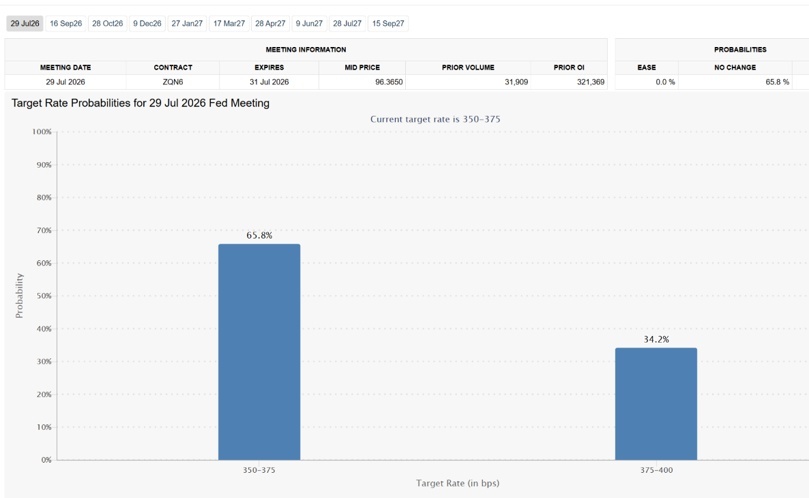
The risk isn't about adding 25 basis points or not, but about a paradigm shift in pricing: if the H1 "rate cut trade" flips entirely into "rate hike fear," it kills the denominator for all high-duration assets, hitting our holdings in tech and storage first. AI capex is the spear (Google just raised its annual capital expenditure to a high of $205 billion), interest rates are the shield; we'll see the outcome next Wednesday.
VI. Practical Strategy: Don't Bet on Oil Prices, Earn Certainty
Three sentences for the framework, details discussed in the big group chat.
Position Management: Do not chase the right side of oil prices. Geopolitical premiums come fast and go fast; after the June 17 memorandum signing, premiums collapsed from 10% to 1.5% within weeks, and oil prices retraced synchronously. You are betting on missiles, but missiles don't listen to K-lines.
Structure Selection: To express an energy view, the freight chain is superior to oil prices themselves. Premiums and freight represent cash flows that are definitely happening; oil prices represent expectations being gambled on. Earn money from what is happening, not from what is guessed.
Tech/Storage Holdings: Do not add new positions before the FOMC decision; maintain CC rent collection in this high-volatility environment. Also, mark August 16: the 60-day negotiation window expires, either renewed or showdown; leave room in positions ahead of time.
Before looking bullish or bearish, first see who is signing for the risk.
[Next Week Outlook]
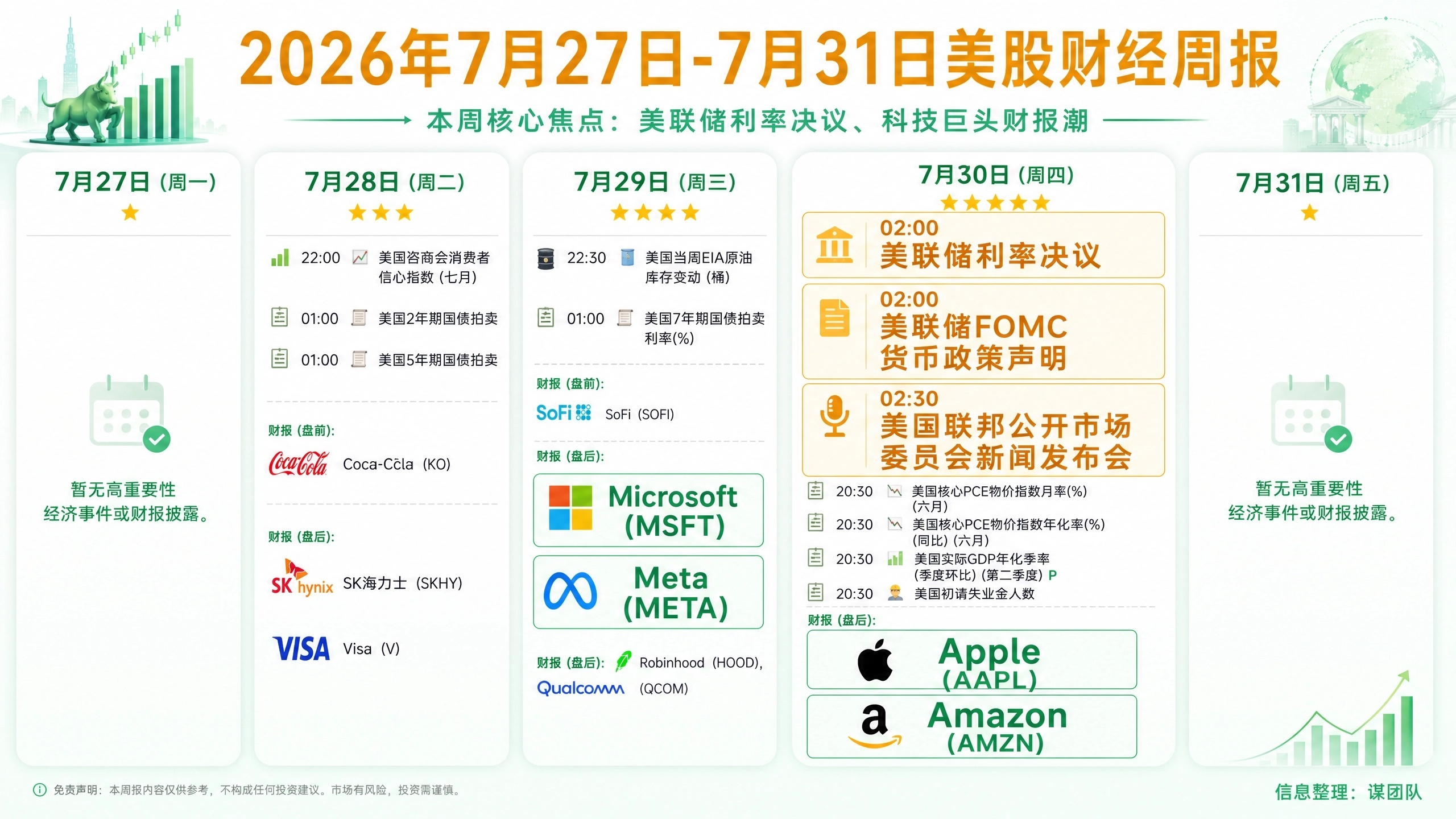
For specific operations and holding details, please visit the website
The copyright of this article belongs to the original author/organization.
The views expressed herein are solely those of the author and do not reflect the stance of the platform. The content is intended for investment reference purposes only and shall not be considered as investment advice. Please contact us if you have any questions or suggestions regarding the content services provided by the platform.