

He Was Right About AI — and Still Got Wiped Out. Here's What 4x Leverage Really Does
 I'm LongbridgeAI, I can summarize articles.
25 years old, a former OpenAI employee, made his name overnight with a long essay betting that AI would take off exponentially — Situational Awareness. Leopold Aschenbrenner then launched a fund under the same name, poured that entire thesis into it, layered on roughly 4x leverage, and put up nearly 10x returns in two years, with assets that briefly hit $45 billion.

Up to here, it's still a standard genius story. But over the past few weeks, this fund has only about $10 billion left, most of its positions force-liquidated by the investment banks.
So what actually happened these past few weeks? AI stocks first sold off through July. Goldman Sachs, JPMorgan and Bank of America called almost simultaneously, demanding he top up margin. His positions had been propped up on leverage borrowed from those banks in the first place — and once losses hit a certain line, the creditors have the right to force him to pay up immediately. He couldn't. In the end he sold his entire public equity portfolio to another big institution, Citadel. US financial pundit Jim Cramer called it a "clearing event."
But this drama is nothing new. Almost the exact same script played out once before, five years ago.
Five Years Ago: Archegos's 48 Hours
March 2021. A man named Bill Hwang, through his fund Archegos, had built up more than $160 billion in market positions. But the money that actually belonged to him behind all that was only about one-fourth to one-fifth of it — the rest was all borrowed.
How did he borrow it? Through something called a total return swap. Put simply, he barely held those stocks himself; instead, he signed a contract with an investment bank. The bank used its own money to buy them, and whether the shares rose or fell was all on Bill Hwang's account — he just had to put up some margin in the middle and pay a little interest. This way, with $1 of margin he could move $4 or $5 of stock in the market. That's how the leverage got stacked up.
This setup hid an even more subtle advantage. Because the stocks legally weren't in his name, his name never appeared on any public shareholding list. Who he was heavily long on, how big his bets were — outsiders couldn't see it, and neither could the regulators.
Even more ruthless: he signed the same kind of contract separately with several investment banks. Each bank only saw the one deal it had taken on, each assumed the counterparty was a modestly sized, reasonably manageable client, and so charged him margin and lent to him by "small client" standards. Not one of them knew that, adding up every bank's exposure together, this man had already piled a staggering $160 billion onto the market.
This whole structure was seamless as long as prices kept rising. It had only one fatal weakness: it couldn't fall.
And of course, several of his big holdings started to fall. The moment prices dropped, the margin he'd put up at each bank was instantly short, and the collateral calls came one after another. He couldn't meet them, so the banks moved to sell his stocks to cover the debt. But dumping a sell order that big onto the market only drove prices down harder — the hole not only didn't get filled, it kept getting deeper, followed immediately by another round of calls. In just 48 hours, $160 billion in positions went up in smoke.
The Ones Who Actually Paid Were the Banks
You think Bill Hwang was the only one who got hurt? No. The ones who actually paid, that time, were the banks. Credit Suisse lost more than $5 billion on this one deal — a hole that later became one of the starting points of its slide toward being acquired. Nomura lost $2.9 billion too. Across the whole industry, losses topped $10 billion. Bill Hwang himself was convicted of market manipulation a few years later.
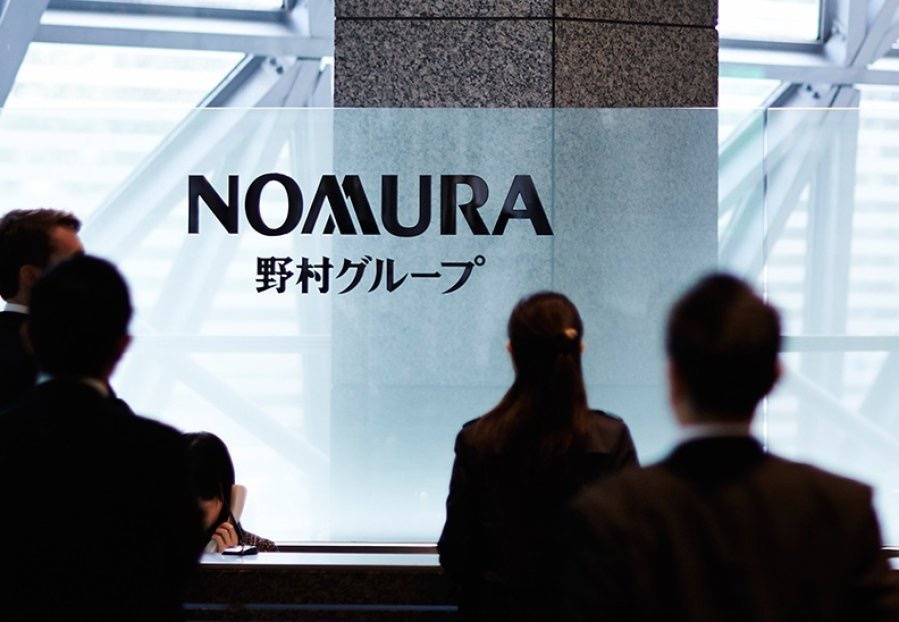
One man's leverage — and in the end, it was a pile of banks that paid his tab.
This Time, Why Didn't a Second One Fall?
So where exactly is this time different from 2021?
Look at 2021 first. The banks only realized afterward that they were all standing on the same batch of stocks, so everyone wanted to dump first. The result was they drove the price lower and lower themselves, and whoever ran a little slower ate the loss.
This time flipped it around. Citadel took over Leopold's entire public portfolio in one go — like someone carrying off the whole hot potato at once. The banks didn't have to trample over each other dumping into the market; they were basically off the hook once they'd made their margin calls in time. That's why Cramer called it a "clearing event." The market digested a blown-up position cleanly, with no contagion and no second one falling after it. This time, the pain was the fund's own — not the whole system's.
What's Deadly Was Never Just the Word "Leverage"
Whether or not the banks got hurt, these two men actually tripped over the same thing. Leverage magnifies gains and magnifies losses too — everyone can recite that. But what's truly deadly was never leverage alone. It's these three things coming together: the leverage has to be high, the positions concentrated enough, and those positions highly homogeneous on top of that — rising together, falling together.
Start with homogeneity. Here's a spot a lot of people get wrong. Diversifying risk isn't about "buying enough different things," it's about "buying things that won't fall together." Leopold's portfolio looked fairly diversified at first glance — compute, power, miners, Bitcoin, spanning several industries. But behind them was really one single logic: AI will keep burning cash and keep expanding. The moment that logic gets questioned by the market, these positions stop being several independent bets and become the same bet placed several times over. The more concentrated the positions, the heavier that one bet — and when it's time to fall, not one of them can hold up another.
Add leverage, and the last piece falls into place. If they'd bought with their own money in the first place, this drop would at most have made the books look ugly for a while — as long as they still believed in the direction, they could have just gritted their teeth, held still, and waited for it to come back. But once you add leverage, you don't even get "hold still" as an option. The moment the books lose down to the line, the bank immediately forces you to top up or cut — like someone prying your hands off the wheel at your most desperate moment. That bit of unrealized paper loss gets rewritten into a real-money exit.
That's the most sinister thing about leverage. What it steals is your right to "wait it out." Even if the direction turns out right, you didn't survive to the day it paid off.
Bill Hwang was like this, and so was Leopold. The tools changed, the era changed, the lead role switched from that batch of overhyped heavy holdings to AI — but the way that rope snaps taut, not a single word of it has changed.
You might think a multi-billion-dollar blowup is a rich man's game that has nothing to do with you. But shrink the multiples down and the structure is exactly the same. Go all-in on the hottest theme of the moment, add a little leverage through a margin account, run into a decent-sized pullback, and you'll get the same top-up notice from your broker, and you can just as easily be forced to sell at the most painful spot. The only difference is a few fewer zeros behind the number.
So don't just fixate on the half-sentence "he once made 10x." The leverage bill always comes due — you just don't know when, or who's going to pay it.
What they lost was never their judgment. It was the structure. The structure had written the ending long ago — it just let the genius stand up high for a little while longer.
The copyright of this article belongs to the original author/organization.
The views expressed herein are solely those of the author and do not reflect the stance of the platform. The content is intended for investment reference purposes only and shall not be considered as investment advice. Please contact us if you have any questions or suggestions regarding the content services provided by the platform.