

Nvidia's $500B Play: When a Graphics Card Becomes a Mortgageable Asset
 I'm LongbridgeAI, I can summarize articles.
On 10 August 2026, in a CNBC interview, Jensen Huang said: "This is the first time technology chips have become an investable asset class." Blackstone President and COO Jon Gray put it even more bluntly, comparing compute to a house in the eyes of a mortgage lender and calling it a "financeable asset class."
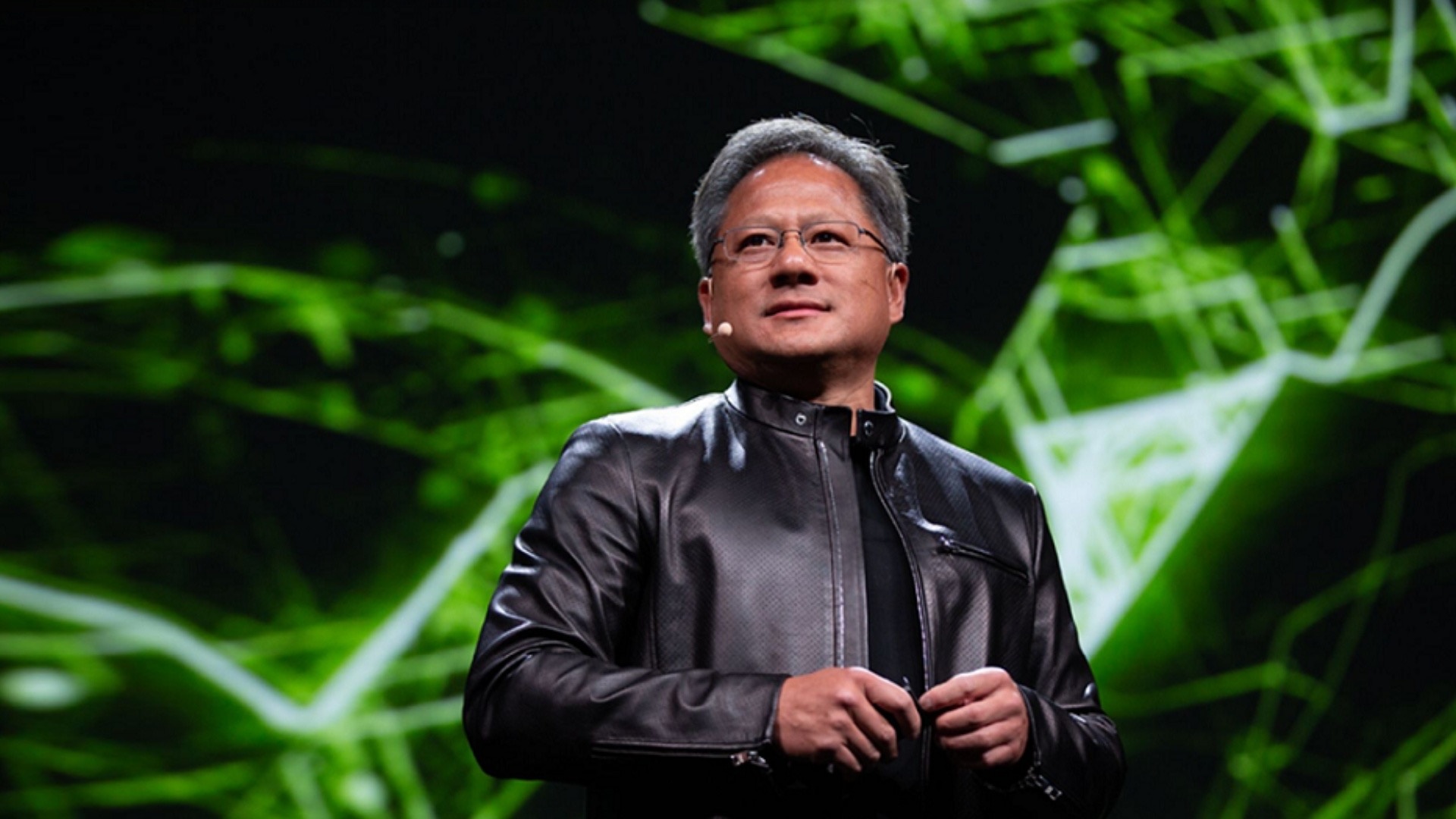
They had grounds to talk that way. The same day, Nvidia signed a partnership with Apollo, BlackRock, Blackstone, Brookfield, Goldman Sachs and KKR — six of the asset managers and private credit giants best able to mobilise capital on Wall Street — to jointly build a financing platform and unlock $500 billion for global AI infrastructure.
More than the $500 billion figure, those two remarks are worth chewing on. They're really saying the same thing — compute is being financialised.
What Makes a Graphics Card an Asset?
Financialisation sounds a bit abstract, but it's actually simple. When something originally "bought to be used" starts to be pledgeable, rentable for income, and packageable into securities to sell to others, it goes from being a tool to being an asset.
Real estate walked this path first. An office tower was originally for collecting rent and housing offices; later it got packed into REITs, sliced into mortgage-backed securities, and landed on insurance companies' balance sheets. Aircraft are much the same — most airlines today lease planes from leasing companies, and the leasing companies then package the planes into bonds and sell them. The thing is still the same thing, but its identity within the financial system is completely different.
So what qualifies compute to squeeze into this club? Huang gives three reasons: renting out GPUs generates cash flow, they can be used for several years, and they can be shifted from one customer to another. Put those together, and in the eyes of a lender, the difference between a graphics card and a house you can rent out and mortgage isn't much.
Taking the Financial Machine Apart
To genuinely turn compute into a tradeable asset, you need a whole financial machine to assemble it. As for what that machine looks like in practice, CoreWeave has already demonstrated it for everyone. It first pledged the GPUs and customer contracts it held to borrow money — one recent facility ran as high as $8.5 billion, and Moody's even gave it an A3 investment-grade rating. Being able to borrow at "investment grade" shows Wall Street really does view that pile of graphics cards as reliable assets. That debt, though, is carried by a purpose-built shell company (the industry calls it an SPV) and doesn't count on the parent's books. That way, if it can't be repaid, the bad debt doesn't burn the parent. The price is that outsiders flipping through the financials can't gauge how much debt it's actually carrying. Between Oracle, Meta, xAI and CoreWeave, the AI infrastructure debt shifted off-balance-sheet this way has already piled up to roughly $120 billion. Further down the chain, this debt can also be packaged into securities and sold to insurance money and private credit, just like mortgages back in the day. JPMorgan has run the numbers: securitisation in the data centre category alone will run $30–40 billion a year across 2026 and 2027.
Nvidia's $500 billion this time adds another layer of insurance to this machine. It has committed to backstop up to 25% of those deals — $125 billion. The one selling the cards personally guarantees the bills of the ones buying them, which amounts to giving the lenders a promise: lend without worry, and if it really blows up in your hands, I'll catch it.
And just like that, an asset class that didn't exist before takes shape. The significance of this $500 billion isn't how many more cards Nvidia gets to sell — it's that Wall Street has, for the first time, moved the whole business of "compute" into the financial ledger.
The Crack in the Machine: The Collateral Shrinks by Itself
The problem lies with the collateral. Assets finance is willing to hold long term are usually ones that depreciate fairly slowly. Pledge a building for ten years and it's still a building; a plane can fly for twenty years. GPUs run the opposite way — once the next generation of a top-end card arrives, the second-hand price can be cut straight in half. The $7.5 billion of debt CoreWeave borrowed in 2024 begins repayment in January 2026, landing right at the moment the collateral is losing value — the thing pledged in shrank before the loan was even paid off. Huang says GPUs can be used for several years and qualify as collateral, but this is actually the one of those three qualifying conditions that holds up least under scrutiny.
There's another, more subtle change. Once something is financialised, what pushes its price around is no longer just real demand — it's also money and leverage. When liquidity is loose, everyone borrows to buy it higher and higher. And once money tightens and the collateral loses value, that same borrowed money turns around and accelerates the fall.
Twenty-Odd Years Ago, Fibre Optics Was Also an "Asset"
This sort of thing happened once before, over twenty years ago. Around 2000, the hot theme was the internet, and the shovel sellers were Cisco, Lucent and Nortel. Wall Street's playbook back then looked a lot like today's: turning an entire round of infrastructure expansion into a tradeable financial asset. Fibre was laid across the country, telecoms issued bonds to buy equipment, the bonds were sold all over Wall Street, and even "bandwidth" was once put on the table to be traded.
The most aggressive step was equipment makers stepping in themselves, lending money to customers to buy their own goods. Lucent alone committed $8.1 billion in vendor financing, Nortel $3.1 billion, Cisco $2.4 billion. Cisco even booked the money it lent out as its own revenue — of its $20 billion in revenue in 2000, roughly a tenth was "financed" into existence this way. With money circling like that, outsiders had no way to tell how much of the demand was real and how much was self-manufactured. Nvidia's $125 billion backstop this time is still the seller guaranteeing the buyer's bill — just gentler than back then.
But this kind of paper prosperity has a deadline: the day the customers can't pay. From 2000 to 2003, 47 emerging telecoms went bankrupt one after another. They couldn't repay their loans, and the pledged fibre had no buyers — huge amounts of it laid in the ground were never even lit up, which the industry called "dark fibre." In the end, the lenders could only write the bad debt off, loan by loan. Cisco's share price fell 89% from its peak. Twenty-odd years on, even with profits up sevenfold, it never got back to that 2000 high. The entire telecom sector saw over $2 trillion evaporate between 2000 and 2002.
But comparing this time with last time, two things are different. Nvidia has handed the lending business off to private credit players like Apollo and KKR, rather than carrying it directly on its own books — the risk is spread thinner, and also harder to see clearly. And the collateral has switched from fibre to GPUs. Yet both times, the bet is on the same thing: whether what gets pledged will still be worth something later. That bet was lost with fibre — and GPUs will lose value faster than fibre ever did.
Listen again now to Huang's line at the start, and it tastes different. Chips becoming an asset class is a step that probably can't be walked back; compute has gone from being a cost to being a new item on the financial ledger. It's just that this new item has a flaw nothing else has: it shrinks even as it's being used. Houses and planes don't do that. Whether an asset that depreciates while in use can hold up the financing structure Wall Street is stacking around it — nobody knows right now.


The copyright of this article belongs to the original author/organization.
The views expressed herein are solely those of the author and do not reflect the stance of the platform. The content is intended for investment reference purposes only and shall not be considered as investment advice. Please contact us if you have any questions or suggestions regarding the content services provided by the platform.