

Counting Screw Threads: Why Apple Picked an Engineer to Find the Next iPhone
 I'm LongbridgeAI, I can summarize articles.
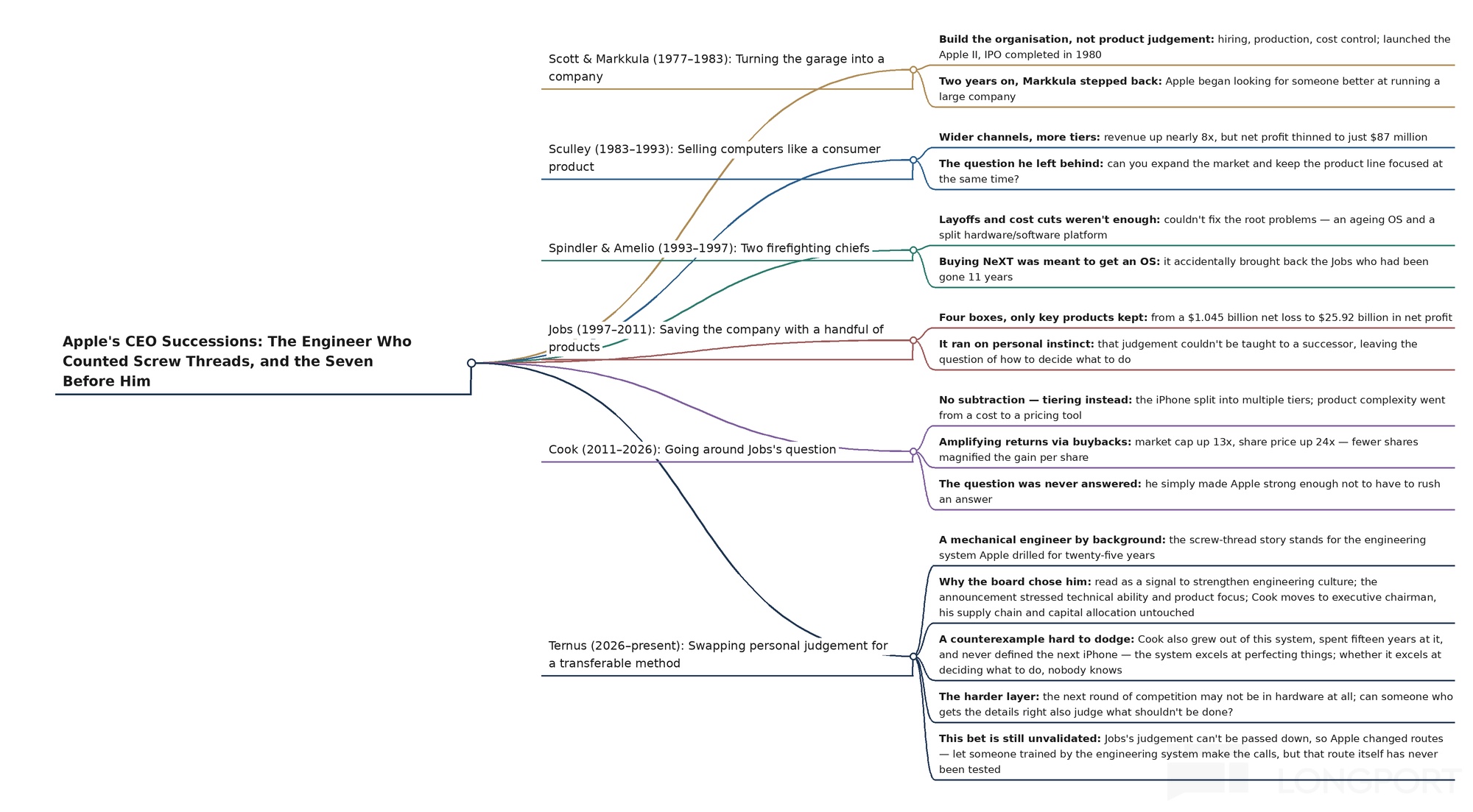
This slice of Apple history spans nearly fifty years, with plenty of characters and turns. If you want to take it slow, follow the eight CEOs straight through; if you'd rather grab the main thread first, scroll down to the mind map at the end.
In 2001, a 26-year-old John Ternus joined Apple's product design team. That was the year Apple released the first iPod, six years before the iPhone existed.
Twenty-five years later, he became the company's eighth CEO.
Apple has rarely picked its helmsman this way. Sculley was poached from PepsiCo, Amelio was brought in from National Semiconductor to put out fires, and Jobs came back eleven years after leaving, arriving with Apple's acquisition of NeXT, the company he founded.
The closest path to Ternus's is Cook's, but the two aren't the same either. When Cook joined Apple in 1998 he was already 37, having spent twelve years at IBM and a stint at Compaq — the "supply chain expert" identity was forged outside, and Apple was the third stop of his career. Ternus joined Apple only a few years out of school, having previously spent four years at a small company working on virtual reality headsets — this man, essentially, grew up inside Apple.
These eight men faced eight different versions of Apple: one had to turn a startup project into a company, one had to sell computers to ordinary people, one had to pull it back from the edge of collapse, and one turned it into the machine it is today, earning over a hundred billion dollars a year.
The answer each of them gave can almost always be traced back to where he came from.
The First Two CEOs: First, Turn the Workshop Into a Company
In 1977, Apple was less than a year old. Jobs was only 22, Wozniak just wanted to dig into computers, and neither had any experience running a company.
Early investor Mike Markkula brought in Michael Scott. This professional manager, formerly of National Semiconductor, became Apple's first CEO.
Scott's job wasn't to invent products but to build an organisation: hire people, arrange production, control costs, and turn a garage startup project into a company that could actually ship. The Apple II launched during his tenure, and Apple completed its IPO in 1980.
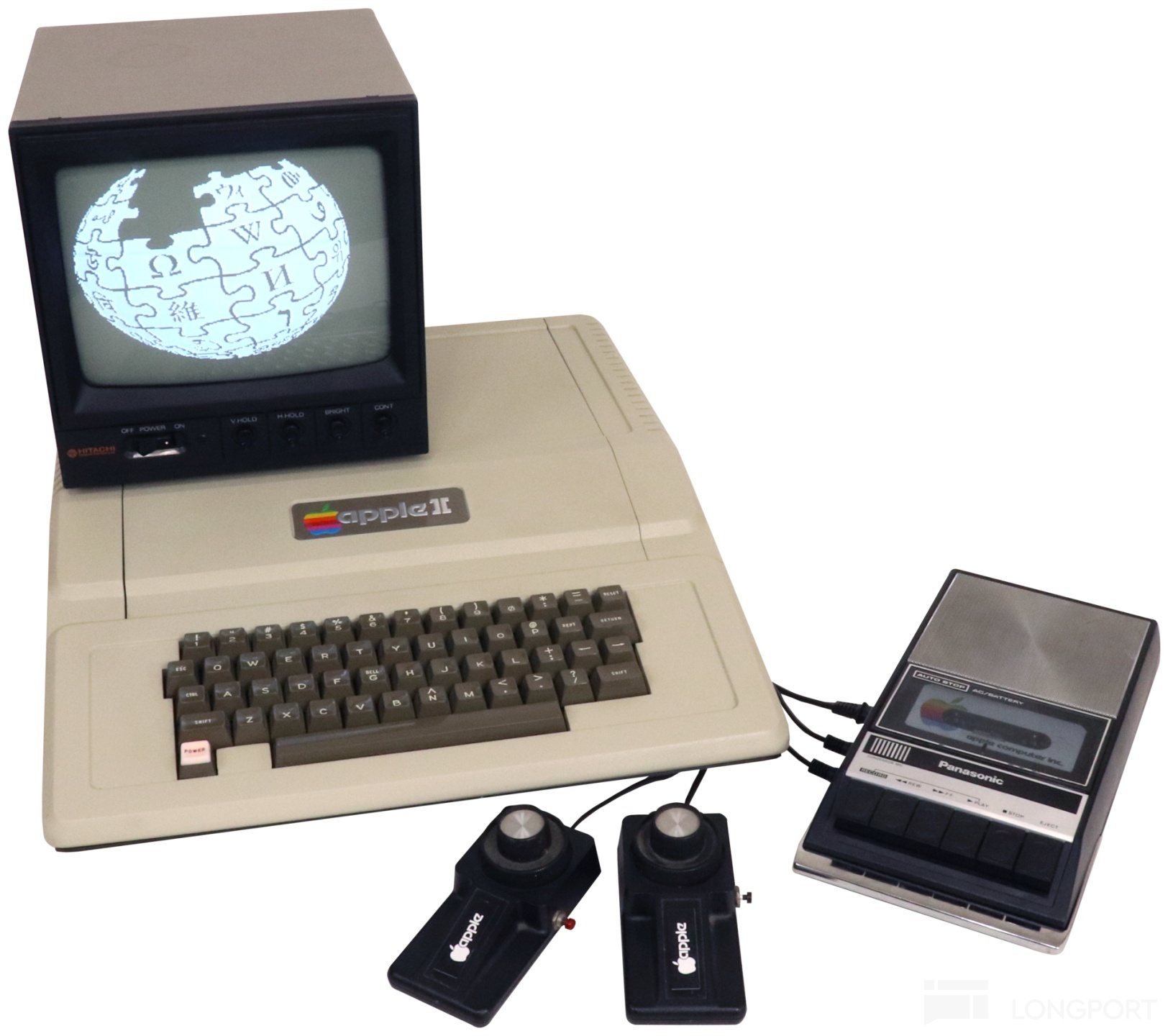
In 1981, Scott left and Markkula took over himself as the second CEO. Two years later, Markkula decided to step back behind the scenes, and Apple started looking for someone better at running a large company.
They picked PepsiCo president John Sculley — and the person who went out and poached him was Jobs himself.
Sculley: Selling Computers Like Pepsi
Sculley arrived in April 1983.
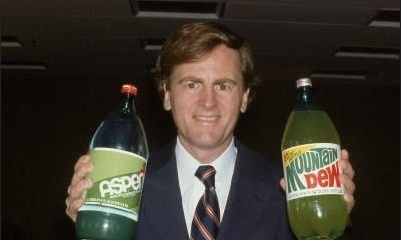
His expertise was consumer brands, channels and price management. He believed computers would eventually become a mass consumer product, so he expanded the dealer network, added product tiers, and pushed the Macintosh into schools, publishing and design.
Judged on results alone, he wasn't purely a failure. Apple's annual revenue grew from $983 million in FY1983 to $7.977 billion in FY1993 — close to eightfold.
But here's the problem.
A drink can reach more people through packaging, flavours and sizes; a computer needs its operating system, software, chips and components to work together. The more models there are, the more scattered the R&D, and the harder inventory and channels get to manage. By Sculley's later years Apple had multiple Mac product lines while also betting on new devices like the Newton — and still couldn't stop cheaper Windows PCs, with more software, from expanding their market.
In FY1993, Apple's revenue approached $8 billion, and net profit was down to just $87 million.
He proved Apple could become a mass-market brand, and he also left behind a question that would keep resurfacing: can you expand the market and keep the product line focused at the same time?
Spindler and Amelio: Two Firefighters, Neither of Whom Put the Fire Out
Sculley's replacement, Michael Spindler, was an operations manager grown inside Apple, long responsible for Europe and international business. He knew costs, channels and scale; after taking over he pushed through layoffs, opened up Mac clone licensing, and successively explored mergers with the likes of IBM and Sun.
FY1995 brought Apple $11.062 billion in revenue and $424 million in net profit; a year later, a loss of $816 million. He could adjust expenses, but he couldn't solve the more fundamental problem: the Mac's operating system had aged, and Apple's hardware and software platforms had drifted to opposite sides.
In 1996, the board brought in Gil Amelio. He had previously helped turn National Semiconductor around, and Apple expected him to replicate the rescue. He cut staff, squeezed spending, and searched for a new operating system — and the losses kept widening. FY1997 revenue fell to $7.081 billion, with a net loss of $1.045 billion.
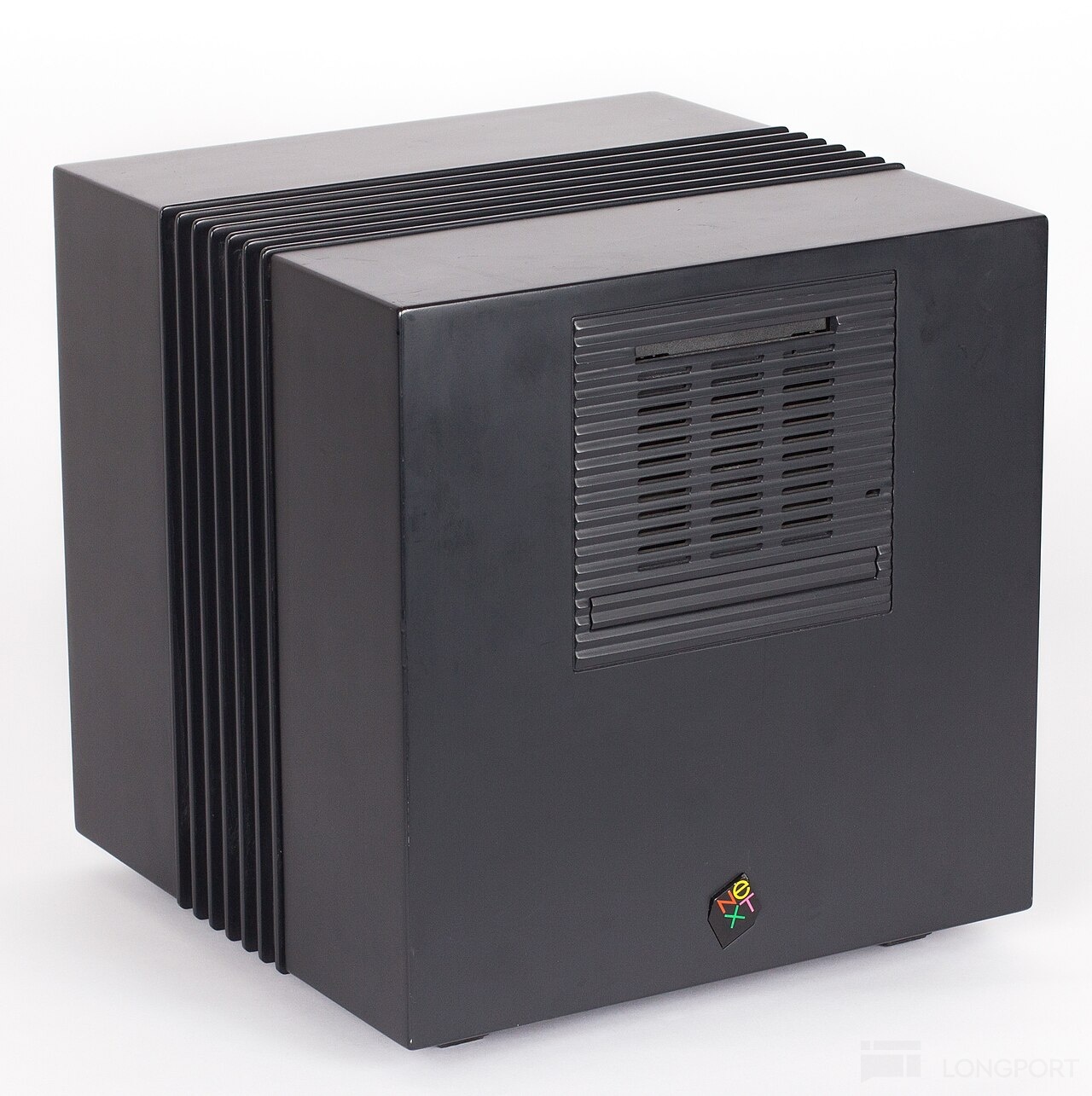
The most important decision of his tenure was spending $428 million to acquire NeXT. NeXT's founder was, of course, the Jobs who had left Apple eleven years earlier. The deal was originally meant to get a new operating system; what it actually did was bring Apple's most important product decision-maker back to the company.
Jobs: Saving the Company With a Handful of Products
After returning to Apple in 1997, Jobs dealt with the products first.
He drew four boxes — professional and consumer, desktop and portable — keeping only one key product per box. The Newton, Mac clone licensing and a mass of peripheral projects were shut down, with resources concentrated on a small number of devices.
Jobs habitually started from the product the user ends up holding, then made engineering, software and the supply chain work backwards around it. In FY1997 Apple's net loss was $1.045 billion; in FY1998, the company delivered $309 million in net profit. After that came the iMac, iPod, iPhone and iPad in succession. By FY2011, the year before he stepped down, Apple's revenue reached $108.25 billion with $25.92 billion in net profit.
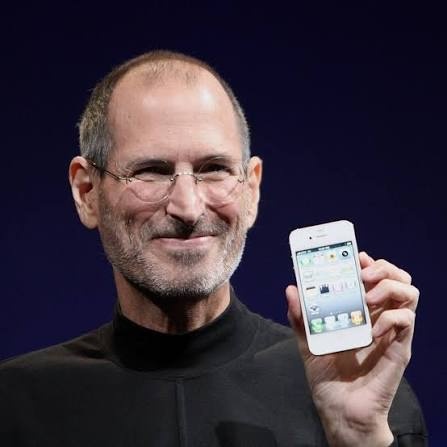
Jobs's method for handling complexity was to reduce the number of choices.
But focus itself isn't the answer; the hard part is judging what to cut and what's worth betting on. In the Jobs era, that judgement was mostly made by him. Apple could turn "make fewer products" into an institution, but it's very hard to write "recognise the next iPhone early" into a process.
That's the question he left his successors: after Jobs, what does Apple rely on to make the next big bet?
Cook: He Got Sculley's Old Answer Right
On 24 August 2011, Tim Cook took over as CEO. Inventory, capacity, delivery and cost were the languages he knew best.
To the question Jobs left behind, Cook's answer was to go around it: don't rush to bet on the next thing, first take what's already in hand to its absolute limit.
Jobs used four boxes to compress the entire company; Cook added tiers inside mature categories — the 2025 iPhone 17 line splits into four models: 17, Air, Pro and Pro Max. That isn't far from Sculley's idea of covering more people; the difference is that Cook has a supply chain that can manage dozens of variants across hundreds of markets.
Product complexity was a cost to Sculley; to Cook it became a pricing tool.
He also changed how Apple allocates cash. Dividends resumed and buybacks began in 2012, and by the first nine months of FY2026 cumulative buybacks approached $880 billion, with Apple's share count down about 44% from FY2011.
That explains a set of seemingly contradictory numbers: as of 31 August 2026, Apple's market cap was roughly $4.6 trillion, 13 times what it was when Cook took over; over the same period the share price rose 24 times. Total value up 13x, with nearly half the shares slicing the pie — and per share that becomes 24x. Buffett gave a more vivid version in his 2021 shareholder letter: Berkshire didn't add a single share, yet its stake in Apple rose from 5.39% to 5.55% — Apple's own buybacks shrank the denominator, so that increase cost Berkshire nothing.
By FY2025, Apple's revenue was $416.2 billion with net profit of roughly $112 billion — 3.8x and 4.3x their FY2011 levels. Cook turned Apple from a company waiting for its next hit into a machine that steadily generates cash.
But that machine's fuel has always been the iPhone: in FY2025 it contributed about half of revenue, and the services business grows on the user base of those same devices. Under Cook, both the Apple Watch and AirPods became new categories, yet not one of them ever changed Apple's growth curve; the car project was cancelled, Vision Pro remains a niche device, Siri has been delayed again and again, and in this round of generative AI, Apple is seen from the outside as a follower.
That question of Jobs's, Cook never answered. He made Apple strong enough that it didn't have to rush an answer — but the question stayed right where it was.
That's the situation Ternus is taking over.
Ternus: Looking for the Next Device Behind a Screw
The person the board chose for this situation is a mechanical engineer.
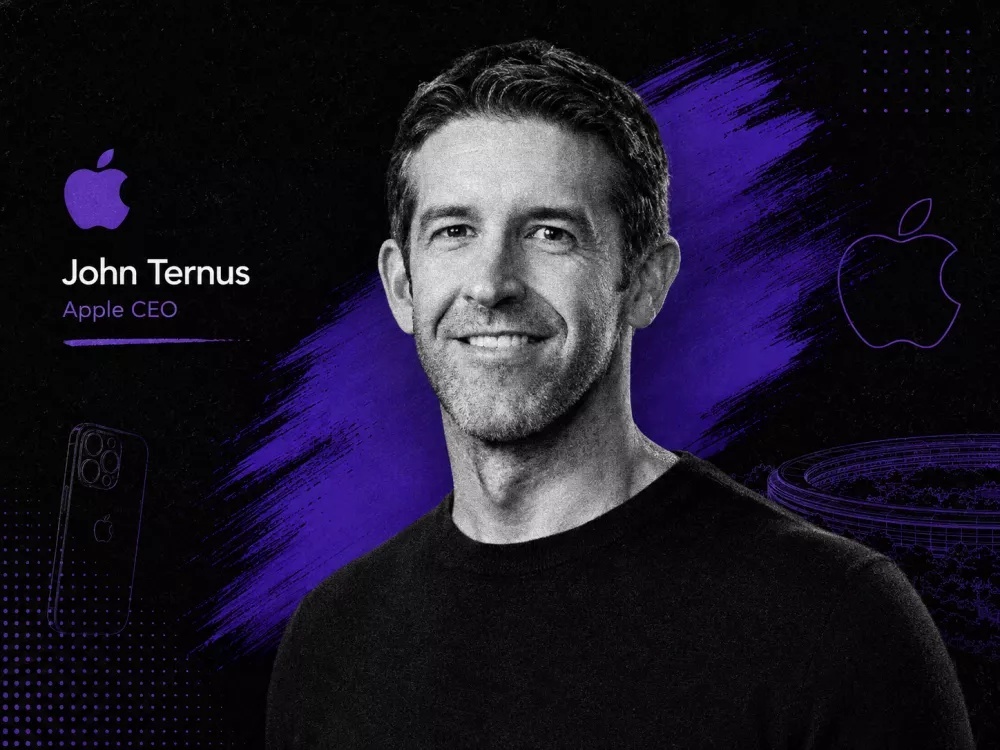
Ternus's first project after joining Apple was the Cinema Display.
Speaking at the University of Pennsylvania in 2024, he told a story from his first year on the job: he stayed past midnight at a supplier's factory, holding a magnifying glass and counting the threads on a single screw head on the back of a display. That batch of parts had been made with 35 threads; Apple's design spec called for 25.
He stopped and wondered at the time: what am I actually doing, is this normal? Later he understood — maybe it isn't normal, but it's right.
Ternus went on to work on or lead hardware engineering for the iPad, AirPods, multiple generations of iPhone, the Mac and the Apple Watch, and he lived through the Mac's transition from Intel processors to Apple's own silicon.
Jobs made his calls on personal instinct, a skill that's very hard to teach anyone else; Ternus relies on a way of working drilled into him over twenty-five years at Apple.
The outside world has broadly read this appointment as a signal: Apple wants to strengthen its engineering culture again. What the board emphasised in the announcement was his technical ability and his focus on product development; Cook moves to executive chairman, and the supply chain and capital allocation he built show no sign of being touched.
In my view, Apple is betting on something that hasn't been validated: since Jobs's kind of judgement can't be passed down, take another route — let someone trained by the engineering system for twenty-five years make the calls.
But there's a fact that's hard to dodge here: Cook was also a man grown inside Apple's system, spent fifteen years at it, and never managed to define the next iPhone either. The system is good at taking things to their limit; whether it's good at deciding which things to do, nobody knows right now.
Ternus himself sits inside that same doubt. The Apple Watch and AirPods have his fingerprints on them, and so does Vision Pro, which still hasn't proven commercial scale — he's a product of this method, and he also had a hand in the things this method failed at.
The harder layer is that the next round of competition may not be in hardware at all. Can someone who can count the threads on a screw also judge which things shouldn't be pursued any further?
Ternus once told students: "Believe you're as smart as anyone in the room, but don't assume you know as much as they do."
For someone who has to decide what Apple bets on next, the second half matters more. If he only sees product detail, Apple may build more exquisite devices while missing a shift in how people interact with them; if he abandons hardware-software integration in order to chase AI, Apple loses the very thing it has genuinely been good at for fifty years.
When Apple picked a CEO in the past, most of the time it was looking for an outsider who could solve the problem in front of it.
This time, it chose someone it raised itself — and placed the bet on that method. And that's the one thing Apple hasn't yet put to the test.


The copyright of this article belongs to the original author/organization.
The views expressed herein are solely those of the author and do not reflect the stance of the platform. The content is intended for investment reference purposes only and shall not be considered as investment advice. Please contact us if you have any questions or suggestions regarding the content services provided by the platform.