


$100 Oil Is Back: The New Market Shockwave Creating Winners, Losers, and Investment Opportunities
 I'm LongbridgeAI, I can summarize articles.
Last week, oil has once again crossed the psychologically important $100-per-barrel mark, reigniting debates about inflation, interest rates, and the future direction of global markets. While energy investors are celebrating, other sectors are facing renewed uncertainty.
The big question is simple: Is this the start of another energy supercycle, or just a temporary spike?
Why $100 Oil Matters
Oil remains one of the world's most important commodities. Nearly every industry depends on energy for transportation, manufacturing, logistics, and operations. When crude oil rises sharply, the effects spread throughout the economy.
Higher oil prices typically result in:
- Increased transportation and shipping costs
- Higher manufacturing expenses
- Rising gasoline and fuel prices
- Increased inflationary pressure
- Potentially higher interest rates
This creates both opportunities and risks across financial markets.
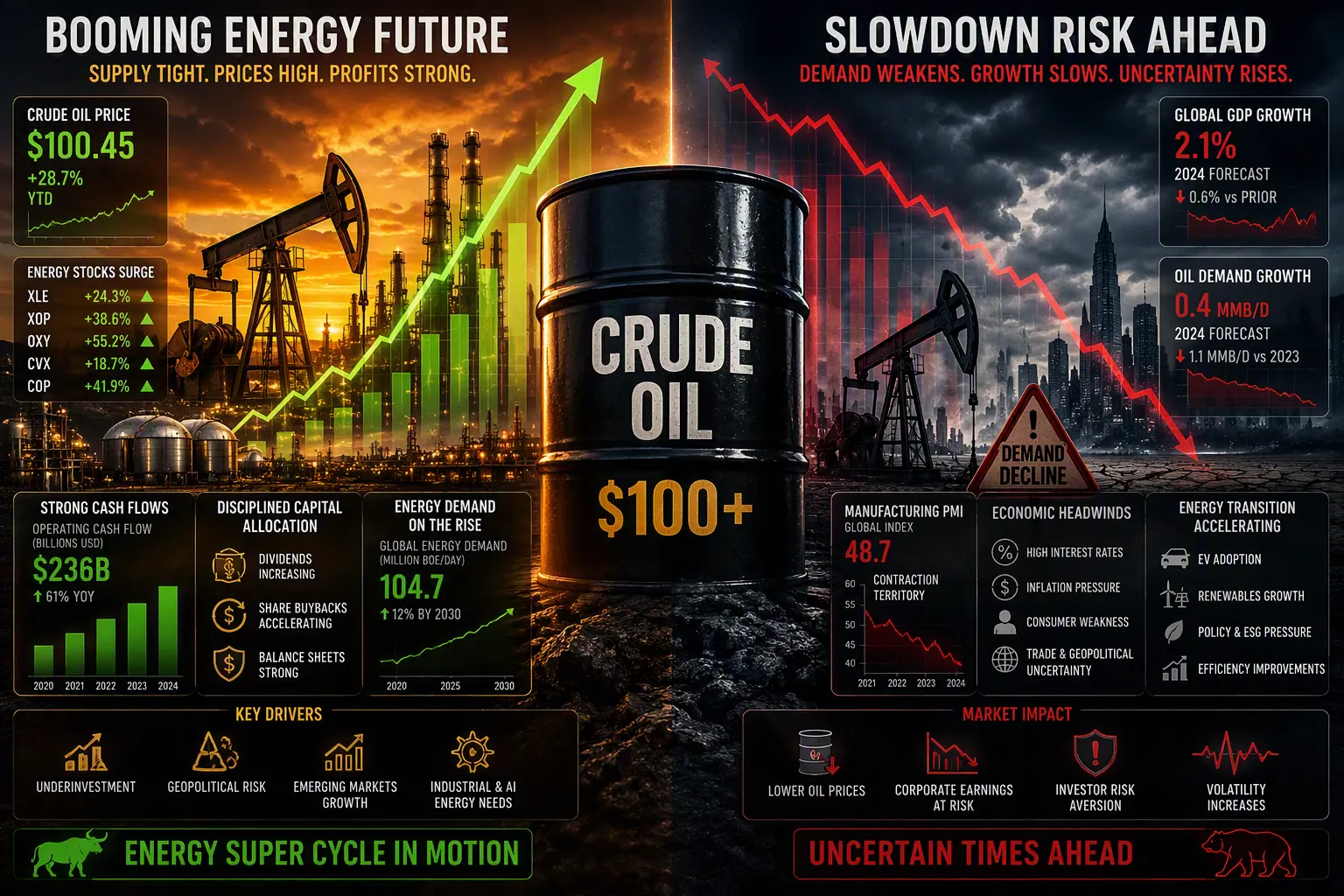
🟢 Potential Winners
1. Energy Producers
The most obvious winners are oil and gas companies.
When oil prices rise from $80 to $100 per barrel, many producers experience a significant increase in profit margins because production costs generally remain relatively stable. Companies involved in crude production, exploration, and refining often generate stronger cash flows and higher dividends during these periods.
Potential beneficiaries include:
- $ExxonMobil(XOM.US)
- $Chevron(CVX.US)
- $ConocoPhillips(COP.US)
- $Occidental Petroleum(OXY.US)
Energy ETFs could also attract fresh investor inflows as institutions seek exposure to the sector.
2. Oilfield Service Companies
Higher oil prices typically encourage producers to increase drilling and exploration activity.
This benefits companies providing:
- Equipment
- Engineering services
- Drilling support
- Energy infrastructure
Historically, oilfield service firms often outperform during the middle stages of an energy rally.
3. Gold
Although not directly linked to oil, gold $Gold(IN00380.US) often benefits when investors become concerned about inflation.
If $100 oil causes inflation to remain elevated, investors may increasingly view gold as:
- An inflation hedge
- A safe-haven asset
- Protection against monetary uncertainty
A combination of rising energy prices and geopolitical tensions could create a favorable environment for precious metals.
4. Commodity-Linked Investments
Broad commodity funds, natural resource companies, and energy-exporting nations may also benefit.
Countries heavily dependent on energy exports generally see improved trade balances and fiscal revenues when oil prices remain elevated.
🔴 Potential Losers
1. Airlines and Transportation Companies
Fuel represents one of the largest operating expenses for airlines.
When oil rises above $100:
- Airline margins get squeezed
- Ticket prices increase
- Demand may weaken
Similarly, trucking, shipping, and logistics companies could face higher operational costs.
2. Consumer Discretionary Stocks
Higher fuel costs effectively act as a "tax" on consumers.
After paying more for:
- Gasoline
- Utilities
- Heating
- Transportation
Consumers have less money available for discretionary spending such as:
- Travel
- Dining
- Entertainment
- Retail purchases
As a result, consumer-focused companies may experience slower growth.
3. Growth and Technology Stocks
Technology companies are not directly harmed by higher oil prices. The bigger issue is inflation.
If rising oil prices keep inflation elevated, central banks may be forced to maintain higher interest rates for longer.
Higher rates tend to:
- Reduce the present value of future earnings
- Pressure high-growth valuations
- Shift investor preference toward value and cash-generating businesses
This could create a more challenging environment for expensive growth stocks, especially those relying heavily on future earnings expectations.
4. The Broader Stock Market
Historically, sustained spikes in energy prices have often slowed economic growth.
Businesses face:
- Higher operating costs
- Margin pressure
- Weaker consumer demand
If oil remains above $100 for an extended period, earnings expectations across multiple sectors may need to be revised lower.

Is This a New Energy Bull Market?
There are compelling arguments on both sides.
Bullish Case
- Supply remains constrained in many regions.
- Years of underinvestment have limited production growth.
- Geopolitical tensions continue to create supply risks.
- Global energy demand remains resilient.
Under this scenario, oil could remain above $100 and potentially move even higher.
Bearish Case
- High prices eventually destroy demand.
- Consumers reduce spending and travel.
- Economic growth slows.
- Producers increase supply to capitalize on higher profits.
This could pull oil back toward more sustainable levels.
My Take
I believe the most likely scenario is not a straight-line move higher, but a period of elevated volatility between $90 and $110.
While supply constraints and geopolitical risks support oil prices, history shows that prolonged periods of very high oil prices tend to weaken economic activity and eventually reduce demand.
Rather than making an all-or-nothing bet on oil, investors may benefit from maintaining balanced exposure:
✅ Energy producers for cash flow and dividends
✅ Select commodity exposure as an inflation hedge
✅ Quality defensive stocks with pricing power
✅ Avoid excessive concentration in sectors most vulnerable to rising energy costs
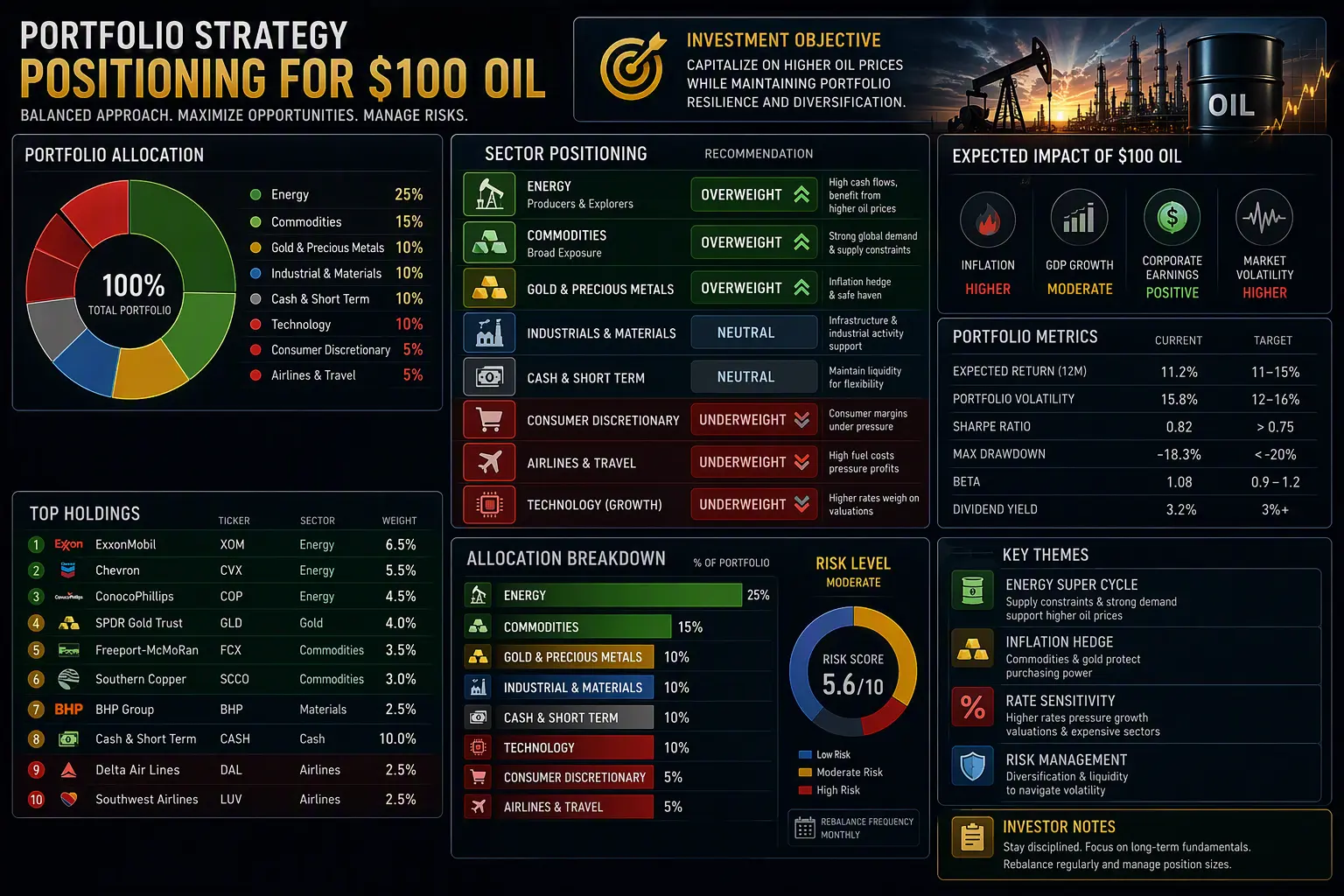
Portfolio Strategy if Oil Stays Above $100
If oil remains above $100 for the long term, I would consider:
Overweight
- Energy
- Midstream infrastructure
- Commodity and natural resource companies
- Gold and precious metals
Neutral
- Financials
- Healthcare
- Industrials with strong pricing power
Underweight
- Airlines
- Transportation
- Consumer discretionary
- Highly valued growth stocks dependent on low interest rates
Final Thoughts
The return of $100 oil is more than just an energy story. It is an inflation story, an interest-rate story, and potentially a market leadership story.
The biggest winners may not simply be oil companies, but businesses with strong cash flow, pricing power, and resilience against inflation. Meanwhile, sectors that depend heavily on cheap energy and strong consumer spending could face a much tougher environment.
The key question for investors isn't whether oil reaches $100. It's whether it can stay there. That answer may determine the next major trend in global markets.


The copyright of this article belongs to the original author/organization.
The views expressed herein are solely those of the author and do not reflect the stance of the platform. The content is intended for investment reference purposes only and shall not be considered as investment advice. Please contact us if you have any questions or suggestions regarding the content services provided by the platform.