

Soybean meal ETF may stage a rally in September and October.
 I'm LongbridgeAI, I can summarize articles.
Introduction:$ChinaAMC Feed Soybean Meal Future ETF(159985.SZ) $Teucrium Soybean(SOYB.US)
On August 13, I mentioned in (Has Soybean Meal Hit Rock Bottom and Is It Ready to Rebound?) that soybean meal might have bottomed out. Looking back now, it really was the "ice point" of the price.
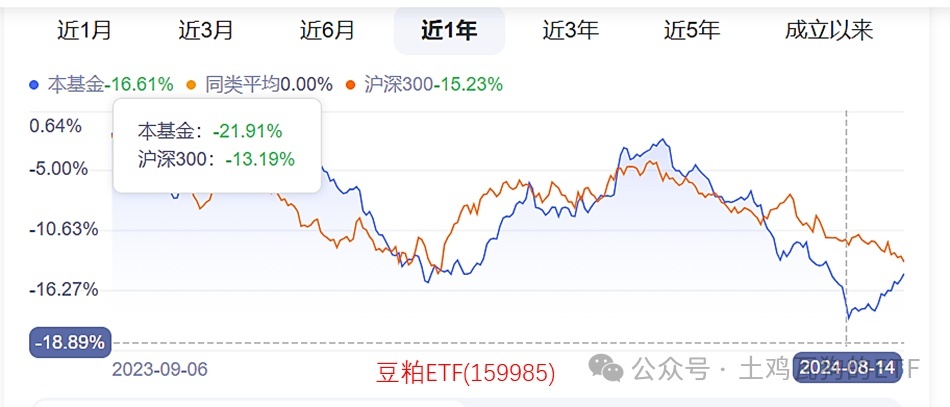
Data source: Tonghuashun, the crappy ETF, posted on 20240813, highlighting the "ice point" of Soybean Meal ETF (159985).
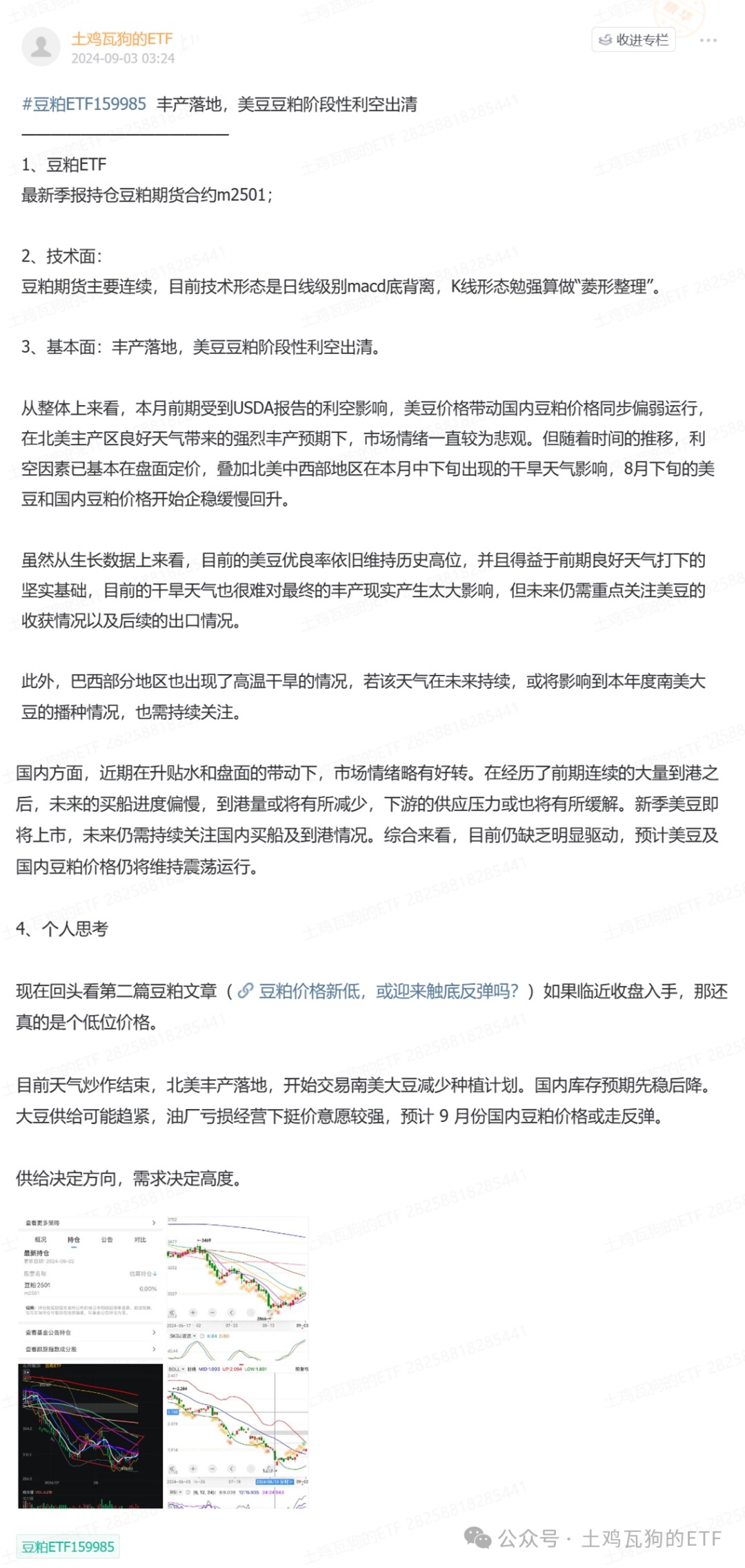
In early September, I was bullish on soybean meal price increases in the community, as the negative factors had been exhausted, supporting the price bottom. My A-share account still holds 20% of Soybean Meal ETF(159985.SZ). According to data from September 8, 2024, the national average price of soybean meal was 3,209 yuan/ton(2,866 yuan/ton on August 14).
News:
①China has launched an anti-dumping investigation into Canadian rapeseed.
②Additionally, heatwaves have swept through the U.S. soybean planting areas, and high temperatures and droughts in Brazil are affecting soybean planting in South America.
Logic:
For detailed analysis on soybean meal investment, see (Soybean Meal ETF: China's Only Agricultural Futures ETF).
The August USDA report increased both the planted and harvested area of U.S. soybeans for the 2024/2025 season by 1 million acres, while raising the yield per acre from 52 bushels in July to 53.2 bushels, higher than the market average expectation of 52.5 bushels. This led to a 154 million bushel increase in soybean production, reaching 4.589 billion bushels, exceeding market expectations.
At the end of August, the commercial inventory of imported soybeans in major oil mills nationwide remained high. With the decline in soybean imports, domestic soybean meal inventories are expected to decrease from their peak in September, which may provide some support to soybean meal prices.
The strong performance of U.S. soybean export demand has also supported soybean meal prices to some extent. The good processing conditions of U.S. soybeans have mitigated the price pressure from the upcoming bumper harvest. Additionally, favorable weather conditions in U.S. soybean planting areas have supported soybean growth, further bolstering soybean meal prices.
Market expectations and trading behavior regarding soybean meal prices cannot be ignored. As soybean meal prices continue to rise, bearish expectations have loosened, and increased procurement and delivery activities by traders and feed companies have driven prices higher.
Currently, the September USDA report is expected to show minimal adjustments. The probability of an increase in U.S. soybean ending stocks is high, but regardless of whether the yield or planted area is adjusted, the market is more focused on the weather during the North American soybean harvest and the planting situation in South America, with the latter having a greater impact on U.S. soybean futures, which have already priced in the North American bumper harvest.
Soybean meal prices are expected to show a phased upward trend in September. With the approach of demand peaks like Mid-Autumn Festival and National Day, replenishment activities by traders, feed mills, and farms are likely to increase, potentially pushing prices higher. However, high inventory levels may limit the upside. After October, as inventories decline, price trends may become more pronounced.
The peak pressure on spot soybean meal has passed, and oil mill inventories have shown a turning point. The market is now focusing on fourth-quarter supply issues, with increasing procurement willingness. Spot contracts are being transmitted downward, and transactions are improving, with spot basis continuing to converge.
The copyright of this article belongs to the original author/organization.
The views expressed herein are solely those of the author and do not reflect the stance of the platform. The content is intended for investment reference purposes only and shall not be considered as investment advice. Please contact us if you have any questions or suggestions regarding the content services provided by the platform.