
Why do I lose money when the stock price rises and also lose when it falls? — The 'soul-searching' question of options players.
 I'm LongbridgeAI, I can summarize articles.
Hello everyone, I wrote two articles about options knowledge a few days ago, and some friends are still confused. I believe this issue is also a soul-searching question for many investors:
"Why do I lose money on options whether the market goes up or down?"
Losing when it rises, losing when it falls, and even worse when it's flat—many people who try options for the first time bet on the right direction enthusiastically, only to find themselves losing money as expiration approaches, sometimes even losing everything.
You're not alone; most options beginners go through this phase. The problem isn’t you but rather: you might have gotten the 'direction' right but missed the 'expectation' and 'time.'

Today’s article will break this down in detail, aiming to help you avoid paying too much 'tuition.'
The essence of options: You're buying 'possibility,' not the outcome
First, understand this: Option price = Future volatility possibility + Current intrinsic value.
When you spend a few hundred dollars on a call option, you're not 'confirming' future profits but betting that the stock price will rise more sharply, faster, and more aggressively than the market 'expects.'
Simply put, you're not fighting the stock price but gambling against market sentiment, time, and probability.
The three 'curses of losing money': Time, volatility, and expectation
Curse 1: Time value decays every day
Options aren’t like stocks where 'holding still won’t lose money.' They 'burn money' every day, especially as expiration approaches.
This is called time decay (Theta).
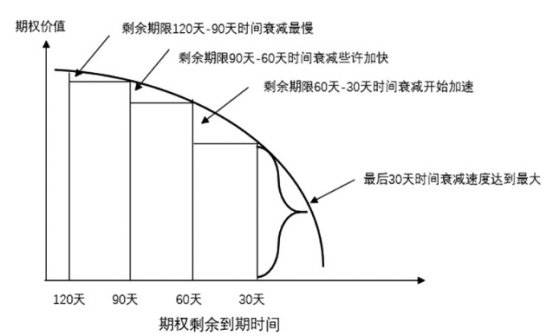
For example:
You buy a Tesla call option with 30 days to expiration. Even if the stock price doesn’t move, you lose a few dollars every day. By the last week, if Tesla hasn’t moved much, the option price might be close to zero.
So you’ll find: Rising too slowly = Losing money; Rising too late = Zero; Flat = Decreasing value.
Curse 2: Implied volatility drops, and everything falls
Another pitfall is volatility (IV, as mentioned before).
The more intense the market expectations, the more expensive the options. But once the 'shoe drops'—like after earnings reports or FOMC meetings—even if the stock moves in your predicted direction, a drop in IV can still make you lose money.
For example, you buy AMD call options before earnings. The report is good, and the stock rises 2%, but IV drops from 90% to 50%. Your options might still depreciate.
This is called: 'Good news is bad news.' You got the direction right but lost on expectations, so you still lose.
Curse 3: Not rising sharply enough, not falling hard enough
Options don’t profit just from rising; they need to rise more sharply than market expectations.
For example, you buy an out-of-the-money option with a strike price of 100, and the current stock price is 95. Even if the stock rises to 98 (a 3% increase), your option might still be worthless because it hasn’t reached in-the-money status.
The worst part: The stock price hovers near your strike price for three days, and you watch the time decay to zero.
So here’s a harsh but true saying: You didn’t lose on direction; you lost on idealism.
How to avoid the dilemma of 'losing whether it rises or falls'?
1. Don’t obsess over 'earnings bets' or 'last-minute plays'
The closer to a major event, the higher the IV, and the more expensive your options. Once the event passes, IV collapses, and you’re likely to lose regardless of the outcome.
2. Extend the timeline to give yourself room
Many beginners like buying ultra-short-term options expiring in 'two days.' They’re cheap, but the volatility is extreme. A slight misjudgment can mean zero.
If you’re truly bullish, consider buying options with 15+ days to expiration. Even if they’re pricier, they’ll avoid rapid time decay.
3. Buy in-the-money or at-the-money options; don’t chase 'cheap hopes'
Those cheap 'far out-of-the-money options' are like lottery tickets—huge wins feel great, but nine out of ten times, they’re 'zero.'
At-the-money or slightly in-the-money options are more expensive but have higher win rates and Delta, making them practical.
Summary: Options aren’t a directional game but a comprehensive gamble
In short: Options aren’t about 'guessing direction' but about gambling on 'expectations vs. reality + time.'
You can get the direction right, but if the timing is off, the duration is insufficient, or volatility doesn’t meet expectations, you might lose everything.
So, when trading options, stay calm and have a clear strategy. Don’t just focus on 'up or down' but understand the 'pricing mechanism' behind it.
Don’t wait until you’ve lost all your capital to realize that you didn’t buy the stock’s movement but a script of what might happen—or might never happen.
$Broadcom(AVGO.US) $Alphabet - C(GOOG.US) $Microsoft(MSFT.US) $Tesla(TSLA.US) $Apple(AAPL.US) $NVIDIA(NVDA.US) $AMD(AMD.US) $Taiwan Semiconductor(TSM.US) $Alibaba(BABA.US) $XIAOMI-W(01810.HK)
The copyright of this article belongs to the original author/organization.
The views expressed herein are solely those of the author and do not reflect the stance of the platform. The content is intended for investment reference purposes only and shall not be considered as investment advice. Please contact us if you have any questions or suggestions regarding the content services provided by the platform.