
彼
Sep 10, 2025 at 02:52 AM
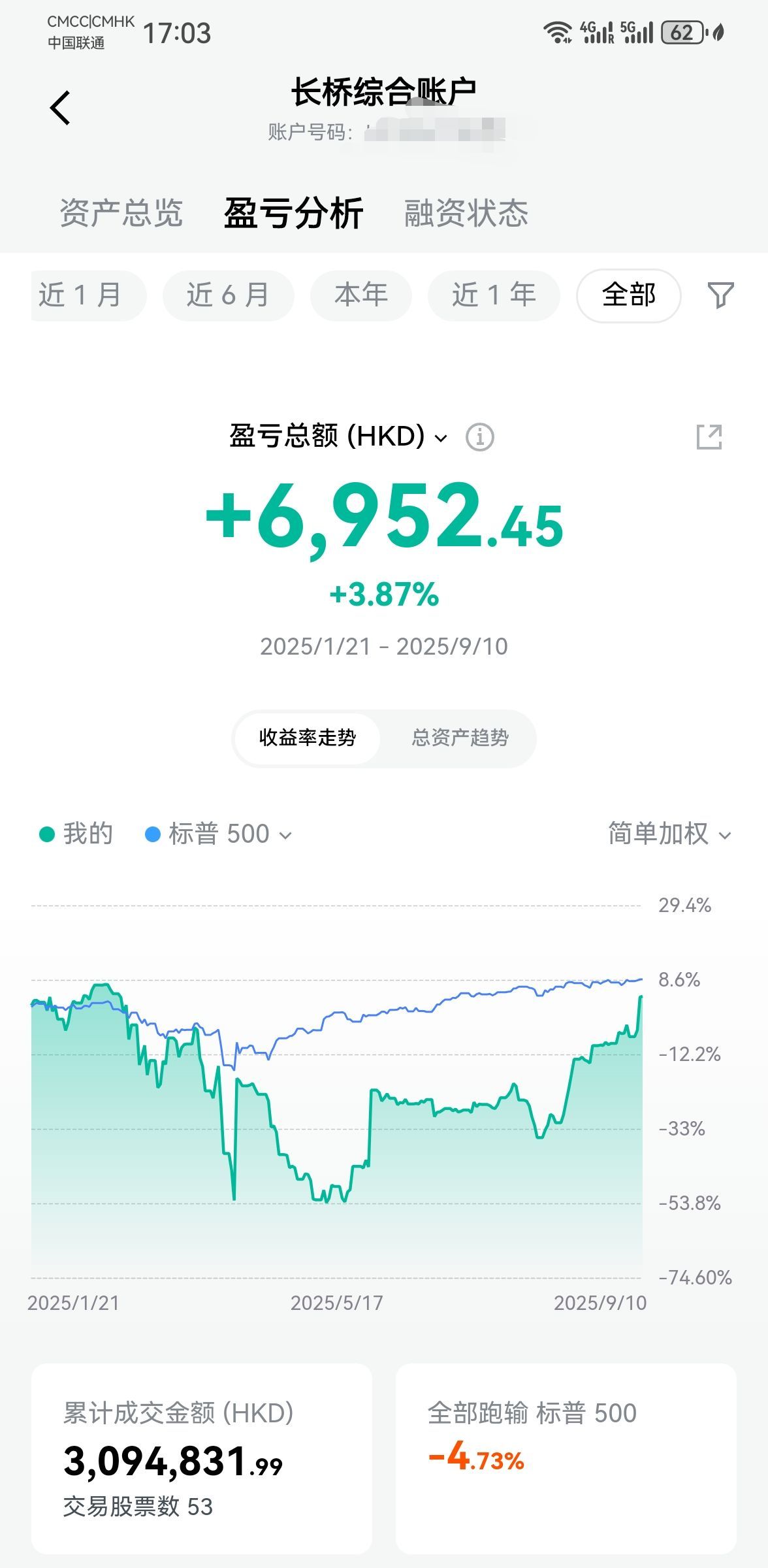
Don't panic! A newbie in US stocks from -53.8% loss to break even: My pitfalls and growth guide
 I'm LongbridgeAI, I can summarize articles.
In January 2025, I officially entered the U.S. stock market—before that, I had only dealt with domestic funds and was a complete novice in stocks. No one expected that within just a few months, my account’s return rate would drop to -53.8%; even more unexpectedly, by adjusting my strategy and stabilizing my mindset, I eventually managed to break even. This journey was full of ups and downs, so I decided to document my experience as a reference for fellow novice investors.
1. Losing -53.8%: The Pitfalls I Stepped Into Were All Lessons
1. The “Newbie Curse” of Chasing Rallies and Selling Lows
During the major U.S. stock market adjustment in April this year, I took “chasing rallies and selling lows” to the extreme: I once went all-in on Nvidia at $126$NVIDIA(NVDA.US) and then followed the crowd to go all-in on a 2x short position on MSTR$MSTR 2X Short ETF(MSTZ.US)—these two stocks remain my biggest loss-making positions to date. Looking back now, if I had held on, I would have broken even or even made a profit long ago. But the risk of concentrating on a single stock is too unfriendly to beginners: the wild swings and continuous plunges in stock prices were unbearable, and my sleep suffered during that period. This lesson made me realize: risk awareness is the bottom line, and the gambling mentality of heavy positions in a single stock is something beginners should never touch.
2. Failing to Hold Good Stocks: Mindset Crashes Before Skills
Later, I tried to learn “value investing” and bought a basket of stocks: Nvidia at $126, PLTR at $85$Palantir Tech(PLTR.US), Tesla at $275$Tesla(TSLA.US), ELF at $70$ELF Beauty(ELF.US)…yet I still couldn’t escape the fate of “cutting losses at the bottom” or “taking small gains and running.” Interestingly, a simulated account with a principal of 1 million opened at the same time in April, which only bought Nvidia, Google$Alphabet - C(GOOG.US), and a gold ETF$iShares Gold Trust(IAU.US), has now grown to 1.53 million. This precisely highlights the core difference between real and simulated accounts: when it’s not your own money, you can stay calm, check the market less, and hold on; but when real money is involved, even if you know it’s a good stock, short-term fluctuations can disrupt your rhythm. This taught me: in investing, “holding on” is harder than “picking the right stock,” and with an unstable mindset, even the best stocks won’t make you money.
3. The “Deadly Temptation” of Chasing Trends
I also followed the hype around crypto-related stocks, buying Circle$Circle(CRCL.US), a stablecoin concept, and witnessed it surge over 5x in two weeks, only to see it still hovering at low levels now; holding MSTZ$MSTR 2X Short ETF(MSTZ.US) for three months, I happened to catch its downward cycle, and my mindset completely collapsed. This experience sobered me up: the volatility of the crypto space far exceeds that of ordinary stocks, and its wild swings are extremely unfriendly to beginners. For those just starting out, I recommend beginning with broad market indices like SPY$SPDR S&P 500(SPY.US), VOO$VG S&P 500(VOO.US), or QQQ$Invesco QQQ Trust(QQQ.US), gradually gaining experience before venturing into high-volatility stocks.
2. The Road to Breaking Even: From “Random Buying” to “Methodical Investing,” I Did These 4 Things
1. Filling Knowledge Gaps: Finding “Peace of Mind” in Books
After the losses, I didn’t rush to trade again but instead immersed myself in reading—I bought over a dozen investment-related books, from “The Psychology of Trading” to dissect my own mindset pitfalls, to “Security Analysis” to solidify my understanding of fundamentals, to “One Up On Wall Street” and “Beating the Street” to learn from master investors, and “Behavioral Finance” and “Why Stock Markets Crash” to grasp market patterns. The one that influenced me the most was “Elliott Wave Principle: Key to Market Behavior”: its breakdown of stock price trends and structures later became the cornerstone of my trading system.
2. Practicing Techniques: Mastering Indicators to Avoid “Technical Traps”
Theory alone wasn’t enough, so I systematically studied technical indicators: MACD, KDJ, WR, RSI, OBV, and other common ones, thoroughly understanding each. I also read practical books like “Moving Averages Explained,” “MACD Indicators Explained,” and “Volume-Price Relationships Explained,” combining indicators with volume-price analysis and chip distribution. Gradually, I stopped blindly following trends and could mostly avoid common technical traps, making better decisions on when to enter, add, reduce, or exit positions.
3. Building a System: Applying “Football Logic” to Investing
I’m a Liverpool fan and a deep player of Football Manager—so I applied the logic of “team management” to investing: just as a team needs to balance offense and defense, my stock portfolio must balance “offense” and “defense.” Currently, I hold 10 stocks, with 3-4 heavy positions: using wave theory, I increase positions during the main upward (third wave) phase, which is my “offensive end”; at the same time, I deliberately pick high-dividend stocks as the “defensive end.” In football, “you can’t win unless you’re unbeaten,” and in investing, “protecting capital is the bottom line”—only by preserving capital can you turn the tide.
4. Leveraging External Forces: Learning “Stock Picking” from Masters
I also joined GuruFocus to track investment trends: on one hand, screening for fundamentally solid, undervalued stocks to avoid pitfalls; on the other, studying the portfolio logic of investment masters like Buffett and Peter Lynch to see how they balance portfolios and judge stock worth. This added a layer of fundamental “safety” to my stock-picking, beyond just technicals.
3. Now: Technicals as the Core, Fundamentals as the Shield
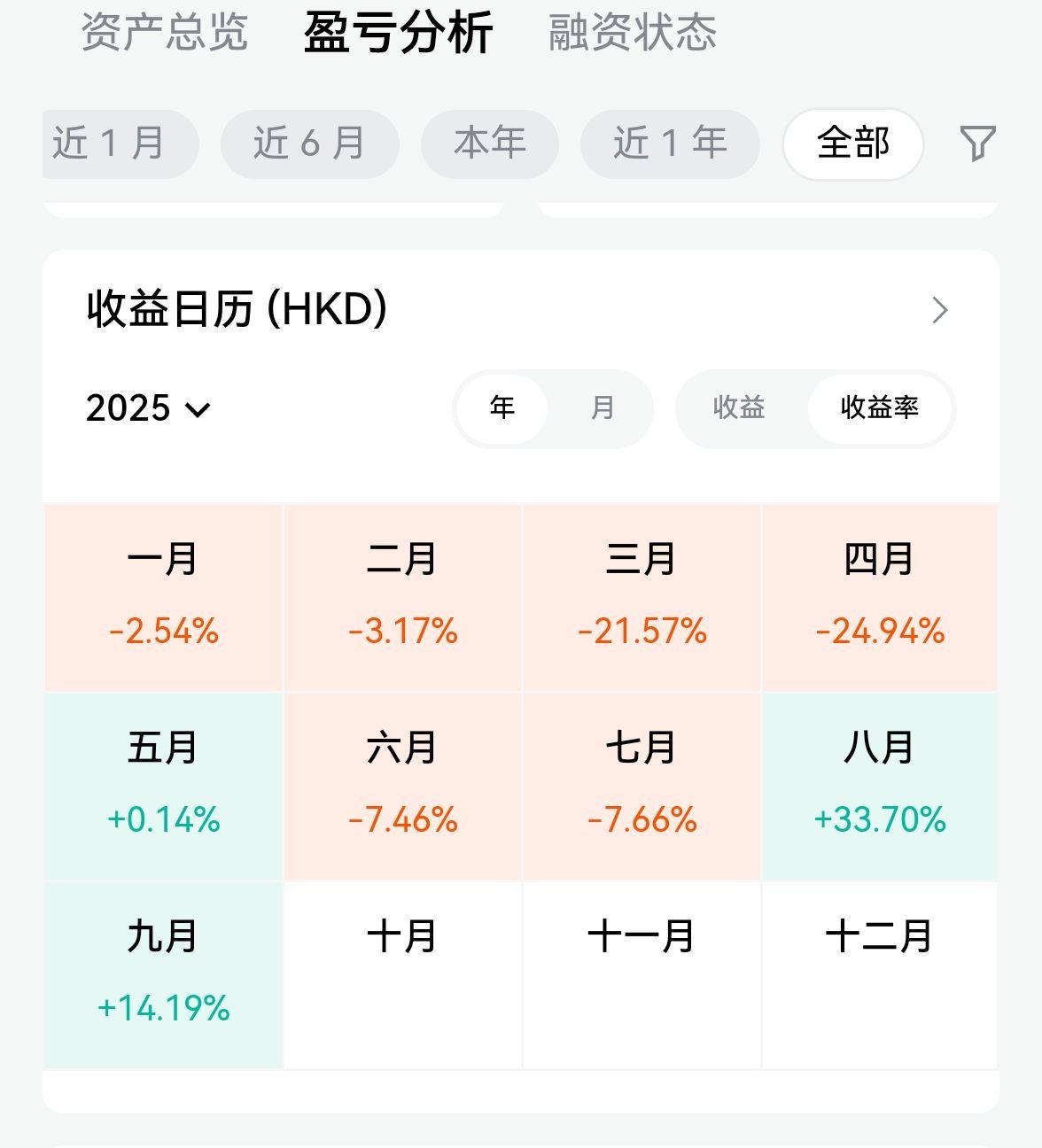
My current trading system is centered on technical indicators (capturing trends, pinpointing entries) with fundamental analysis as support (screening stocks, controlling risks). By August and September, my real account’s returns finally saw significant improvement. From -53.8% to breaking even, then slowly profiting, this journey took over half a year, but I’ve finally found a rhythm that works for me.
Writing this is both a record of my growth and encouragement to fellow new investors on Longbridge: there’s no “crash course” in investing, and beginners will inevitably stumble, but as long as you’re willing to learn from mistakes, refine your system, and stabilize your mindset, you’ll eventually reap your own rewards. May we all achieve our goals, steadily profiting in the market, not relying on luck to “gamble.”
$Unitedhealth(UNH.US) $Tesla(TSLA.US) $Lockheed Martin(LMT.US) $Apple(AAPL.US) $PepsiCo(PEP.US) $Eli Lilly(LLY.US) $UPS(UPS.US) $ExxonMobil(XOM.US) $Lululemon(LULU.US) $Johnson & Johnson(JNJ.US)

Unitedhealth
USUNH

Lockheed Martin
USLMT

Eli Lilly
USLLY

UPS
USUPS

ExxonMobil
USXOM

Tesla
USTSLA

Apple
USAAPL

PepsiCo
USPEP

Lululemon
USLULU

Johnson & Johnson
USJNJ

MSTR 2X Short ETF
USMSTZ

Circle
USCRCL

Invesco QQQ Trust
USQQQ

SPDR S&P 500
USSPY

VG S&P 500
USVOO

NVIDIA
USNVDA

Palantir Tech
USPLTR

ELF Beauty
USELF

Alphabet - C
USGOOG

Alphabet
USGOOGL

iShares Gold Trust
USIAU
The copyright of this article belongs to the original author/organization.
The views expressed herein are solely those of the author and do not reflect the stance of the platform. The content is intended for investment reference purposes only and shall not be considered as investment advice. Please contact us if you have any questions or suggestions regarding the content services provided by the platform.