

[Popular Science] Short squeeze again! The new "meme stock" Beyond Meat surged 1500% in 4 days! See how retail investors used option Gamma squeeze to crush the short sellers!
 I'm LongbridgeAI, I can summarize articles.
The most explosive news in the past two days is undoubtedly the artificial meat company $Beyond Meat(BYND.US)!
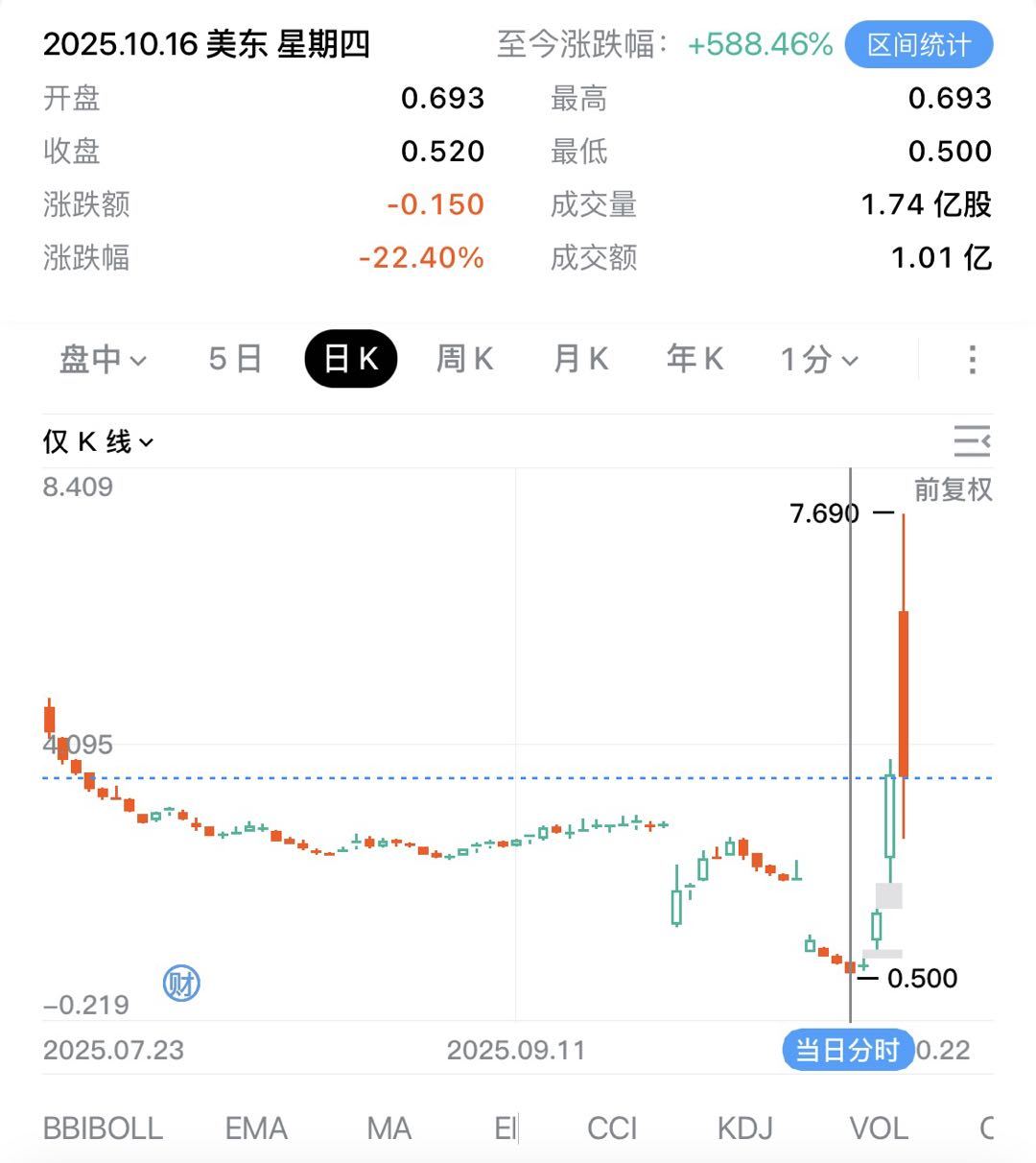
If you see its stock price trend, your jaw will drop: in just a few days, the stock price soared from a historical low of $0.5 to nearly $7.6, with a peak increase of over 1500%, staging a magical comeback.
Don't know what happened? Don't worry, Option King will explain it to you slowly.
In short, this is a classic "retail army sniping Wall Street shorts" short squeeze, with a plot almost identical to that of $GameStop(GME.US) a few years ago.
1. First, let's look at the protagonist of this drama: Beyond Meat
This company has been struggling, with sales performance declining for three consecutive years. Last week, due to a debt restructuring agreement, its stock price plummeted 49% in a single day, hitting a historical low of $0.50 on October 16.
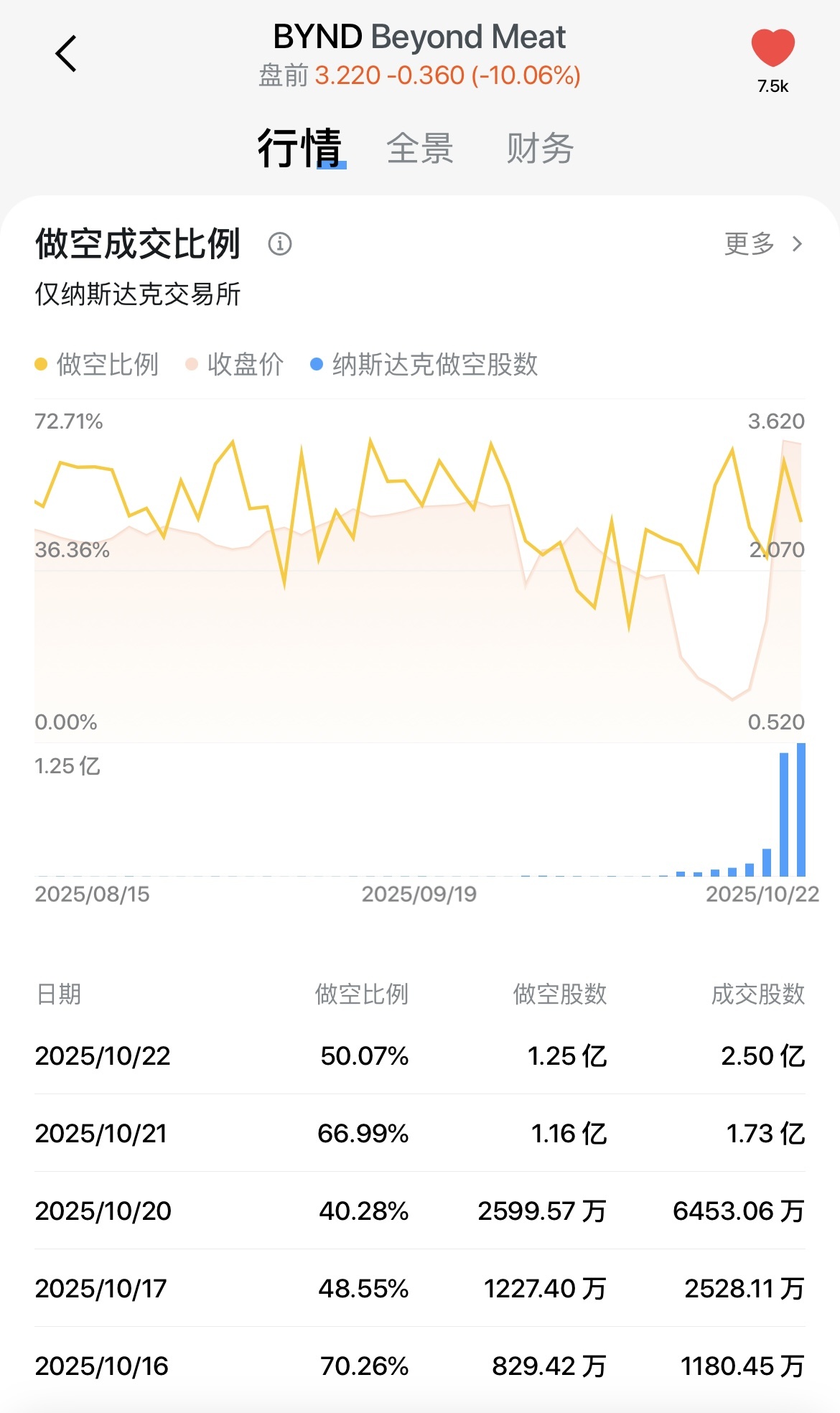
Even worse, Wall Street isn't optimistic about it. As of the end of September, Beyond Meat's short interest was shockingly high, with about 64% of tradable shares already shorted.
Some might ask: What is short selling? Simply put, investors expect the stock price to fall, so they borrow shares from brokers and sell them at the current higher market price, then buy them back at a lower price later to return to the broker, profiting from the difference. It's like getting something for nothing.
How did such a seemingly "precarious" company suddenly come back to life?
2. The three major drivers behind the plot reversal
Driver 1: The "Avengers" on social media
The script of this drama is almost a perfect replica of the $GameStop(GME.US) incident from a few years ago—same formula, same flavor.
The high short interest mentioned earlier laid the groundwork for the "short squeeze."
On social media platforms like Reddit, retail investors began to rally. Some users posted discussions on how to make this heavily shorted stock "go nuclear," calling on everyone to "fight against the evil Wall Street short sellers."
Among them was a leader, Demitri Semenikhin, a trader who started aggressively promoting this stock last week, attracting a large number of retail investors to follow suit.
Does this feel familiar? The GME short squeeze also had a leader, Roaring Kitty, heavily promoting it on social media.
Driven by these forces, the company's stock price began to show unusual movements, and the show officially began.
Driver 2: Institutional funds adding fuel to the fire
After gaining attention on social media, institutional funds also couldn't sit still. The fund company Roundhill Investments included Beyond Meat in its Meme Stock ETF $Roundhill Meme Stock ETF(MEME.US) on October 21.
What is this ETF? It specifically tracks a series of high-momentum, high-volatility stocks favored by retail investors. In this ETF, $Beyond Meat(BYND.US) has the largest weighting, at about 10.2%. This move by institutions undoubtedly poured more fuel on the already hot market.
Driver 3: A fundamental story to assist
Emotion alone isn't enough—there needs to be a good story. Then, the company timely announced news of expanding sales in $Walmart(WMT.US), covering over 2,000 stores, providing the latest fundamental "positive" story for this short squeeze drama.
This news further ignited the already intense market sentiment, driving the stock price to break through upward again.
With so many positive factors combined, the result was that the market completely exploded!
A company whose stock price had just hit rock bottom and was almost abandoned by everyone staged a dramatic turnaround in just a few days.
The stock price multiplied several times like a rocket! The intraday surge was so crazy that it directly triggered the circuit breaker mechanism.
This familiar plot, this familiar frenzy: yes, that short squeeze storm that once swept GME is back!
3. What is a short squeeze?
Here’s a down-to-earth example to help you understand:
Imagine you bet with your friend that $Beyond Meat(BYND.US) will fall, so you borrow his shares and sell them first, planning to buy them back later at a lower price to return to him. But the plot goes completely the opposite way—Beyond Meat doesn’t fall but starts skyrocketing. Seeing the painful losses, you have no choice but to grit your teeth and buy back the shares at a higher price to cut losses.
When thousands of people like you in the market are doing the same thing—being forced to buy shares to stop losses—this concentrated buying pressure pushes the stock price even higher, forcing more short sellers to surrender and buy shares. And so, a self-reinforcing upward spiral is formed.
But the story isn’t over—the more exciting part is yet to come!
4. What is a gamma squeeze?
Retail investors continue to go crazy, not only buying stocks but also frantically buying call options (Calls).
Thus, another even fiercer accelerator comes into play: the gamma squeeze.
To understand this, we first need to grasp two options concepts: Gamma and market makers.
What is Gamma?
Gamma is one of the Greek letters in options. You can think of Gamma as acceleration, while another Greek letter, Delta, is speed.
Delta = How much the option price rises for every $1 increase in the stock price (this is speed)
Gamma = How much Delta (the speed) increases for every $1 increase in the stock price (this is acceleration)
Simply put, the higher the Gamma, the faster the option premium rises/falls.
Who are market makers?
They are like indispensable intermediaries in the market. Their job is to maintain liquidity—when you want to buy, they step up to sell to you; when you want to sell, they take out money to buy from you.
Unlike ordinary investors who bet on price movements, market makers have a simple goal: to steadily profit from the bid-ask spread. Because of this, what they fear most is risk exposure, and they always try to maintain Delta neutrality.
How do options trigger a gamma squeeze?
Let’s use the actual case of $Beyond Meat(BYND.US) to walk through the entire process:
At the beginning of the story, retail investors on social media frantically bought BYND’s shares and call options.
They particularly liked buying those weekly options—these options are cheap and have huge leverage, perfectly fitting the mentality of "betting small to win big."
At this point, market makers had to step in. They acted as counterparties, selling these call options to investors.
But as the stock price continued to rise, market makers began to feel uneasy:
Because selling call options means that if the stock price keeps rising, they could face huge losses. To protect themselves, market makers activated the Delta-neutral hedging mechanism.
Here’s a key point: Weekly options already have high Delta values, and as the stock price surges, the options’ Gamma values (the rate of change of Delta) start to kick in.
This means that to maintain Delta neutrality, market makers are forced to buy more shares to hedge risks. It’s like driving uphill—you have to keep stepping on the gas to maintain speed.
A chain reaction is formed:
The higher the stock price rises, the more weekly options’ Delta and Gamma work together, forcing market makers to buy even more shares;
The more they buy, the more the stock price surges;
The more it surges, the more out-of-the-money call options become in-the-money, attracting even more people to chase after options due to the profit effect.
This is a combination of two squeezes working together. Here’s a simple summary of this storm:
Short Squeeze = Retail buys shares → Shorts forced to cover → Buy shares → Stock price rises → More shorts cover → Stock price rises even more
Gamma Squeeze = Retail buys Calls → Market makers hedge by buying shares → Stock price rises → Forced to buy even more shares → Stock price rises even more
5. Risk warnings for options trading
After experiencing such a wave, the options market is really lively!
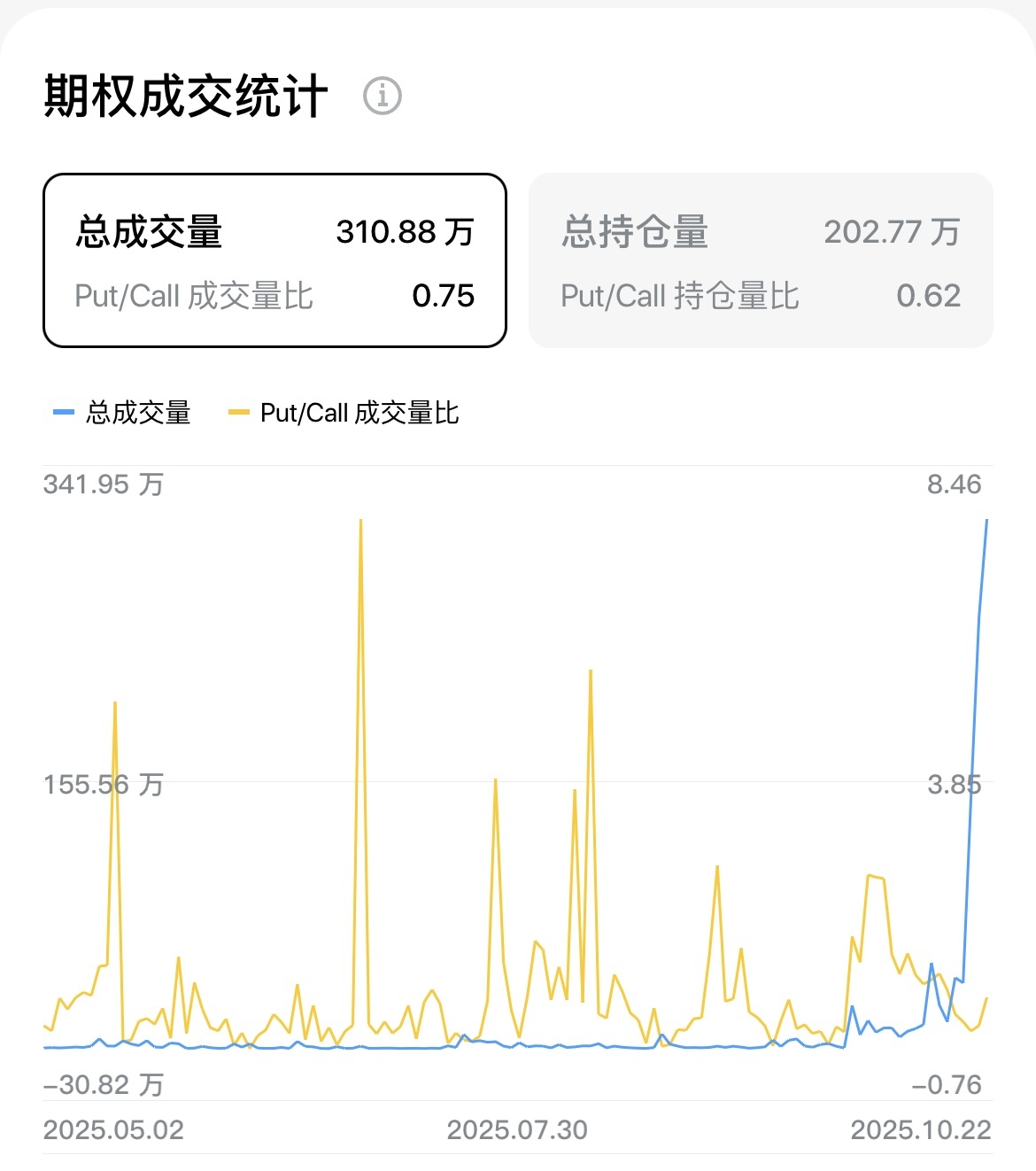
Let’s look at yesterday’s trading volume data—the far-right curve shot up vertically, showing just how frenzied the market was.
$Beyond Meat(BYND.US) Options market data for October 22 (ET):
Total options volume: 3.1088 million contracts, with calls accounting for 57.07% and puts for 42.93%.
Open interest: 2.0277 million contracts, with calls accounting for 61.74% and puts for 38.26%.
This article isn’t about strategy—let’s talk about risks first:
First, IV crash risk:
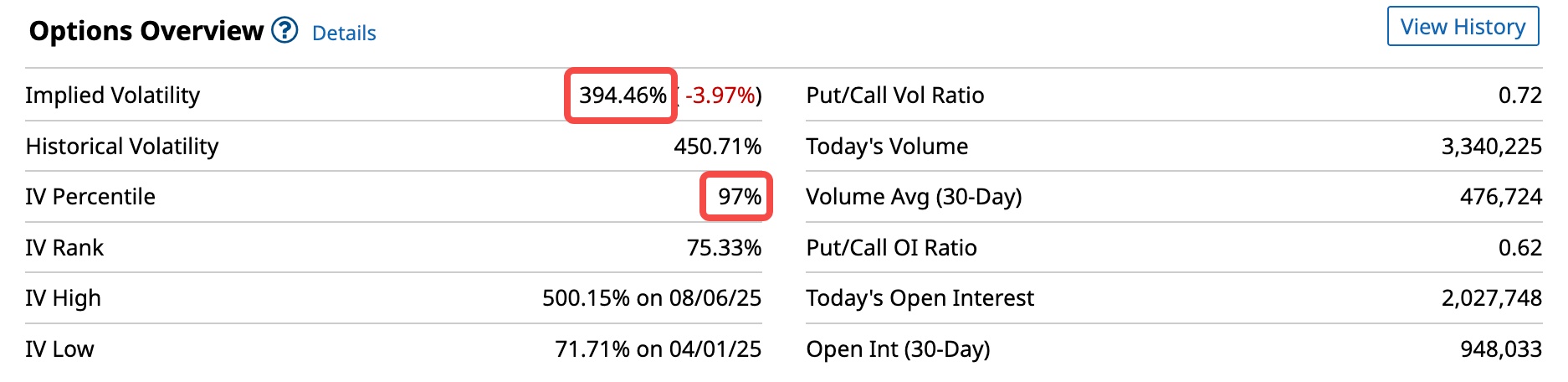
The current implied volatility (IV) is extremely high, having surged to 394%!
The IV percentile is also as high as 97%. What is IV percentile? It’s essentially a percentile ratio.
For example, Beyond Meat’s current IV percentile of 97% means the current IV is higher than 97% of the time over the past year.
As we all know, IV is a core factor in options pricing. It reflects the market’s expectations for future volatility of the underlying asset.
Generally, the higher the IV, the more expensive the options; the lower the IV, the cheaper the options. With IV this high now, option prices include a lot of emotional premium.
It’s worth noting that the stock price has already started falling in after-hours trading. Such a post-surge drop could very likely lead to a rapid decline in IV.

For option buyers, a drop in IV directly erodes the value of the premium. Even if you’re right about the direction, you could still lose money—this is the so-called "double kill" of calls and puts.
If you’re considering entering the market for a short-term trade, whether buying Calls or Puts, you must set strict stop-losses.
Second, be cautious with long-term options:
Given the current situation, such positions aren’t very suitable for long-term holding. This wave of market movement is entirely driven by sentiment and has little to do with the company’s fundamentals. Only stocks with solid fundamentals are suitable for long-term holding.
Here’s Beyond Meat’s short interest data for your reference. We need to carefully judge: Will this short squeeze continue, or is it nearing its end?
There’s another risk point to pay special attention to: Last week, $Beyond Meat(BYND.US) passed a debt-for-equity swap agreement. In plain terms: The company is going to issue a lot of new shares, which will significantly dilute existing shareholders’ equity!
And this crazy surge in stock price has many people worried that it might just give those creditors who just completed the debt-for-equity swap a perfect opportunity to cash out. They could easily sell their shares at the high price and walk away with the money.
Alright, that’s it for today’s article. How would you trade Beyond Meat? Are you investing or speculating? Feel free to share your thoughts.




The copyright of this article belongs to the original author/organization.
The views expressed herein are solely those of the author and do not reflect the stance of the platform. The content is intended for investment reference purposes only and shall not be considered as investment advice. Please contact us if you have any questions or suggestions regarding the content services provided by the platform.