

XtalPi: Science Platform + Robot Closed Loop + Token Metering, Accelerating AIDD Infrastructure Strategy
 I'm LongbridgeAI, I can summarize articles.
After a week of event fermentation, the XtalPi Science platform has taken the stage amidst a wave of skepticism~
I. Platform Positioning and Core Proposition
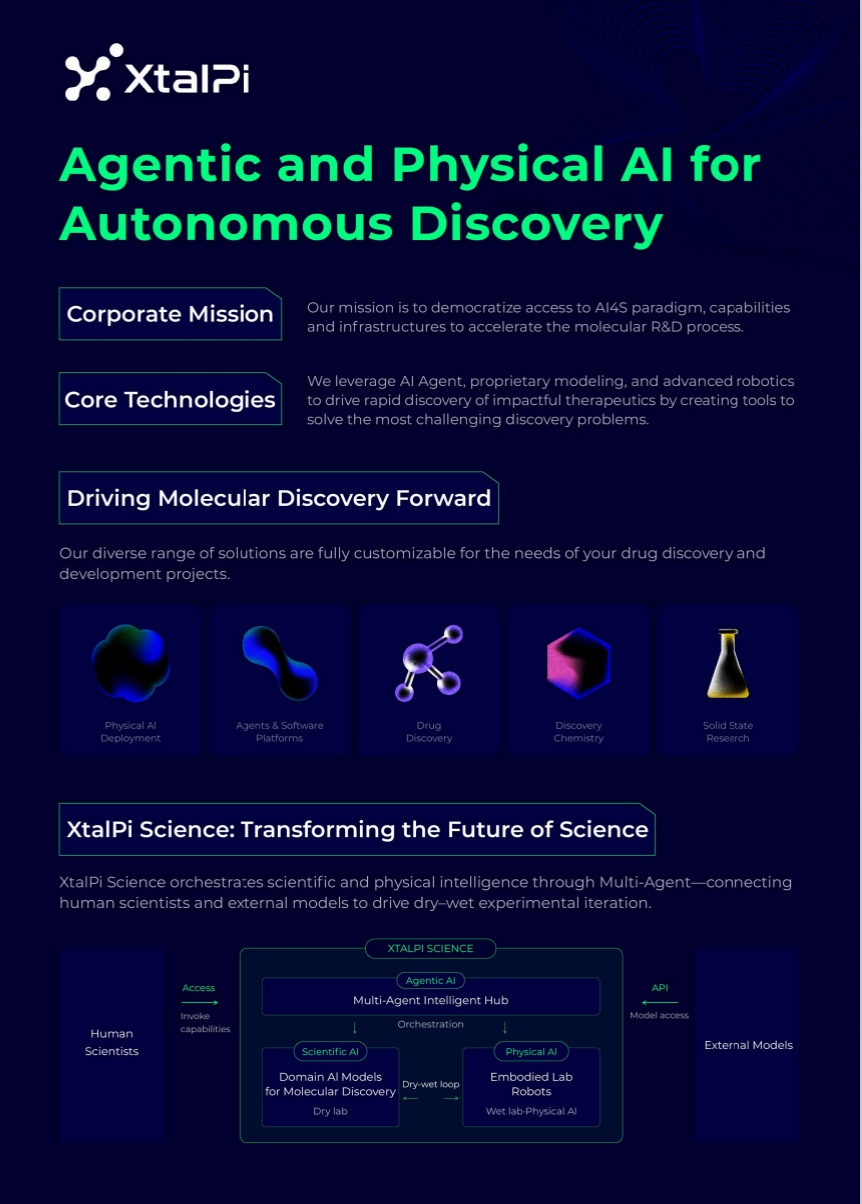
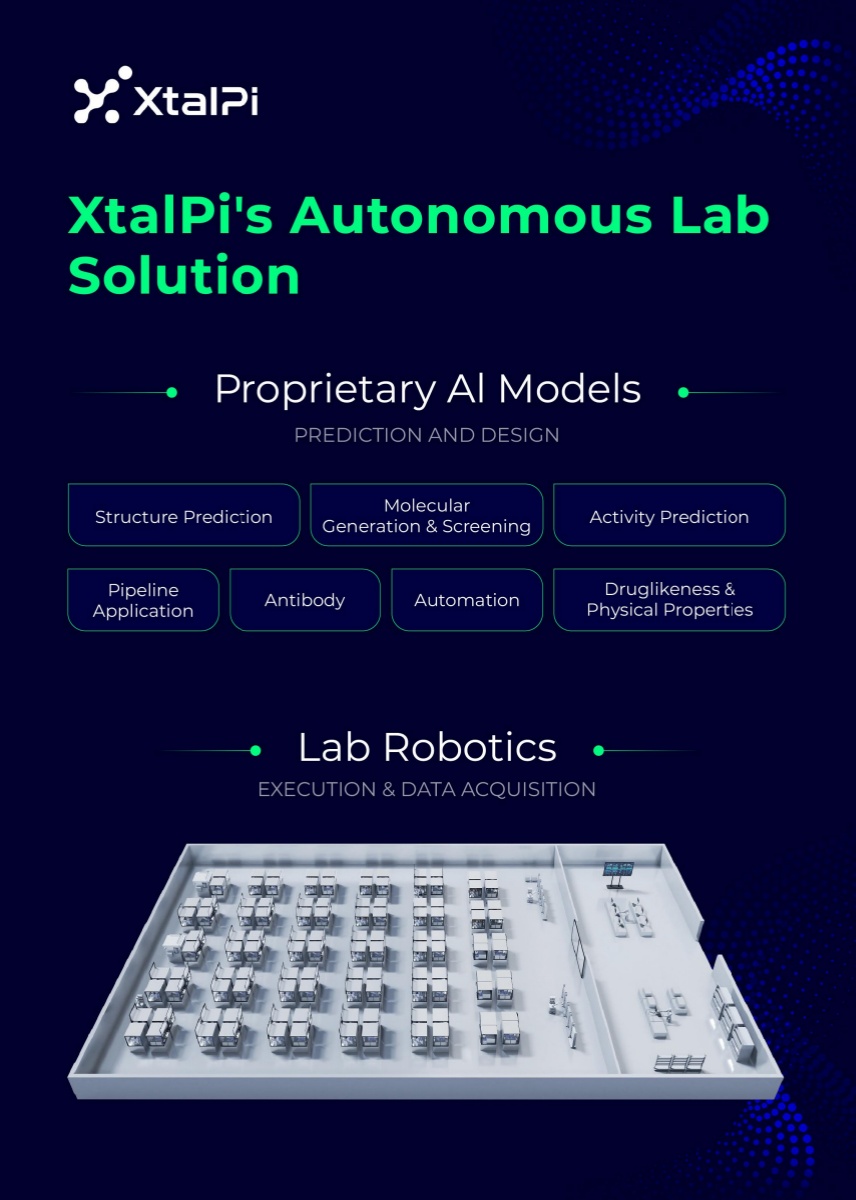
• XtalPi Science is positioned as the world's first comprehensive AI for Science (AI4S) platform integrating Large Language Models (LLM) + Scientific Agents (Genius Agents) + large-scale automated robotic experiments.
• Goal: To upgrade AI for Science from "model demos + point solutions" to a measurable, end-to-end research platform capable of planning tasks, invoking professional models, operating automated experiments, and learning from results.
• The core is the DMTA closed loop (Design–Make–Test–Analyze): AI not only generates hypotheses but also validates them through real physical experiments, forming a complete cycle of "digital hypothesis → professional prediction → physical verification → data feedback."
• Coverage areas: Drug molecules, proteins, chemical reactions, material formulations, solar cells, industrial experiments, etc.
II. Genius Agents and Orchestration Capabilities
• Genius Agents are multi-agent systems responsible for decomposing research goals, invoking scientific models and software, coordinating experimental resources, aggregating results, and retaining project knowledge.
• The company emphasizes not "a better single model," but orchestration capabilities: connecting LLMs, vertical scientific models, scientific software, and robotic laboratories to form a unified workflow.
• Comparison: NVIDIA's BioNeMo Agent Toolkit and Anthropic's Claude Science are more tool-kit oriented; XtalPi attempts to operate a tightly integrated experimental closed loop.
III. Science Token Business Model
• Science Token is a unified unit of measurement used to invoke models, data, workflow agents, and robotic laboratory resources on demand.
• Similar to cloud services' "consumption-based research capability": customers purchase result-oriented capacity rather than separately procuring model licenses, simulation tools, consulting, and lab time.
• Early moves: Provided 100 million Science Tokens for trial use to alliance members and some universities/research partners; as of noon on July 29, nearly 200 organizations had applied for trials.
IV. Data and Value of Failure Data
• The XtalPi robotic laboratory generates over 50,000 reaction yield records and 300,000 process records monthly, accumulating over 500,000 experimental records in total.
• Internal company data: The SureRXN system has a chemical hallucination rate of approximately 4.6%, and a first-pass route synthesis accuracy of approximately 51.7% (self-reported by the company, unaudited independently).
V. Ecosystem and Strategic Significance
• Simultaneously launched the "Scientific Intelligence Open Ecosystem Alliance," joining forces with industry, universities, and research partners.
• Supports modes such as platform invocation, model/tool integration, joint development, and private deployment.
• Significance for Windows/Enterprise IT: This is a typical representative of Physical AI workflows—AI agents do not just summarize papers or generate molecular structures, but orchestrate software, data services, instruments, and evidence chains to complete measurable research tasks.
VI. Opportunities and Risk Points
• Short-term highlights: Conversion rate of Science Token trials, actual usage by alliance members, orders for private deployments.
• Medium-to-long-term value: Platform network effects, acceleration of the data flywheel, diversification of revenue across multiple tracks.
• Risks: High execution complexity, customer acceptance, and balancing competition and cooperation with large model vendors.
Thoughts recorded: XtalPi's new strategic path resembles the early form of UiPath in our current portfolio (from tool to platform). Compared to UiPath's software robots, XtalPi's robots lean more towards real-world physics, with higher validation thresholds. If successful, the moat will be deeper. Ultimately, it still depends on the paid usage rate of Science Tokens and the effectiveness of the data closed loop. In short, it is becoming more like UiPath + part of Palantir in the scientific field, both competing for control at the "workflow layer."
$XTALPI(02228.HK)
$UiPath(PATH.US)







The copyright of this article belongs to the original author/organization.
The views expressed herein are solely those of the author and do not reflect the stance of the platform. The content is intended for investment reference purposes only and shall not be considered as investment advice. Please contact us if you have any questions or suggestions regarding the content services provided by the platform.