
[Hong Kong Stock IPO] After the new regulations, these five sponsors have a win rate of up to 100%! Three conclusions teach you how to identify the big boss!
 I'm LongbridgeAI, I can summarize articles.
No new stocks today, let's continue with data analysis.
Let me elaborate a bit more. Why do I often enjoy looking at historical data to find patterns when I have nothing else to do? For example, the previously discovered "many chefs for no-brand products," and before the new regulations, "products issued by CITIC are always premium." Is it purely coincidental or is there actual value?
This is how I see it: these conclusions were all derived from dark pool price fluctuations, which represent the final results. We are inferring causes from effects. If certain conditions are met and the dark pool performance is better, then it's either pure coincidence or there exists some causal link.
The larger your sample size, the smaller the probability of coincidence, and the higher the probability that a causal relationship exists.
OK, enough small talk, here comes the 干货 (meat of the matter).
The chart below shows the performance of various sponsors after the new regulation (Mechanism B). Here, I manually excluded those investment banks with fewer than 2 sponsored issuances.
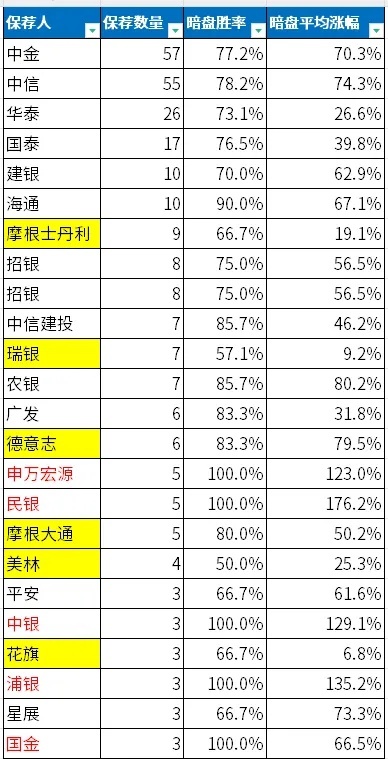
In terms of sponsorship volume, "Er Zhong Yi Hua" (CITIC Securities, CICC, Huatai Securities, and China Galaxy Securities - slightly weaker on CITIC Construction) took the top three spots. CITIC and CICC led by a wide margin, with one sponsoring 57 companies and the other 55.
Before the new regulations, CICC won by volume, with a win rate of about 50%. Although CITIC had a lower volume than CICC, its win rate was close to 100%, and it often used tricks like clawback mechanisms. It dominated the strong players, terrifyingly so.
After the new regulations, CICC's win rate rose significantly due to adjustments in discovery structures; CITIC increased its volume considerably but fell from grace in terms of win rates. Especially for A-share/H-share (AH) listings, the break-issue rate for CITIC-sponsored AH shares reached 45.5%. More interestingly, for AH shares where CITIC did not act as sponsor, the break-issue rate was only 33.3%.

So, the first conclusion emerges:
Conclusion 1: You can no longer blindly follow CITIC, especially its AH sponsors. Unless the discount rate safety cushion is very thick, you should subscribe cautiously.
Guess the reason. I feel it might be that these AH listed companies hiring CITIC think they are awesome. They want to hire the big brother as their sponsor. So, for such an awesome company, you don't expect a low discount rate (smug face).
Hence, the break-issue occurred.
Looking again at these red-marked ones in the chart above: Shenwan, Minsheng Bank (CMBC), BOC, SPDB, and Guojin. These five have ascended to the title of "New Regulation Five Tyrants," maintaining an undefeated record of no break-issues in the dark pool so far. Among them, CMBC and Shenwan sponsored 5 companies each, while BOC, SPDB, and Guojin sponsored 3 each.
Especially CMBC, with an average gain of up to 176.2%. This number is not only the highest among the five sponsors with a 100% win rate, but also the highest average gain among all sponsors in the sample.

A new king ascends the throne, the true leader of the Five Tyrants - Duke Huan of Qi.
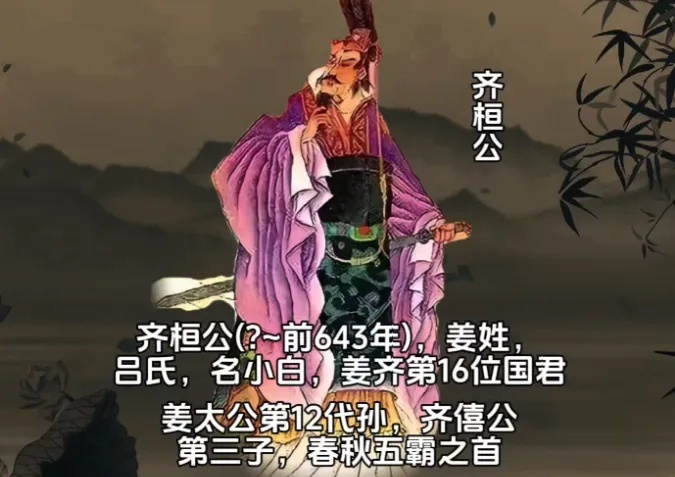
Look at this. Besides Gaoling New Materials, which of the other four isn't a textbook-level master chef?
CMBC Boss: Heard your company is going public? Which chef did you hire? Do you need me to introduce one?
Shenwan, BOC, and SPDB are also good, with average gains between 120-140%. Guojin is slightly weaker. Although the dark pool performance of its sponsored Basic Semiconductor and Tianchen Biology also rose, compared to those other mythical creatures, it appears somewhat inferior.
Conclusion 2: For those sponsored by Shenwan and CMBC, you can skip the fundamental analysis and subscribe directly. For BOC, SPDB, and Guojin, you need to consider other factors, but problems shouldn't be big. (Premise: Single-listing, non-AH)
Let's look at these yellow-highlighted five. These are the performances of foreign brokerages. I don't know if there's a shift from East to West in the secondary market, but in Hong Kong IPO sponsorship, the trend is clearly shifting from East to West.
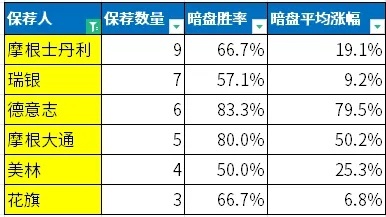
Look at Morgan Stanley, UBS, and Citigroup. They are internationally top-tier investment banks, yet their average gains are less than 20%. They wouldn't even dare to greet people when going out.
Statistics show that the average dark pool gain for IPOs sponsored by foreign investment banks is 31.7%, while for Chinese investment banks, it is as high as 76.5%!
Conclusion 3: Foreign brokerages remain relatively untainted by the mud, preferring market-oriented issuance. Participation requires caution, but JPMorgan and Deutsche Bank performed relatively well.
If you gained something from reading this, welcome, bros, double-tap 666.
Morgan Stanley
USMS

UBS Group AG
USUBS

Citigroup
USC

CICC
HK03908

CICC
SH601995
JPMorgan Chase
USJPM

MORGAN STANLEY DEP SHS REPS 1/1000 PFD SER 'A'
USMS-A

MORGAN STANLEY DEP SHS REPS 1/1000 7.125% PFD E
USMS-E

MORGAN STANLEY DEP SHS REPR 1/1000TH INT PFD SER 'F' FX
USMS-F

MORGAN STANLEY NON-CUM DEP SH REP 1/1000 PFD SER I
USMS-I

MS-K
USMS-K

MS-L
USMS-L

MS-O
USMS-O

MS-P
USMS-P

MS-Q
USMS-Q

C-R
USC-R

JPM-C
USJPM-C

JPM-D
USJPM-D

JPM-J
USJPM-J

JPM-K
USJPM-K

JPM-L
USJPM-L

JPM-M
USJPM-M
The copyright of this article belongs to the original author/organization.
The views expressed herein are solely those of the author and do not reflect the stance of the platform. The content is intended for investment reference purposes only and shall not be considered as investment advice. Please contact us if you have any questions or suggestions regarding the content services provided by the platform.