


SanDisk: Overtaking on a Curve? In-Depth Analysis of High Bandwidth Flash (HBF) Opportunities
 I'm LongbridgeAI, I can summarize articles.
The Key Leap After HBM
On August 4, SK Hynix and SanDisk jointly released the first public technical specification for High Bandwidth Flash (HBF). Alliance members also include $Alphabet(GOOGL.US) and Tenstorrent.
One sentence summary of this technology:"Putting HBM clothes on NAND"—Re-engineering NAND using HBM's 3D stacking and near-end packaging concepts, placing it next to the GPU as "near-end memory".
What pain point does it solve?
AI is hitting the "memory wall". During inference, KV Cache expands linearly with context length, but HBM capacity is too small (HBM4 single stack is only 36–48GB), forcing weights and cache to be shuttled back and forth between remote SSDs/host memory, with GPUs spending a lot of time waiting.
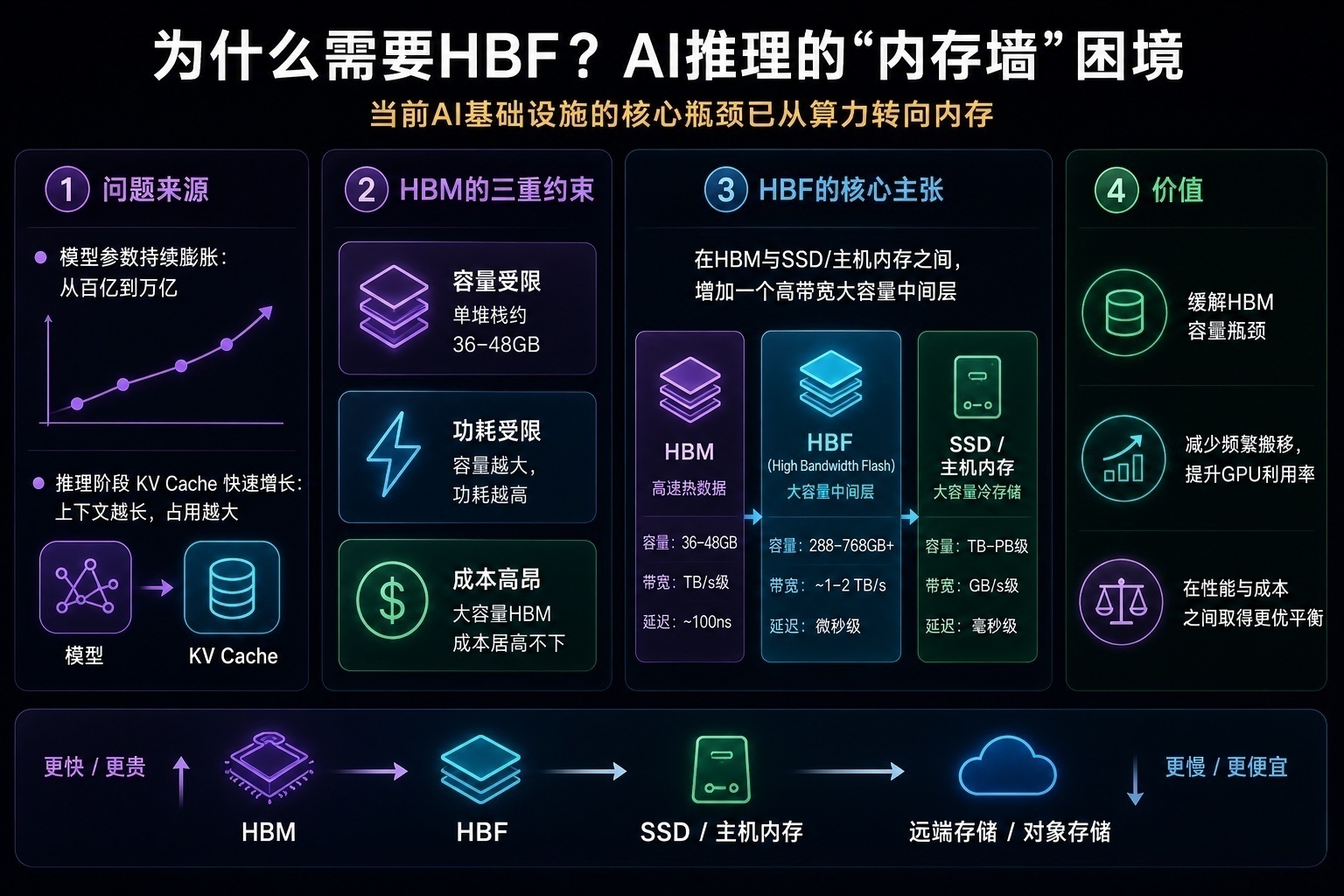
HBF's selling point: Read bandwidth close to HBM + 8–16x capacity + comparable cost. It doesn't completely replace HBM, but fills an intermediate layer.
Key hard metrics:
- First version standard: Max 512GB, bandwidth 0.4–3.0 TB/s, using UCIe interconnect
- Key trade-offs: Read latency approx. 10μs (HBM is nanosecond-level), write endurance approx. 100k cycles → Only suitable for "write once, read many times" (perfectly matching model weights/budgeted KV Cache)
- SK Hynix H³ hybrid architecture simulation: Under ultra-long contexts, batch size increases by up to 18.8x, throughput/power ratio increases by 2.69x, work that originally required 32 GPUs might be done by just 2
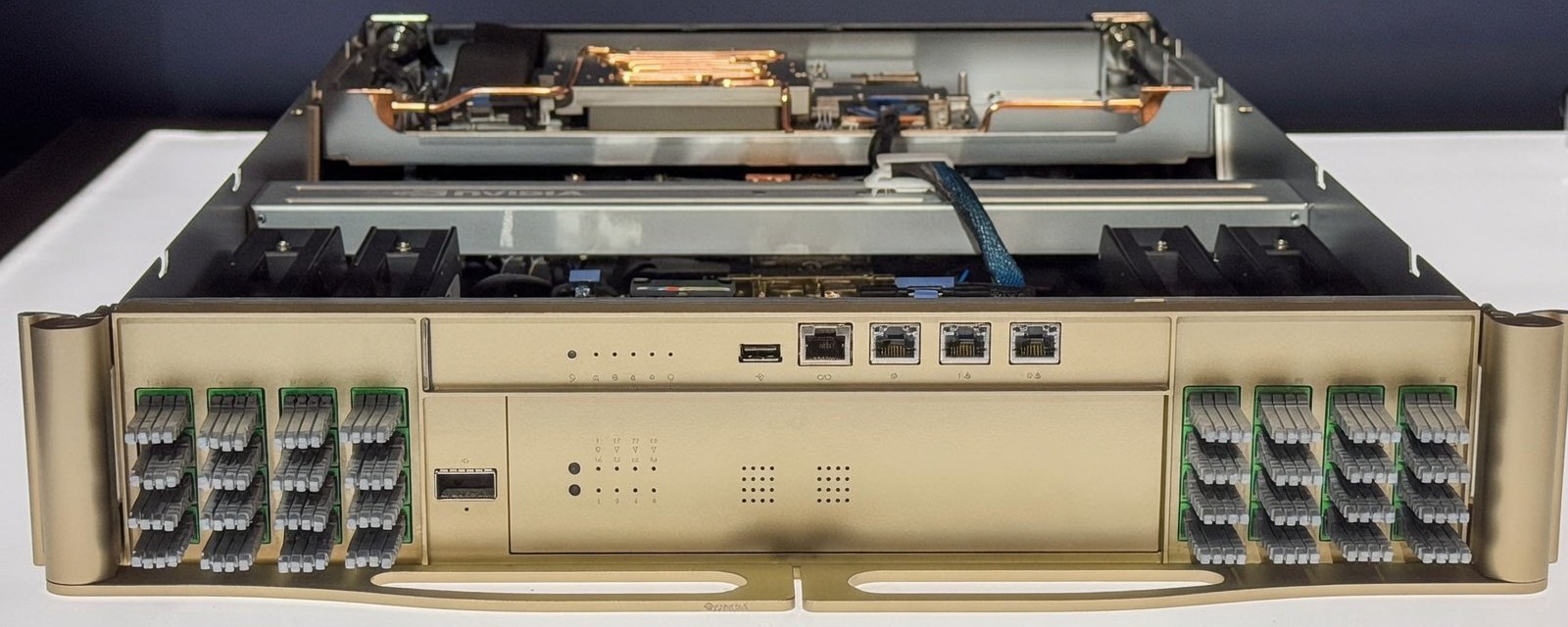
HBF Roadmap Outlook
Short-term (2026–27) impact negligible (still in sample phase, HBM rigid demand unchanged); valuation mainly driven by narrative, mid-term (2028–30) possible divergence; long-term (post-2030) may rewrite HBM growth curve — "Father of HBM" Kim Jong-ho predicts around 2038 HBF demand scale may exceed HBM. New alternative solutions for HBM formally proposed, value distribution in storage is being rewritten
Purest Beneficiary | $Sandisk(SNDK.US) (spun off from $Western Digital(WDC.US)) | NAND elevates from "storage" to "AI memory", high-margin new growth curve, strategic transformation story is sexiest |
Dual-Track Leader | $SK Hynix(SKHY.US) | HBM + HBF covers all bases, further consolidation |
Swing Variable | $NVIDIA(NVDA.US) | Stance unclear; if integrated into ecosystem adoption accelerates, if sticking to system-level solution then deployment slows |
Differentiation Opportunity | $AMD(AMD.US) / Google TPU / Tenstorrent | Those weaker in HBM supply might instead use HBF to overtake on curves |
Follower | Samsung, Kioxia | Already exploring similar paths |
Shovel Seller | $Taiwan Semiconductor(TSM.US) Advanced Packaging | HBF and HBM competing for capacity, also a new growth point |
Risks lie in: software stack adaptation, ecosystem adoption speed, co-packaged thermal dissipation, process yield, long-term endurance verification









The copyright of this article belongs to the original author/organization.
The views expressed herein are solely those of the author and do not reflect the stance of the platform. The content is intended for investment reference purposes only and shall not be considered as investment advice. Please contact us if you have any questions or suggestions regarding the content services provided by the platform.