

Huazhu Raises Full-Year Guidance: Brand Leadership and Franchise System Drive Long-Term Value
 I'm LongbridgeAI, I can summarize articles.
On August 17, Huazhu Group released its Q2 2026 earnings: revenue of RMB 7.1bn (+10.8% YoY); net profit attributable to shareholders of RMB 1.6bn (+2.1% YoY); adjusted EBITDA reached RMB 2.7bn (+~20% YoY).
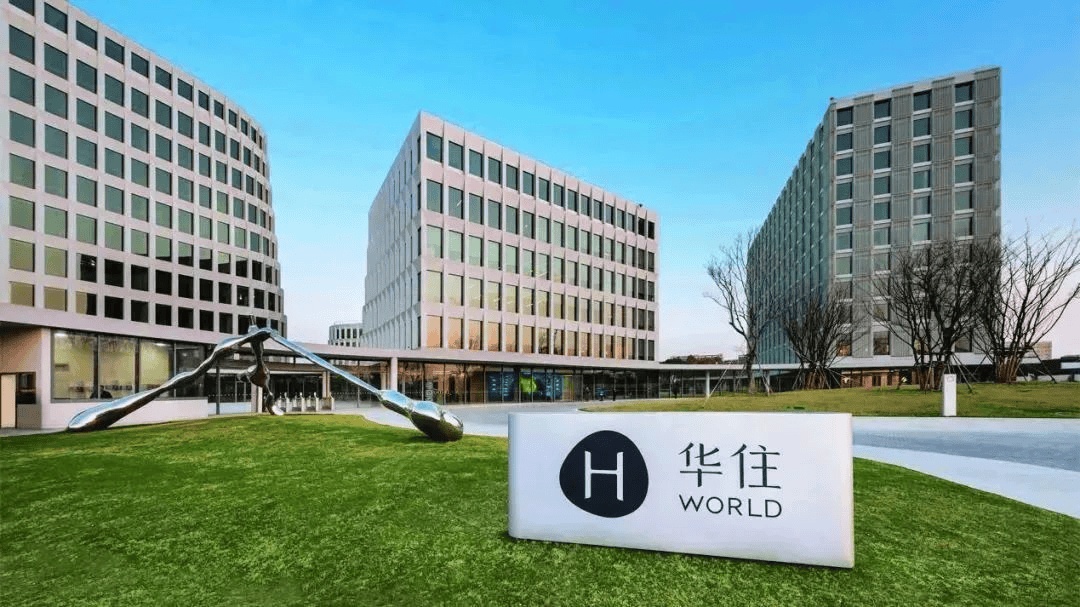
The company simultaneously raised its full-year guidance, increasing the full-year revenue growth target from 2%-6% to 4%-8%. The revenue growth guidance for Huazhu China was raised to 7%-11%, while management, franchise and licensing revenue growth guidance increased from 12%-16% to 16%-20%.
From an operational perspective, Huazhu China's comprehensive RevPAR in Q2 was RMB 238 (+1.1% YoY), with same-store RevPAR (hotels operating for at least 18 months) declining 3.0% YoY. Management, franchise and licensing revenue reached RMB 3.586bn (+25.2% YoY), operating profit grew 24.1% YoY, and operating margin expanded from 27.8% to 31.1%.
Huazhu's room demand is currently recovering moderately, while its profit structure has already improved first. Huazhu expands revenue through its brands, membership base, operational systems, and franchise network, with the constraints on growth speed from heavy-asset investments continuing to ease.
After the hotel industry entered a stock competition phase, the long-term quality of chain groups is jointly determined by whether guests continue to repurchase and whether franchisees are willing to renew contracts. The value of Huazhu's financial report can also be reinterpreted along these two categories of customers.
Hotel demand returns to normal, chain groups are converting scale advantages into margin advantages
Data shows Huazhu China's ADR was RMB 298 (+2.6% YoY); occupancy rate was 79.8% (-1.2 pct YoY); RevPAR grew 1.1%. For reference, IHG's Greater China RevPAR grew 0.8% YoY in Q2.
Huazhu's Q2 room data cannot be described as strong. While Chinese hotel demand remains resilient, a comprehensive rise in both volume and price has not yet materialized. In contrast, profit performance is significantly stronger, specifically:
In Q2, Huazhu's management, franchise and licensing revenue was RMB 3.586bn (+25.2% YoY); self-operated and leased hotel revenue was RMB 3.233bn (-4.9% YoY). In H1, management, franchise and licensing revenue accounted for 50.3% of group revenue, compared to 45.4% in the same period last year. Hotel operating costs grew 7.4% YoY, lower than revenue growth, linking cost ratio reduction directly to light-asset expansion.
The financial mechanism behind this change is not complex. Self-operated hotels need to continuously bear rent, decoration, labor, and depreciation. The management and franchise model leaves more property and major capital investment to owners, while the group generates revenue through brand licensing, operational management, member traffic diversion, and technical systems. After network expansion, the new stores' capital occupation relative to the group is relatively limited, making it easier for economies of scale to settle into margins and cash flow.
As of the end of June, Huazhu operated 13,539 hotels globally, including 13,417 in China. In Q2, Huazhu China opened 498 new hotels, 497 of which adopted the management, franchise and licensing model; pending opening hotels in China reached 3,054. The company opened a total of 1,035 hotels in H1. Management maintains the annual target of opening 2,200 to 2,300 new stores, stating that the number of pending opening hotels at the end of Q2 increased both YoY and QoQ.
Huazhu's operating cash inflow in Q2 was RMB 3.4bn; cash and cash equivalents stood at RMB 14.2bn as of the end of June, with total debt of RMB 4.2bn. The company launched a new three-year, $2.5bn shareholder return plan and announced an ordinary cash dividend of approximately $275mn.
Huazhu's light-asset strategy continues to improve shareholder return capabilities. Although expansion continues, cash flow can now balance development investment and shareholder returns.
Travel becomes more frequent and restrained, mid-range chains are taking over new accommodation consumption structures
In H1 2026, domestic residents made 3.463 billion trips (+5.4% YoY); total domestic travel spending reached RMB 32.1 trillion (+2.0% YoY). During the May Day holiday, domestic trips totaled 325 million (+3.6% YoY), with total spending of RMB 185.492 billion (+2.9% YoY).
Significant changes have occurred in China's service consumption. Travel volumes continue to grow, but expenditure growth is relatively moderate, with tourism consumption returning from concentrated release to higher-frequency, more rational daily spending. Huazhu's fundamental changes occur against this industry backdrop. Additionally, a prominent feature in the industry currently is that service consumption outperformed goods consumption during the same period.National Bureau of Statistics data shows that service retail sales grew 5.3% YoY in H1, while goods retail sales grew 1.1%; social consumer goods retail sales grew 0.6% YoY in July.
It is evident that residents are still willing to pay for travel, leisure, and experiences, but their requirements for accommodation prices, hygiene, location, and service stability are becoming clearer. Such a consumption environment is more friendly to economy and mid-range chains with standardization capabilities.
Huazhu's product structure strongly covers this demand segment. Hanting, Ji Hotel, and Orange remain the core brands in the company's mass accommodation market. On the conference call, management stated that Hanting 4.0's RevPAR was significantly better than the old version; operations and preparation hotels for mid-to-high-end brands such as City Comfort, Ji Hotel Grand View, Crystal Orange, and Metropole reached 1,738.
Product upgrades relate not only to room rates but also to single-store investment returns and brand lifecycle, ultimately affecting whether franchisees are willing to continue investing.
Supply-side expansion space also remains. A February report by the Financial Times stated that the chain penetration rate of large-scale hotels in China is approximately 30%-40%, compared to 70%-80% in the US.
The domestic accommodation market still has a large number of independent properties available for branding and chain transformation. Against the backdrop of real estate adjustments, the operational efficiency of stock properties is receiving higher attention. Consequently, the membership, revenue management, procurement, and digitalization capabilities provided by mature hotel groups possess more realistic commercial value.
Huazhu is advancing towards 20,000 hotels and 2,000 cities. As of the end of June, operating and preparation hotels cover 1,468 cities in China.
Future sinking-market expansion will further test product adaptation capabilities: room rate ceilings, customer source structures, and property cost differences vary greatly across different cities, requiring standardized brands to retain sufficient regional operational flexibility.
Scale expansion enters a quality-constrained period, single-store returns and overseas profitability determine the gold content of growth
Although the light-asset model has improved store-opening efficiency, it cannot be taken lightly regarding operations and franchisee returns. Therefore, the 3,054 pending opening hotels in China represent revenue reserves but also imply higher execution requirements.
Management continued to emphasize "high-quality" network expansion on the conference call, where scale growth now requires stricter single-store economic support. Next, beyond store count, mature store RevPAR, ramp-up cycles, closure rates, and franchisee investment returns will become increasingly important.
Overseas business is then a variable with elasticity for Huazhu's next stage.
Huazhu International's revenue in Q2 was RMB 1.3bn (-5.8% YoY); comprehensive RevPAR declined 3.8% YoY, impacted by Middle East conflicts and the ramp-up of new Southeast Asian markets. Adjusted EBITDA for overseas business was RMB 131mn in the same period, a significant improvement from the Q1 loss of RMB 56mn. Management maintains the full-year profitability target for overseas business in 2026. Europe's Q2 RevPAR grew 1.1% YoY, indicating local improvements in overseas operations, though cross-regional brand operations, cost control, and geopolitical risks still require time to digest.
Huazhu also plans to continue investing in technology, AI, membership systems, and brand building. Light-asset does not mean lowered operational thresholds. The larger the hotel network, the more dependent revenue management, quality control, training, procurement, and member operations are on system capabilities. If scale lacks stable experience support, brand management costs will also be amplified. Management explicitly mentioned on the conference call that talent, technology and AI, the H Rewards membership system, and brands remain long-term investment directions.
After Huazhu raised its full-year guidance, the direction for the Chinese hotel industry next is clearer: chain expansion continues, the granularity of industry competition will become finer and finer. The next battle for hotel groups will fall on how much cash each store can generate, and who each franchisee is willing to hand over their next capital to.
Source: HK Stock Research Society


The copyright of this article belongs to the original author/organization.
The views expressed herein are solely those of the author and do not reflect the stance of the platform. The content is intended for investment reference purposes only and shall not be considered as investment advice. Please contact us if you have any questions or suggestions regarding the content services provided by the platform.