
印度的核能發展進一步加劇了巨大的鈾供應缺口
 我是 LongbridgeAI,我可以總結文章信息。
印度根據其 2014 年的核協議確保了澳大利亞的鈾供應,以支持其到 2047 年實現 100 吉瓦核能容量的目標。這是繼與加拿大 Cameco 達成的價值 26 億加元的協議之後,後者將提供 2200 萬磅的 U3O8。由於國內資源不足,以及由於中國、俄羅斯和小型模塊化反應堆(SMRs)需求上升導致的全球供應缺口擴大,主權買家正在鎖定鈾的供應量。高盛指出,長期供應缺口令人擔憂,進一步強化了鈾價持續上漲的論點
Prime Minister Modi secured another major uranium supply line. During his visit to Australia this month, the two sides finalized the administrative arrangements needed to move Australian uranium to India under the previous 2014 nuclear cooperation agreement. The fuel must stay under IAEA safeguards for exclusively peaceful use.
Australia holds roughly 28% of global uranium reserves. New Delhi has eyed those reserves for years, and now the yellowcake spigot can open.
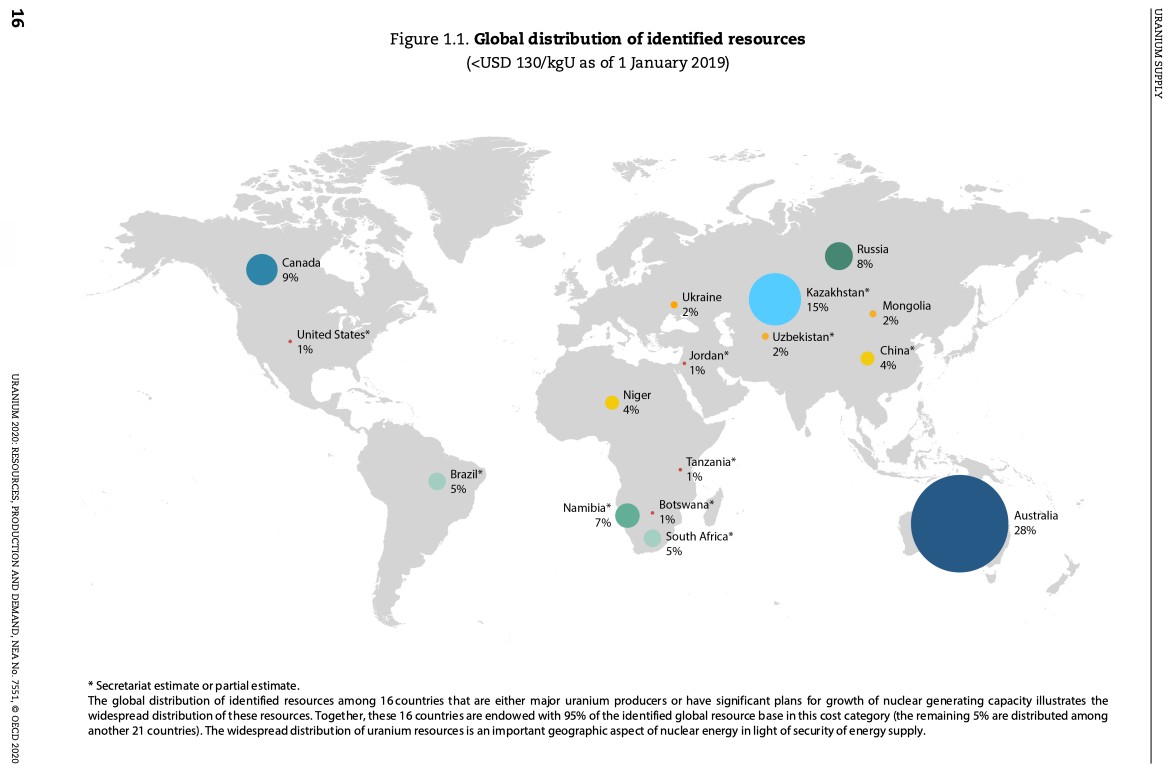
This follows the March deal with Canada's Cameco. That contract covers nearly 22 million pounds of U3O8 from 2027 through 2035 at market-related pricing, worth around C$2.6 billion.
India already buys from Russia and Uzbekistan, and holds some domestic production. The message is consistent: a country targeting 100 GW of nuclear capacity by 2047 cannot rely on thin indigenous resources alone.
Current operable capacity sits near 8 GW. The gap requires sustained annual additions measured in gigawatts, not megawatts.
Cumulative net deficits keep expanding as reactor builds in China and Russia outpace primary supply response. Goldman models have only recently started taking into account the significant expansion in the SMR space as well, resulting in some relatively alarming supply gaps in the years ahead.
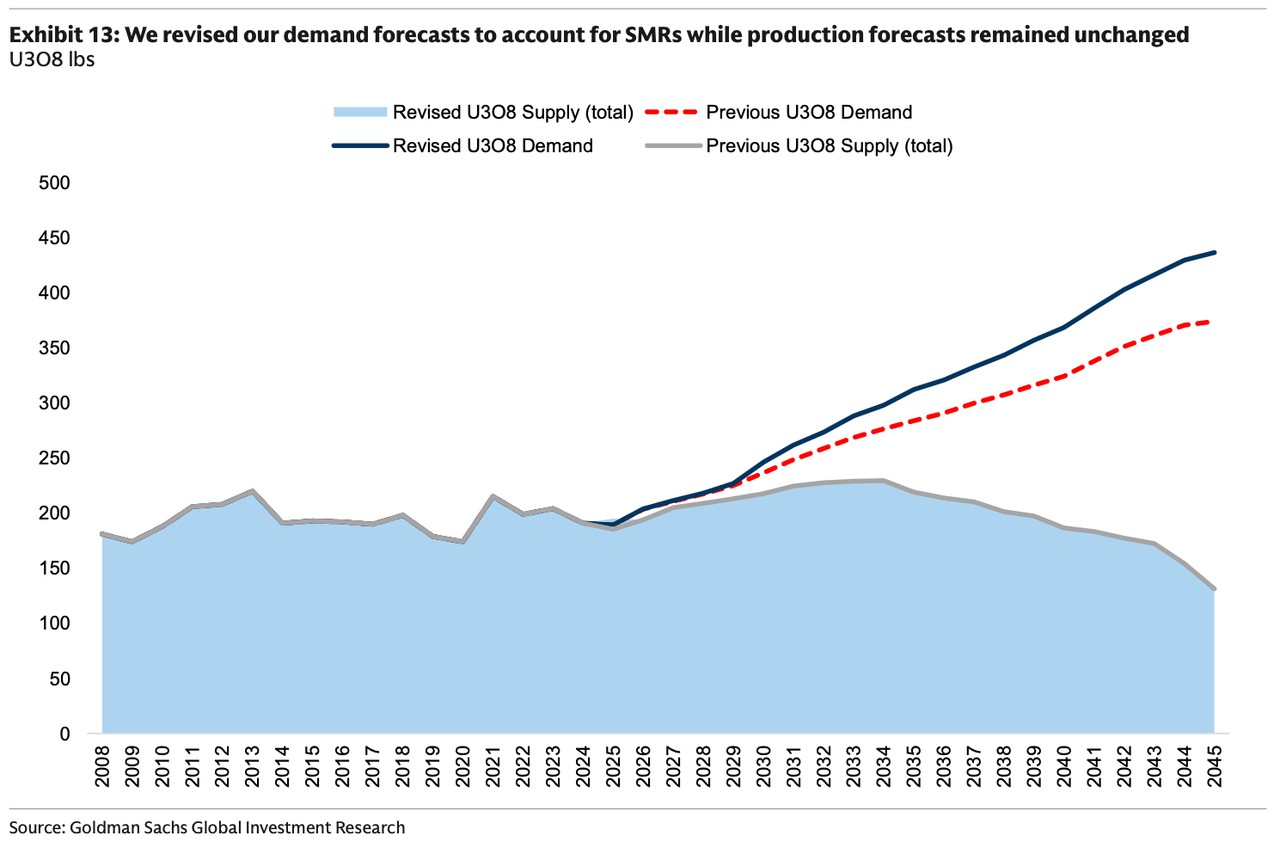
The Cameco agreement already reflected this reality. CEO Tim Gitzel noted that sovereign buyers are locking up volumes in a window where available supply grows more uncertain. Kazakhstan has also moved to build its own strategic reserve.
Couple these data points with Goldman's estimate of the ongoing lack of long-term uranium supply contracting by the existing global fleet…
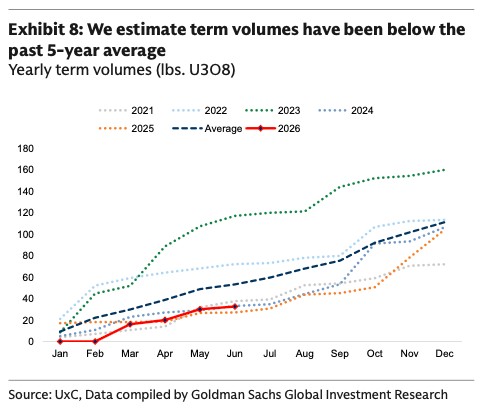
We've been pointing to the uranium upside trade for several years now. We laid out a longer form of our thesis for the anticipated continued rise of the price of uranium just a few months ago. The idea is incredibly straightforward. There's not enough mines, and the demand is exploding faster than people can keep track of.