
“Fibermaxxing” 熱潮迫使大型食品公司進入配方改革週期
 我是 LongbridgeAI,我可以總結文章信息。
BNP Paribas 分析師報告稱,Z 世代的 “纖維最大化” 趨勢,受到健康意識和 GLP-1 藥物使用的推動,正在迫使主要食品公司重新配方。全球膳食纖維市場預計到 2034 年將以 9.6% 的年均增長率增長。像百事和雀巢這樣的公司正在強調高纖維的宣傳,而塔特萊和宜瑞安等供應商則有望從這一向飽腹感和消化健康轉變中受益
BNP Paribas analysts say Gen Z's growing awareness of healthy, high-protein, high-fiber diets is accelerating a reformulation cycle across the Big Food industrial complex, as manufacturers race to make products more appealing to the youth and those on GLP-1weight-loss drugs.
In a report titled "Fiber Is the New Protein,” BNP analyst Joan Lim said the protein craze ignited by GLP-1 adoption has been coined"fibermaxxing," as younger consumers seek food products promising satiety, digestive health and weight-management benefits.
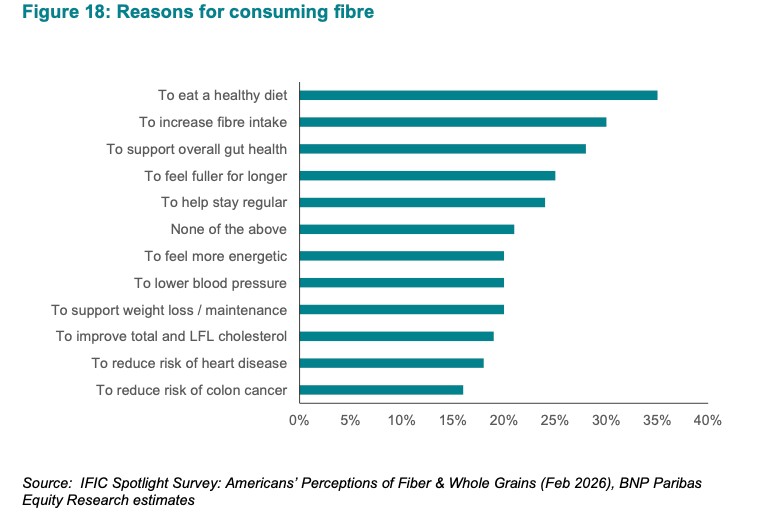
Consumer research firmNielsen showsprotein-rich categories have seen stronger volumes versus junk foodcategories.
The global dietary fiber market was valued at roughly $9.6 billion in 2025 and is forecast to grow at a compound annual rate of 9.6% through 2034, as the fiber-maxxing trend gains even more momentum.
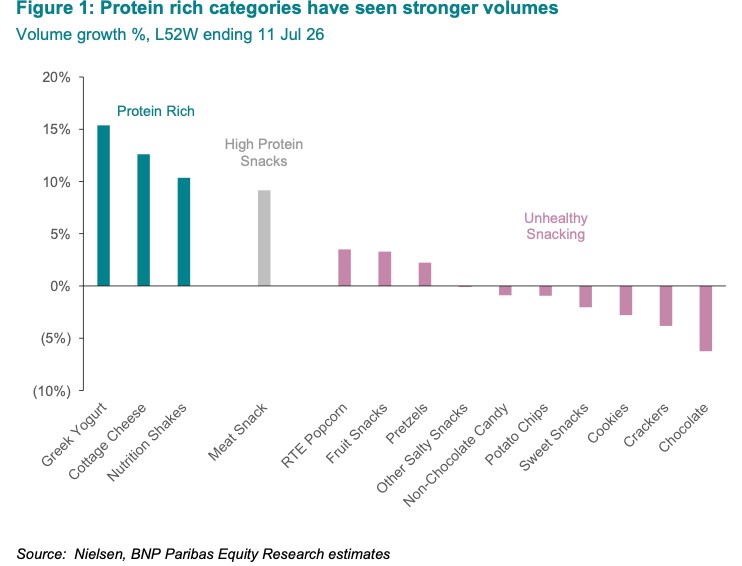
Fibermaxxing is already visible, according to Lim. Only 20% of people globally consume the recommended daily amount of fiber, yet social media posts using the #fibermaxxing hashtag attracted more than 150 million views on TikTok in 2025.
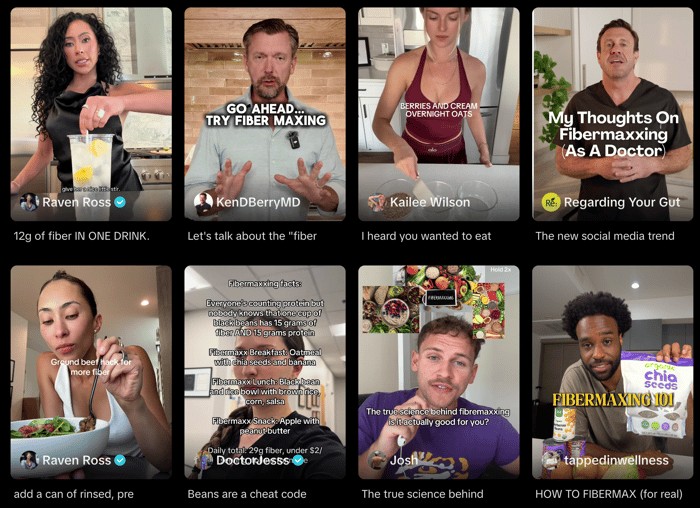
Food and beverage research firm Datassential found that 52% of US consumers are interested in trying fibermaxxing and 42% consider products labeled "high fiber" healthier.
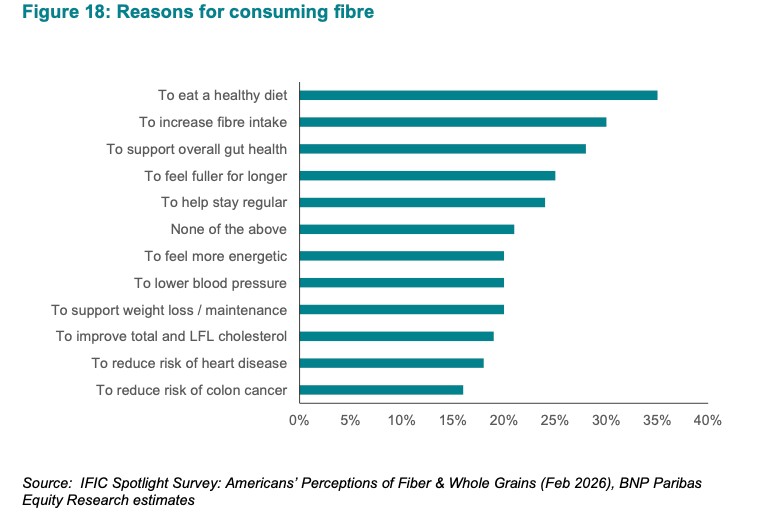
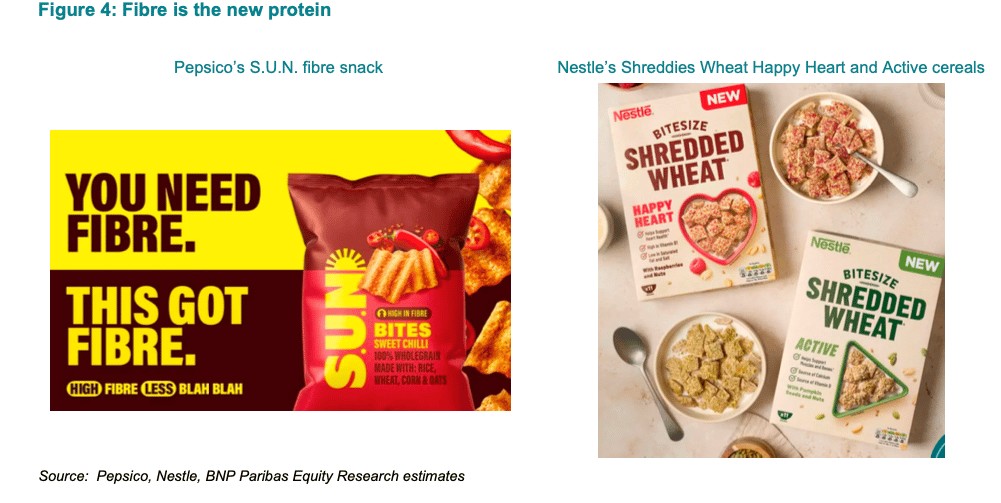
Fiber has also overtaken probiotics in digestive-health marketing. Some 38% of products carrying a digestive-health claim now advertise high fiber, compared with 19% featuring probiotics. PepsiCo and Nestlé are among the big food companies that are placing fiber claims more prominently on their packaging.
About 35% of US consumers increased their protein intake between 2024 and 2025, while 75% said they would pay more for protein-rich foods and beverages. The global market for protein-rich products is estimated at $65 billion and growing at 6%-8% annually.
With GLP-1 penetration at 12% in the US and in the low single digits globally, adoption is expected to increase as the drugs become widely available in oral form and more affordable. Lim pointed out that "GLP-1 users need to consume more protein to mitigate the effects of muscle loss."
BNP identified Tate & Lyle and Ingredion as best positioned to benefit from fibermaxxing.
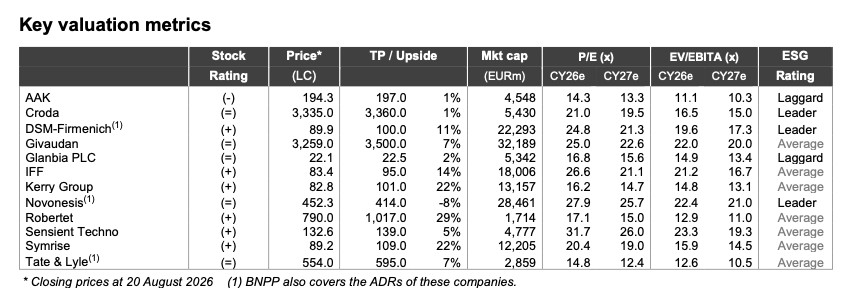
Kerry Group, DSM-Firmenich, IFF, Givaudan and Novonesis could benefit from demand for flavors, enzymes, cultures and texture solutions.