What Are Government Bonds? A Comprehensive Guide to Interest Rates, Credit Ratings, and Default Risk
Government bonds provide steady income through regular coupon payments, but how do interest rates, credit ratings, and default risk affect investment value? This article unpacks bond investing essentials to support informed decisions.
TL;DR: Government bonds are fixed-income securities issued by governments, providing investors with stable returns through regular interest payments. Bond yields are closely linked to credit ratings and default risk: higher-rated bonds typically carry lower default risk, but also offer relatively lower interest returns. This article provides a comprehensive analysis of how government bonds work, how rating systems operate, and how risks are managed—helping you build a complete knowledge framework for bond investing.
Government bonds have long served as an important stabilizer in investment portfolios, especially during periods of market volatility, as they can effectively cushion the price risk of equity assets. However, “government-issued” does not mean “zero risk”—changes in interest rates, adjustments to credit ratings, and default risk can all affect a bond’s actual investment value. This article breaks down, step by step, the interest rate mechanics, rating systems, and default risk assessment of government bonds, helping you establish a solid foundation in fixed-income investing.
Basic Concepts of Government Bonds
Government bonds (Government Bonds) are fixed-income securities issued by governments to raise funds for public spending or infrastructure development. Buying a government bond is essentially lending money to the government; in return, the government commits to paying interest on a regular basis and repaying the principal at maturity.
Core Features of Government Bonds
Government bonds have three core features. First is their fixed-income nature: the coupon rate and maturity date are specified at issuance, allowing investors to anticipate stable interest income. Second is their relatively low default risk: because governments have taxation authority and the ability to issue currency, their debt-servicing capacity is generally more stable than that of corporations. Third is relatively high liquidity: government bonds from most major economies can be freely traded in the secondary market, enabling investors to sell early for cash if needed.
Hong Kong Government Bond Programme
The minimum investment amount for Hong Kong retail government bonds is HKD 10,000, with subscriptions mainly made through banks and securities brokers. Product types include inflation-linked iBonds, Silver Bonds designed for people aged 55 or above, and Green Retail Bonds that support green projects. Coupon frequency and tenor vary by product, allowing investors to choose according to their individual needs.
How Bond Interest Rates Work
Coupon Rate and Yield to Maturity
The coupon rate (Coupon Rate) is the fixed interest rate specified when a bond is issued and is used to calculate interest payments. For example, a bond with a face value of HKD 10,000 and a coupon rate of 3.5% pays HKD 350 in interest per year.
Yield to maturity (YTM) is the key metric for measuring a bond’s true return. It takes into account the purchase price, coupon rate, remaining tenor, and principal repayment, reflecting the annualized return if the bond is held to maturity. When a bond’s market price is below par, its YTM will be higher than its coupon rate.
The Inverse Relationship Between Interest Rates and Bond Prices
Bond prices move inversely to market interest rates. When market rates rise, newly issued bonds offer higher coupon rates, making existing bonds less attractive and pushing their market prices down. When market rates fall, existing bonds become more attractive and their market prices rise.
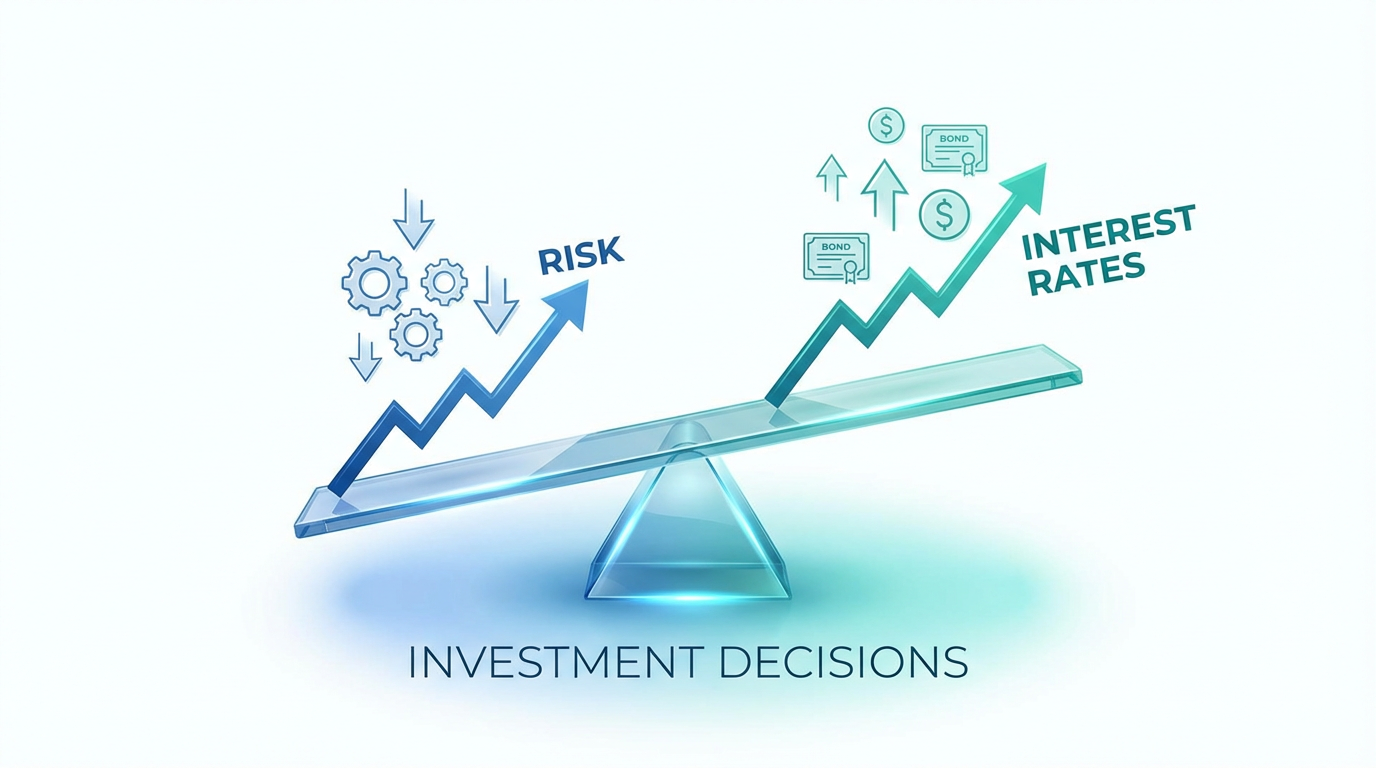
This inverse relationship creates interest rate risk. If market rates rise sharply, bond market values decline, and investors who sell before maturity may incur capital losses.
Duration and Interest Rate Sensitivity
Duration measures a bond’s sensitivity to changes in interest rates. The longer the bond’s maturity, the greater its sensitivity to rate changes and the larger the potential price fluctuations. Long-term bonds generally offer higher yields than short-term bonds to compensate investors for taking on additional interest rate risk.
Bond Credit Rating System
Credit ratings are assigned by independent rating agencies based on the issuer’s financial condition, debt-servicing capacity, and the broader economic environment.
The Three Major International Rating Agencies
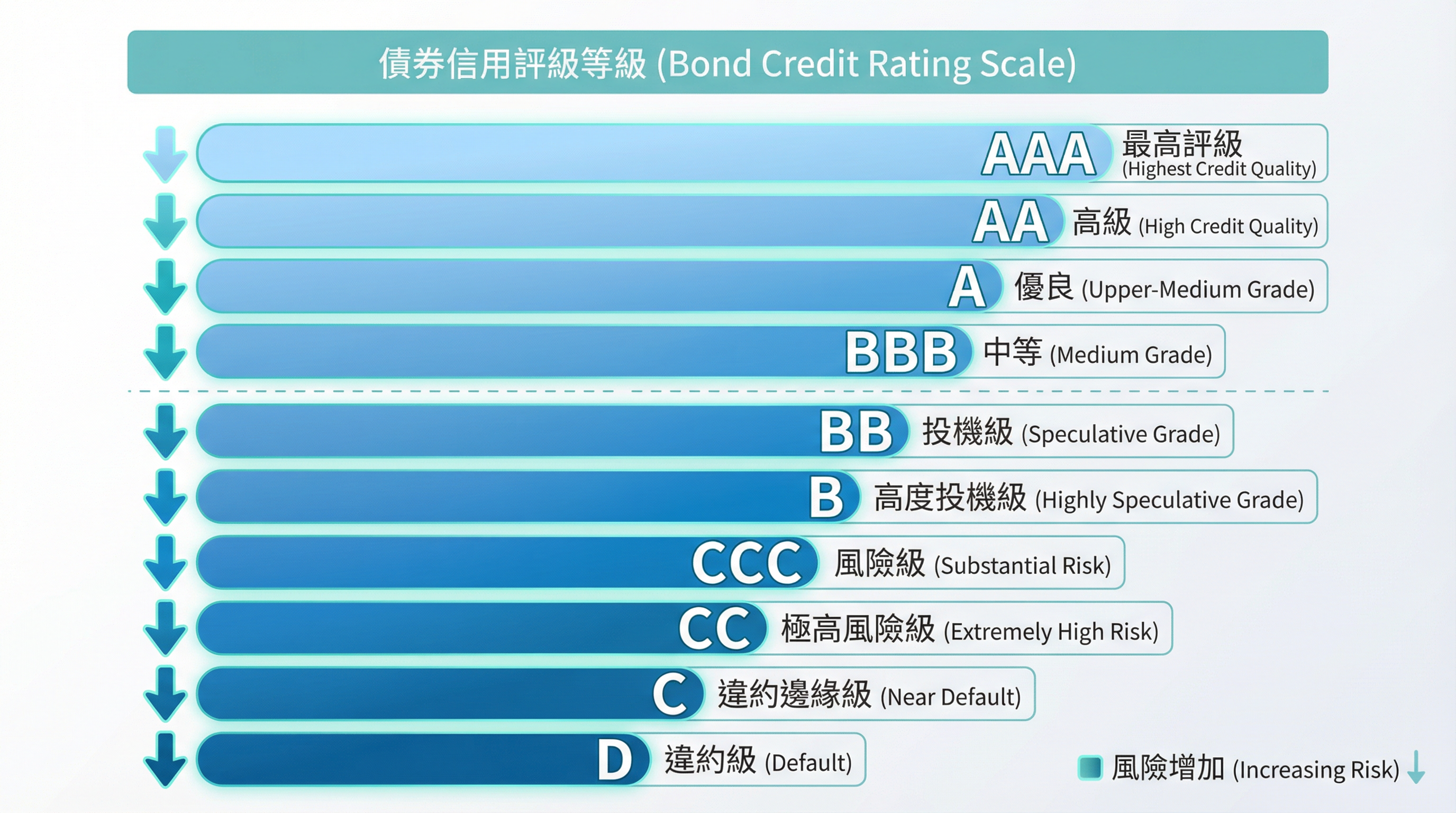
The world’s three major credit rating agencies are Standard & Poor’s (Standard & Poor’s), Moody’s (Moody’s), and Fitch (Fitch). These agencies assign credit ratings to bond issuers using letter grades, ranging from the highest AAA/Aaa to the lowest D (default).
Investment Grade vs. Speculative Grade
Investment-grade bonds are rated BBB-/Baa3 or above. They carry lower default risk and are suitable for conservative investors. Most government bonds—especially those issued by developed economies—fall into this category.
Speculative-grade bonds are rated BB+/Ba1 or below. They carry higher default risk but offer higher interest returns. Historical data show that the lower the rating, the higher the probability of default, particularly for bonds rated CCC or below.
How Ratings Affect Investment Decisions
Changes in credit ratings directly affect bond market prices. A downgrade typically causes bond prices to fall, as investors demand higher yields to compensate for increased risk. An upgrade attracts more investors and can push bond prices higher. Rating agencies also provide rating outlooks, indicating the likely direction of rating changes over the next 6 to 24 months.
Default Risk of Government Bonds
Definition of Default Risk
Default risk (Default Risk) refers to the risk that the issuer fails to pay interest on time or repay principal. For government bonds, defaults usually occur when fiscal conditions deteriorate severely, foreign exchange reserves are insufficient, or political and economic crises arise.
Historically, sovereign defaults have occurred. For example, Argentina has declared sovereign debt default multiple times, and Greece underwent debt restructuring during the European debt crisis. These cases remind investors that even government-issued bonds can default—especially in countries with weaker fiscal positions or unstable political conditions.
Sovereign Ratings and Probability of Default
Rating agencies assign sovereign ratings (Sovereign Rating) based on factors such as a country’s economic strength, fiscal discipline, political stability, and external debt levels. The higher the rating, the lower the default risk.
According to historical data from rating agencies, AAA-rated bonds have an extremely low default rate and have recorded no defaults since 1981. Default rates rise sharply for bonds rated CCC+ or below. Based on S&P Global Ratings data, in 2024 more than 91.7% of global corporate bond default cases came from bonds rated CCC+ and below. Although this dataset focuses on corporate bonds, government bonds exhibit a similar pattern—lower ratings generally imply higher default risk.
Differences Between Developed and Emerging Markets
Government bonds issued by developed economies such as the United States, Germany, Japan, and Hong Kong have extremely low default risk due to economic stability, sound fiscal management, and strong rule of law. U.S. Treasuries are widely regarded by the market as a “risk-free asset” and serve as a global pricing benchmark for fixed-income markets.
Emerging-market government bonds carry higher default risk due to factors such as greater economic volatility, higher external debt ratios, political instability, and currency depreciation risk. Investing in emerging-market government bonds can offer higher yields, but investors must bear the corresponding default risk and currency risk.
Other Risks That Affect Government Bond Returns
Other Risks
Inflation risk: Inflation erodes the real return of bonds. To address inflation risk, some governments issue inflation-linked bonds, whose interest payments are tied to an inflation index.
Liquidity risk: The risk that investors cannot sell bonds quickly at a reasonable price. Major markets such as U.S. Treasuries are highly liquid, while government bonds from some smaller economies trade less actively.
Reinvestment risk: The risk that, after receiving coupon payments or principal repayment at maturity, investors cannot reinvest at the same or a higher interest rate.
How to Assess the Investment Value of Government Bonds
Compare Yields Across Different Bonds
Investors can compare the yields of government bonds with different maturities and issuers to understand how the market prices risk across bonds. Generally, bonds with longer maturities or lower ratings offer higher yields.
The yield curve (Yield Curve) is an important tool for analyzing bond markets, showing yield levels across different maturities. When the yield curve inverts—meaning short-term yields exceed long-term yields—it is often viewed as a warning signal of an economic recession.
Consider Portfolio Diversification
Bond investing should be diversified to spread risk. Investors should avoid concentrating all funds in bonds from a single government or a single maturity. Instead, they should build a diversified bond portfolio that includes government bonds from different regions and maturities, potentially combined with corporate bonds and other fixed-income instruments.
On the Longbridge Securities platform, you can explore a diversified range of investment products, including bonds from different markets and other fixed-income securities.
Monitor the Macroeconomic Environment
Government bond performance is influenced by macroeconomic conditions, including interest rate policy, inflation expectations, economic growth, and fiscal conditions. Investors should closely track central bank policy trends—such as rate-hike or rate-cut cycles—as well as changes in government fiscal policy.
You can use the Longbridge market data service to track global bond market performance and leverage Longbridge analysis tools to conduct in-depth research on the risk–return characteristics of various investment products.
Frequently Asked Questions
Are government bonds completely risk-free?
Government bonds are not completely risk-free. While default risk for government bonds issued by developed economies is extremely low, they are still exposed to interest rate risk, inflation risk, and liquidity risk. Investors should comprehensively assess risks based on the bond’s credit rating, the issuing government’s fiscal position, and market conditions.
Does a higher bond rating mean a higher return?
No. Higher-rated bonds carry lower default risk, but their interest returns are usually lower. While speculative-grade bonds offer higher yields, their default risk rises significantly. Investors need to strike a balance between risk and return.
What is the difference between holding a bond to maturity and selling it early?
If investors hold a bond to maturity, they receive all scheduled interest payments and the repayment of principal, unaffected by market price fluctuations. If they sell the bond before maturity, it will be traded at the prevailing market price, potentially resulting in capital gains or losses. Investors should decide based on their liquidity needs and market conditions.
Conclusion
As a fixed-income investment tool, government bonds play an important role in portfolios, especially for investors seeking stable returns and effective risk management. Understanding the mechanics of bond interest rates, credit ratings, and default risk is fundamental to making informed investment decisions. Although government bonds are relatively resilient, they are not entirely risk-free, and investors must still evaluate factors such as interest rate risk, inflation risk, and liquidity risk.
Building a diversified bond portfolio, closely monitoring the macroeconomic environment, and selecting reputable issuers are all effective strategies for reducing investment risk. Whether you choose to invest in Hong Kong government bonds, U.S. Treasuries, or sovereign bonds from other countries, a solid grasp of bond-investing knowledge can help you make appropriate decisions under different market conditions.
Which investment tool you choose depends on your investment objectives, risk tolerance, market views, and experience level. Regardless of the instrument selected, you must fully understand its operating mechanics, risk characteristics, and trading rules, and establish a robust risk management plan. You can learn more about investing through Longbridge Academy or download the Longbridge App.