Do ETFs Pay Dividends? Singapore Investors Guide
Yes, many ETFs pay dividends by collecting payments from underlying stocks. Singapore investors enjoy tax-free dividend income from SGX-listed ETFs and can build reliable passive income streams.
title: Do ETFs Pay Dividends? Singapore Investors Guide
excerpt: Yes, many ETFs pay dividends by collecting payments from underlying stocks.
Singapore investors enjoy tax-free dividend income from SGX-listed ETFs and can
build reliable passive income streams.
subtitle: Build passive income through dividend ETFs with tax-efficient strategies
for Singapore
meta_title: Do ETFs Pay Dividends? Singapore Investors Guide
meta_description: Discover how ETFs pay dividends and build passive income in Singapore.
Learn about tax advantages, dividend yields, and portfolio strategies with comprehensive
insights.
TL;DR: Yes, many ETFs do pay dividends by collecting dividend payments from underlying stocks and passing them to investors. Singapore investors can build passive income through dividend ETFs while enjoying tax advantages such as no dividend withholding tax on Singapore Exchange (SGX)-listed ETFs and full exemption on dividends received by individuals.
Building a reliable passive income stream is a priority for many Singapore investors seeking financial stability. Exchange-Traded Funds (ETFs) that pay dividends offer a practical solution, combining diversification with regular cash distributions. But do all ETFs pay dividends? How do dividend payments work, and what should Singapore investors consider when selecting dividend ETFs for passive income?
This guide explains how ETF dividends function, explores key considerations for Singapore investors including tax implications, and provides practical insights into building a dividend-focused portfolio through platforms like Longbridge.
Understanding ETF Dividends
What Are ETFs and How Do They Generate Dividends?
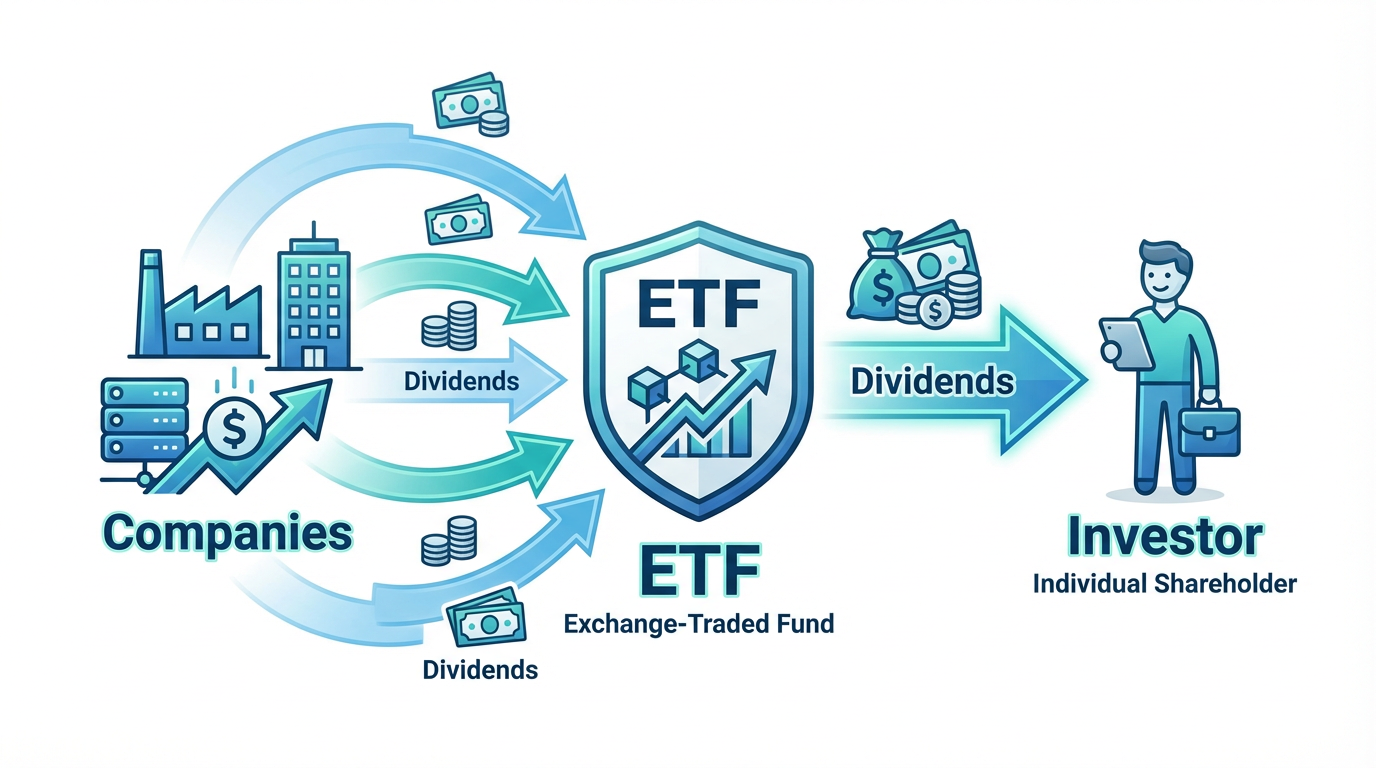
An Exchange-Traded Fund (ETF) is an investment vehicle that holds a diversified basket of securities such as stocks, bonds, or other assets. When an ETF invests in dividend-paying stocks, it collects the dividend payments from those underlying companies and distributes them to ETF shareholders.
Not all ETFs pay dividends. Growth-focused ETFs that invest in companies prioritizing capital appreciation over dividend distributions may pay little or no dividends. Conversely, dividend ETFs specifically target stocks with strong dividend histories, making them suitable for income-oriented investors.
How ETF Dividend Payments Work
When companies held within an ETF pay dividends, the ETF collects these payments and pools them together. The fund then distributes these accumulated dividends to ETF shareholders on a predetermined schedule, typically quarterly, though some ETFs pay monthly, semi-annually, or annually.
The amount each investor receives depends on the number of ETF shares held and the total dividends collected from the underlying portfolio. For example, if you own 100 shares of a dividend ETF that declares a distribution of SGD 0.50 per share, you would receive SGD 50 in dividend income.
Types of Dividend-Paying ETFs
Equity Dividend ETFs
These ETFs invest primarily in dividend-paying stocks from various markets and sectors. Singapore investors can access equity dividend ETFs tracking local Singapore Exchange (SGX)-listed stocks, United States (US) markets, Hong Kong, or global equities.
According to market data, SGX-listed Real Estate Investment Trust (REIT) ETFs such as the Lion-Phillip S-REIT ETF and CSOP iEdge S-REIT Leaders ETF typically offers dividend yields ranging from approximately 4.90 percent to 5.78 percent, providing attractive income opportunities for local investors.
Bond and Fixed Income ETFs
While technically paying interest rather than dividends, fixed income ETFs function similarly by collecting interest payments from bonds and distributing them to shareholders. These offer more stable income compared to equity ETFs, though generally with lower yields.
Sector-Specific Dividend ETFs
Certain sectors historically generate higher dividends, including real estate, utilities, telecommunications, and financial services. Sector-specific ETFs concentrate in these industries, potentially offering higher yields but with less diversification compared to broad-market dividend ETFs.
Tax Considerations for Singapore Investors
Singapore's Favorable Dividend Tax Treatment
Singapore offers significant tax advantages for dividend investors. Under the one-tier corporate tax system, dividends paid by Singapore-resident companies are exempt from taxation for individual shareholders. According to the Inland Revenue Authority of Singapore (IRAS), this exemption applies because the company has already paid corporate tax on its profits.
For SGX-listed dividend ETFs, Singapore does not impose dividend withholding tax. This means Singapore investors receive 100 percent of dividend distributions without any tax deductions at source, a meaningful advantage compared to many other jurisdictions.
Foreign Dividend Withholding Tax
While Singapore-sourced dividends enjoy full exemption, investors should be aware of withholding taxes on foreign-sourced dividends. US-listed ETFs, for instance, may be subject to a 30 percent withholding tax on dividends at the fund level for Singapore investors without a tax treaty benefit.
On withholding tax structures, Ireland-domiciled ETFs holding US stocks face only a 15 percent withholding tax due to the US-Ireland tax treaty, making them potentially more tax-efficient than direct US-listed ETFs for Singapore investors.
When selecting dividend ETFs, consider the domicile of the fund and the geographic exposure of underlying holdings to optimize after-tax returns. Singapore and regional Asian ETFs listed on the SGX typically offer the cleanest tax treatment for local investors.
Building a Dividend ETF Portfolio
Determining Your Income Objectives
Before selecting dividend ETFs, clarify your income requirements. Are you seeking supplementary income to complement your salary, or do you need substantial cash flow to support living expenses? Your income needs will influence whether you prioritize higher-yielding ETFs or more conservative, stable dividend payers.

Evaluating Dividend Yield and Sustainability
Dividend yield, calculated by dividing annual dividend payments by the ETF price, provides a snapshot of income generation. However, yield alone does not tell the complete story. A very high yield may indicate underlying risks such as unsustainable payout ratios or declining asset values.
Examine the dividend history of the ETF and its underlying holdings. Consistent or growing dividends over time suggest financial health and sustainable business models. Review the ETF's fact sheet and historical distribution data, available through the fund provider or your brokerage platform.
Distribution Frequency and Cash Flow Planning
Consider how often you need to receive income. Monthly-paying dividend ETFs provide regular cash flow, helpful for retirees or those using dividends for living expenses. Quarterly distributions, the standard for most ETFs, require less frequent monitoring but may need more careful budgeting.
Some Singapore investors combine ETFs with different payment schedules to create consistent income throughout the year, aligning cash inflows with financial obligations.
Geographic and Sector Diversification
Diversification remains fundamental to risk management. Rather than concentrating exclusively in Singapore dividend ETFs, consider including exposure to other markets such as the US, Hong Kong, or broader Asia-Pacific region.
Similarly, diversifying across sectors reduces concentration risk. While REIT ETFs may offer attractive yields, balancing them with dividend-paying stocks from technology, healthcare, or consumer sectors creates a more resilient portfolio capable of weathering sector-specific downturns.
You can explore various investment products including stocks, ETFs, and REITs across Singapore, US, and Hong Kong markets through Longbridge's comprehensive platform.
Dividend Reinvestment vs Cash Distributions
The Power of Dividend Reinvestment
Many brokerage platforms, including Longbridge, allow investors to choose between receiving dividends as cash or automatically reinvesting them to purchase additional ETF shares. Dividend reinvestment can significantly accelerate wealth accumulation through compounding.
When dividends are reinvested, you acquire more shares without additional out-of-pocket investment. These additional shares then generate their own dividends, creating a compounding effect that can substantially boost long-term returns, particularly in tax-advantaged environments like Singapore where dividends face no withholding tax.
When to Take Cash Distributions
Taking cash distributions makes sense when you need the income for living expenses or prefer to manually reallocate funds to other investments. If you are retired or semi-retired and relying on investment income, receiving dividends as cash provides regular, predictable funding.
Cash distributions also offer flexibility to rebalance your portfolio manually or redirect funds to undervalued investment opportunities as market conditions change.
Monitoring and Adjusting Your Dividend ETF Portfolio
Regular Performance Review
Dividend portfolios require periodic review to ensure they continue meeting your income objectives. Monitor both dividend payments and the underlying performance of your ETFs. Declining prices may signal problems with holdings or broader market concerns.
Review the ETF's distribution history, checking whether dividends remain stable, are growing, or show concerning declines. Most ETF providers publish fact sheets detailing performance metrics, portfolio composition, and distribution history.
Staying Informed Through Market Research
Access to quality research and analysis helps you make informed decisions about your dividend ETF holdings. Longbridge provides market insights, data visualization tools, and research resources to help investors track performance and understand market dynamics.
You can access educational resources through the Longbridge Academy to deepen your understanding of dividend investing strategies and stay updated on market developments affecting your portfolio.
Rebalancing for Risk Management
As markets move, your portfolio allocation may drift from your target. For instance, if Singapore REIT ETFs appreciate significantly while international equity ETFs lag, your portfolio may become overweight in Singapore property exposure, increasing concentration risk.
Periodic rebalancing maintains your desired risk profile and can potentially enhance long-term returns.
Frequently Asked Questions
Do all ETFs pay dividends?
No, not all ETFs pay dividends. Growth-oriented ETFs that invest in companies focusing on capital appreciation rather than dividend distributions may pay minimal or no dividends. Dividend ETFs specifically target dividend-paying stocks and are designed to generate regular income for investors.
How often do dividend ETFs make payments?
Dividend ETF payment schedules vary by fund. Most equity dividend ETFs distribute dividends quarterly, though some pay monthly, semi-annually, or annually. The specific payment frequency is detailed in the ETF's prospectus and fact sheet, available through your brokerage platform or the fund provider's website.
Are ETF dividends taxable in Singapore?
For individual investors in Singapore, dividends from Singapore-resident companies and SGX-listed ETFs are generally exempt from taxation under the one-tier corporate tax system. However, dividends from foreign sources may be subject to withholding taxes imposed by the country where the dividend originates, though these typically do not result in additional Singapore tax liability for individuals.
What is a good dividend yield for an ETF?
There is no universal "good" dividend yield, as appropriate yields depend on market conditions, risk tolerance, and investment objectives. Singapore REIT ETFs currently offer yields ranging from approximately 4 percent to 6 percent. Higher yields may indicate greater risk or unsustainable distributions, so examine yield sustainability by reviewing payout ratios, distribution history, and underlying business fundamentals.
Can I reinvest ETF dividends automatically?
Many brokerage platforms offer dividend reinvestment options that automatically use dividend payments to purchase additional ETF shares. This feature enables compounding without manual intervention and can significantly enhance long-term wealth accumulation. Check with your broker to confirm availability and any associated fees.
Conclusion
ETF dividends offer Singapore investors a practical pathway to building passive income while maintaining diversification and benefiting from favorable local tax treatment. By understanding how dividend ETFs function, evaluating factors such as yield sustainability, distribution frequency, and geographic exposure, and leveraging Singapore's tax advantages, investors can construct resilient income-generating portfolios.
Whether you are just beginning your dividend investing journey or looking to optimize an existing portfolio, selecting the right combination of dividend ETFs aligned with your income objectives and risk tolerance is essential. Regular monitoring, informed decision-making, and thoughtful rebalancing help ensure your dividend strategy continues delivering reliable income over time.
The choice of financial instruments depends on your investment objectives, risk tolerance, market outlook, and experience level. Regardless of the method selected, it is essential to fully understand its mechanics, risk characteristics, and execution rules, while maintaining a robust risk management plan. You can learn more about investment strategies through the Longbridge Academy or by downloading the Longbridge App.