Singapore Dividend ETFs: High-Yield Options for Income Investors
Discover high-yield Singapore dividend ETFs on the SGX. Compare REIT ETFs, equity ETFs, and bond ETFs to build a diversified passive income portfolio.
TL;DR: Singapore dividend ETFs offer a hands-free approach to generating passive income. Key categories include REIT ETFs, equity ETFs, and bond ETFs, each serving different income objectives and risk profiles.
Dividend exchange-traded funds (ETFs) present an alternative for those looking to supplement their income without actively managing individual stock positions. A Singapore dividend ETF pools dividend-paying assets into a single tradeable security, distributing income to shareholders on a regular schedule. This guide examines the high-yield options available on the SGX and outlines the factors worth considering before investing.
What Is a Dividend ETF?
A dividend ETF is an investment fund that holds a basket of dividend-paying securities and trades on a stock exchange like an individual stock. These funds are designed to provide regular income distributions while offering the diversification benefits of holding multiple assets.
How Dividend ETFs Generate Income
Dividend ETFs collect dividends from their underlying holdings and distribute these payments to shareholders, typically on a semi-annual or quarterly basis. The fund manager handles the selection, weighting, and rebalancing of the portfolio, which can save investors considerable time compared to managing individual dividend stocks.
Benefits for Singapore Investors
For local investors, dividend ETFs offer several practical advantages. They provide instant diversification across multiple income-generating assets, reducing the impact of any single company cutting its dividend. They also offer lower management fees compared to actively managed unit trusts, with most SGX-listed dividend ETFs typically charging expense ratios between 0.3% and 0.6% per year.
Types of Singapore Dividend ETFs
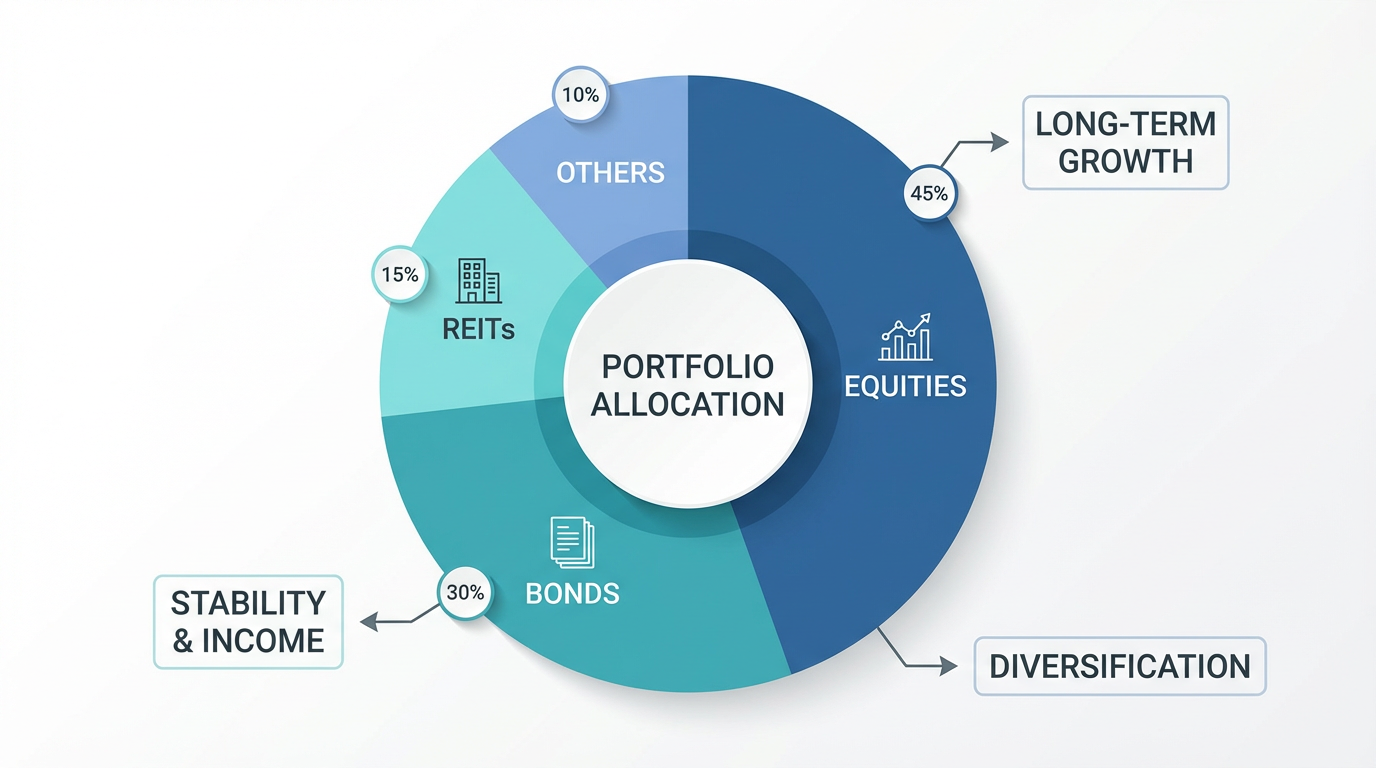
Singapore dividend ETFs fall into three main categories, each with distinct characteristics and yield profiles.
REIT ETFs
Real Estate Investment Trust (REIT) ETFs invest in property trusts that own income-producing real estate such as shopping malls, office buildings, warehouses, and data centres. Singapore REITs are required by regulation to distribute at least 90% of their taxable income, making REIT ETFs reliable income vehicles.
Equity ETFs
Equity dividend ETFs invest in dividend-paying stocks, often tracking indices designed to select companies with strong dividend histories.
Bond ETFs
Bond ETFs invest in fixed income securities and can offer higher yields, though with different risk profiles. However, investors should note that this type of ETF holds lower-rated Asian bonds denominated in USD, introducing both credit risk and currency considerations.
How to Evaluate Singapore Dividend ETFs

Selecting a dividend ETF involves more than comparing headline yields. Here are the key factors to consider.
Distribution Yield and Sustainability
Dividend yield measures the annual distributions relative to the ETF's price. A high yield can be attractive, but it may also signal underlying risks. A yield that appears elevated could result from a declining share price rather than strong dividend growth. Examine whether the underlying holdings have stable cash flows to support continued distributions.
Total Expense Ratio
The expense ratio represents the annual cost of owning the ETF, deducted from fund assets. Lower expense ratios preserve more of your returns over time. Most SGX-listed dividend ETFs typically charge between 0.3% and 0.6% annually. According to Morningstar data, the global average ETF expense ratio is approximately 0.14%, so Singapore-listed options tend to carry slightly higher costs.
Assets Under Management
ETFs with higher Assets Under Management (AUM) typically offer better liquidity and tighter bid-ask spreads. An AUM of at least SGD 100 million is generally considered sufficient for operational efficiency. Smaller ETFs may face closure risk if assets decline significantly.
Currency Considerations
ETFs denominated in foreign currencies introduce exchange rate risk. A Singapore investor holding a USD-denominated ETF will see returns affected by SGD/USD movements. Some investors prefer SGD-denominated ETFs to avoid this additional variable, while others may deliberately seek foreign currency exposure as part of their overall strategy.
You can use a stock screener to filter and compare ETFs based on these criteria.
High-Yield Singapore Dividend ETF Options
Several SGX-listed dividend ETFs currently offer yields above 5%. The following represent some of the available options across different asset classes.
REIT-Focused ETFs
REIT-focused ETFs offer diversified exposure to real estate investment trusts, often using a market-cap-weighted approach. Singapore-focused ETFs typically invest across sectors such as retail, office, industrial, and data centres, providing regular income through distributions.
Regional REIT ETFs include REITs from other Asian markets, offering broader diversification but introducing factors like currency and regulatory differences. These ETFs are suited for investors seeking income and real estate exposure without picking individual REITs.
Equity-Focused ETFs
An ASEAN dividend index ETF targets dividend leaders across the ASEAN region, providing broader geographic diversification for those with significant Singapore exposure already in their portfolios.
Tip: Dividend yields and distributions are not guaranteed and can fluctuate based on market conditions and the performance of underlying holdings.
How to Buy Singapore Dividend ETFs
Purchasing SGX-listed ETFs requires a brokerage account that supports trading on the Singapore Exchange.
Account Setup
Most digital brokers offer online account opening through SingPass MyInfo, typically completing verification within minutes. Ensure your chosen platform provides access to SGX-listed securities and supports the investment products you wish to trade.
Trading Mechanics
SGX-listed ETFs trade in board lots of 100 units during market hours (9:00 AM to 5:00 PM SGT). You can place market orders for immediate execution or limit orders to specify your preferred price. Consider the bid-ask spread when trading, as wider spreads increase your effective transaction cost.
Ongoing Considerations
Monitor your ETF holdings periodically to ensure they continue meeting your income objectives. Distribution schedules vary by ETF, with some paying quarterly and others semi-annually. Many investors choose to reinvest distributions to compound their holdings over time.
Risks and Considerations
While dividend ETFs offer diversification benefits, they carry risks that investors should understand.
Market Risk
ETF prices fluctuate based on the value of underlying holdings. During market downturns, both capital value and dividend payments may decline. REITs, for example, can be sensitive to interest rate changes, which affect both property valuations and borrowing costs.
Distribution Risk
Dividend payments are not guaranteed. Companies within the ETF may reduce or suspend dividends during challenging periods. The COVID-19 pandemic demonstrated how quickly distributions can change when underlying businesses face stress.
Tracking Error
ETFs aim to replicate index performance, but differences between the ETF's returns and the underlying index (tracking error) can occur due to expenses, cash holdings, and rebalancing timing.
Frequently Asked Questions
What is a good dividend yield for Singapore ETFs?
Some SGX-listed dividend ETFs have historically offered yields in the range of 3% to 7%, depending on the asset class. Actual distributions may fluctuate based on market conditions and performance of underlying holdings. REIT ETFs and high-yield bond ETFs tend to offer higher yields, while broad market equity ETFs generally provide yields in the 3% to 5% range. A sustainable yield supported by stable underlying cash flows is more important than chasing the highest available number.
Are dividends from Singapore ETFs taxed?
Singapore does not impose tax on dividends received by individual investors from SGX-listed ETFs. However, the underlying holdings may be subject to withholding taxes at source if they include foreign securities. For example, US-sourced dividends within an ETF are subject to 30% withholding tax before distribution.
How often do Singapore dividend ETFs pay distributions?
Most SGX-listed dividend ETFs pay distributions semi-annually, though some pay quarterly. The distribution schedule is disclosed in each ETF's prospectus. Investors should note that distribution amounts can vary each period based on the dividends received from underlying holdings.
Can I use CPF or SRS to invest in dividend ETFs?
Certain SGX-listed ETFs are approved for CPF Investment Scheme (CPFIS) and Supplementary Retirement Scheme (SRS) investments. The STI ETFs and some REIT ETFs carry CPFIS approval. Check the specific ETF's eligibility status before attempting to invest using these accounts.
Conclusion
Singapore dividend ETFs provide a practical way to build passive income exposure without the complexity of selecting and monitoring individual dividend stocks. The key lies in understanding what drives each ETF's yield, whether from Singapore REITs, regional equities, or Asian bonds, and matching that income source to your overall investment objectives and risk tolerance.
When evaluating options, look beyond headline yields to examine expense ratios, fund size, and the sustainability of underlying distributions. Consider how each ETF fits within your broader portfolio and whether currency exposure aligns with your preferences.
The choice of financial instruments depends on your investment objectives, risk tolerance, market outlook, and experience level. Regardless of the method selected, it is essential to fully understand its mechanics, risk characteristics, and execution rules, while maintaining a robust risk management plan. You can learn more about investment strategies through the Longbridge Academy or by downloading the Longbridge App.