Futures vs. Options: Understanding the Roles and Applications of Two Key Financial Instruments
Dive deep into the core differences between futures and options—rights and obligations, risk-return profiles, margin requirements, and time value—to help you pick the derivative strategy for your investment goals and risk tolerance.
When investing in the derivatives market, futures and options are two of the most common trading tools. For investors seeking to manage risk or seize market opportunities, understanding the fundamental differences and respective roles of these two instruments is a critical step in making informed investment decisions. This article will provide a detailed comparison of the core features, practical applications, and risk-return profiles of futures and options to help you identify the tool best suited to your investment goals.
Basic Definitions of Futures and Options
What is a Futures Contract
Futures are standardized agreements in which two parties commit to buying or selling a specified quantity of an underlying asset at a predetermined price on a set date in the future. Futures contracts cover a range of underlying assets, including stock indices, commodities, currencies, and bonds.
Once a futures contract is signed, both the buyer and the seller are obligated to fulfill the contract terms regardless of how the market price changes. This mandatory nature makes futures a powerful tool for both hedging and speculative trading.
What is an Options Contract
Options are also derivative contracts, but unlike futures, they grant the buyer the right, not the obligation, to act. Options are divided into call options and put options:
- Call Option: Gives the buyer the right to buy the underlying asset at a specified price within a certain time frame.
- Put Option: Gives the buyer the right to sell the underlying asset at a specified price within a certain time frame.
After the buyer pays the premium, they have the discretion to exercise or not to exercise the option. Conversely, once the seller receives the premium, they are required to fulfill the terms of the contract based on the buyer's decision.
Futures vs. Options: Core Differences
Differences in Rights and Obligations
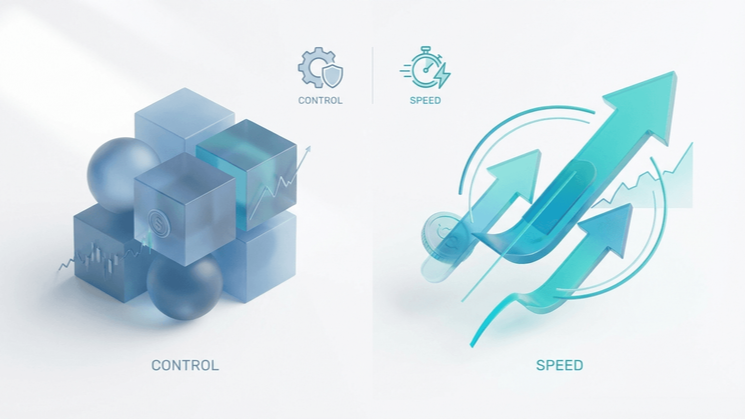
This is the most fundamental distinction between futures and options. Futures contracts are binding on both parties—regardless of how the price of the underlying asset moves, both sides must fulfill their settlement responsibilities. This bilateral obligation means futures traders assume equal rights and duties.
In contrast, options contracts create an asymmetric distribution of rights and obligations. The option buyer has the right to choose whether to exercise the option based on market conditions, while the seller is passive and must act according to the buyer’s decision. This flexibility makes options particularly suitable for investors pursuing strategies with limited risk.
Risk and Return Structure
Futures trading features a "symmetric" risk-return profile. Whether buying or selling a futures contract, both profit and loss can theoretically be unlimited. When the market moves in your favor, gains can far exceed the initial margin; but if the market turns against you, losses can multiply rapidly, possibly triggering margin calls.
Options trading, on the other hand, displays an "asymmetric" risk and reward structure:
- Option Buyer: The maximum loss is limited to the premium paid, while the profit potential can be theoretically unlimited (for calls) or substantial (for puts).
- Option Seller: The maximum gain is capped at the premium collected, but losses could be unlimited and thus carry far higher risk.
This asymmetry allows option buyers to participate in the market with limited capital while keeping potential losses under control.
Margin and Capital Requirements
Futures trading requires both buyers and sellers to pay an initial margin, typically a percentage of the contract's notional value. The margin system ensures that all participants are able to meet their contractual obligations. When adverse market movement causes account equity to fall below the maintenance margin, the trader must add more funds, or positions may be forcibly liquidated. Many online brokers run automatic liquidation systems for risk control; if your margin becomes deficient, your position may be closed at the market price without prior notice until the deficit is covered. Therefore, investors should always maintain an adequate margin buffer and avoid using the maximum leverage, to prevent sudden liquidations during sharp market swings.
Options trading has a simpler funding requirement:
- Option Buyer: Only needs to pay the non-refundable premium, with no further margin required.
- Option Seller: Must pay a margin as collateral in addition to collecting the premium. The margin amount depends on the contract terms and market conditions.
Important Reminder: The maximum loss for an option buyer is limited to the premium paid, but the risk assumed by the option seller can be far greater than the premium received. Never sell options without a clear assessment of your risk tolerance.
The Factor of Time Value
Options have a unique time value component that futures lack. The value of an option comprises its intrinsic value and time value.
Time value erodes as expiration approaches—a phenomenon known as time decay. For option buyers, the passage of time means value is lost; for sellers, it underpins their premium income.
While futures contracts also have expiration dates, they do not have a time value component. Their prices primarily reflect the market's expectation of the underlying asset's future value.

Practical Applications of Futures and Options
Main Uses of Futures
Hedging Risk: Corporations and investors often use futures to lock in future prices and manage price volatility risk. For instance, airlines may buy fuel futures to hedge against rising oil prices.
Leverage Trading: Since futures only require a small portion of the total contract value as margin, investors can control a large position with relatively less capital. This leverage effect amplifies both potential profits and losses, and is therefore suitable only for experienced investors with strong risk tolerance.
Price Discovery and Arbitrage: Futures markets gather collective expectations from many participants, aiding in price discovery. Seasoned traders can also exploit price discrepancies for arbitrage.
Main Uses of Options
Directional Trading with Limited Risk: Option buyers can participate in the market with only the premium at stake—even if the trade goes against them, losses are capped at the premium paid.
Income Enhancement Strategies: Stockholders can write covered calls to earn option premiums and boost returns. This is best suited to sideways or moderately rising market conditions.
Flexible Hedging: Options offer multiple hedging strategies. For example, buying puts insures the portfolio against declines—essentially acting as market insurance.
Volatility and Capital Efficiency: Advanced traders can use option spreads to trade on volatility. Compared to buying stocks outright, purchasing call options delivers similar upside exposure for less capital.
How to Choose the Right Tool
Choose According to Risk Tolerance
Option Buyer Strategies: These feature "limited loss, unlimited gain" characteristics. As the maximum potential loss is the premium paid, this approach is often used by those seeking to lock in potential losses while retaining upside exposure.
Futures or Option Seller Strategies: Both aim for return or premium income, but the account must withstand market swings and provide additional margin as required by the market.
Choose According to Investment Objectives
Seeking Hedging Protection: Both tools can be used for hedging, but in different circumstances. Futures provide absolute price locking, ideal for needs requiring certainty. Options keep upside potential, making them suitable for those who wish to cap downside risk while retaining profit opportunity.
Pursuing Speculative Profits: Futures offer high leverage and two-way trading, making them suitable for short-term speculation. Options offer a range of strategic combinations, allowing for trades targeting market direction, volatility, or time decay.
Enhancing Income: Options selling strategies (such as covered calls and cash-secured puts) add income to existing portfolios. Futures are seldom used for this purpose.
Choose According to Market Perspective
Strong Directional View: If you have a clear and strong market view, futures are more direct, with no concern for time decay.
Uncertain or Neutral Outlook: Option strategies provide greater flexibility. Even in range-bound markets, certain option strategies (like iron condors or butterfly spreads) can be profitable.
Volatility View: If you’re focused on market volatility rather than direction, options are the only tool for direct volatility trading. Futures do not offer this function.
Risk Management in Futures and Options Trading
Risk Control in Futures Trading
Set Stop-Loss Levels: Since futures can incur unlimited losses, you must pre-set stop-losses to exit positions promptly if the market moves against you.
Control Position Sizes: Never risk more than you can afford to lose. It’s generally advised that risk per position should not exceed 2-5% of your total account value.
Monitor Margin Levels: Ensure the account always has enough funds to handle volatility and avoid forced liquidation from margin calls.
Risk Control in Options Trading
Avoid Overbuying Out-of-the-Money Options: Out-of-the-money options are cheap, but the likelihood of them expiring in the money is low and you may lose the entire premium.
Be Cautious with Seller Strategies: The potential risk from selling options far surpasses the premium received. Unless you have sufficient experience, avoid naked selling strategies.
Understand the Impact of Time Decay: Option buyers need the market to move enough in their favor within a limited time to turn a profit.
Investment Tip: Whether trading futures or options, start small and scale up only after gaining experience. Leverage can magnify risk in derivative products, so risk management is crucial.
Frequently Asked Questions
Which is riskier: Futures or Options?
Risk characteristics differ and cannot be easily compared. With futures, both parties face theoretically unlimited risk—losses may far exceed initial margin. Option buyers’ risk is limited to the premium, but sellers can face unlimited risk. Overall, both futures and option writing are high-risk and only suitable for knowledgeable and experienced investors.
Should beginners choose futures or options?
For beginners, buying options is generally more appropriate, as the maximum loss is predetermined and risk is easier to control. However, all derivative investing requires thorough study and understanding. It’s recommended to practice with simulated trading first and start small to gain hands-on experience. Do not engage in futures or option selling until you’ve developed sufficient knowledge and risk management skills.
Can futures and options be combined in a strategy?
Yes. Advanced investors often combine futures and options for sophisticated strategies. For example, you can hold a futures position while buying options as protection, or use futures to hedge certain risks in an options portfolio. Such strategies require deep market knowledge and precise risk calculations—not all investors will be suited to them.
How is the liquidity of futures and options?
Liquidity depends on the specific contract. Major index futures (such as Hang Seng Index Futures) and options on popular stocks are usually liquid with narrow bid-ask spreads. Conversely, less popular or long-dated contracts may have wider spreads and execution difficulties. Always consider liquidity when selecting contracts to ensure smooth entry and exit.
How should I choose option strike prices?
Strike selection depends on your market outlook, risk tolerance, and investment goals. In-the-money options cost more but have a higher chance of expiring profitably. At-the-money options balance cost and winning odds. Out-of-the-money options are cheaper but require substantial price movement to profit, making them riskier—best suited for those seeking high returns and willing to accept the possibility of losing the entire investment.
Do futures and options have different trading hours?
Trading hours depend on the specific market and contract. For example, US index futures (such as Nasdaq futures) offer nearly 24-hour electronic trading. The Hong Kong futures market has both standard day sessions and night trading, usually open until 3:00 a.m. As for Hong Kong stock options, these mainly track the regular stock trading hours, although some futures/options markets offer extended trading. Understanding trading hours is crucial for risk management, as events outside regular hours may cause market gaps at reopening.
Which tool to choose depends on your investment goals, risk tolerance, market outlook, and experience. Whichever you pick, you must fully understand its operation, risk profile, and trading rules, and build a sound risk management plan. Learn more through the Longbridge Academy or by downloading the Longbridge App.