Call vs Put Options: A Simple Guide for Singapore Investors
Call options give you the right to buy stocks at fixed prices, while put options grant the right to sell. Discover which option type suits your investment strategy and risk tolerance.
TL;DR: Call options give you the right to buy a stock at a fixed price and gain value when prices rise. Put options grant the right to sell at a predetermined price and gain value when prices decline, also serving as protection for existing holdings. Both limit your maximum loss to the premium paid, but require careful timing and market outlook.
Options trading can feel overwhelming when you are starting out, especially when deciding between call and put options. These two fundamental instruments form the backbone of options trading, yet many Singapore investors remain uncertain about when to use each one. Understanding the call option vs put option distinction can be essential before placing your first options trade.
This guide breaks down how call and put options work, when to use each type, the potential benefits and risks, and practical considerations for Singapore investors looking to expand beyond traditional stock investments.
What Are Options Contracts?
Options are contracts that give you the right, but not the obligation, to buy or sell an underlying asset at a predetermined price (called the strike price) by a specific expiration date. Each contract represents 100 shares of the underlying stock.
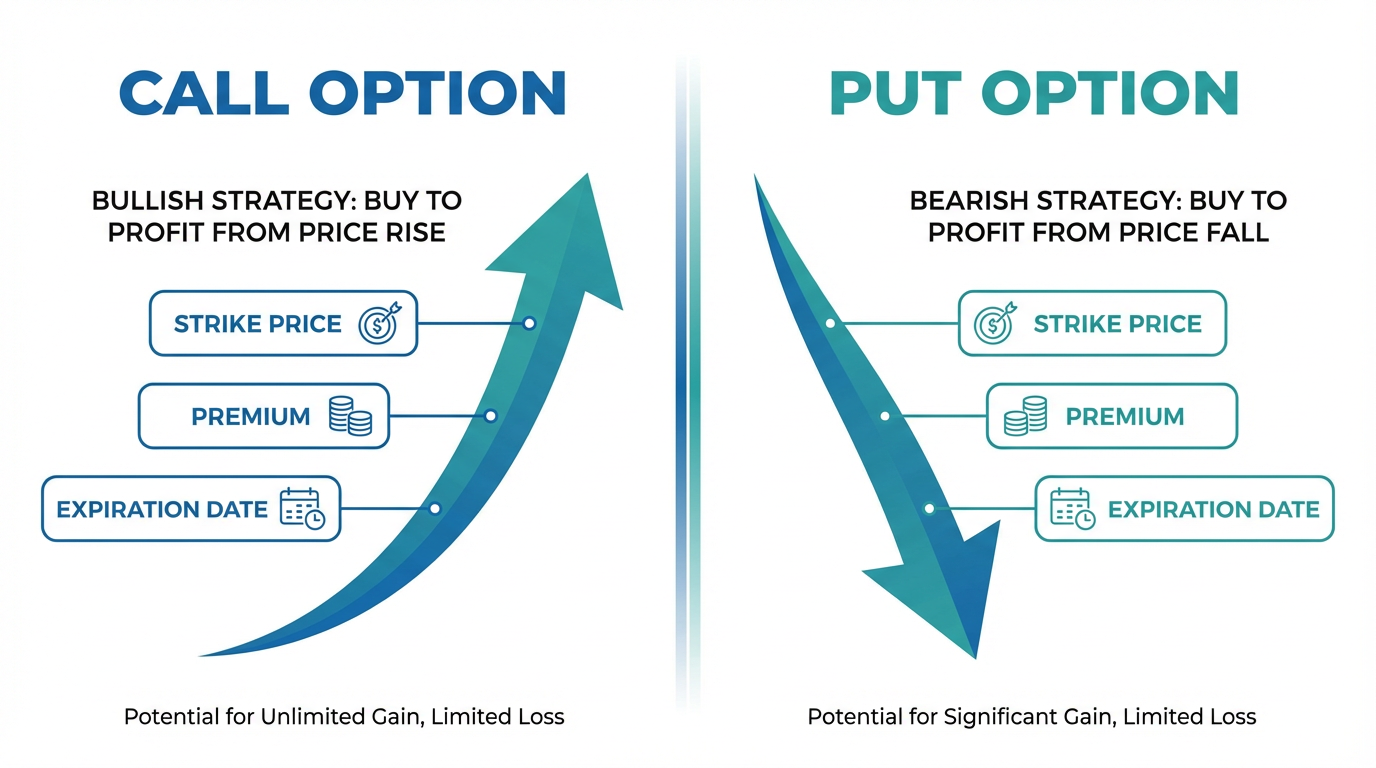
Three core components define every option contract: Strike price determines the price at which you can exercise your right. Premium represents the upfront cost you pay. Expiration date establishes the deadline by which you must exercise the option or let it expire.
Call Options: The Right to Buy
A call option grants you the right to purchase a stock at the strike price before the expiration date. Investors typically buy calls when they believe a stock's price will rise significantly.
How Call Options Work
When you purchase a call option, you pay a premium for the right to buy shares at a locked-in price. If the stock price rises above your strike price, your call option gains value because you hold the right to purchase shares below their current market price.
For instance, consider a technology stock currently trading at USD 150. Instead of buying 100 shares for USD 15,000, you might purchase a call option with a USD 160 strike price for a USD 500 premium. If the stock rises to USD 180 before expiration, your option becomes valuable because you can buy at USD 160 what the market values at USD 180.
When to Consider Call Options
You might consider buying calls when you expect a stock to appreciate but want to limit your capital commitment. They typically work well when you anticipate significant price movement but face capital constraints that prevent purchasing shares directly. The premium paid represents your maximum possible loss.
Call Option Profit Potential
Call options do not have a predefined upside limit, as stock prices can theoretically rise without a cap. However, the probability of achieving substantial gains depends on timing and magnitude of price movements. Your breakeven point equals the strike price plus the premium paid.
If the stock fails to rise above your strike price before expiration, the option expires worthless and your loss equals the premium paid.
Put Options: The Right to Sell
A put option provides the right to sell a stock at the strike price before expiration. Investors might buy puts when anticipating price declines or seeking to protect existing positions from downside risk.
How Put Options Work
When you buy a put option, you pay a premium for the right to sell shares at a predetermined price. If the stock price falls below your strike price, the put gains value because you can sell shares at a higher price than current market value.
Imagine owning shares of a retail company trading at USD 200. You purchase a put option with a USD 190 strike price for a USD 800 premium. If the stock declines to USD 170, your put becomes valuable because you secured the right to sell at USD 190, protecting against deeper losses.
When to Consider Put Options
Put options serve two primary purposes. First, they allow speculation on declining prices without the complexity and unlimited risk of short selling stocks. Second, they provide portfolio protection through a strategy known as protective puts.
You might consider buying puts when you own shares but worry about potential short-term declines. The put acts as insurance, allowing you to maintain your position while limiting downside exposure.
Put Option Profit Potential
Put options may offer substantial but capped profit potential because stock prices cannot fall below zero. Your maximum gain occurs if the stock drops to zero, making the put worth the strike price minus the premium paid.
Like call options, your maximum loss when buying puts equals the premium paid. This defined risk structure is one reason some investors use puts for hedging purposes.
Key Differences Between Call and Put Options
The fundamental difference between call option vs put option lies in market outlook and directional bias. Calls express bullish sentiment, anticipating rising prices. Puts reflect bearish expectations or defensive positioning.
Directional Perspective
Call buyers profit when stock prices rise above the strike price plus premium paid. Put buyers profit when prices fall below the strike price minus premium paid.
Profit and Loss Profiles
Both option types limit buyer losses to the premium paid. However, their profit profiles differ substantially. Calls offer unlimited upside potential as stocks can theoretically rise indefinitely. Puts provide capped but significant profit potential since stocks cannot drop below zero.
Calls work well for capitalizing on anticipated positive catalysts such as earnings announcements. Puts serve defensive purposes or speculation on negative developments like regulatory challenges or broader market declines.
Understanding Option Premiums and Pricing
The premium you pay for any option reflects several factors including the stock's current price relative to the strike price, time until expiration, and implied volatility.
Options closer to expiration typically cost less because they have limited time to move in your favor. Higher volatility increases option premiums because greater price swings improve the probability of profitable moves.
Risk Management Considerations
While buying options limits your maximum loss to the premium paid, this protection comes with important caveats. Options require three things to go right: direction, magnitude, and timing. The stock must move in your anticipated direction, move enough to offset the premium, and do so before expiration.
This triple requirement makes options trading more challenging than stock investing, where only direction matters. Many investors underestimate the timing component, purchasing options that expire before achieving profitability.
Position Sizing and Exit Strategy
Even with defined maximum losses, proper position sizing remains essential. Allocating too much capital to options can erode your portfolio if multiple positions expire worthless.
Having a clear exit plan before entering positions helps prevent emotional decision-making. Consider both profit targets and loss limits. If an option reaches your profit goal, consider taking gains rather than hoping for additional appreciation that may never materialize.

Options Trading for Singapore Investors
Singapore investors can access options through platforms that offer US market trading, as local options exchanges provide limited liquidity for retail investors. Most options trading by Singapore-based individuals occurs in US equity options markets.
Platform and Account Requirements
Trading options requires a margin account approval from your brokerage. Most platforms require minimum funding levels and completion of a knowledge assessment before granting options trading privileges.
Longbridge provides options trading access in US markets, allowing Singapore investors to trade both call and put options on American stocks. The platform supports secure execution with comprehensive market data services to help you track positions.
Regulatory and Tax Considerations
The Monetary Authority of Singapore (MAS) regulates brokerages operating in Singapore, while options themselves trade on foreign exchanges subject to those jurisdictions' rules. Options profits and losses have tax consequences that vary based on holding periods. The Inland Revenue Authority of Singapore (IRAS) provides guidance on investment income taxation.
Common Mistakes to Avoid
New options traders frequently make predictable errors. Options priced very cheaply often appear attractive but typically have low probability of profitability. Time decay accelerates as expiration approaches, particularly in the final 30 days. Because options typically require less capital than stock purchases, some investors overcommit by buying too many contracts, which magnifies losses when positions move against them.
Frequently Asked Questions
What happens if I don't exercise my option before expiration?
If your option expires in-the-money, most brokerages automatically exercise it, resulting in a stock position. If it expires out-of-the-money, it becomes worthless and you lose the premium paid. You can also sell the option before expiration to close your position without taking delivery of shares.
Can I lose more than the premium I paid when buying options?
When buying call or put options, your maximum loss equals the premium paid. This defined risk applies only to option buyers. Option sellers face different risk profiles, with potentially unlimited losses on certain strategies, which is why selling requires advanced approval levels.
Which is better for beginners: calls or puts?
Neither option type is inherently better for beginners. Your choice depends on your market outlook and investment objectives. Calls suit bullish scenarios while puts work for bearish views or portfolio protection. You may consider starting off by buying options rather than selling them, as selling may carry greater risk and complexity.
How do I choose the right strike price and expiration date?
Strike price selection balances probability and cost. Closer-to-the-money options cost more but have higher success probability. Expiration dates should provide sufficient time for your expected price move to materialize, typically ranging from several weeks to several months depending on your outlook.
Are options suitable for long-term investing?
Options work primarily as short to medium-term instruments due to their expiration dates. While long-dated options exist, the time decay and premium costs generally make them less suitable for long-term buy-and-hold strategies compared to owning stocks directly.
Conclusion
Understanding the call option vs put option distinction forms the foundation for effective options trading. Calls provide the right to buy stocks at fixed prices, benefiting from rising markets. Puts grant the right to sell at predetermined prices, protecting against declines or profiting from downward moves.
Both option types offer defined maximum losses equal to premiums paid, but require accurate predictions about direction, magnitude, and timing. This triple challenge makes options more complex than stock investing, yet the leverage and flexibility they provide can complement traditional portfolios when used appropriately.
The choice of financial instruments depends on your investment objectives, risk tolerance, market outlook, and experience level. Regardless of the method selected, it is essential to fully understand its mechanics, risk characteristics, and execution rules, while maintaining a robust risk management plan. You can learn more about investment strategies through the Longbridge Academy or by downloading the Longbridge App.