US Futures Trading Hours for Singapore Investors
Discover the complete schedule for US futures trading hours converted to Singapore Time, including session breakdowns, Daylight Saving Time adjustments, and peak trading windows.
TL;DR: US futures markets trade nearly 24 hours a day, five days a week, with the main CME Globex platform operating from Monday 6:00 AM SGT through Saturday 5:00 AM SGT. Singapore investors can access peak liquidity during the US cash market session (9:30 PM to 4:00 AM SGT during Daylight Saving Time).
For Singapore-based investors looking to trade US futures, understanding the trading schedule in local time is essential. Unlike stocks, which trade during fixed market hours, futures markets operate almost continuously throughout the week, offering flexibility that aligns well with different time zones. This guide breaks down US futures trading hours in Singapore Time (SGT), helping you identify when markets open, when liquidity peaks, and how Daylight Saving Time (DST) affects your trading schedule.
How US Futures Markets Operate
US futures trade on electronic platforms, with the Chicago Mercantile Exchange (CME) Globex being the primary venue for popular contracts like E-mini S&P 500 (/ES), E-mini Nasdaq-100 (/NQ), and crude oil futures. The CME operates what is effectively a 23-hour trading day, with a brief maintenance break each day.
The Weekly Trading Cycle
The CME Globex opens on Sunday at 5:00 PM Central Time (CT) in the United States and closes on Friday at 4:00 PM CT. During each trading day, there is a 60-minute maintenance break from 4:00 PM to 5:00 PM CT when positions are marked to market and margin requirements are updated.
Products Available Around the Clock
Most equity index futures, currency futures, and energy futures follow this near-continuous schedule. However, some products have more limited hours. For example, livestock futures trade only from 8:30 AM to 1:05 PM CT, Monday through Friday.
US Futures Trading Hours in Singapore Time
Converting US trading hours to SGT requires accounting for the time difference, which varies depending on whether the United States is observing Daylight Saving Time.
During US Daylight Saving Time (March to November)
When the US observes DST, Singapore is 12 hours ahead of US Eastern Time (ET). The CME Globex schedule in SGT is:
-
Weekly Open: Monday 6:00 AM SGT
-
Weekly Close: Saturday 5:00 AM SGT
-
Daily Maintenance Break: 5:00 AM to 6:00 AM SGT
During US Standard Time (November to March)
When DST ends, the time difference increases to 13 hours. The schedule shifts accordingly:
-
Weekly Open: Monday 6:00 AM SGT
-
Weekly Close: Saturday 6:00 AM SGT
-
Daily Maintenance Break: 6:00 AM to 7:00 AM SGT
Tip: Mark your calendar for the second Sunday in March and the first Sunday in November, when the US switches between DST and Standard Time. This affects when markets open and close in SGT.
Understanding Global Futures Trading Sessions
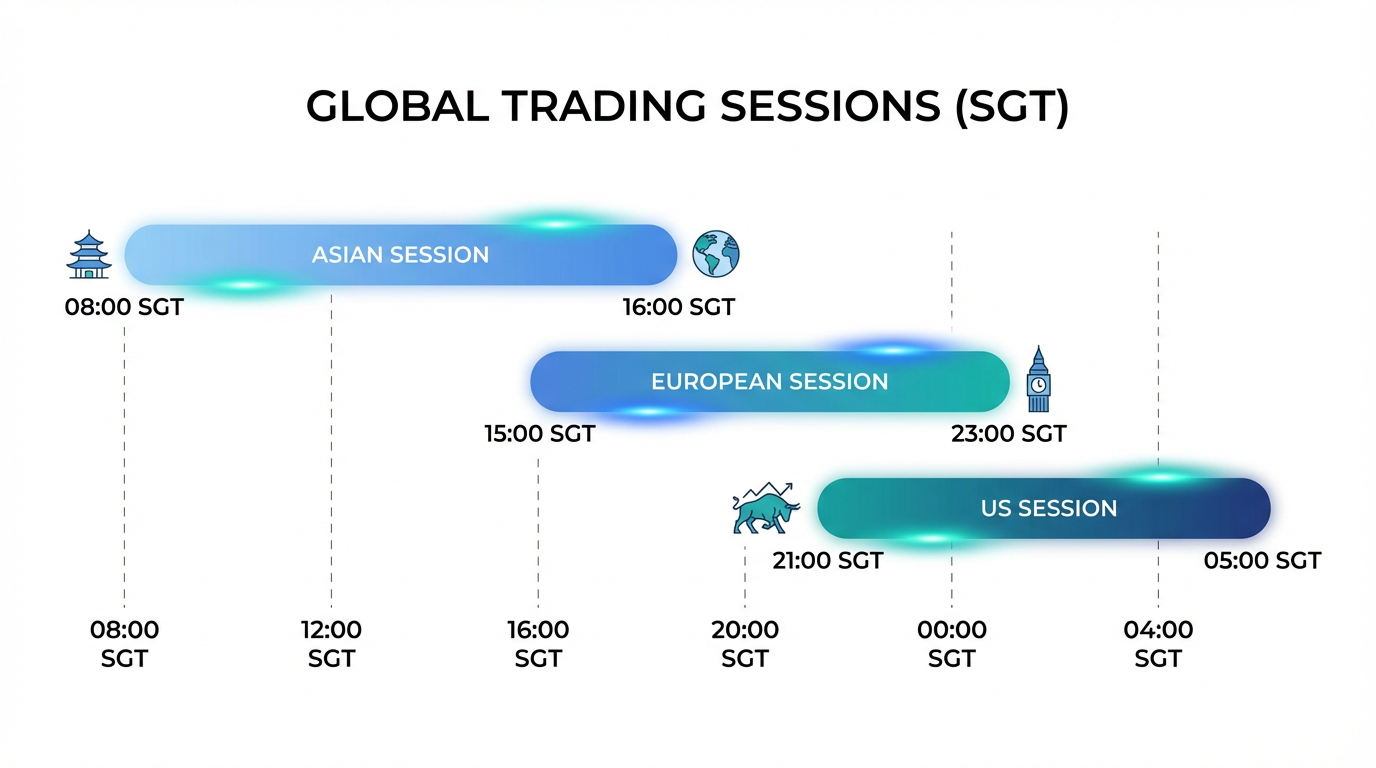
Futures markets experience distinct trading sessions as different regions of the world wake up and participate. Each session has its own characteristics in terms of volume, volatility, and the types of news that drive price movements.
Asian Session
The Asian session runs from approximately 7:00 PM to 4:00 AM US Eastern Time, which corresponds to 7:00 AM to 4:00 PM SGT during DST. This session covers markets in Japan, Hong Kong, Singapore, and Australia. According to CME Group data, trading activity during Asia hours tends to concentrate around 8:00 AM to 9:00 AM SGT when the Globex platform becomes more active.
European Session
The European session begins around 2:00 AM ET (2:00 PM SGT during DST) and runs until about 11:00 AM ET (11:00 PM SGT). This session often sees increased volatility as European economic data is released and London-based traders enter the market.
US Session
The US session, particularly the cash market hours from 9:30 AM to 4:00 PM ET (9:30 PM to 4:00 AM SGT during DST), represents the most liquid and volatile period for US futures. This is when institutional traders are most active and when major US economic announcements are released.
Peak Trading Windows for Singapore Investors
Identifying the most active trading periods helps you plan when to enter or exit positions and when to expect wider or tighter bid-ask spreads.

High Liquidity Periods
The highest liquidity typically occurs during:
-
US Market Open (9:30 PM SGT during DST): The first hour of US cash trading often sees significant volume and volatility as overnight developments are priced in.
-
Session Overlaps: When the European and US sessions overlap (around 9:30 PM to 11:00 PM SGT during DST), liquidity tends to be robust.
-
Major Economic Releases: US employment data (typically released at 8:30 PM SGT during DST on the first Friday of each month) and Federal Reserve announcements often create significant market movement.
Lower Liquidity Periods
Trading tends to be thinner during:
-
Weekend Opens: The first few hours after Sunday evening open (Monday 6:00 AM SGT) often see wider spreads.
-
Holiday Periods: US market holidays result in reduced hours or full closures.
-
Late Asian Session: The period between 12:00 PM and 5:00 PM SGT often sees lower US futures activity before European traders enter.
You can track market performance and monitor price movements to identify suitable entry points during these sessions.
Key Times to Watch
Certain scheduled events consistently create increased volatility in US futures markets. Singapore investors should be aware of these times.
Economic Data Releases
-
8:30 AM ET (8:30 PM SGT during DST): Major economic indicators including Non-Farm Payrolls, Consumer Price Index (CPI), and Gross Domestic Product (GDP) releases.
-
10:00 AM ET (10:00 PM SGT during DST): Consumer confidence, manufacturing data, and housing statistics.
Federal Reserve Events
- 2:00 PM ET (2:00 AM SGT during DST): Federal Open Market Committee (FOMC) rate decisions and policy statements. These announcements can cause extreme volatility, and many traders prefer to avoid holding positions through these events unless they have a specific strategy.
Corporate Earnings Season
During earnings season (typically January, April, July, and October), after-hours announcements from major US companies can move index futures significantly during Asian trading hours.
Daylight Saving Time Considerations
The United States observes Daylight Saving Time from the second Sunday in March until the first Sunday in November. During this period, clocks move forward one hour, which means Singapore is 12 hours ahead of US Eastern Time instead of 13 hours.
Practical Impact for Singapore Traders
When DST begins in March:
-
US market open shifts from 10:30 PM SGT to 9:30 PM SGT
-
US market close shifts from 5:00 AM SGT to 4:00 AM SGT
When DST ends in November:
-
US market open shifts from 9:30 PM SGT to 10:30 PM SGT
-
US market close shifts from 4:00 AM SGT to 5:00 AM SGT
Tip: Set calendar reminders for DST transitions. The shift can catch traders off guard if they have standing orders or scheduled trading routines.
Holiday Trading Schedules
US futures markets observe reduced hours or full closures on major American holidays. The CME Group typically finalises holiday trading hours approximately two weeks before each holiday.
Common Holiday Closures
-
New Year's Day: Full closure
-
Martin Luther King Jr. Day: Early close
-
Presidents Day: Early close
-
Good Friday: Full closure
-
Memorial Day: Early close
-
Independence Day: Early close or full closure
-
Labor Day: Early close
-
Thanksgiving: Early close (day before and after may have modified hours)
-
Christmas: Full closure (Christmas Eve often has early close)
Always verify the specific schedule with your broker before trading around holidays, as hours can vary by product.
Getting Started with US Futures
Investors accessing US futures markets should be aware of the product specifications and associated risks.
Understanding Futures Contracts
Futures are leveraged instruments, meaning you control a large notional value with a relatively small margin deposit. For example, one E-mini S&P 500 contract controls approximately USD 250,000 when the index is near 5,000 points. This leverage amplifies both potential gains and potential losses. (This example is for illustration purposes only and does not constitute investment advice.)
Contract Expiration
Unlike stocks, futures contracts expire. Index futures like the E-mini S&P 500 roll quarterly in March, June, September, and December. Traders need to close or roll their positions before expiration to avoid delivery or settlement requirements.
To explore the range of investment products available for trading, including US-listed options and Exchange-Traded Funds (ETFs), consider reviewing what suits your investment objectives.
Frequently Asked Questions
What time do US futures open in Singapore?
US futures on the CME Globex platform open at 6:00 AM SGT on Monday. The market then trades nearly continuously until 5:00 AM or 6:00 AM SGT on Saturday, depending on whether the US is observing Daylight Saving Time.
Can I trade US futures during Singapore daytime hours?
Yes. Because US futures trade almost 24 hours, you can execute trades during Singapore daytime. However, liquidity during the Asian session (7:00 AM to 5:00 PM SGT) is generally lower than during the US cash session (9:30 PM to 4:00 AM SGT during DST).
How does Daylight Saving Time affect trading hours?
When the US observes DST (March to November), Singapore is 12 hours ahead of Eastern Time. When DST ends (November to March), the difference increases to 13 hours. This shifts all US market times by one hour in SGT.
What are the most liquid hours for trading US futures?
The highest liquidity occurs during the US cash market session, particularly the first hour after the 9:30 PM SGT open (during DST). Session overlaps between European and US trading hours also offer strong liquidity.
Conclusion
Understanding US futures trading hours in Singapore Time allows you to plan your trading activity around periods of high liquidity and significant market events. The near-24-hour nature of futures markets provides flexibility, but peak opportunities typically occur during the US cash session and around major economic releases. Singapore investors may consider DST transitions and holiday schedules when reviewing US futures trading hours.
The choice of financial instruments depends on your investment objectives, risk tolerance, market outlook, and experience level. Regardless of the method selected, it is essential to fully understand its mechanics, risk characteristics, and execution rules, while maintaining a robust risk management plan. You can learn more about investment strategies through the Longbridge Academy or by downloading the Longbridge App.