Is US Stock Trading Income Taxable in Singapore?
Singapore has no capital gains tax, but US stock dividends face a 30% withholding tax. Find out when trading income becomes taxable and what Singapore investors need to know.
TL;DR: Singapore does not impose capital gains tax, so most investors trading US stocks will not be taxed on their profits. However, if the Inland Revenue Authority of Singapore (IRAS) determines that your trading activity constitutes a business, your gains become taxable income. US stock dividends are also subject to a 30% withholding tax imposed by the United States.
For many Singapore investors, the appeal of US stocks is clear: access to global technology giants, diversified sectors, and deep, liquid markets. But a common question arises before anyone places their first trade — is trading income taxable in Singapore when it comes to US stocks?
The short answer is nuanced. Singapore's tax framework is investor-friendly in many respects, but it is not a blanket tax-free environment for all trading activity. Understanding the rules can help you trade with clarity and avoid any surprises when tax season arrives.
Singapore's Tax Framework: No Capital Gains Tax
Singapore operates on a territorial basis for income tax, meaning only income earned in Singapore or received in Singapore from abroad is generally subject to tax. Crucially, Singapore does not have a capital gains tax system. Gains from selling shares — including US stocks — are not automatically treated as taxable income.
According to IRAS, gains from the sale of financial instruments are generally considered capital in nature for individual investors pursuing personal investments. This means that if you buy shares in a US-listed company and later sell them at a profit, that gain is typically not subject to Singapore income tax.
This framework makes Singapore one of the more investment-friendly jurisdictions for retail investors. However, there is one important caveat that every active trader should understand.
The Investor vs. Trader Distinction
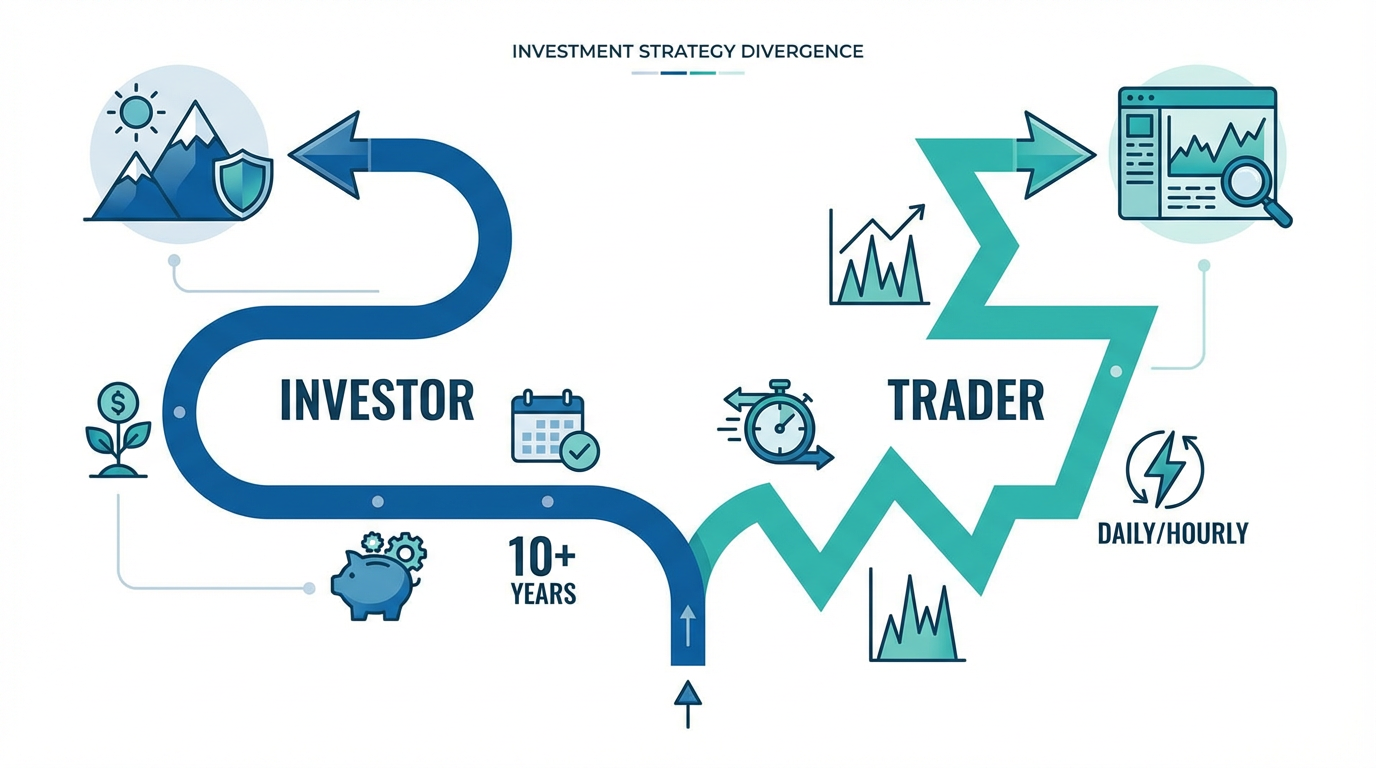
The most critical tax question for anyone trading US stocks in Singapore is: does IRAS view your activity as investing or trading as a business?
IRAS applies a set of criteria, commonly referred to as the "badges of trade," to assess whether someone's buying and selling of shares constitutes a trade or business. If your activities are deemed a business, the profits are no longer capital gains — they become trading income, which is subject to Singapore's standard personal income tax rates.
What Are the Badges of Trade?
IRAS evaluates the totality of facts and circumstances when making this determination. Key factors include:
-
Frequency of transactions: Trading frequently across many transactions suggests a business-like approach rather than occasional investing.
-
Holding period: Buying and selling positions within short timeframes, especially with a focus on quick profits, points toward trading activity.
-
Profit motive: If your primary intent is to profit from rapid price movements rather than building long-term returns through dividends or capital appreciation, IRAS may classify this as a trade.
-
Systematic organisation: Approaching your trading with the structure and systems of a business — dedicated time, tools, and resources — is a factor in the assessment.
-
Method of financing: Using borrowed funds to finance trades can indicate a more commercial, business-like intent.
There is no single threshold that automatically classifies you as a trader. IRAS evaluates each case individually. Two people with similar trading volumes may be assessed differently depending on their specific circumstances.
What Happens If You Are Classified as a Trader?
If IRAS determines that your trading activities constitute a trade or business, your profits must be declared as income under "Other Income" in your annual income tax return. Singapore's personal income tax rates are progressive, ranging from 0% on the first SGD 20,000 of chargeable income up to 24% on income above SGD 1,000,000 (from Year of Assessment 2024 onwards), according to IRAS.
Capital losses from trading activity classified as a business may also be deductible against other income, though specific conditions apply. If your gains are confirmed as non-taxable capital gains, they do not need to be reported in your tax return.
Tip: If you are uncertain about how IRAS would classify your trading activity, consult a qualified Singapore tax professional. The distinction can have meaningful financial implications, and professional advice tailored to your situation is the most reliable approach.
US Stock Dividends: The 30% Withholding Tax
While capital gains from US stocks are generally not taxed in Singapore, dividends from US-listed stocks are a different matter entirely.
The United States government imposes a withholding tax on dividends paid to foreign investors, including Singapore residents. For investors without a tax treaty with the US, the standard withholding rate is 30% of gross dividend income. Since Singapore does not currently have a tax treaty with the United States, Singapore investors receive only 70% of any declared dividend — the remaining 30% is withheld by the US before it reaches your brokerage account.
The W-8BEN Form
Before investing in US stocks through a brokerage platform, you will typically be asked to complete a W-8BEN form (Certificate of Foreign Status of Beneficial Owner for United States Tax Withholding and Reporting). This form identifies you as a non-US person for tax purposes, which confirms the 30% withholding rate applies rather than the higher rates that might otherwise be assessed.
Completing this form accurately is an important step when setting up your trading account. Most regulated brokerages, including Longbridge, handle this as part of the account setup process.
Are US Dividends Taxable Again in Singapore?
The good news is that once the 30% US withholding tax has been applied, the remaining dividend amount you receive in Singapore is generally not taxed again by IRAS under the one-tier system. However, because Singapore has no tax treaty with the US, you cannot claim a foreign tax credit for the withheld amount against your Singapore income tax liability.
Considering Ireland-Domiciled ETFs
Some investors opt for Exchange Traded Funds (ETFs) domiciled in Ireland rather than the US to reduce dividend withholding tax. Thanks to the US-Ireland tax treaty, Ireland-domiciled ETFs pay only a 15% withholding tax on US dividends rather than 30%. However, these ETFs often carry higher management expense ratios and may have other trade-offs worth considering carefully before making a decision. You can explore a range of investment products available on Longbridge to understand your options.
Record-Keeping: Why It Matters
Regardless of how your trading activity is classified, maintaining thorough records is essential. IRAS requires taxpayers to keep records relevant to their income tax assessment for at least five years from the relevant Year of Assessment.
For traders and investors in US stocks, this means keeping:
-
Trade confirmations and brokerage statements
-
Records of purchase prices, sale prices, and dates
-
Notes on the purpose or intent behind key investment decisions
-
Dividend receipts and withholding tax documentation
Good records not only support compliance but also protect you in the event of an IRAS query. Platforms like Longbridge provide detailed trade histories and account statements that make record-keeping more manageable. You can also stay informed about market developments through Longbridge News and deepen your investment knowledge via Longbridge Academy.
Practical Considerations for Singapore Investors
For most individual retail investors in Singapore who buy US stocks for long-term growth or dividends, the tax picture is relatively straightforward:
-
Capital gains from selling US stocks are generally not taxable in Singapore.
-
Dividends from US stocks are subject to a 30% US withholding tax before reaching your account.
-
Active trading that resembles a business in IRAS's assessment may result in profits being taxable as income.
Understanding where you sit on this spectrum helps you make more informed decisions about your trading frequency, strategy, and portfolio structure. Staying up to date with market insights is also valuable — you can track stocks and sectors using tools like the Longbridge Stock Screener to support your research process.
Tip: Dividends from Singapore-listed stocks, including those on the Singapore Exchange (SGX), are generally not taxable for individual investors under Singapore's one-tier dividend tax system. This is different from US stock dividends.
Frequently Asked Questions
Do I need to declare US stock trading gains in my Singapore tax return?
If your gains are considered non-taxable capital gains by IRAS, you do not need to declare them. However, if IRAS classifies your trading as a business activity, the profits must be declared as "Other Income" in your annual income tax return. When in doubt, seek guidance from a qualified tax professional.
Is there a minimum trading frequency that triggers income tax in Singapore?
IRAS does not set a fixed threshold or number of trades that automatically triggers income tax classification. Each case is assessed based on the totality of circumstances, including frequency, holding period, intent, and how systematically trading is conducted. There is no single bright-line rule.
How much withholding tax do Singapore investors pay on US stock dividends?
Singapore investors pay a 30% withholding tax on dividends from US-listed stocks and ETFs. This is because Singapore does not have a tax treaty with the United States. The tax is deducted before dividends reach your account.
What is a W-8BEN form and do I need it?
The W-8BEN form is a US tax document that certifies you are a non-US person for tax withholding purposes. Most regulated brokerages require you to complete this form when opening an account for US stock trading. It ensures the correct 30% withholding rate is applied rather than potentially higher rates.
Are dividends from Singapore stocks taxable?
No. Dividends received from Singapore-resident companies and SGX-listed companies are generally not taxable for individual investors under Singapore's one-tier tax system. This contrasts with US stock dividends, which are subject to US withholding tax.
Conclusion
Whether trading income is taxable in Singapore depends on how your activities are classified by IRAS. For most individual investors holding US stocks for long-term growth, capital gains are generally not subject to Singapore income tax. The primary tax consideration is the 30% US withholding tax on dividends — a cost that investors should factor into their portfolio decisions.
Understanding these rules provides clarity on potential tax implications. Being aware of the investor-trader distinction, keeping accurate records, and staying informed about tax obligations all contribute to a more disciplined approach to investing.
The choice of financial instruments depends on your investment objectives, risk tolerance, market outlook, and experience level. Regardless of the method selected, it is essential to fully understand its mechanics, risk characteristics, and execution rules, while maintaining a robust risk management plan. You can learn more about investment strategies through the Longbridge Academy or by downloading the Longbridge App.