
U.S. May existing home sales exceeded expectations, but it was still the weakest May since 2009, with home prices reaching a new high
 I'm LongbridgeAI, I can summarize articles.
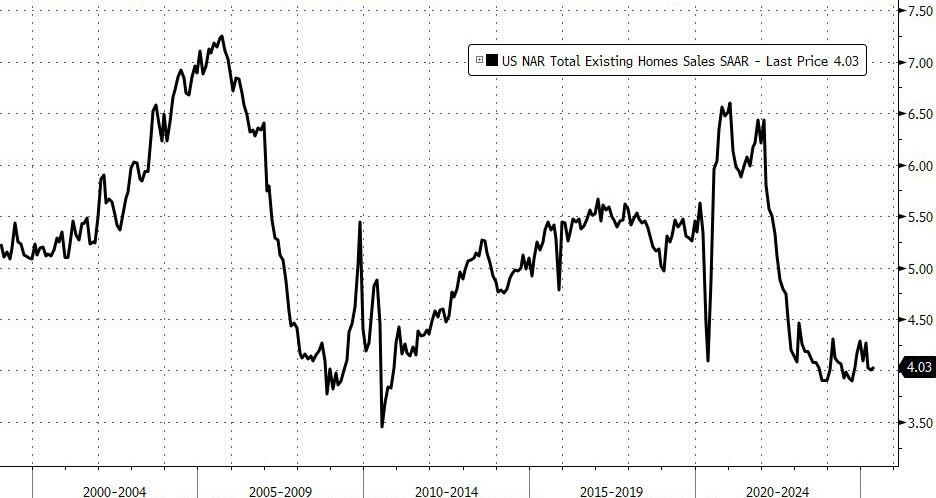
In May, the annualized total of existing home sales in the United States was 4.03 million units, higher than the expected 3.95 million units and the previous value of 4.00 million units; existing home sales in May increased by 0.8% month-on-month, while the expectation was a decrease of 1.3%, and the previous value was a decrease of 0.5%. The increase in inventory did not lead to a decline in home prices, as the median sales price in May rose by 1.3% year-on-year, reaching USD 422,800, setting a historical high for the same period
On June 23, the National Association of Realtors (NAR) in the United States released data showing that existing home sales in May slightly increased, but the overall transaction pace remains sluggish, reflecting ongoing constraints in the housing market due to poor affordability.
Specifically, the total number of existing home sales in the U.S. in May was an annualized 4.03 million units, higher than the expected 3.95 million units, and the previous value was 4 million units; existing home sales in May increased by 0.8% month-on-month, while the expectation was a decrease of 1.3%, and the previous value was a decrease of 0.5%. Seasonally unadjusted data indicates that existing home sales decreased by 4% compared to the same period last year.
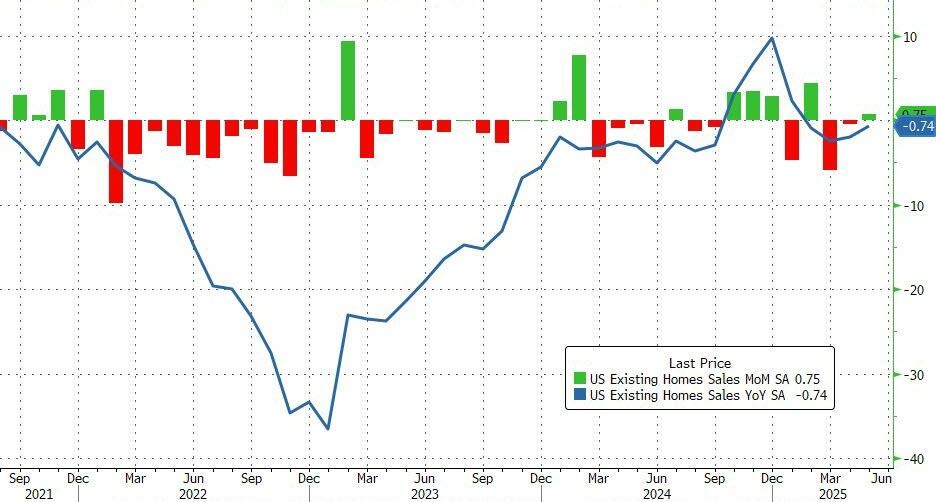
The May existing home sales data recorded the only second increase this year. Nevertheless, this is the weakest May sales performance since 2009.
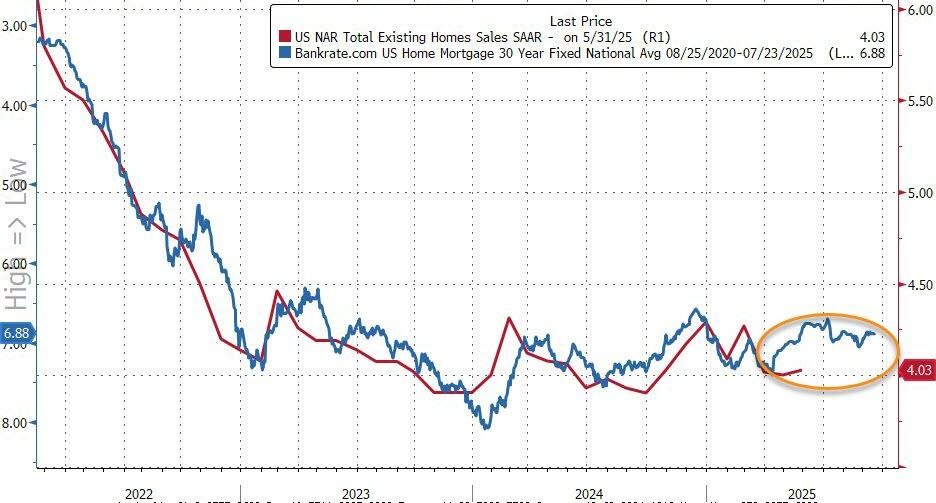
According to predictions from the Mortgage Bankers Association, mortgage rates remain close to 7% and are expected to stay above 6% at least until next year. Analysts believe that if financing costs do not decrease or home prices do not fall, the U.S. real estate market will remain weak in the foreseeable future.
In May, housing inventory in the market increased by 6.2%, reaching 1.54 million units, the highest level in nearly five years. However, even with an increase in listings, sales did not see a significant boost, marking the weakest spring market start in five years.
Meanwhile, the increase in inventory did not lead to a decrease in home prices. NAR data shows that the median sales price in May rose by 1.3% year-on-year, reaching $422,800, setting a historical high for the same period. Over the past five years since the outbreak of the pandemic, home prices have cumulatively increased by 51%. Although some areas in the U.S. "Sun Belt" have seen slight price corrections, overall home prices remain strong. The NAR report indicates that the median sales price in the southern region decreased by 0.7% year-on-year.
NAR Chief Economist Lawrence Yun stated in a statement:
The continued sluggish sales are mainly due to mortgage rates remaining high. We can no longer attribute the problem to supply. Supply is now increasing, and the issue lies with affordability.
The previously strong high-end market, defined as homes priced at least $1 million, is no longer performing better than lower-priced homes.
Brokers are inquiring whether hedge funds (which hold a significant share of buyers in the Sun Belt) have recently been selling off properties in large quantities, leading to price fluctuations.
In May, 60% of homes sold were on the market for less than a month, unchanged from April. About 28% of homes sold for above the listing price, down from 30% in May of last year From a regional perspective, the largest housing market in the United States—the Southern region—saw existing home sales increase by 1.7%, with an annualized sales volume reaching 1.84 million units. Sales in the Northeast and Midwest regions also rose. However, sales in the Western region declined by 5.4%, with an annualized sales volume of 700,000 units, marking the lowest level since the end of 2023.
The National Association of Realtors (NAR) noted that in May, individual investors or buyers purchasing a second home accounted for 17% of the market, up from 15% in April; cash transactions made up 27% of total sales. First-time homebuyers represented 30% of the transaction volume, indicating that they are "struggling to enter the market."
Existing home sales account for approximately 90% of the sales volume in the U.S. real estate market, calculated at the time of transfer. Typically, contracts are signed one or two months prior to the transfer, so the sales data for May primarily reflects purchasing decisions made in April and March.
This Wednesday, the U.S. government will release new home sales data for May. Unlike existing home data, which is calculated based on transaction timing, new home data is based on the contract signing date, allowing for a more timely reflection of housing demand dynamics