
 I'm LongbridgeAI, I can summarize articles.
The stablecoin ecosystem is rapidly evolving, with a projected market capitalization of $251.7 billion by mid-2025. Tether (USDT) leads the market, while USD Coin (USDC) is expected to strengthen its position due to regulatory support. Stablecoins are increasingly used for cross-border transfers and e-commerce, with lower fees compared to traditional methods. Centralized stablecoins will dominate the market, accounting for 90% of the total by 2025. Decentralized stablecoins like Dai (DAI) are also growing, with a projected market share increase. Overall, stablecoins are becoming integral to the digital economy and DeFi applications.
Digital assets combine the stability of traditional currencies with the flexibility of blockchain technology—this is no longer a dream, but a rapidly developing reality. From central banks to startups, the stablecoin ecosystem has grown into a cornerstone of the digital economy. This article uses a data perspective to analyze key milestones and cutting-edge developments in stablecoins, highlighting their impact and future trajectory. Key Data Summary By mid-2025, the total market capitalization of stablecoins reached $251.7 billion. They are actively used in over 50 countries, particularly in regions with high inflation or limited banking services, such as Nigeria, Argentina, and Vietnam. Tether (USDT) continues to lead the stablecoin market, with a circulating supply of approximately $112 billion, accounting for approximately 68% of the total stablecoin market capitalization. It processes approximately $20-25 billion in daily trading volume. With regulatory support, USD Coin (USDC)'s market position is expected to further consolidate in 2025. Dai (DAI), with approximately $6.7 billion in circulation, maintains its leading position among decentralized stablecoins. Stablecoins are increasingly used in Ethereum transactions, strengthening their role in DeFi. Growth Drivers and Core Use Cases: Stablecoin adoption is projected to increase significantly in 2025, with a Chainalysis report showing higher year-over-year growth in emerging markets. Stablecoins are increasingly used for cross-border transfers, with some platforms reporting over 50% of their remittance volume driven by stablecoins. Stablecoin remittance service fees are 30-60% lower, with a global average of approximately 2-3%, compared to 6% for traditional bank remittances. Retail adoption is surging, with consumers using stablecoins for e-commerce payments, with fees as low as 0.1%, far lower than the 3.5% charged by credit cards. Central banks around the world continue to explore stablecoin integration, and the US has introduced regulatory frameworks such as the GENIUS Act. By 2025, tokenized real-world assets (RWA) will exceed $10 billion, with stablecoins becoming the primary settlement layer. By 2025, DeFi's total value locked (TVL) will reach $123.6 billion, with stablecoins contributing approximately 40%. Stablecoin Interest Rates and On-Chain Distribution Ethereum dominates the stablecoin landscape, holding 65.4% of the total supply.
Centralized Stablecoins
- Tether (USDT) maintains its dominant position with over $112 billion in circulation and approximately 68% market share.
- Circle's USDC reached a market share of 24.3% in the first quarter of 2025, with a market capitalization of $64 billion, and increased institutional support. Pax Dollar (USDP) circulation is estimated to reach $1.3 billion in 2025, with continued growth in adoption. Binance USD (BUSD) market concentration is increasing, with circulation falling to approximately $4 billion in 2025. Traditional financial integration is deepening, with Visa and Mastercard supporting stablecoin payments on over 10 global networks. By mid-2025, centralized stablecoins will account for approximately 90% of the total stablecoin market. Approximately 12 countries will recognize centralized stablecoins for cross-border trade in 2025. Decentralized Stablecoins: Decentralized stablecoin market share is projected to increase from 18% in 2023 to 20% in 2025. Dai (DAI) will surpass $10 billion in market capitalization in 2025, leading decentralized stablecoins. Reserve Protocol (RSV) has approximately $500 million in circulation, driven primarily by adoption in Latin America. Security enhancements on platforms like MakerDAO have reduced stablecoin-related vulnerabilities by 30%.
- The steady growth of liquid, collateralized derivative stablecoins such as LUSD reflects broader DeFi integration.
Market Capitalization and Distribution
The total stablecoin market capitalization reached a record high of $252 billion in mid-2025. The five major stablecoins, USDT, USDC, DAI, BUSD, and TUSD, account for approximately 90% of the total market capitalization. Decentralized stablecoins such as DAI and FRAX account for 20% of the market capitalization.- Ethereum remains the leading stablecoin holder, accounting for approximately 70% of the supply.
- BNB Chain ranks second, accounting for approximately 15%.
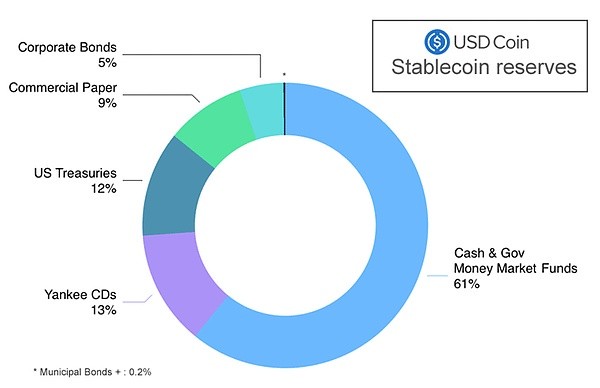
(Data source: Swyftx Learn)
Regulatory Dynamics and Compliance
As of mid-2025, 12 countries and regions, including the United States, the United Kingdom, Singapore, and Hong Kong, have introduced dedicated regulatory frameworks for stablecoins. Ten central banks have announced collaborations with stablecoin providers to achieve cross-border central bank digital currency (CBDC) interoperability.
Approximately 80% of top stablecoin projects comply with AML and KYC standards. Approximately 90% of stablecoin projects regularly publish reserve audit reports, enhancing issuer transparency. The European Union's Markets in Crypto-Assets (MiCA) Directive has fully come into effect, setting compliance standards for stablecoin issuers in its member states. The US GENIUS Act, passed in July 2025, establishes a federal licensing and compliance framework, requiring 1:1 asset backing, audits, and reserve transparency. Hong Kong's new regulations, effective May 2025, will require stablecoin issuers to be licensed. Stablecoin Usage Distribution: DeFi and trading accounted for 67% of total stablecoin activity, dominating the market. Remittances accounted for 15%, highlighting their role in cross-border transfers. Inflation hedging accounted for 10%, used for wealth preservation in unstable economies. Merchant payments accounted for 5% , reflecting its gradual adoption in retail and commerce. Other uses accounted for 3% .
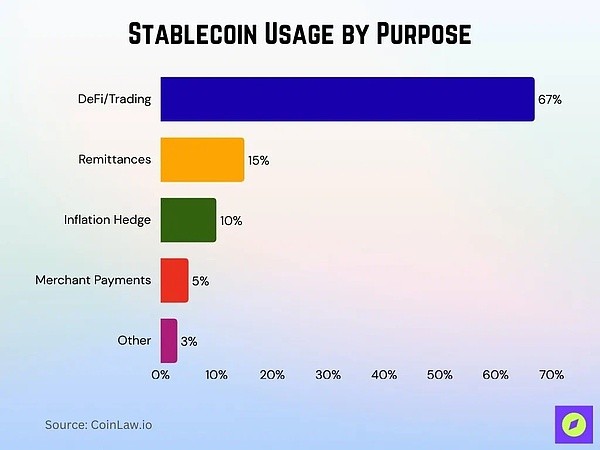
(Data source: Econofact)
Academic Research and Literature
Over 30% of crypto-related content on mainstream financial blogs and journals involves stablecoins. Over 50% of blockchain-related books include dedicated chapters on stablecoins.
Academic publications on stablecoins increased by 18%, with over 200 new research papers expected in 2025. The number of white papers on algorithmic stablecoins tripled, focusing on hybrid decentralized collateral models. A 2024 Harvard Business Review study found that 60% of institutional investors favor stablecoins; the MIT Digital Currency Initiative continues to emphasize the role of stablecoins in promoting financial inclusion; and Stanford University has established a Stablecoin and Digital Asset Lab to promote regulatory innovation. Recent Developments: Stablecoins have been integrated into the FedNow system, providing near-instant settlement for US businesses. Amazon has launched a pilot program to accept stablecoins for global e-commerce transactions; Mastercard has expanded stablecoin support to select merchants and integrated it into its existing card-based infrastructure, which covers over 150 million merchants; and BlackRock has included stablecoins in its portfolio, demonstrating institutional confidence. Ethereum's Shanghai upgrade doubled the scalability and processing speed of stablecoins. Ripple's liquidity hub expanded stablecoin support to accelerate cross-border payments. Furthermore, a pilot program for blockchain payments in rural India saw a 60% increase in stablecoin trading volume. Conclusion: The stablecoin market has solidified its position as a cornerstone of the digital economy, bridging traditional finance and blockchain. From cross-border payments to DeFi and even the integration of institutional finance, stablecoins are no longer niche tools but a vital part of global financial infrastructure. With technological advancements and clearer regulations, stablecoins will undoubtedly continue to play a key role in shaping the future global financial ecosystem.