
 I'm LongbridgeAI, I can summarize articles.
According to reports, the U.S. Department of Commerce will extend the tariff credit arrangement for imported auto parts from the originally planned two years to five years. This policy allows automakers to reduce tariffs on imported parts, with an announcement expected as early as this Friday. Such exemptions and credit policies are becoming an important means to mitigate the negative impacts of tariffs
The American automotive industry is about to welcome tariff reductions after continuous lobbying, which not only constitutes a direct benefit for automakers but also reaffirms the "loud thunder but little rain" nature of Trump's tariff policy.
On October 16, media reports indicated that the U.S. Department of Commerce plans to announce an extension of the tariff credit arrangement for imported parts by five years, which was originally set to expire after two years. This arrangement allows automakers to reduce the tariffs they need to pay on imported automotive parts.
Reports cited informed sources revealing that the policy is expected to be announced as early as Friday, with relevant details disclosed in the official government documents implementing the import truck tariffs. Following the news, General Motors' stock price rose by 3.8% in after-hours trading, while Ford Motor and Stellantis also saw short-term gains.
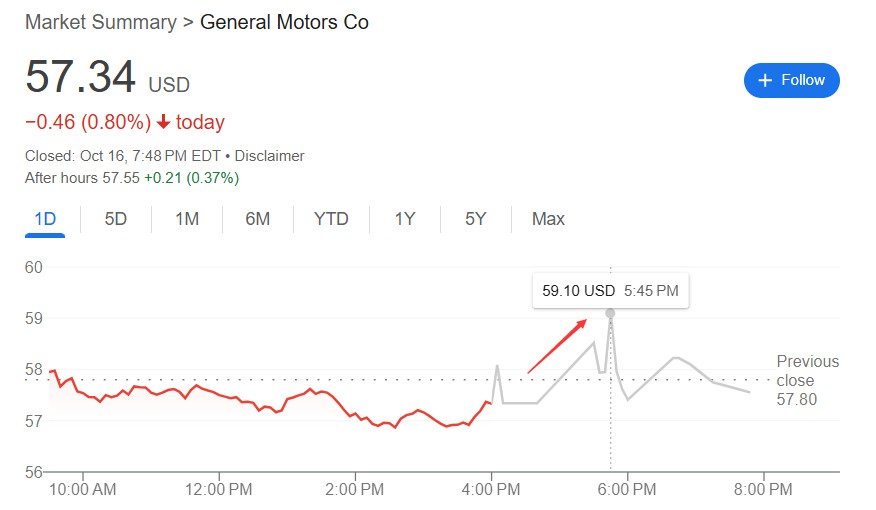
This move is the latest adjustment in a series of tariff measures by the Trump administration. Although the tariffs imposed on imported vehicles, parts, and raw materials such as steel and aluminum have increased costs for U.S. automakers, similar exemptions and offset policies are becoming key tools to mitigate the negative impacts of tariffs.
Automakers Lobby for Months for Reductions
This concession is the result of months of lobbying by automakers such as Ford Motor and General Motors. U.S. automakers are facing rising cost pressures due to Trump's tariffs on imported vehicles, parts, and raw materials such as steel and aluminum.
Under the policy that is about to be extended, automakers can offset a portion of the 25% tariff imposed on imported parts.
Automakers producing and selling complete vehicles in the U.S. can apply for a credit equivalent to 3.75% of the value of vehicles manufactured in the U.S. This credit was originally set to decrease to about 2.5% after one year and be completely eliminated after the second year. Now this arrangement will be extended to five years.
Ford CEO Jim Farley has stated that considering labor and exchange rate cost differences, the U.S.-Japan Trade Agreement gives competitors like Toyota a cost advantage of thousands of dollars per vehicle compared to similar models manufactured by Trump in the U.S.
Therefore, any form of tariff reduction is crucial for maintaining the competitiveness of U.S. automakers.
The "Loud Thunder but Little Rain" Trade War
The extension of the tariff policy targeting the automotive industry is, in fact, a microcosm of a broader phenomenon—the actual impact of the U.S. trade war is far less severe than claimed, and "exemptions" are key to this.
Wall Street Journal previously mentioned that Citi's research report in September pointed out that the actual effective tariff rate in the U.S. is only about 9%-10%, far lower than the theoretical rate of about 18%, primarily due to policy-driven "exemptions and exceptions."
The report noted that between 2019 and 2021, after the U.S.-China trade war in 2018, 957 companies submitted 163,522 tariff exemption applications, with an approval rate as high as 61% The impact of tariffs is lower than expected, which also explains why the highly anticipated "tariff inflation" has not emerged on a large scale.
Citigroup's report points out that although the prices of the "tariff basket" of goods it tracks have rebounded, the growth remains moderate. This is partly because the actual tariff impact borne by companies is less than expected, and partly due to the buffering effect of inventory.
Citigroup analyzes that the current situation of the trade war being "loud thunder but little rain" is favorable for risk assets and retains space for the Federal Reserve to cut interest rates amid a weak labor market. However, investors need to be wary of two major risks:
First, the inventory built by companies to avoid tariffs is nearing depletion, which may push up commodity inflation in the next month or two.
Second, if transshipment trade continues to increase, it may lead to a new round of tariff measures against countries like Vietnam and Thailand in the future