


Puma's stock price soared over 14%, reports: Anta, LI NING and other giants are considering a bid

According to reports, Anta Sports is evaluating a potential acquisition of this sportswear manufacturer. Additionally, Chinese sports brand Li Ning and Japan's ASICS may also show interest in Puma. Puma is currently facing operational difficulties, with its stock price falling over 50% this year, reaching a ten-year low. It is facing multiple challenges such as double-digit sales decline, high inventory, and weakened brand appeal, and has lowered its guidance for 2025, expecting to incur operational losses
The struggling German sports brand - Puma is attracting the attention of potential acquirers.
On November 27th, according to media reports, Anta Sports and several other companies are considering acquiring Puma, which drove the company's stock price up 14% in early trading on Thursday, becoming the market focus. The stock had hit its lowest point in over a decade earlier this month, with a decline of more than 50% year-to-date.
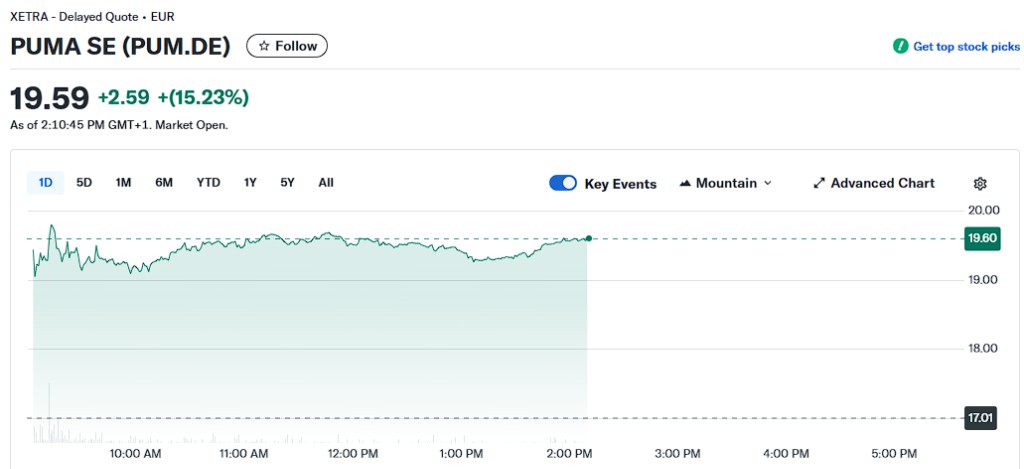
Reports cite informed sources stating that Anta Sports is evaluating a potential acquisition of this sports apparel manufacturer. Additionally, Chinese sports brand Li Ning and Japan's ASICS may also show interest in Puma.
It is noteworthy that this acquisition rumor comes at a time when Puma is in what it calls a "reset period," facing multiple challenges such as a sharp decline in sales growth post-pandemic, weakened brand appeal, and high inventory, while struggling in an increasingly competitive sports apparel market and tariff impacts.
Several Asian Giants Eye Acquisition Opportunities
According to reports, Asian sports brand giants such as Anta Sports, Li Ning, and ASICS may show interest in acquiring Puma. The interest from these potential buyers reflects the ambition of Asian sports brands seeking international expansion.
Analyst Felix Dennl pointed out that for Anta, acquiring Puma could serve as a gateway to the Western market, considering the Chinese company's strong track record in turning around underperforming assets. However, he also stated:
"On one hand, Anta has gained extensive international market exposure through its stake in Amer Group, so the expected additional value added to the portfolio by Puma is not entirely clear."
Li Ning stated in an email that "As of now, the company has not engaged in any substantive negotiations or evaluations regarding the transactions mentioned in the news."
Puma's largest shareholder is Artemis, which holds 29% of the company. Artemis is the holding company of French billionaire Pinault's family and the largest shareholder of Gucci's parent company Kering, which has been spending heavily, leading to a growing debt scale.
Reports suggest that Artemis's valuation expectations for Puma may become a major obstacle in any transaction involving the sports brand.
Puma Faces Operational Difficulties, Driving Reset Plans
Earlier this month, the company's stock price hit its lowest level in over a decade, with a cumulative decline of more than 50% year-to-date. This performance reflects the increasingly fierce competition in the sports apparel market and the impact of tariff policies on consumer sentiment.
Puma is currently experiencing severe operational challenges. Quarterly sales announced on October 30 showed a double-digit decline. Puma acknowledged that key challenges include weak brand momentum, U.S. tariffs, and high inventory levels.
In July, the company lowered its guidance for 2025, now expecting sales to decline by a low double-digit percentage, down from previous expectations of low to mid-single-digit percentage growth The company also stated that due to the impact of tariffs, it expects to incur an operating loss in 2025, a significant reversal from the previously anticipated profit of EUR 445 million (USD 516 million) to EUR 525 million.
New CEO Arthur Hoeld took office on July 1, responsible for revitalizing the struggling brand. His turnaround plan includes layoffs, narrowing the product range, and improving marketing operations.
In a statement on October 30, Hoeld said:
"At the end of July, we indicated that 2025 would be a year of reset. Since then, we have taken significant steps to clean up Puma's distribution channels, improve cash management, and reset operating expenses. By expanding our cost efficiency program, we are quickly responding to challenges, making the business more efficient and resilient."
