
 I'm LongbridgeAI, I can summarize articles.
AI's disruption of the software industry has impacted the private credit market, leading to a sharp decline in the stock prices of institutions such as Ares and KKR. Behind this is a portfolio highly concentrated in software companies threatened by AI, raising concerns about debt repayment. UBS warns that if the disruption accelerates, the default rate in private credit could soar to 13%, with risks further exacerbated by the widespread presence of Payment-in-Kind (PIK) structures, highlighting the vulnerability of this market
The disruptive wave brought by artificial intelligence technology is spreading from the software industry deep into the financial markets, and the private credit bond market is facing unprecedented uncertainty. As AI technology begins to threaten the business models of traditional software companies, the private credit bond portfolios, which are a major source of financing for the industry, are undergoing severe risk reassessment, raising concerns about the asset quality of the private credit bond industry, which is as large as $3 trillion.
Last week, the release of a new AI tool by the artificial intelligence company Anthropic triggered a sell-off of software data supplier stocks, and this shock quickly transmitted to the asset management sector. The market is worried that AI technology will weaken the cash flow of borrowing companies and increase default risks, leading to a sharp decline in the stock prices of asset management companies with large private credit bond businesses. Ares Management's stock price fell more than 12% last week, KKR dropped nearly 10%, Blue Owl Capital fell over 8%, and TPG declined about 7%. In contrast, the S&P 500 index only slightly dipped about 0.1% during the same period.
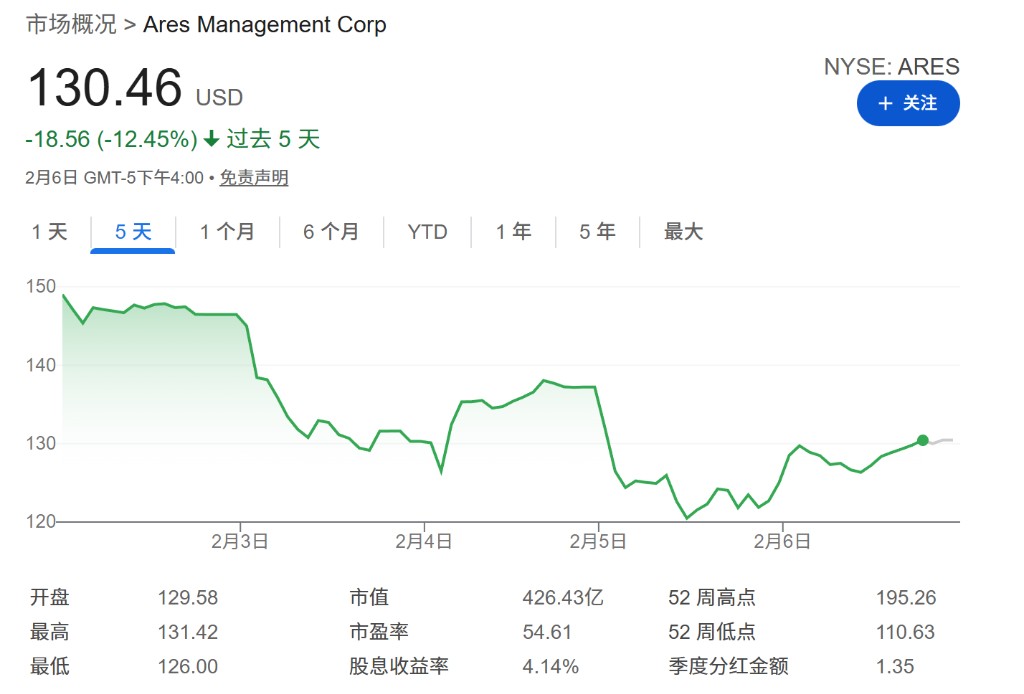
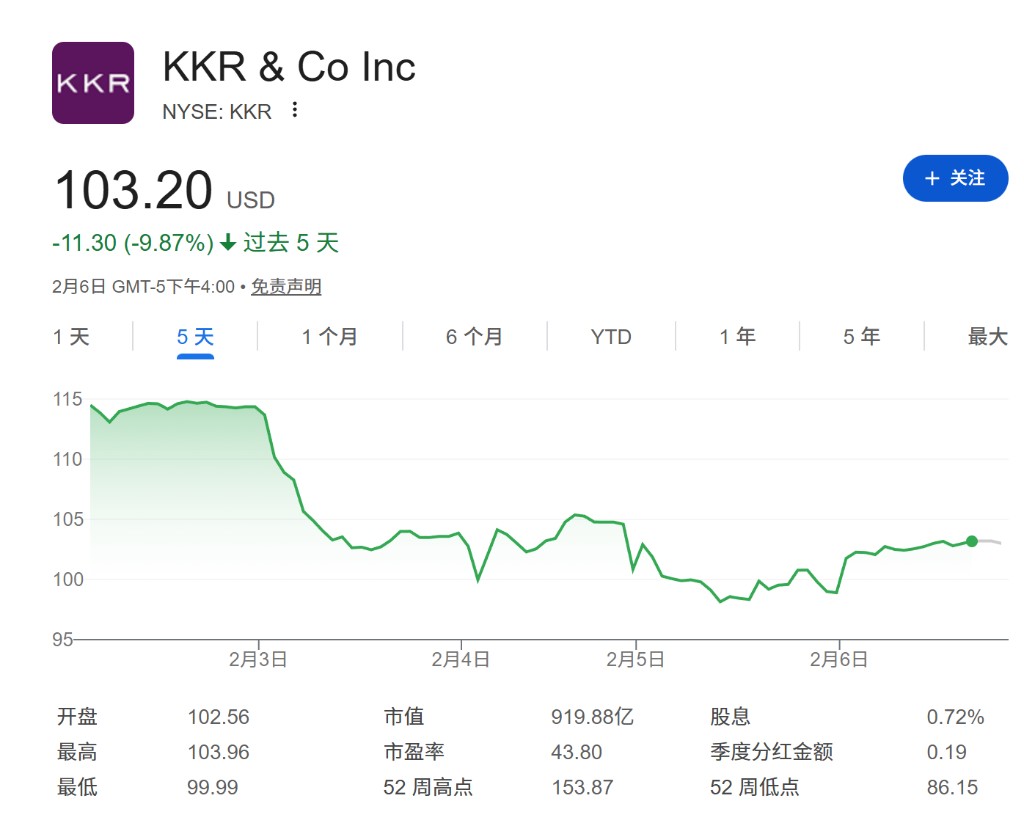
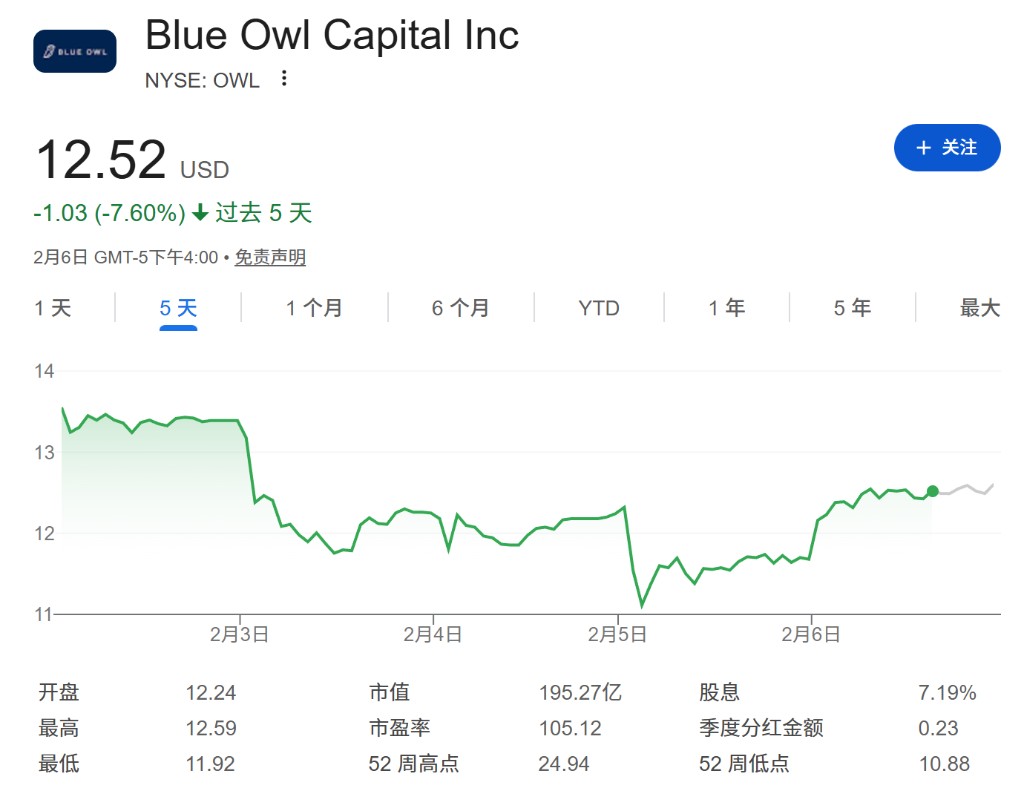
This market turmoil highlights investors' growing unease about their exposure to the private credit bond market. Analysis from PitchBook indicates that the software industry has been a favored investment target for private credit bond institutions in recent years, with many large single-layer loans flowing to such companies. According to a previous article by Wall Street Insight, the software industry accounted for 17% of the investment transaction volume in U.S. Business Development Companies (BDCs, which specialize in providing funding to small and medium-sized enterprises in the private credit market), second only to the business services sector.
UBS Group has issued a stern warning that if the disruptive effects of AI accelerate beyond the adaptability of borrowing companies, the default rate of U.S. private credit bonds could soar to 13% in an aggressive scenario. This forecast is significantly higher than UBS's stress test estimates for leveraged loans (8%) and high-yield bonds (4%), indicating that the private credit bond market appears particularly vulnerable in the face of technological disruption.
Concerns Over Credit Bond Quality Due to Software Industry Exposure
The high concentration of the private credit bond market in the software industry means that any tremor in this field will be magnified. The new tool developed by Anthropic is designed to perform complex professional tasks, which are currently the chargeable services of many software companies. This directly challenges the moat of traditional software businesses, raising doubts about their future debt repayment capabilities. Jeffrey C. Hooke, a senior lecturer in finance at the Johns Hopkins Carey Business School, pointed out: "Private credit debt has provided loans to a large number of software companies. If these companies' businesses start to decline, problems will arise in the portfolio." Hooke further stated that the pressures in the private credit debt sector existed before concerns about AI, with liquidity issues and loan delays occurring frequently, and the impact of AI undoubtedly adds a new layer of risk to an already pressured industry.
Kenny Tang, head of U.S. credit debt research at PitchBook LCD, believes that the disruption caused by AI could pose credit debt risks for some borrowers in the software and services industry, depending on where companies stand on the AI technology curve. Those that fail to keep pace with technological changes will face severe challenges.
Payment-in-Kind (PIK) Loans Intensify Risk Accumulation
In addition to industry exposure, the loan structure itself exacerbates potential risks. Kenny Tang noted that software and services companies account for the largest share of Payment-in-Kind (PIK) loans. This loan structure allows borrowers to defer cash interest payments, which is typically used to give high-growth companies a buffer to establish revenue streams, but this arrangement is highly risky when the borrower's financial condition deteriorates. Once the fundamentals weaken, deferred interest will quickly evolve into credit debt issues.
Mark Zandi, chief economist at Moody's Analytics, warned that due to the opacity of the private credit debt market, it is difficult to conduct a comprehensive assessment of its risks. However, he emphasized that the rapid growth of AI-related lending, rising leverage, and lack of transparency are all quite evident "yellow warning flags." Zandi expects serious credit debt issues to arise and cautioned that if the current growth in credit debt continues, the industry may not be able to absorb losses as well a year from now as it can now.
Systemic Concerns Emerge
The market reassessment triggered by AI occurs against a backdrop of multiple questions facing the private credit debt industry itself. This $3 trillion market has long been scrutinized for high leverage and opaque valuations. Jamie Dimon, CEO of JP Morgan, warned late last year about the hidden dangers in the private credit debt market, stating that the pressures on individual borrowers could signal more hidden troubles.
A report from PitchBook last week mentioned that corporate software companies have been darlings of private credit debt institutions since 2020. However, the market must now be prepared to deal with the disruptive impacts driven by AI. This uncertainty is forcing investors to reassess merger and acquisition deals financed through opaque, illiquid loans, especially those highly exposed to the risks of technological change