
 I'm LongbridgeAI, I can summarize articles.
As the yen once again approaches the 160 "life-and-death line," Japanese Finance Minister Satsuki Katayama issued a stern warning, stating that "bold measures" will be taken to respond resolutely—phrasing that has appeared before every previous intervention. Previously, Japanese authorities also considered using foreign exchange reserves to directly short oil prices as an unconventional means to halt the yen's slide
As the yen continues to face pressure, Japanese Finance Minister Satsuki Katayama issued a clear warning, hinting that authorities are prepared to take intervention action and drawing a clear exchange rate defense line for the market.
On Friday, as reported by Bloomberg, Katayama said when asked about yen weakness that authorities will "respond resolutely, including taking bold measures." In the typical parlance of Japanese officials, this phrasing is usually interpreted by the market as a precursor to foreign exchange intervention.
Prior to the remarks, the USD/JPY exchange rate hovered around 159.70, approaching the 160 level—the exact trigger point for the Japanese authorities' multiple market interventions in 2024. Boosted by her comments, the yen rose briefly to 159.49, though the gains subsequently narrowed.
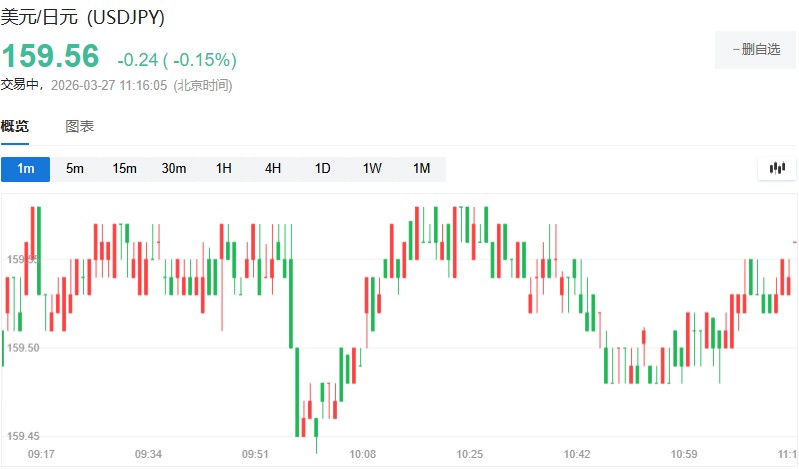
This statement comes against the backdrop of ongoing tensions in the Middle East and surging energy prices. The dollar has strengthened overall this month, with the Bloomberg Dollar Spot Index rising more than 2% within the month, driven by both safe-haven inflows and the market lowering its expectations for Federal Reserve rate cuts. The direct trigger for the yen's pressure was speculative selling sparked by rising oil prices.
The 160 Mark: Approaching Historical Intervention Levels Again
160 is a highly sensitive psychological level for Japanese foreign exchange authorities.
In 2024, Japan's Ministry of Finance entered the market multiple times when USD/JPY reached or breached this level, deploying a total of several hundred billion yen to support the currency. The exchange rate's renewed approach to this level has put the market on high alert as to whether authorities will repeat intervention operations.
Katayama's remarks continue the consistent "verbal intervention" strategy of Japanese officials—applying pressure to the market through rhetoric before actually deploying foreign exchange reserves.
The brief strengthening of the yen following these remarks shows that the market still reacts to such signals to some extent, but the lack of sustained gains suggests investors remain in a wait-and-see mode regarding whether authorities will truly step in.
Oil Market Speculation: Intervention Scope May Extend to Commodities
Notably, Katayama focused not only on exchange rates this time but also extended her outlook to the commodity markets. She again attributed the yen's recent speculative selling pressure to oil market volatility, stating that authorities are closely monitoring broader market dynamics, including commodities.
According to a previous Wallstreetcn article, the Japanese government is evaluating an unconventional plan—using foreign exchange reserves to directly intervene in the crude oil futures market by establishing short positions to drive down oil prices, thereby indirectly alleviating yen depreciation pressure. On Tuesday, Finance Minister Satsuki Katayama shifted her focus from speculative behavior in the foreign exchange market to the crude oil futures market, stating that the latter is disrupting exchange rate movements and adding that "the Japanese government is ready to take comprehensive action on all fronts."
Regarding oil prices, Trump on Thursday again pushed back the deadline for strikes on Iranian energy infrastructure, stating that negotiations with Iran are progressing "very well" and promising not to attack Iranian energy facilities for now. This statement caused a brief pullback in oil prices, and both the yen and Japanese government bond yields found temporary relief during Friday's early Tokyo trading, though the impact was fleeting.
Katayama also revealed that the G7 Energy and Finance Ministers' meeting will take place next week, with the Middle East situation expected to be a core topic. Meanwhile, Katayama stated that the Japanese government will hold an emergency meeting on Friday with financial institutions to study how to provide support to companies facing financing pressures due to the Middle East conflict.