
The World's Most Crowded Trade Is Unraveling
 Complete. Here is the key summary
The sharp reversal in South Korea's AI trading frenzy has become a microcosm of the global AI investment bubble. The KOSPI Index's weekly RSI hit a historic low, while SK Hynix's stock price corrected sharply to test key support levels. Highly leveraged trades exacerbated volatility, with Bank of America data showing significant capital inflows at peak levels, indicating a prolonged deleveraging process. Although oversold technical conditions may present rebound opportunities, analysts believe the adjustment will take time, with the core issue shifting to whether excessive positions have been fully cleared
The sharp reversal in South Korea's AI trading frenzy may be serving as a mirror to the global AI investment bubble.
Just six weeks ago, South Korean AI concept stocks were at the peak of fervor. Today, one of the world's most crowded trades has undergone a violent clearing—valuations have compressed significantly, leverage has been forcibly liquidated, and momentum has completely collapsed. The KOSPI Index is testing its 200-day moving average, with its weekly RSI falling to historically extreme lows; meanwhile, SK Hynix has completed a full "boom-bust cycle," with nearly all previous gains wiped out.
The core question in the market has shifted from "how far can the decline go" to "whether the excess within the system has been sufficiently cleared." Bank of America estimates that South Korea's stock market attracted approximately $16 billion in inflows over the past four weeks, with substantial capital chasing highs, implying that position resetting will not happen overnight. Meanwhile, semiconductor, South Korean equity, and memory chip stocks are attempting to stabilize in deeply oversold territory, with some market participants beginning to focus on potential technical rebound opportunities.
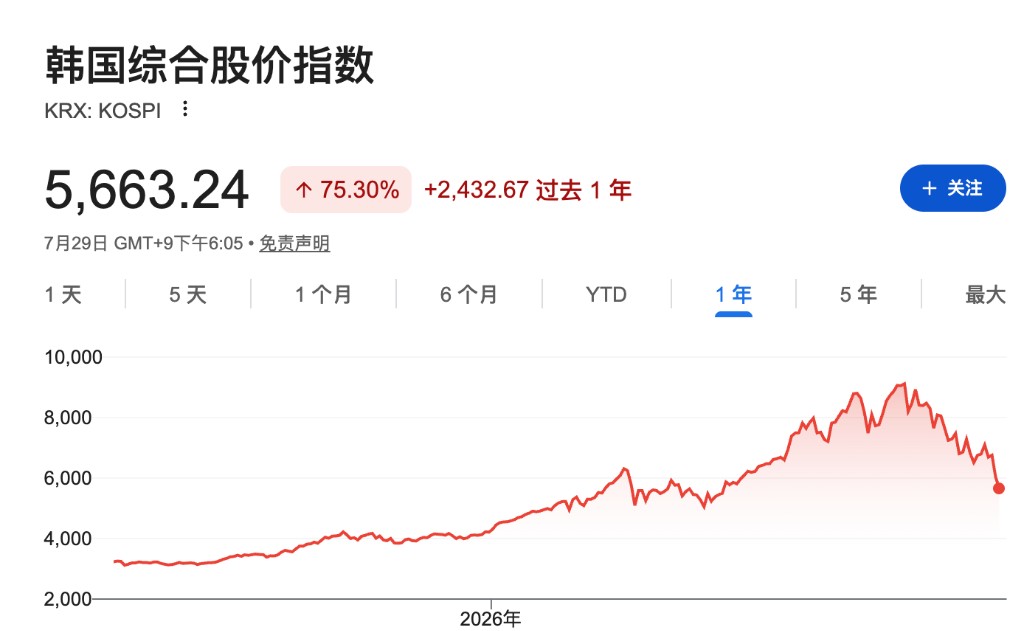
Momentum Collapse: KOSPI Weekly RSI Hits Historic Low
The KOSPI's technical indicators have released extreme signals. The index's weekly RSI has dropped to its lowest level in history, while the daily RSI has also fallen to 31, entering a deeply oversold zone.
Currently, the KOSPI is testing support at the 200-day moving average and long-term trend lines. From a technical perspective, the oversold condition creates conditions for a rebound, but analysts argue that the excess in the AI rally accumulated over months, meaning the adjustment will also take time—the "AI hangover" will not end quickly.
As a representative stock of the Asian AI boom, SK Hynix's performance is particularly typical. Post-earnings selling pressure pushed its stock price back near the long-term trend line and the 200-day moving average, essentially erasing prior gains.
Of greater concern is the concentrated release of leverage risk. As previously pointed out by Goldman Sachs, the 2x leveraged ETF for SK Hynix once became the largest single-stock leveraged ETF globally. As the trend reversed, highly leveraged trades amplified market volatility, causing many investors to experience the risks associated with leveraged instruments during the downturn.
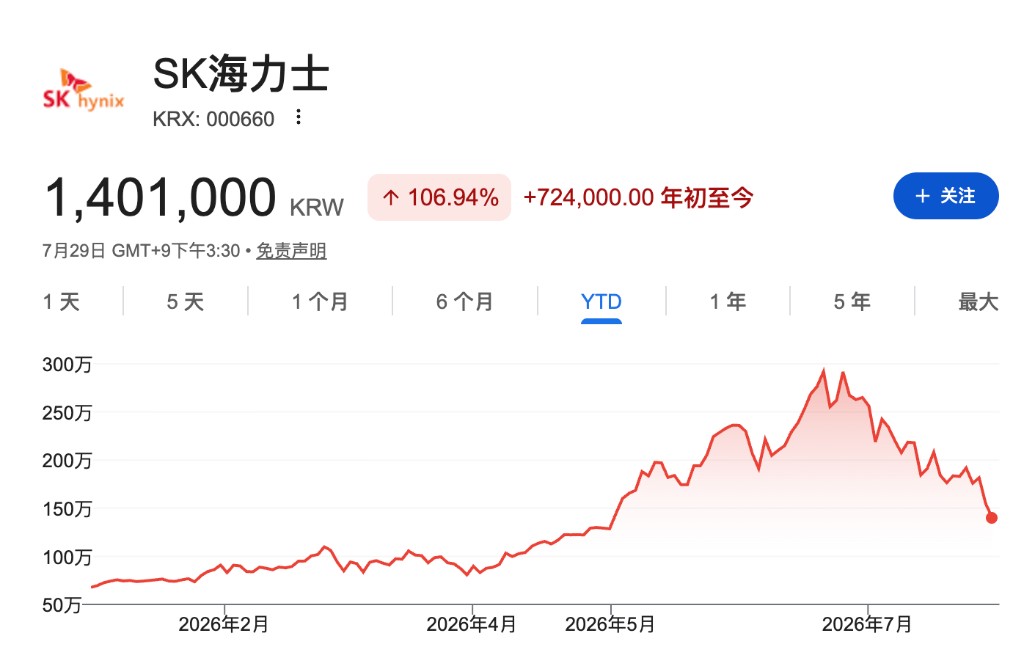
Although technical indicators show oversold signals, position pressure has not been fully released. According to Bank of America data, South Korea's stock market attracted cumulative inflows of approximately $16 billion over the past four weeks, with some capital entering at the peak of the rally.
This means that market deleveraging is a process rather than a single event. Currently, semiconductor and memory chip stocks are attempting to find support in oversold areas. If unexpected positive news emerges, the rebound magnitude could be amplified by position adjustments, but in the medium term, the valuation pressure accumulated by AI trades still requires further digestion.

Risk Warning and Disclaimer
Investing involves risks; please proceed with caution. This article does not constitute personal investment advice, nor does it consider the specific investment objectives, financial status, or needs of individual users. Users should consider whether any opinions, views, or conclusions in this article align with their specific circumstances. Investment decisions made based on this content are the sole responsibility of the investor.