
Alibaba Surges Over 6%: Does Qwen Open a New Gateway for Token Flow?
 I'm LongbridgeAI, I can summarize articles.
The market is beginning to buy into Alibaba's token flow logic
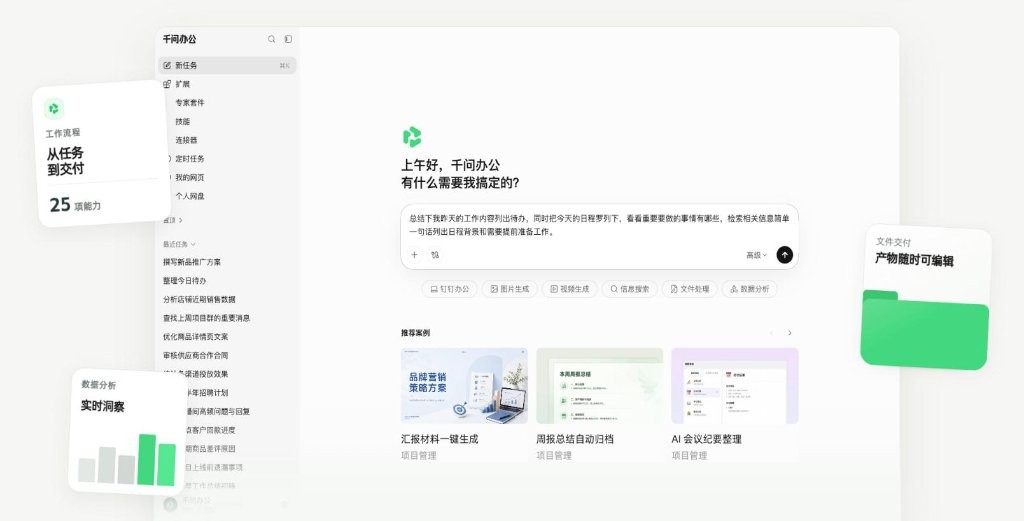
On August 3, Alibaba released its flagship model Qwen3.8, and "Qwen Office" entered public beta testing.
The simultaneous rollout of the model and office products fills a critical gap in Alibaba's AI narrative: Qwen3.8 provides more advanced and cost-effective model supply, while Qwen Office integrates the model into high-frequency workflows.
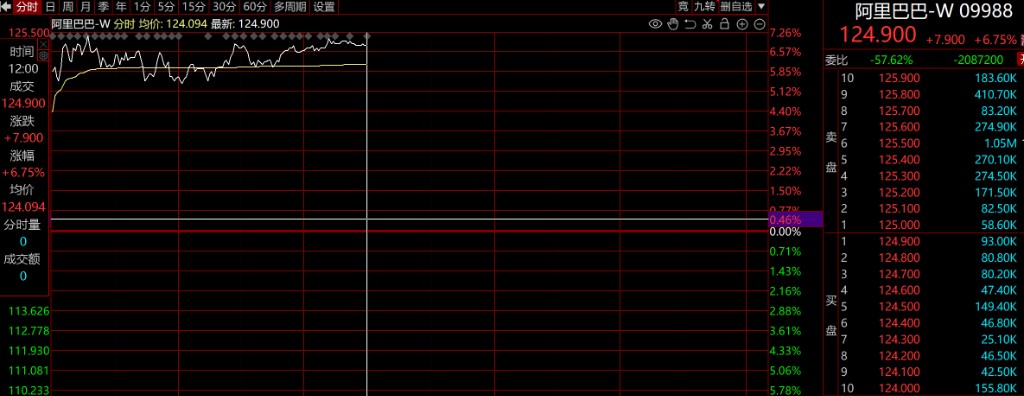
The core of this trading thesis lies in whether AI investments can be converted into revenue. Today, Alibaba's Hong Kong-listed shares rose more than 6% during trading hours, reflecting a positive response from the capital markets.
Alibaba's valuation has long been driven by two contrasting logics. E-commerce continues to generate cash flow but is affected by consumption growth rates, platform subsidies, and investments in instant retail. AI and cloud computing offer higher growth expectations, but it remains to be seen when capital expenditures will translate into profits, requiring further performance validation.
The emergence of Qwen Office could create Alibaba's next product to drive token circulation, provided it achieves significant enterprise-level usage.
Tech Giants Compete for the Office Market
Over the past two years, most office Agents have focused first on solving individual efficiency problems. An employee can use an Agent to search for information, write reports, and create spreadsheets, thereby shortening their own delivery time. However, enterprise efficiency depends on handoffs between multiple departments: Can market data enter the sales system? Can sales commitments be synchronized with legal and delivery teams? Can financial metrics remain consistent across different teams?
If one link speeds up but data remains scattered, permissions are siloed, and downstream processes require re-verification, the organization's total delivery cycle may not shorten.
Consequently, the enterprise office market requires a different product form. The product must understand organizational structures and permissions, connect databases, knowledge bases, and business systems, support cross-departmental process orchestration, and retain audit trails, version control, and accountability records. While personal Agents prioritize the quality of completing a single task, enterprise-grade products must also handle data governance, standard reuse, and multi-person collaboration. Organizations ultimately purchase a manageable, replicable production system.
Competition in the domestic office market has thus expanded.
WPS is advancing from a document entry point to WPS 365 and its native office intelligent agent, "WPS Lingxi," leveraging advantages in format compatibility, existing document stock, and government/enterprise clients. Tencent has entered via desktop Agents; WorkBuddy can read and write local files, autonomously decompose tasks, and invoke tools, with the enterprise version capable of connecting to internal systems. Enterprise WeChat, QQ, Tencent Docs, and Tencent Cloud provide distribution channels and infrastructure.
ByteDance is integrating the capabilities of its Doubao and Lark product lines, launching Doubao Enterprise Edition for organizations. The Seed model handles complex tasks, data processing, multimedia generation, and computer/browser operations, while Lark provides enterprise knowledge, organizational permissions, and a collaborative environment. AI-generated documents, spreadsheets, and other outputs can flow directly into Lark, allowing ByteDance to extend personal AI usage into team collaboration.
Alibaba's approach more closely resembles a complete enterprise Agent architecture. Qwen Office integrates QoderWork, MuleRun, and Wukong, supporting desktop Agents, cloud Agents, and enterprise collaborative Agents. It will subsequently connect with DingTalk IM, enterprise databases, and workflows. Qwen determines the intelligence ceiling, DingTalk provides organizational relationships, permissions, and process entry points, and Alibaba Cloud handles data, computing power, and token billing.
This full-stack combination represents a relatively clear advantage for Alibaba, though it tests whether the three systems can deliver a unified experience.
Law firms can accumulate merger and acquisition due diligence processes into organizational-level Skills, and multinational teams can allow Agents to continue advancing projects after employees clock out. Such scenarios transform personal experience into corporate assets. Once deployed in production environments, the resulting token consumption is far higher than that of a single Q&A session or a piece of copywriting.
From Stronger Models to More Token Calls
Qwen3.8 provides a new model foundation for this gateway. According to Alibaba's disclosures, Qwen3.8-Max has a total parameter count of 2.4 trillion, with 95 billion activated parameters, supports a context window of 1 million tokens, and significantly enhances capabilities in Coding, Cowork, and long-cycle Agent tasks. Domestic API pricing is set at 12 yuan per million input tokens and 36 yuan per million output tokens, with a cache hit price of 1.5 yuan.
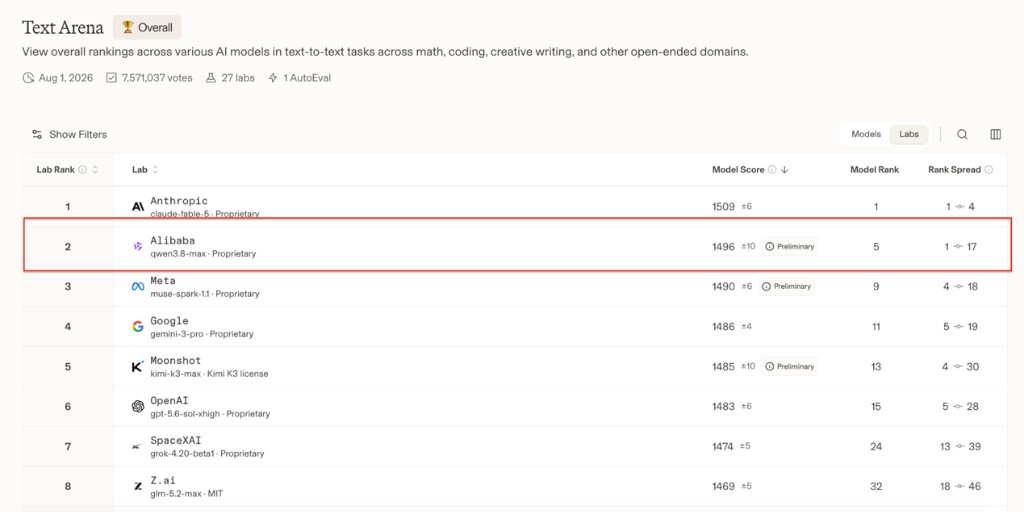
Model capability determines whether an Agent can complete complex tasks, while unit cost determines whether enterprises are willing to expand usage. When both improve simultaneously, typical demand elasticity emerges: as the price per call drops, more tasks become economically viable. Agents expand from generating a single PowerPoint slide to continuously reading hundreds of materials, invoking multiple systems, and iterating persistently, causing the total token consumption per task to rise.

Office scenarios can provide more stable and higher-intensity call volumes than consumer-facing Q&A.
Consumer Q&A often consists of short dialogues, where user willingness to pay and retention are prone to fluctuation. Enterprise tasks often involve long documents, images, videos, and historical knowledge, including multi-round cycles of planning, tool invocation, and result verification. The call intensity of a due diligence, audit, or operational analysis task can be far higher than that of ordinary chat.
Once an enterprise embeds an Agent into standard processes, migration costs rise along with permission configurations, knowledge bases, and accumulated Skills, resulting in revenue quality that is typically superior to one-time traffic conversion.
The contribution of Agents to cloud vendors' performance is gradually becoming evident. In the quarter ended March 2026, Alibaba Cloud's revenue grew 38% year-on-year, with external commercial revenue growing 40%. AI-related product revenue achieved triple-digit growth for the 11th consecutive quarter, accounting for 30% of external cloud revenue, while the number of Bailian customers increased eightfold year-on-year.
Brokerages are quite consistent in their assessment of this shift. Citigroup defines Alibaba as a primary beneficiary of China's token economy, estimating that MaaS (Model-as-a-Service) could become Alibaba Cloud's largest revenue product. Morgan Stanley predicts cloud revenue growth of 45% in the first quarter of fiscal year 2027, with cloud EBITA margins rising from 9% in the previous quarter to 11%. HSBC believes that the increasing share of MaaS, expanded deployment of self-developed chips, and cloud product price hikes will jointly improve cloud profit margins.
These changes reflect the core impact of AI on Alibaba's valuation: the market is beginning to measure the return on Alibaba's AI investments using token call volume, MaaS revenue, and cloud profit margins.
Qwen3.8 offers capabilities close to frontier models at a lower price, which may temporarily depress revenue per token. However, lower costs will also encourage clients to delegate more processes to Agents. As long as call volume grows faster than prices decline, and self-developed chips, caching, and sparse architectures continue to reduce inference costs, cloud revenue and profit margins can improve simultaneously.
The Market Needs AI Scenario Expansion
As the capabilities of leading models continue to improve and inference prices keep falling, competition in the AI industry is extending to the scenario level. Model leaderboards determine the technical ceiling, while real-world scenarios determine call frequency, customer retention, and payment scale.
The difficulty in expanding scenarios centers on enterprise workflows. Enterprises question whether Agents can stably complete long-cycle tasks, inherit organizational permissions while protecting data, integrate with existing systems while retaining audit trails, and calculate how much labor and time each task saves.
Therefore, the industry is searching for high-frequency, long-context, and repeatable tasks. Programming, office work, customer service, marketing, and professional research have become major entry points. Among these, office work covers more departments and involves more complex data relationships. Vendors must simultaneously handle model effectiveness, system integration, and organizational governance, meaning product forms will gradually evolve from single-point assistants to enterprise-level execution platforms.
To judge whether scenarios are succeeding, the market requires a set of harder metrics: the number of enterprise clients and payment rates, token consumption and retention per client, task completion rates, the frequency of organizational-level Skill reuse, and the revenue and profit generated by call volumes.
For Alibaba, Qwen Office serves to bring Qwen into enterprise workflows and then convert those tasks into Alibaba Cloud call volumes. For the entire industry, the next phase of the AI narrative will come from more real-world scenarios and their ability to keep tokens flowing.