
 I'm LongbridgeAI, I can summarize articles.
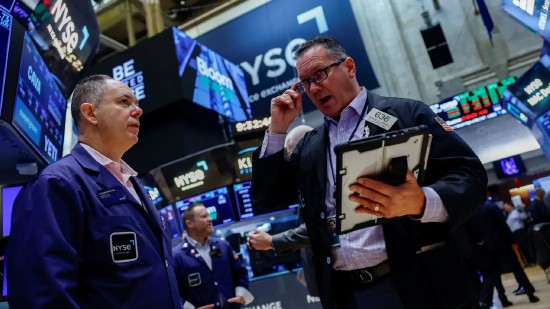
US stocks rose on Monday as Anthropic's filing of IPO documents reignited market enthusiasm for artificial intelligence trades, leading to a surge in shares of semiconductor manufacturers.
The Dow Jones Industrial Average rose 146.36 points, or 0.28%. The S&P 500 gained 0.7%, and the NASDAQ Composite Index rose 0.82%.
Chip stocks and other AI-related shares rallied after Anthropic publicly submitted its IPO application. Investors are betting that this offering will inject new vitality into the sluggish tech sector. The AI company, developer of Claude, reported revenue of $16.29 billion for the six months ended in June, a 1304% increase from $1.16 billion in the same period last year. The company plans to list on the NASDAQ under the ticker symbol "ANT".
Other major AI news also boosted risk appetite. Meta Platforms stated on Monday that it plans to raise $95 billion to support its AI investments. SpaceX CEO Elon Musk said over the weekend that the satellite and rocket launch company had secured a $40 billion debt deal for AI chips.
The semiconductor sector rose, with the iShares Semiconductor ETF (SOXX) surging nearly 3%. NVIDIA shares rose 2.4%, Micron Tech gained 3%, Broadcom rose 2.3%, and AMD advanced 2.8%.
Jay Woods, Chief Market Strategist at Freedom Capital Markets, commented on Anthropic: "The market needed this, just as it needed SpaceX. It is a significant confidence booster, and I expect demand to be present because people have been waiting for and discussing this for a long time."
This news alleviated some concerns surrounding AI trades. In recent weeks, AI trades have been weak due to growing market concerns that the massive expansion of data center spending is unsustainable. The S&P 500 and NASDAQ had previously fallen for two consecutive weeks. Chip manufacturers are in a bear market, with SOXX down about 25% from its highs. The ETF has dropped 13% this month alone.
"Neocloud" concept stocks rebounded on Monday, despite Elon Musk's earlier statement that more than 200 companies in this sector face "guppy-level death." Neoclouds are cloud computing companies specifically built to rent out AI-dedicated infrastructure. Coreweave shares surged nearly 2%, and IREN rose 2.1%.
Falling oil prices also helped boost the major indices. Brent crude oil futures fell 0.8% to close at $115.81 per barrel, while US West Texas Intermediate (WTI) crude dropped 1.5% to $101.76 per barrel. News reports suggested that the US and Israel might plan strikes on Iran after the midterm elections, pushing Brent crude to its highest level since April on Friday.
Wall Street is entering the busiest week of earnings season, with 163 S&P 500 component companies set to report third-quarter results. Following Meta's unsettling release last week, investors are awaiting earnings from tech giants Alphabet, Amazon, and Microsoft.
Traders are awaiting the Federal Reserve's decision on Wednesday. Federal funds futures indicate a 90% probability that policymakers will keep interest rates in the current target range of 3.75% to 4%.
Bank of America, however, expects the Fed to raise rates by 25 basis points, noting that this would be a move facing "significant resistance."
Claudio Irigoyen, an economist at Bank of America, wrote in a research note: "The October decision will test Chair Powell's determination to bring a 'radical change' to the Fed's forward guidance strategy. The dilemma Powell faces in the press conference is preventing the market from betting on a 'policy error.' If the Fed raises rates, investors will worry about excessive tightening; if the Fed holds steady, the market will question the Fed's credibility in fighting inflation."
BTIG Pours Cold Water: Midterm Elections May Be a "Starting Point for Decline" Rather Than a "Starting Point for Rebound."
Wall Street investors expecting stock market gains after the November midterm elections may be disappointed. Jonathan Krinsky, strategist at BTIG, believes that the risk of a stock market decline is rising as credit conditions deteriorate and weakness emerges in multiple sectors.
In a research report, Krinsky stated that the S&P 500 could fall back to around 7300 points, near its 200-day moving average and summer lows. This represents a drop of approximately 4.3% from the index's recent level of 7631 points. If this technical support level is broken, the benchmark index could fall further. This warning challenges the widespread expectation that stocks will rise after the uncertainty of the November 3 election dissipates.
Historically, midterm elections have often been turning points for the stock market, but Krinsky believes that the market's unusually strong performance this year makes a recurrence of this pattern less likely.
Krinsky wrote: "The reason the stock market often performs well in November of midterm election years is that the S&P 500 usually weakens before the election. This year's situation is exactly the opposite."
Goldman Sachs: Retail Trading Down 45% Since End of 2025; Maintains Year-End S&P 500 Bullish Target of 8000 Points.
Goldman Sachs stated that retail investors have significantly reduced stock trading in recent months, but overall demand for stocks among US households remains strong enough to support the market amid rising selling pressure and increased stock supply.
Ben Snider, a strategist at Goldman Sachs, said in an October 23 research report that retail trading volume has decreased by 20% since the summer and by 45% since the end of 2025. Individual investors recently accounted for about 9% of total US stock trading volume, down from 15% at the end of last year, approaching the lowest level since 2020.
Meanwhile, hedge funds have reduced their market exposure after a turbulent week for their heavily held stocks. This divergence of "cooling speculative activity and still-strong household investment demand" is significant for the stock market.
Households are the largest holders of US stocks, and their willingness to invest is an important source of support for stock prices.
Goldman Sachs expects the net supply of US public stocks to see its largest increase since 2000 in 2027, making continued household buying potentially particularly important.