
 I'm LongbridgeAI. Here is the key information I extracted
The Democratic Party's landslide victory in the US midterm elections sparked concerns about tighter artificial intelligence regulations, prompting investors to accelerate their exit from the chip sector and causing Japanese and South Korean semiconductor stocks to suffer heavy losses. Meanwhile, Hong Kong and A-shares surged together, with the GEM index reversing a 2% decline to rise 3%, while the Hang Seng Index and Hang Seng TECH Index both rallied, with the former up 3% and the latter soaring 5%, driving a broad surge in technology and internet stocks.
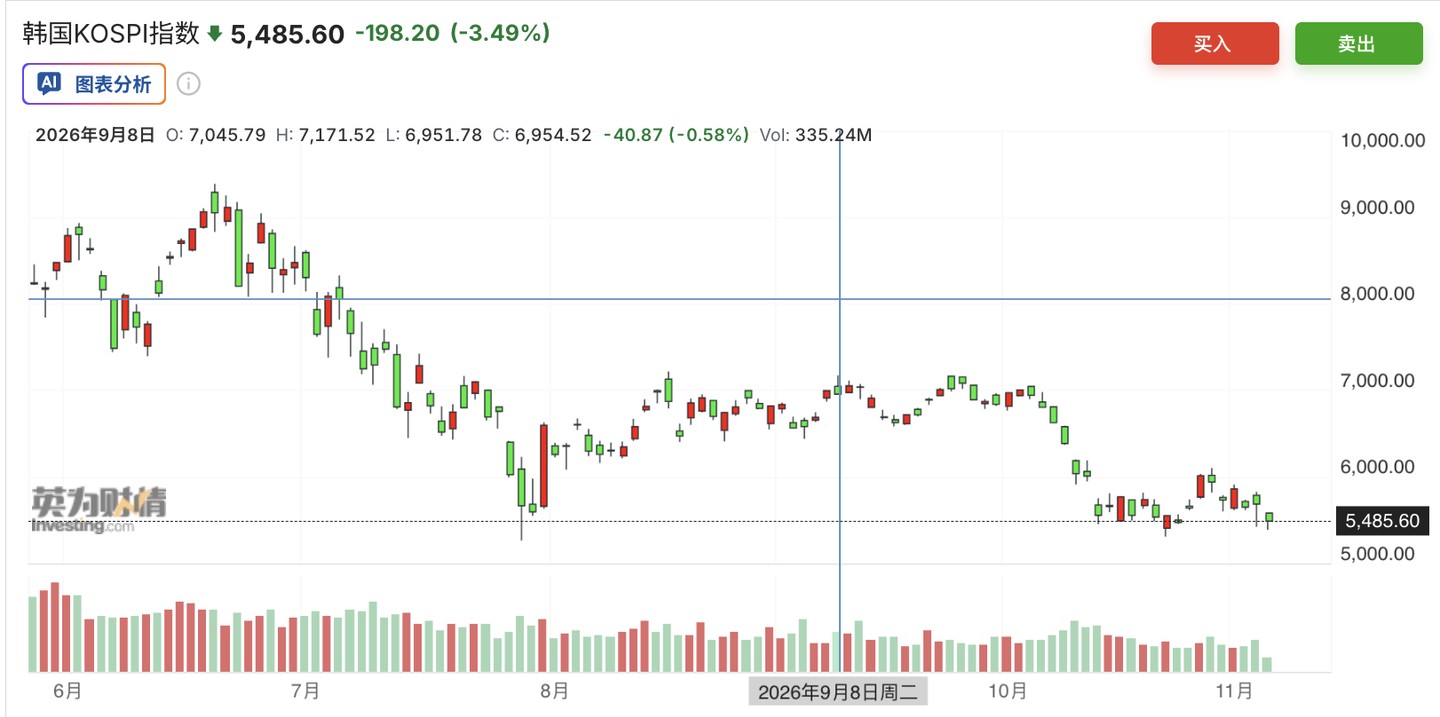
South Korean and Japanese semiconductor stocks led declines in the Asia-Pacific market, with South Korea's KOSPI Composite Index seeing its losses widen to 5.2% at one point. The Korea Exchange activated the SIDECAR mechanism on Thursday morning, suspending program selling on the KOSPI to curb the spread of selling pressure. US stock futures also came under pressure, with Nasdaq 100 futures falling 1% and S&P 500 futures dropping 0.2%, indicating that market anxiety over the technology and AI sectors is spreading to Western markets.
In contrast, A-shares and Hong Kong stocks rose strongly. The GEM index reversed a 2% drop to gain 3%. Both the Hang Seng Index and the Hang Seng TECH Index rallied, with the Hang Seng Index rising 3% and the Hang Seng TECH Index surging 5%, leading to significant gains in tech and internet stocks. Alibaba, Tencent, JD.com, and Xiaomi all saw substantial increases. However, technology stocks such as optical modules and memory chips adjusted downward, and AI large model stocks also declined.

The core logic behind the selloff in chip stocks is that the Democratic Party's sweep of both houses of Congress has raised fears that its campaign promises to impose stricter restrictions on data center development will be fulfilled, directly suppressing investment demand for AI infrastructure and thereby impacting chip demand. Tim Waterer, Chief Market Analyst at KCM Trade, stated, "The Democratic Party's comprehensive victory has significantly increased the likelihood that AI data center construction will hit a regulatory wall, keeping the semiconductor sector under continuous pressure across Asia."
South Korean and Japanese Chip Stocks Plunge, Seoul Composite Index Triggers Circuit Breaker Protection
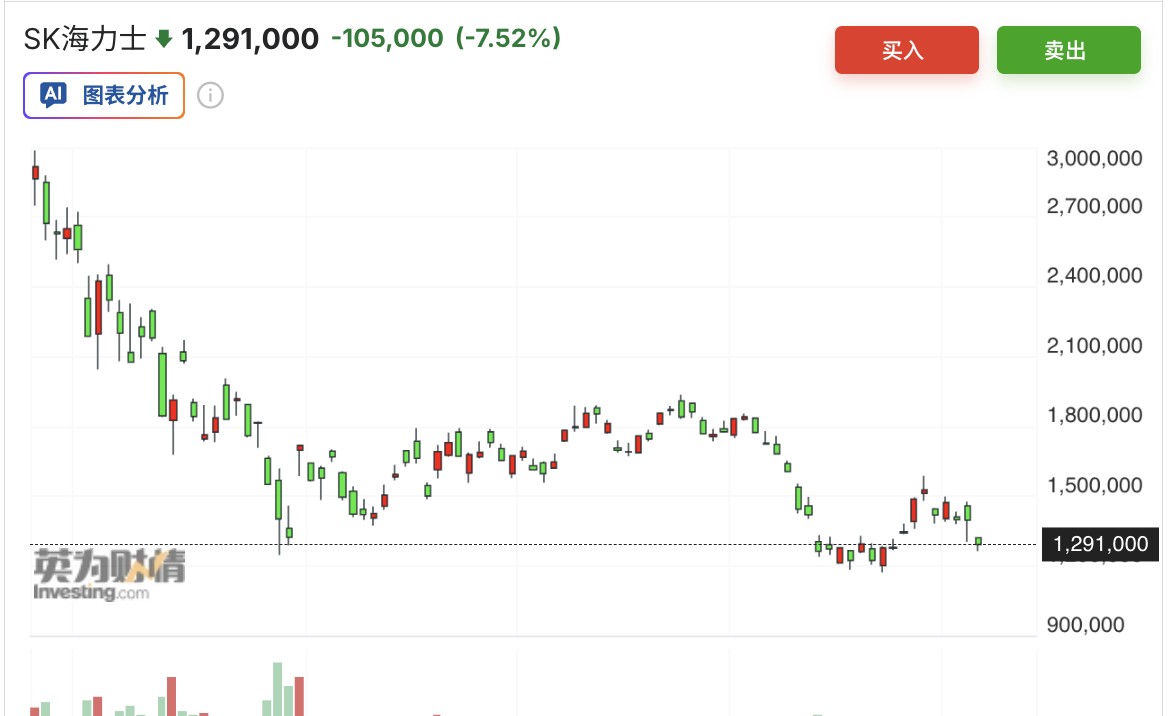
The South Korean market was the hardest hit. Memory chip giant SK Hynix fell more than 9% at one point, and Samsung Electronics dropped over 6%. Dragged down by these two chip leaders, the KOSPI index saw its losses widen to 5.2%, prompting the Korea Exchange to immediately activate the SIDECAR program trading suspension mechanism to halt a stampede-style market decline.
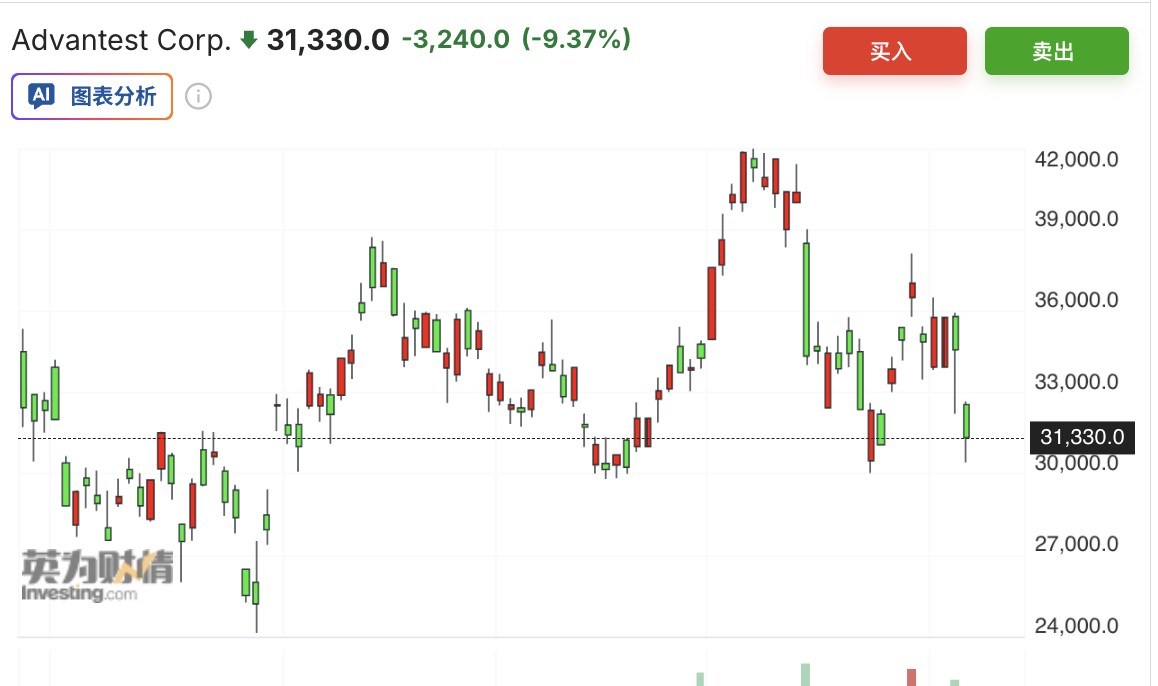
Japanese semiconductor stocks also faced intense selling pressure. Chip testing equipment maker Advantest plummeted 11.69%, Lasertec crashed 11.76%, Tokyo Electron fell 9.89%, Renesas Electronics dropped 6.37%, and SoftBank Group also fell more than 6%.
In comparison, the broader Japanese market showed divergence. The Nikkei 225 Index saw its losses widen to 1% at one point, but the Topix Index rose more than 1% against the trend, benefiting from a recovery in consumer and financial sectors driven by falling oil prices, which offset some of the decline in tech stocks.
Democratic Victory Sparks AI Regulatory Concerns, Becoming the Trigger for Selloff
The direct trigger for this round of tech stock selling was the result of the US midterm elections. The Democratic Party secured comfortable majorities in both the Senate and the House of Representatives and won several governorships. In Texas, Democratic candidate Gina Hinojosa explicitly advocated for stricter controls on data center development during her campaign and ultimately won the gubernatorial election, sharply intensifying market concerns about tighter regulation of AI infrastructure.
Immediate observations from Goldman Sachs' trading desk confirmed this market logic. According to John Flood at Goldman Sachs, "The most prominent theme on the trading desk right now is 'go long hyperscale cloud providers, short semiconductors'—the underlying logic being that if data center construction is restricted, computing power supply becomes scarcer, allowing cloud providers to raise prices due to scarcity, reduce capital expenditures, and use excess cash for stock buybacks; for chip demand, however, this outlook constitutes a direct negative."
Jordan Watson, Portfolio Manager at Tandem Investment Advisors, cautioned that the market divergence following Wednesday's surge in US stocks is not a permanent state, "I would not view Wednesday's stock market performance as a signal that everything is back to normal, but rather as a rational correction by the market regarding the scale of capital investment in AI infrastructure and its return expectations. Volatility ahead is inevitable."
Market Divergence: Consumption and Finance Benefit, Technology Under Pressure
Although the semiconductor sector faced selling pressure, overall performance in the Asia-Pacific market was mixed. Australia's S&P/ASX 200 rose about 2%, and Hong Kong's Hang Seng Index gained 2.4%, both benefiting from improved risk appetite after a sharp drop in oil prices. The Bloomberg Dollar Spot Index fell 0.2%, the 10-year US Treasury yield dropped 4 basis points to 4.85%, and gold rose 1.5% to $4,122.14 per ounce.
The cooling of the crude oil market is another main thread in this round of market rotation. Brent crude fell more than 8% on Wednesday to below $95 per barrel, as the market bet that a Democratic victory would accelerate efforts to push the Trump administration to end the war in Iran. Bloomberg reported that Senate Minority Leader Chuck Schumer has publicly promised to push for a ceasefire in the Middle East.

Regarding the medium-to-long-term direction of AI investment themes, opinions are divided. Ulrike Hoffmann-Burchardi of UBS Global Wealth Management believes that strengthened congressional regulation does not necessarily end the AI investment cycle, as underlying demand remains robust. Ryan Detrick of Carson Group pointed out, "With election uncertainty resolved, buyers are entering the market comprehensively." Scott Rubner, Head of Equity Strategy at Citadel Securities, also expects that as election suspense dissipates and corporate earnings remain strong, US stocks will continue their year-to-date gains.
Investors' attention is turning to upcoming economic data and corporate earnings reports. Weekly initial jobless claims will be released on Thursday, followed by the October non-farm payrolls report on Friday. On the earnings front, Tapestry, Kimberly-Clark, and ConocoPhillips will report results in early trading on Thursday, with Airbnb and Akamai following in the afternoon.
In the chip sector, Qualcomm reported better-than-expected quarterly earnings after hours on Wednesday and provided strong guidance, yet its stock still fell about 6.5%, reflecting the current market sentiment's suppressive effect on the entire sector. ARM Holdings' revenue forecast largely matched analysts' estimates, indicating that its data center business expansion is somewhat offsetting weakness in the smartphone market.