

NVIDIA down over 16% year-to-date! AI faith collapsing or golden opportunity reappearing?

Core question: Can $NVIDIA(NVDA.US) still hold its ground?
In the last two days, the Nasdaq has dipped into a "technical correction zone," with AI concept stocks collectively plummeting: Marvell's earnings report poured cold water, software stocks bled, and even Broadcom's 17% post-market surge couldn't lift NVIDIA into the green. With a year-to-date decline of 16%, the stock price has fallen back to December levels— is this a short-term panic due to Trump's tariff maneuvers, or a precursor to the AI bubble bursting?
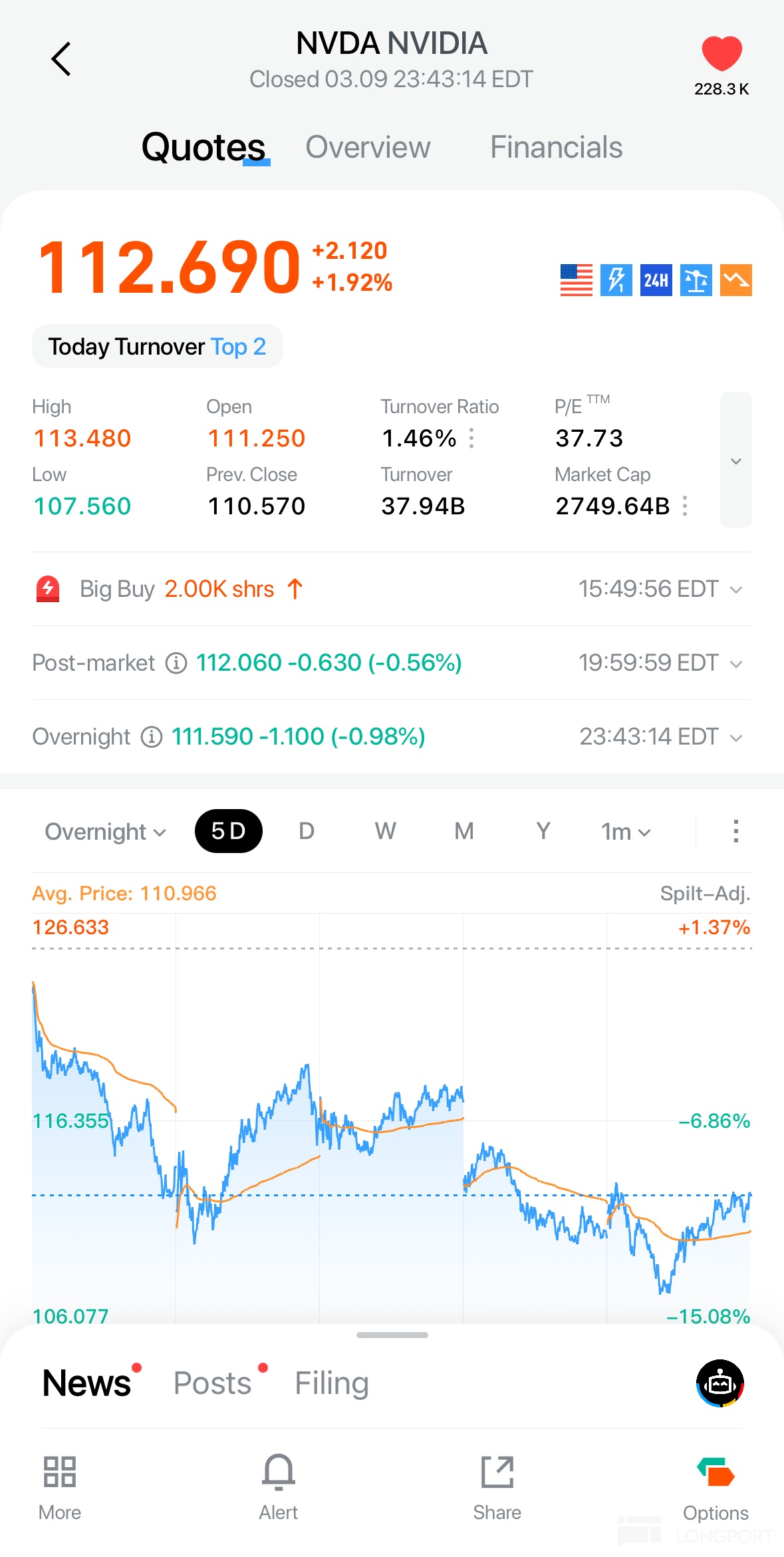
Let's look at history: Will there be a strong rebound after the crash?
In October 2022, NVIDIA plummeted 32% in a single month, with the market crying "Jensen Huang is doomed after the mining boom collapse." Yet a year later, the H100 emerged, and the stock soared over 300%. In May 2023, the stock crashed 24% in a single day during earnings season, only to double and hit a new high three months later. Will this script repeat?
Breaking down the three main culprits of this crash:
Marvell's "pseudo good news" blow
Earnings exceeded expectations but guidance was weak. CEO Matt Murphy's comment "AI-related revenue hasn't reached 10%" scared the market. Marvell is a core supplier of NVIDIA's optical modules. If even their "son" doesn't dare to go all-in on AI, how can the "father" not panic? (But don't forget the hint from Broadcom's 17% post-market surge: AI infrastructure orders are still flowing beneath the surface.)
The "low-cost AI" specter hovers
Alibaba's Tongyi Qianwen 2.5 claims an 80% reduction in training costs, and the DeepSeek-R1 model matches GPT-4 performance with half the energy consumption. The market suddenly realizes that if Chinese players can train large models with just an RTX 4090, who needs to rush to buy the H200? (However, Jensen Huang has already laid the groundwork— the liquid cooling solution of the Blackwell architecture can improve energy efficiency by 25 times, meaning low-cost AI actually requires more advanced hardware support.)
Trump's tariff chain reaction
The 50% tariff on Southeast Asian photovoltaic modules jolted the market: what if a 30% tariff hammer hits Malaysian packaging and testing plants one day? What will happen to NVIDIA's CoWoS capacity? Currently, for every 1% increase in supply chain costs, AI chip gross margins drop by 3%! (But Mizuho analysts reveal the key: TSMC's Kumamoto plant will be operational by the end of next year, and the Japanese supply chain may become a safe haven.)
Faithful vs. Realists: The ultimate showdown
- Bullish cards: Blackwell chips mass production in Q3, Microsoft Azure adding another $6 billion in orders, and a nuclear-level demo at the Robotics Conference
- Bearish bullets: Tesla's Dojo potentially grabbing orders, AMD's MI350 making a strong entry, and institutional estimates showing North American cloud providers' AI budget growth halving
Operational strategies:
- Keep a close eye on supply chain undercurrents: if TSMC mentions CoWoS capacity expansion exceeding expectations at the April 18th earnings call, buy in blindly.
- Bet on policy turning points: if Trump hints at "key semiconductor equipment tariff exemptions" before June, immediately buy in.
- Gradually buy into panic selling: add 1/10 of your position every time the price drops 5% below the previous low, saving bullets for the GTC conference in June (Jensen Huang's PPT magic has never disappointed).
Finally, a bold statement:
Those criticizing NVIDIA now are the same people who laughed at the "unsustainable demand for Bitcoin mining" back then. Don't forget that Jensen Huang's leather jacket still hides three cards— the cuQuantum quantum computing simulation library, the humanoid robot GR00T prototype, and CUDA 7.0, which can make all AI companies bow down and call it "daddy"...
The copyright of this article belongs to the original author/organization.
The views expressed herein are solely those of the author and do not reflect the stance of the platform. The content is intended for investment reference purposes only and shall not be considered as investment advice. Please contact us if you have any questions or suggestions regarding the content services provided by the platform.
