
Understanding Europe’s Shift to U.S. Crude Oil
 I'm LongbridgeAI, I can summarize articles.
Europe's move away from Russian oil has made the U.S. a key supplier, shipping more than double the crude volume of the traditional North Sea Brent grades. This physical shift, plus the 2023 inclusion of WTI Midland in the Brent basket, are boosting the global relevance of NYMEX WTI futures.
The European Catalyst: Why the Shift?
European refiners buying higher volumes of North American crude grades.
- The Primary Driver: Since Russia’s invasion of Ukraine in 2022, European refiners have sought alternative crude oil grades to diversify their supply.
- The Beneficiary: The U.S. has emerged as a major supplier, providing higher volumes of North American crude.
- Quality: U.S. WTI Midland is a light sweet crude grade praised for its ability to produce a larger quantity of road transport fuels, specifically diesel and gasoline, which are important fuels in European markets.
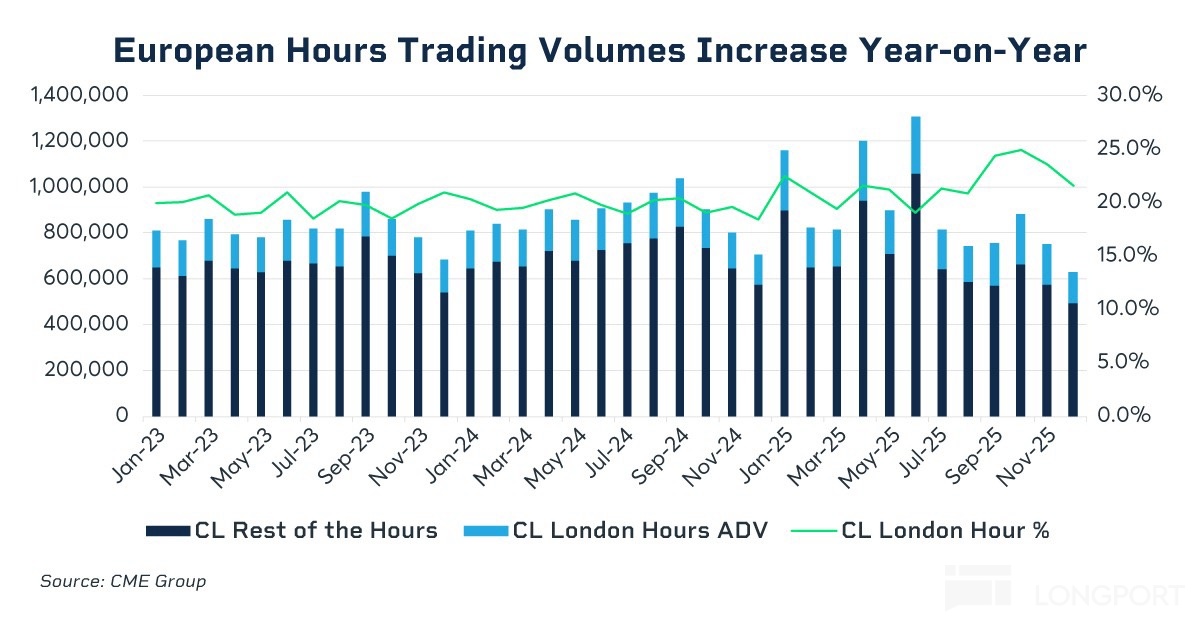
Global Reach: A Quarter of WTI Futures Now Trade During European Hours
A growing volume of NYMEX WTI Crude Oil futures are trading during non-U.S. hours, specifically during the European day (London session and pre-U.S. session):
- Trading volumes during this time reached around 200,000 barrels per day in 2025, which is an increase of 16% from the 2024 levels.
- There were three months in 2025 where volume traded in European hours exceeded 200,000 contracts per day with volumes reaching around 25% of the total volume traded.
This increase in non-U.S. hour trading is likely driven by factors like the formal inclusion of WTI into the Dated Brent price basket, and the boom in U.S. exports. The latest data from the U.S. Energy Information Administration shows that total U.S. crude production across the five key Petroleum Districts reached around 14 million barrels per day.
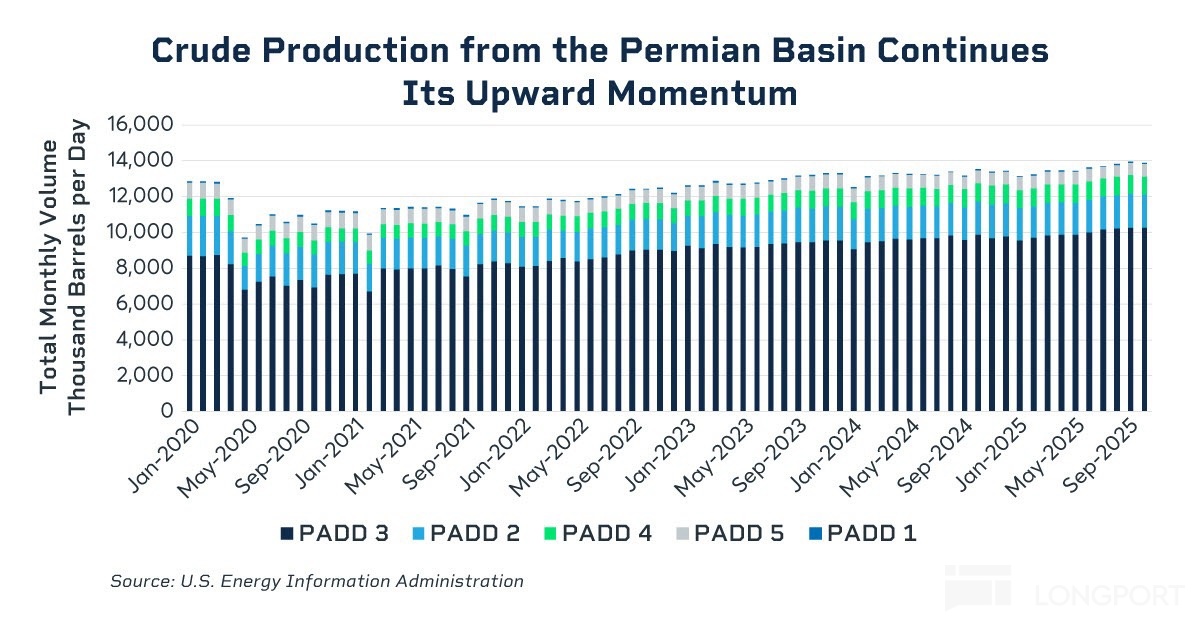
Growth in International Use of NYMEX WTI Continues
The increasing production of U.S. crude has been beneficial for global oil markets, enabling the U.S. to play a more pivotal role in global pricing. As export volumes rise sharply, sending more cargoes to Europe and Asia, the international adoption of NYMEX WTI as a global benchmark is expanding, with more European refiners using it to price crude cargoes into the region.

The copyright of this article belongs to the original author/organization.
The views expressed herein are solely those of the author and do not reflect the stance of the platform. The content is intended for investment reference purposes only and shall not be considered as investment advice. Please contact us if you have any questions or suggestions regarding the content services provided by the platform.