


 Posts
PostsWhich potential Alpha projects are quietly heating up in the DeSci sector?

A bull market never lacks opportunities. Participating in early-stage emerging projects always seems to double capital in a short time, with reports of 100x or even 10,000x coins popping up everywhere. The crypto community greedily searches for the next big thing.
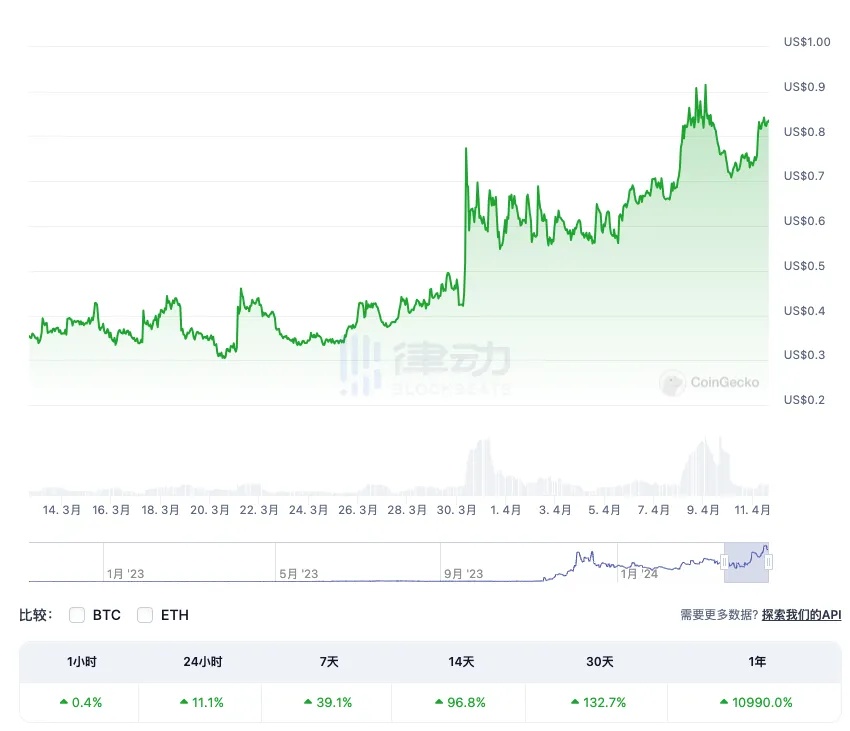
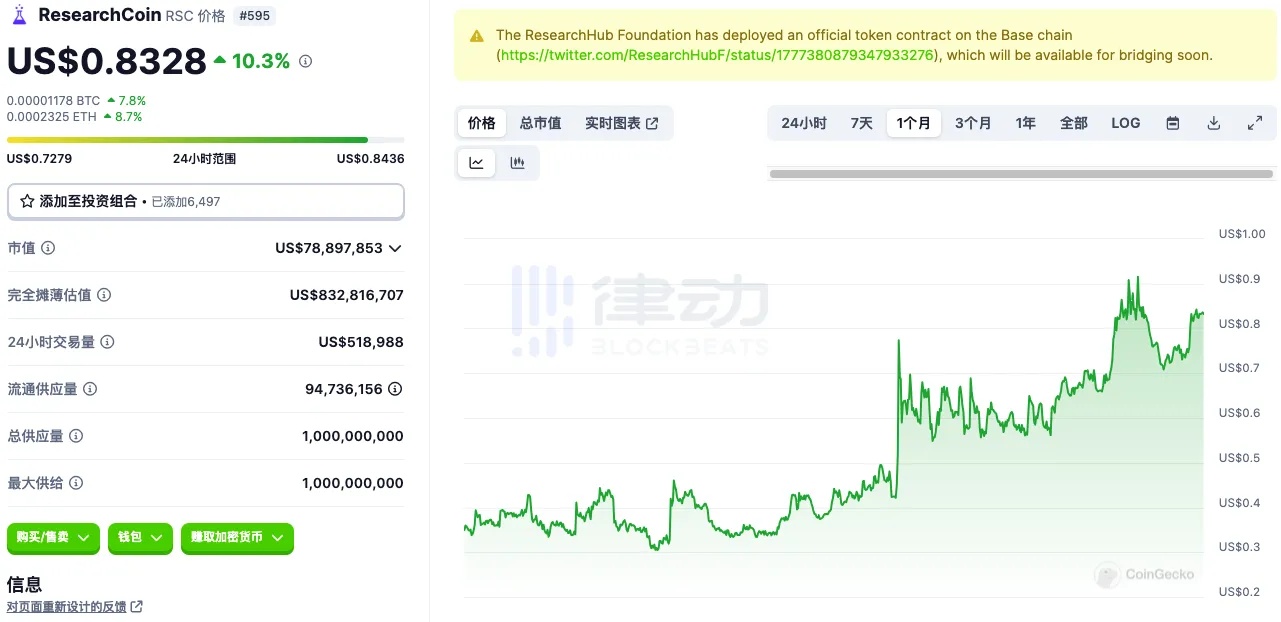
Amid the flood of 10,000x memes and AI concepts, gains seem like just a number—doubling is no longer enough to stir waves in the crypto community. But among the sea of rising tokens, ResearchCoin (RSC) has caught the market's attention, with its price repeatedly hitting new highs over the past month.
Beyond its price surge, another noteworthy aspect of RSC is its sector—DeSci (Decentralized Science), an initiative that uses public infrastructure built on Web3 (including NFTs, smart contracts, and DAOs) to achieve fair and transparent funding, creation, review, storage, and dissemination of scientific knowledge. DeSci encourages scientists to openly share their research and gain recognition while allowing anyone to easily access and contribute to research outcomes.
In their year-end outlooks last year, many VCs publicly expressed optimism about the DeSci sector. For example, Messari stated in an investment forecast article that they were turning their attention to several key non-financial sectors in crypto, with DeSci offering critical solutions that extend far beyond finance, making it less driven by rampant speculation.
Zee Prime Capital co-founder Matti, in an interview with BlockBeats, said that DeSci is solving real-world problems with utility that most cryptocurrencies lack, making it more like "crypto's crypto."
However, for the current crypto market, DeSci's adoption rate remains low, still a very new concept.
Compared to the Chinese community, DeSci has garnered more discussion in English-speaking communities. Late last year, Berlin hosted a DeSci conference, featuring industry OGs like Zee Prime Capital co-founder Matti, Molecule CEO Tyler Golato, and co-founder Paul Kohlhaas, who shared their research and insights on DeSci.
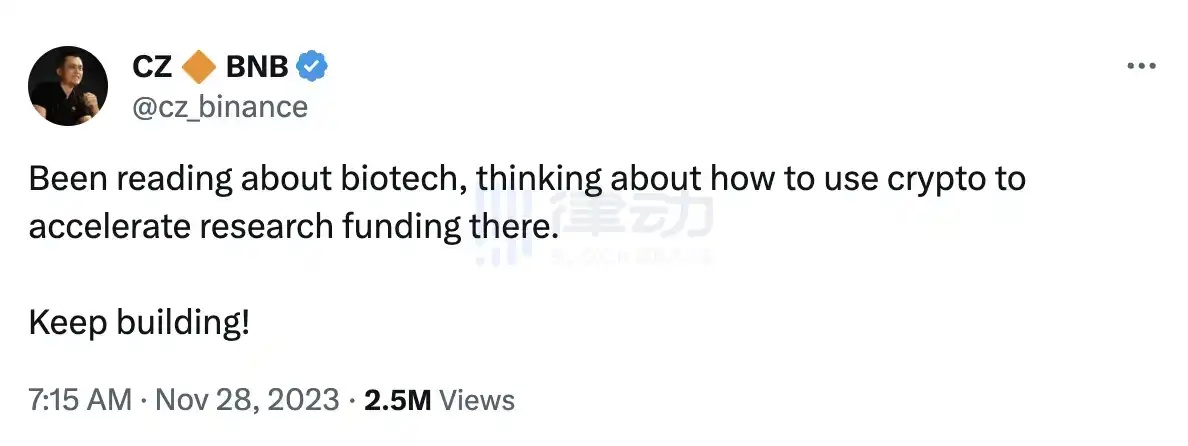
In the Chinese community, DeSci gained some traction after former Binance CEO CZ mentioned it on social media. CZ revealed he had been reading about biotechnology and pondering how crypto could accelerate research funding in that field. As is well known, the crypto community has long been interested in "longevity" research, and DeSci perfectly aligns with this demand.
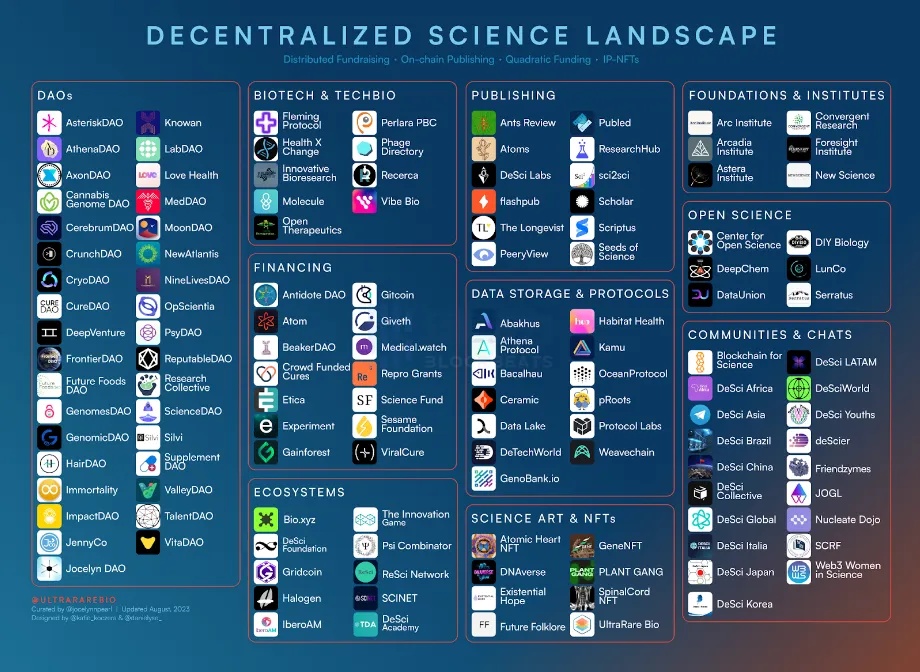
According to WIKI data, there are already over a hundred projects in the DeSci sector. However, Messari reports that 50% of DeSci projects were established in the past year. From the chart, it's clear that DAOs dominate the current DeSci ecosystem, while other concepts like NFT-related combinations remain in their early, undeveloped stages.
DAOs Solve DeSci's Funding Challenges
DAOs can be considered the foundational form of the DeSci concept, currently the most thriving part of the ecosystem. The biggest and most pressing issue for DeSci is funding difficulties. Beyond DAOs, decentralized financing also makes up a significant portion of the sector, with DAOs primarily existing to address funding challenges.
Traditional research relies on centralized methods like national natural science funds to secure funding and resources, but this leads to numerous issues in the application process, which is often lengthy and inefficient. Moreover, worsening macroeconomic conditions, such as economic downturns and environmental concerns, have further reduced overall research funding, exacerbating the problem.
The Interconnected DeSci Ecosystem
In the DeSci ecosystem, the close ties between projects might be a promising start. Raising funds through DAOs seems like a viable option, with different DAOs even investing in each other.
For example, after receiving investment from Seed Club Ventures, Molecule invested in the open-source drug development organization LabDAO. Later, Molecule itself secured a $1 million investment from Sora Ventures. To foster innovation in biomedical research, Molecule plans to provide $50,000 grants to deserving scientific teams or individuals in Asia.
As an Ethereum-based biotech research fundraising platform, Molecule has two main systems: Molecule Discovery and Molecule Finance. Molecule combines smart contracts with legal agreements to create Intellectual Property NFTs (IP-NFTs), a novel mechanism that allows anyone to share ownership of research projects and their future outcomes, such as intellectual property, royalties, and data.
Molecule's CEO and co-founder Tyler Golato, along with co-founder Paul Kohlhaas, also created Bio.xyz and VitaDAO.
Bio.xyz serves as a biotech DAO accelerator and DeSci meta-governance layer, aiming to enable DeSci DAOs to leverage IP-NFTs to fund, manage, and develop intellectual property from universities, companies, and researchers worldwide. Additionally, Bio.xyz provides DeSci DAOs with launchpads, resources, mentorship, shared networks, and a suite of legal and smart contracts.
Molecule and Bio.xyz fund decentralized science organizations like VitaDAO. Combining multiple projects makes it easier to apply for scientific research grants while linking intellectual property to crypto.
DAOs Focused on Real-World Problems
According to OP Research's study, most current DeSci projects lean toward the biotech sector, likely due to the sheer volume of biotech research and increased public interest in life sciences post-pandemic.
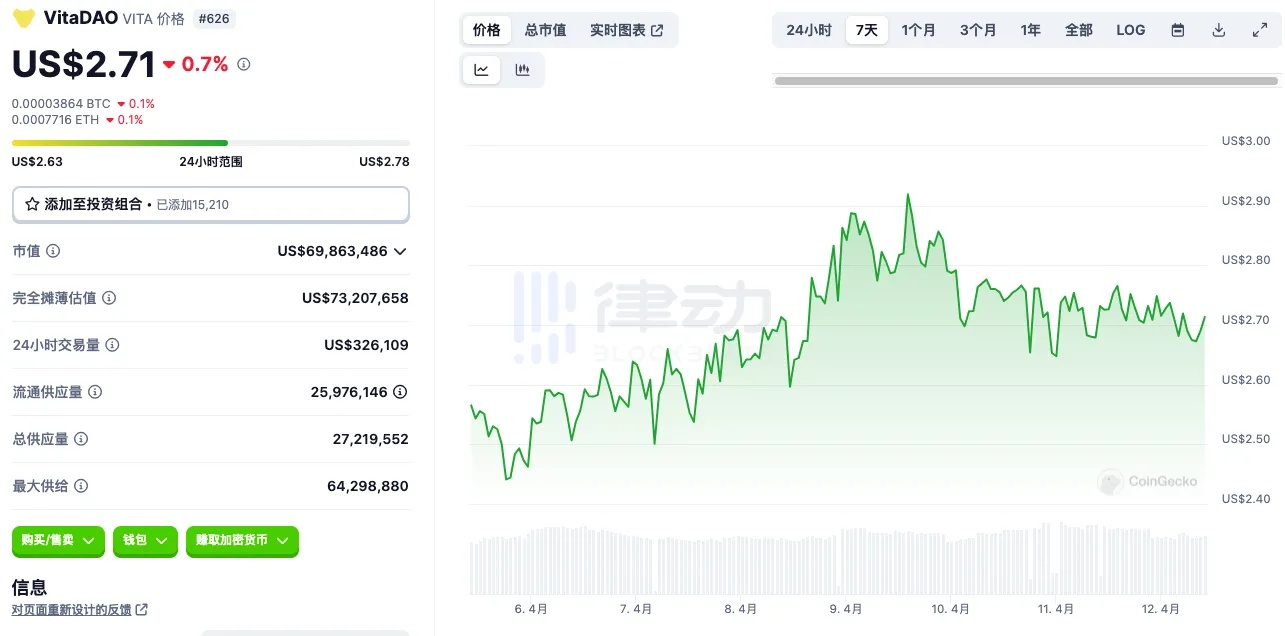
VitaDAO leads in longevity research and development. As the world's first biotech DAO, VitaDAO's primary goal is to advance longevity research, extending human lifespan and healthspan. Its native token, VITA, has surged 48% in 30 days, with a market cap of $83.29 million. VITA holders participate in VitaDAO's decision-making processes, including project funding selection, financial management, and governance activities.
AxonDAO Governance Token (AXGT) also focuses on biotech. It redefines interactions between individuals and their health data using blockchain and AI. The project leverages precognitive algorithms, biometrics, genomic data, and other key health indicators to not only monitor but also predict health outcomes.
DeSci can use AxonDAO to streamline clinical data collection, storage, and verification via blockchain, offering a secure and transparent solution. This approach establishes decentralized universal standards for personal health and wellness data, empowering individuals with better access and control over their information.
Another popular topic in biotech is hair loss. HairDAO is a decentralized organization dedicated to treating hair loss through an open-source investment and operational model. Patients and researchers collaborate on revolutionary new treatments, with users earning HAIR tokens as rewards for sharing their treatment experiences in HairDAO's app.
HairDAO features rich reward mechanisms, cultural flair, and meme appeal. As Zee Prime Capital co-founder Matti wrote in "Hair Is Money," HairDAO's end goal is a fully vertically integrated pharmaceutical business, including drug manufacturing and distribution. It must evolve from a chaotic Discord group of 1,000 into a reliable enterprise capable of scaling to tens or hundreds of thousands (for data collection) while outsourcing real-world operations (for approvals, patents, manufacturing, distribution, etc.).
DeSci Solves Peer Review and Publication Challenges
Beyond funding, DeSci's second major challenge is peer review and academic publishing. Typically, a research project's funding cycle starts with an application at the beginning of the year, with final reviews and approvals at year-end, leaving much time wasted on bureaucratic processes.
During evaluation, projects often lack comprehensive and efficient review mechanisms. By the time funding is approved, research is already halfway done, making it hard to allocate funds where they're most needed. Additionally, journal articles and patents are key metrics for funding approval, leading to a rigid and sometimes exploitative publishing industry that distorts research priorities.
ResearchCoin (RSC), mentioned earlier, decentralizes review authority, aiming to disrupt traditional journal publishing.
By creating a "Hub" system as an alternative to traditional journals, ResearchCoin allows scientists and scholars to publish and discuss academic content openly, bypassing traditional publishing gatekeepers and accelerating information dissemination with post-publication peer review. As a crypto research platform, users earn RSC by contributing to ResearchHub, with rewards proportional to the community's perceived value of their work.
Users can also set RSC bounties for peer reviews, paper summaries, or new lab methods. They can even "pre-register" projects to raise crypto funding before research begins. According to ResearchHub, platform activity—especially peer review—has grown steadily over time.
ResearchCoin was co-founded by Coinbase CEO Brian Armstrong and others, securing $5 million in Series A funding last June 15. Per CoinGecko, RSC's price has risen to $0.8328 at the time of writing, up 10.3% in 24 hours.
While most DeSci tokens have seen solid gains, their low adoption rate might explain why some top projects in CoinGecko's DeSci rankings are tagged with unrelated labels like DePIN or RWA.
For example, OriginTrail, ranked #201 in total crypto market cap and #1 in DeSci, only lists AI, DePIN, and RWA on its official Twitter. Yet its website highlights life sciences and healthcare as key focuses. Dynex, the sector's #6 project, doesn't even mention DeSci on its website or Twitter, positioning itself as a neuromorphic quantum computing cloud with DeSci use cases only briefly noted in documentation for pharma, automotive, and aerospace.
As an emerging concept, the DeSci sector may follow the trajectory of other niche projects, gradually gaining popularity.
The copyright of this article belongs to the original author/organization.
The views expressed herein are solely those of the author and do not reflect the stance of the platform. The content is intended for investment reference purposes only and shall not be considered as investment advice. Please contact us if you have any questions or suggestions regarding the content services provided by the platform.
