


Iron ore and A-share market weekly report and global capital market weekly report 20240415

Overall Perspective
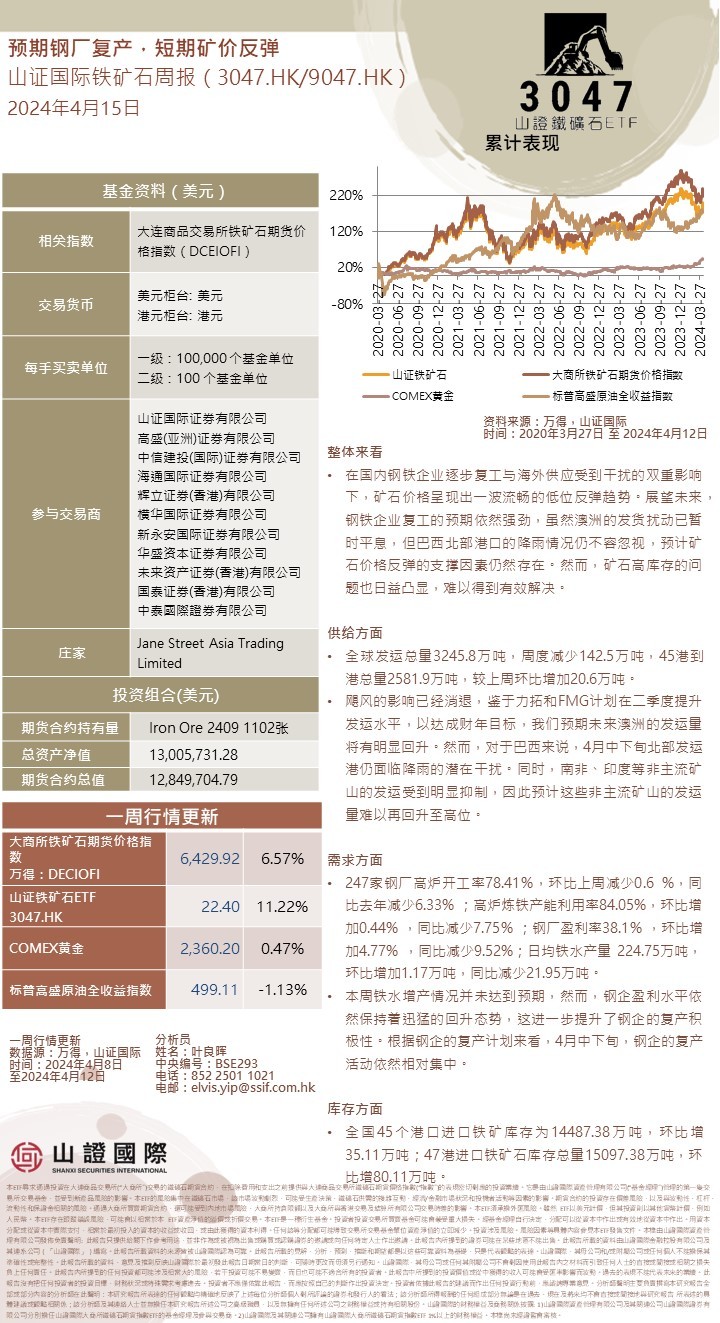
• Under the dual impact of gradual resumption of domestic steel enterprises and disruptions in overseas supply, iron ore prices have shown a smooth low-level rebound trend. Looking ahead, expectations for the resumption of steel enterprises remain strong. Although shipping disruptions in Australia have temporarily subsided, rainfall in northern Brazilian ports still cannot be ignored. It is expected that the supporting factors for the rebound in iron ore prices will persist. However, the issue of high iron ore inventories is becoming increasingly prominent and difficult to resolve effectively.
$F SSIFIRONORE(03047.HK)
Supply Side
• Global shipments totaled 32.458 million tons, a weekly decrease of 1.425 million tons. Arrivals at 45 ports totaled 25.819 million tons, an increase of 206,000 tons compared to the previous week.
• The impact of the hurricane has subsided. Given that Rio Tinto and FMG plan to increase shipment levels in the second quarter to achieve fiscal year targets, we expect a significant recovery in shipments from Australia in the future. However, for Brazil, northern shipping ports still face potential disruptions from rainfall in mid-to-late April. At the same time, shipments from non-mainstream mines in South Africa, India, and other regions have been significantly suppressed, making it difficult for these non-mainstream mines to return to high shipment levels.
Demand Side
• The blast furnace operating rate of 247 steel mills was 78.41%, a decrease of 0.6% compared to the previous week and a decrease of 6.33% compared to the same period last year. The blast furnace ironmaking capacity utilization rate was 84.05%, an increase of 0.44% compared to the previous week but a decrease of 7.75% compared to the same period last year. The profit margin of steel mills was 38.1%, an increase of 4.77% compared to the previous week but a decrease of 9.52% compared to the same period last year. Daily pig iron production was 2.2475 million tons, an increase of 11,700 tons compared to the previous week but a decrease of 219,500 tons compared to the same period last year.
• This week's increase in pig iron production did not meet expectations. However, the rapid recovery in steel enterprise profitability has further boosted their enthusiasm for resuming production. According to steel enterprises' resumption plans, production resumption activities will remain relatively concentrated in mid-to-late April.
Inventory Side
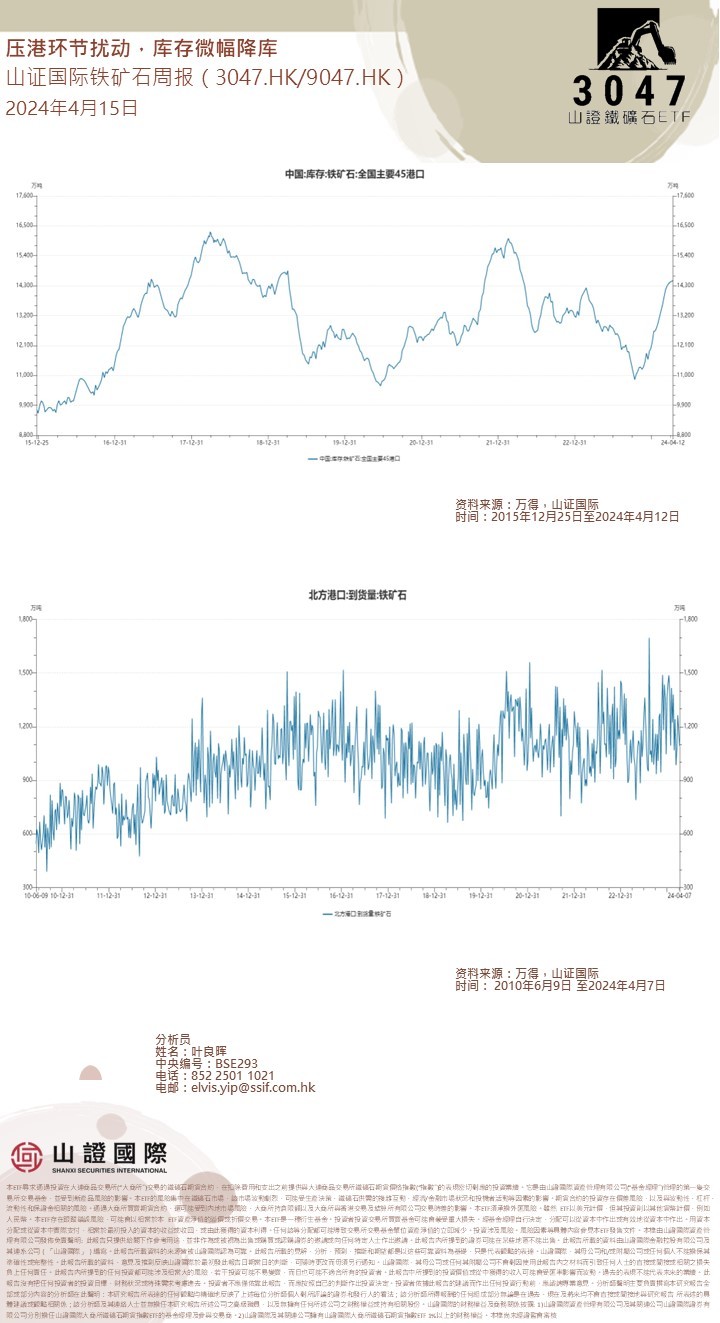
• Imported iron ore inventories at 45 ports nationwide totaled 144.8738 million tons, an increase of 351,100 tons compared to the previous week. Imported iron ore inventories at 47 ports totaled 150.9738 million tons, an increase of 801,100 tons compared to the previous week.
This Week's A-Share Weekly Report:
The key measures of the "New National Nine Articles" focus on [emphasizing dividends + strengthening delisting], which is expected to reshape the A-share ecosystem and solidify the foundation for a long-term bull market in indices. The effectiveness of quality and dividend factors is expected to continue improving, benefiting state-owned enterprise dividend stocks with strong earnings releases and dividend capabilities.
Short-term demand recovery has strengthened secondary inflation trading, leading to a surge in resource products. Our pricing model shows that copper prices have slightly exceeded expectations this week (though pricing has not yet become frothy), while the deviation of international gold prices from their theoretical fair value is more significant.
During the earnings decision period, focus on Q1 reports and sectors with improving prospects—primary industries with strong Q1 earnings expectations and sequential improvements in sentiment: communications, automotive, machinery, beauty, and defense; secondary industries: sports, engineering machinery, commercial vehicles, biologics, cosmetics, gas, automotive parts, communication equipment, and white goods.
Molecular expectations are about to face a "decision." Before molecular and denominator forces align upward, there is no need to rush strategically; patience is key. At the tactical level, it is advisable to emphasize balanced trading structures and the return to earnings pricing. Identifying high-value assets with low crowding and improving profit expectations will be the key to success in the next phase.
Industry allocation recommendations: (1) Manufacturing going global + superior earnings expectations + upward revisions in sentiment expectations: engineering machinery, commercial vehicles, communication equipment; (2) Independent sentiment cycles: pig farming, oil shipping/shipbuilding; (3) From a medium-term perspective, stable dividend assets remain the optimal choice for core holdings.
$VALUEGOLD ETF(03081.HK) $XIAOMI-W(01810.HK) $Moutai(600519.SH)
Global Capital Market Weekly Report:
Retail sales exceeded expectations, with upward revisions for January and February. This raises our Q1 real consumption tracking from 2.5% to 3.0% and GDP from 2.4% to 2.7%.
Although retail sales were strong, it is unclear whether the growth is broad-based, as non-store categories aggregate all online spending—75% of this month's controlled retail sales growth came from e-commerce.
$Amazon(AMZN.US)


The copyright of this article belongs to the original author/organization.
The views expressed herein are solely those of the author and do not reflect the stance of the platform. The content is intended for investment reference purposes only and shall not be considered as investment advice. Please contact us if you have any questions or suggestions regarding the content services provided by the platform.
